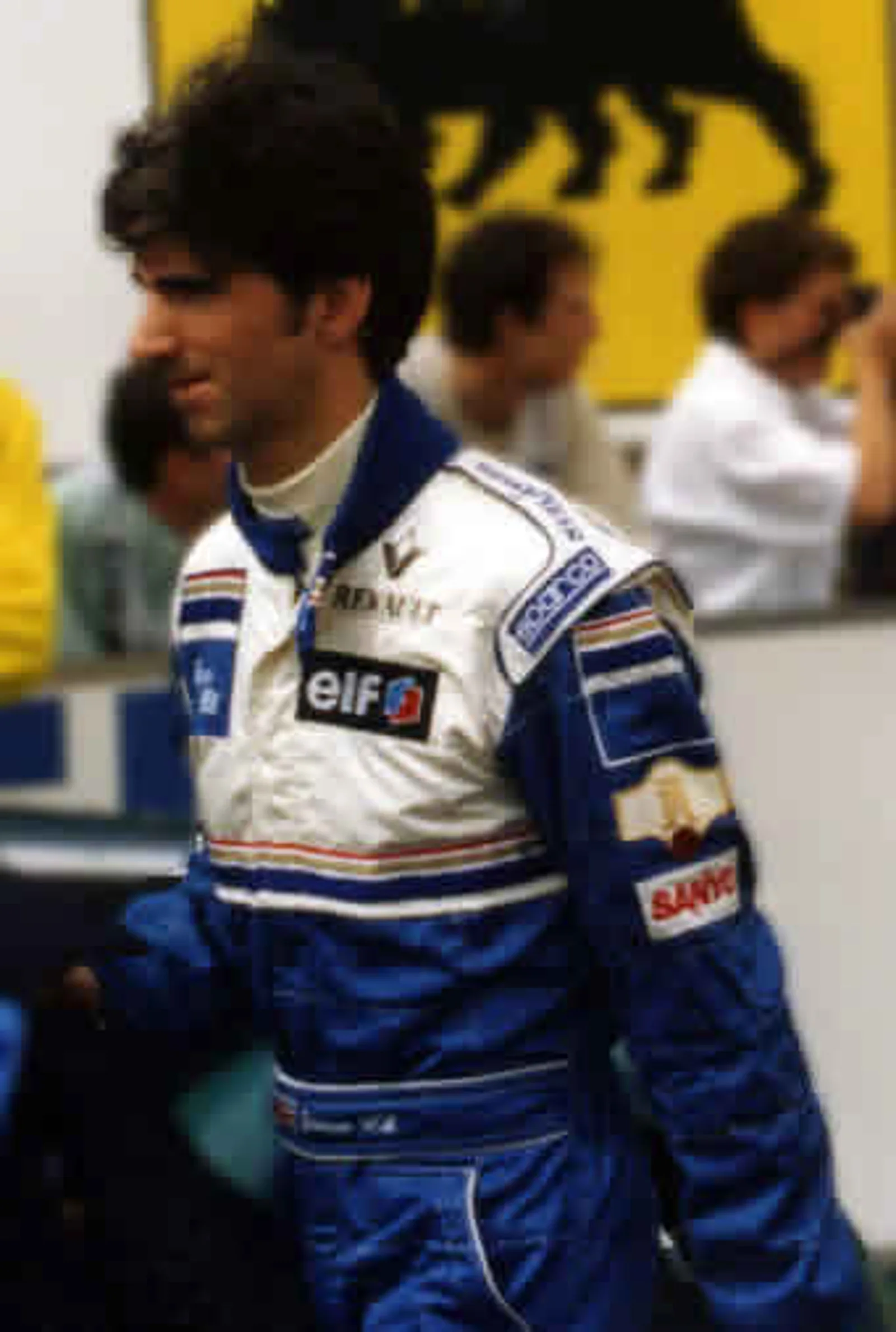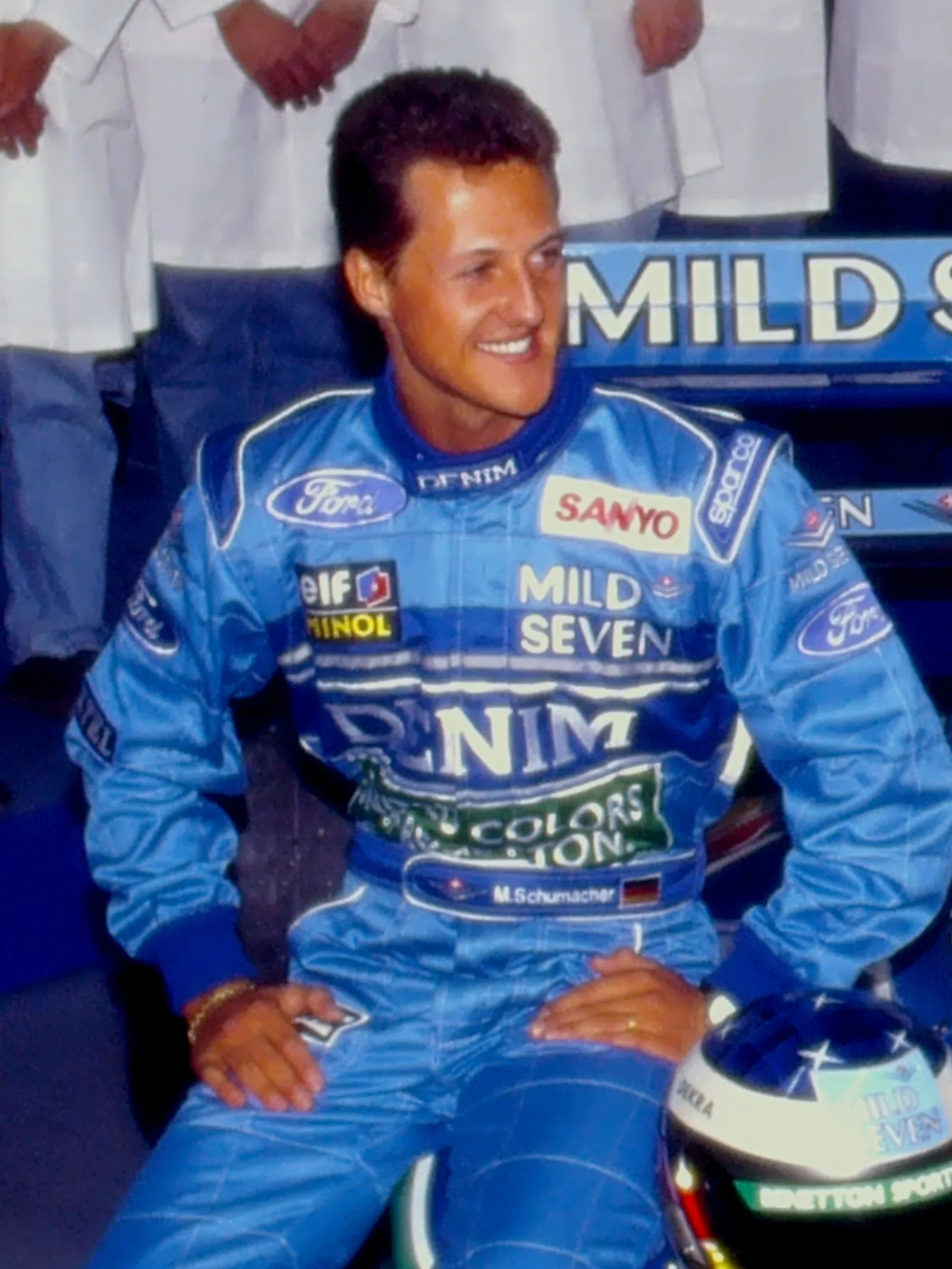
Schumacher matched Mansell's record of nine wins to retain his title, while Renault power carried Benetton to the only Constructors' title in its history.
Michael Schumacher won his second straight drivers' title in 1995 with nine victories, matching Mansell's 1992 record. Benetton claimed its only Constructors' Championship in a 17-race season, with Renault engines winning all but one race.
The 1995 FIA Formula One World Championship was the 49th season of the sport and the first to be contested over 17 races since 1977. It ended with Michael Schumacher retaining his crown at the Pacific round in Japan, and Damon Hill won the final race in Australia from pole.
What changed for 1995?
The engine capacity fell from 3.5 litres to 3 litres, and the cars were given higher ride heights and smaller wings and diffusers. The changes were expected to cut downforce by 30 to 40 percent, and the cars gained more crash protection.
The 3-litre limit was introduced for safety reasons, and the description of the permitted fuel was tightened. Together these reduced engine output, adding to the push to keep speeds in check after Imola.
The cars' ride height rose by 50 mm (2.0 in), and the front wing had to sit at least 50 mm above the floor, up from 40 mm (1.6 in). The rear wing could not rise more than 80 cm (31 in) above the reference plane, down from 95 cm (37 in), and the rear diffuser's maximum width was cut from 100 cm (39 in) to 30 cm (12 in).
Cars needed impact-absorbing side structures, and the frontal crash test speed rose from 11 m/s (36 ft/s) to 12 m/s (39 ft/s). The minimum weight went from 515 kg (1,135 lb) to 525 kg (1,157 lb), and then to 595 kg (1,312 lb) with the driver included.
The 1994 measures, introduced after Imola, were formalised for 1995. They included a rear wing that could not extend ahead of the rear wheel centreline, a 70% limit on the space the rear wing elements could use, and the 10 mm wooden skid block with its 1 mm wear limit.
The grid shrank to 13 teams and 26 cars after the withdrawal of Lotus and Larrousse. Every entrant was therefore guaranteed a race start, the first time since the 1994 Canadian Grand Prix that a non-starter could not be blamed on failing to qualify.
Nine wins, a Hill rivalry that boiled over at Silverstone and Monza, and Benetton's only Constructors' title defined 1995.
Who were the drivers and teams in 1995?
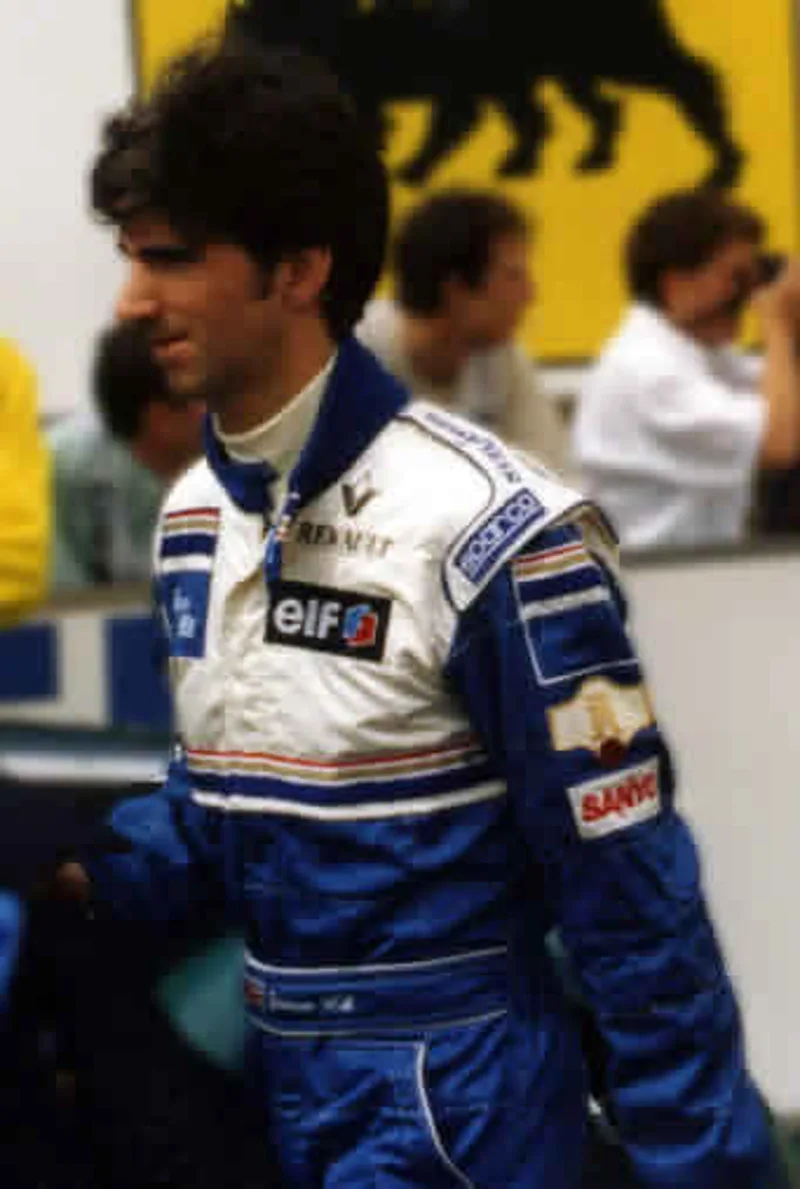
Schumacher stayed at Benetton, which switched from Ford to Renault power, while Damon Hill and David Coulthard shared the Williams line-up. Team Lotus left Formula One after 36 years, and Larrousse never reached the track because the funding it needed never arrived.
Team Lotus had won six Drivers' and seven Constructors' titles before its exit. Its assets were bought by David Hunt, who ran them as Pacific Team Lotus, and that dispute over the name led to a contract row over Mika Salo.
Renault engines went to Benetton, ending a seven-year Ford association, and to Williams. Sauber took the Ford contract, McLaren switched to Mercedes engines, Jordan took Peugeot units, and Footwork took the Hart engine. Renault power won all but one race of the season.
At Ligier the arrival of Martin Brundle prompted rumours that Tom Walkinshaw would run the team. Rivals compared the Ligier JS41 with the Benetton B195, and Walkinshaw said the two cars were as close aerodynamically as they could make them.
Coulthard was given a full-time Williams seat after Mansell left in January, and Mansell's brief McLaren stint ended after he could not fit comfortably in the MP4-10. His deal had already been cut from $15 million to $10 million when the sponsor refused to pay his asking price.
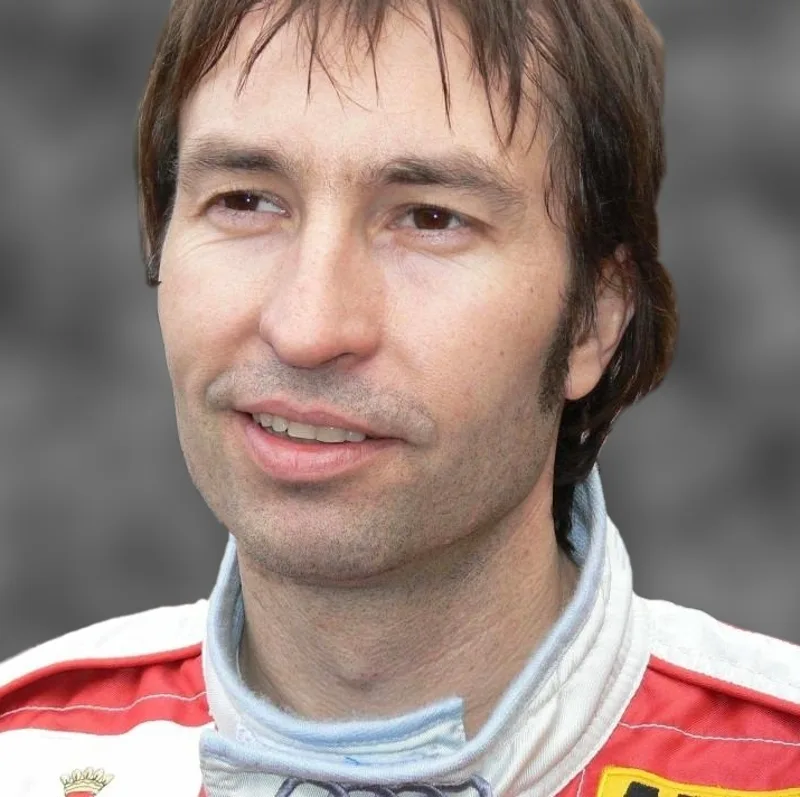
Herbert moved from Ligier to Benetton and won two races with the team. Forti stepped up from Formula 3000 with its FG01, the last Formula One car to use a manual gearbox. Simtek went bankrupt on 1 June, after the fifth race of the season.
How did the opening rounds go?
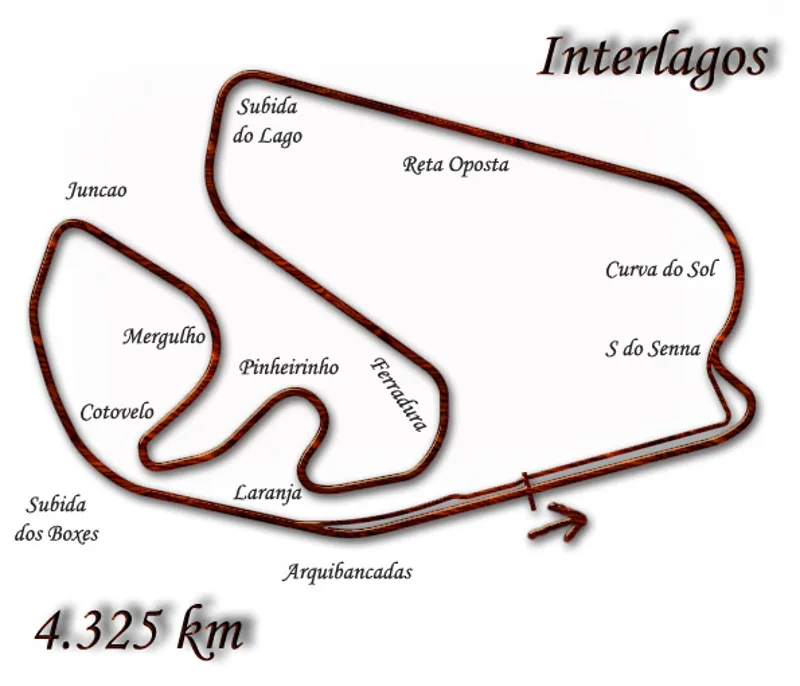
Hill took pole in Brazil and Schumacher won, and the early season was marked by fuel disqualifications of Schumacher and Coulthard that were later reversed. Hill then won in Argentina and San Marino, while Schumacher won in Spain and Monaco.
In Brazil Hill had a bad start and was passed by Schumacher, and the two drivers battled through the early pit stops until Hill's gearbox seized on lap 31. Schumacher won ahead of Coulthard. Both were then disqualified because their fuel samples did not match the regulations, but the teams successfully appealed, since the illegal fuel gave no performance advantage.
The teams still lost their constructors' points and were fined $200,000, and the decision drew criticism over the split between car and driver. In Argentina Coulthard took his first pole, but his throttle failed and Hill took the lead through the pit stops to win, with Alesi second and Schumacher third.
At Imola Schumacher took pole, but he crashed on cold tyres after the start, and Berger's car stalled, giving Hill the lead. Hill won ahead of Alesi and Berger. Coulthard was penalised for speeding in the pit lane, which cost him a place in the fight for second.
Schumacher took pole in Spain and led from start to finish. Herbert finished second for his first podium, while Hill suffered a hydraulic problem and crawled across the line fourth. At Monaco Hill took pole, but Schumacher won, with Hill second and Berger third.
How did the mid-season races shape the title?
Canada gave Schumacher pole, the hundredth for a Renault-powered car, but an electrical problem on lap 57 sent him to the pits for 70 seconds while the steering wheel and computer were changed. Alesi won on his 31st birthday, his only Grand Prix victory, and the last win by a V12 car to date. The Jordans of Barrichello and Irvine finished second and third.
In France Hill took pole again, but Schumacher went past him during the pit stops and won, with Coulthard third. At Silverstone the title rivals collided as Hill tried to repass Schumacher, and both retired. That promoted Herbert and Coulthard to the front, and Herbert won his first race ahead of Alesi.
Two weeks later Schumacher won his home race in Germany, with Coulthard second and Berger third. Hill had spun on lap two after a driveshaft failure from pole, and Berger recovered from a ten-second stop-go penalty for jumping the start.
Hill then won in Hungary from pole with the fastest lap, ahead of Coulthard and Berger. Schumacher finished three laps down with fuel pump problems. After that round Schumacher led with 56 points, Hill had 45 and Alesi 32, and Benetton led the constructors with 74 points to Williams on 68 and Ferrari on 57.
How did the late-season rounds decide the title?
Schumacher and Hill clashed at Silverstone and again at Monza, and both received suspended bans for their driving. Schumacher won at Spa-Francorchamps in the rain, while Coulthard took his first career win in Portugal.
At Spa Coulthard retired, Hill took the lead, and Schumacher passed him during the stops. Schumacher led away from Hill on wet tyres after a safety car, and Hill recovered to second after a ten-second penalty for speeding in the pit lane. Brundle finished third, and Schumacher was given a one-race suspended ban for defending too aggressively.
At Monza Coulthard spun on the formation lap and restarted in a spare car on pole. A first-lap collision stopped the race, and Schumacher was hit by Hill on lap 13 and retired. Herbert won his second race of the year, with Hakkinen second and Frentzen third.
In Portugal Coulthard started from pole and held on for his first career win, with Hill second and Schumacher third. Katayama was hospitalised for two days after an airborne collision at the start with Badoer's Minardi.
At the Nurburgring Coulthard stalled on the reconnaissance lap and started in the spare car. Alesi collided with Hill during the stops, and Schumacher passed Alesi for the lead two laps from the end. Schumacher won, Alesi was second and Coulthard third.
How was the title settled in Japan?
Schumacher clinched his second title by winning the Pacific Grand Prix with two races still to run, and Herbert's third place at the Japanese Grand Prix sealed Benetton's Constructors' title. The pair of results made the final rounds less important than the summer and autumn battles.
At the Pacific round Coulthard took his fourth consecutive pole, with Hill and Schumacher behind. Alesi got to second at the start, and Schumacher overtook Hill and Alesi during the first stops. He pulled clear and took his eighth victory of the season, which was enough to make Hill's deficit impossible to close.
In Japan Schumacher took pole, but the Williams cars could not match his pace. Both Ferraris were judged to have jumped the start and served ten-second penalties, and Alesi retired with a driveshaft failure. Schumacher won, and Herbert finished third to clinch the Constructors' title for Benetton.
Hill took pole in Adelaide and won the finale, two laps ahead of Panis and Morbidelli. Coulthard came to grief in the pit lane, Schumacher and Alesi tangled, and Herbert and Berger both stopped. Hill's win equalled a feat by Jackie Stewart from the 1969 Spanish Grand Prix.
Race winners and standings
| Race | Winner | Notable point |
|---|---|---|
| Brazil | Michael Schumacher | Reinstated after fuel disqualification |
| Argentina | Damon Hill | Coulthard's first pole; throttle failure |
| San Marino | Damon Hill | Schumacher crashed on cold tyres |
| Spain | Michael Schumacher | Herbert second for his first podium |
| Monaco | Michael Schumacher | Hill second, Berger third |
| Canada | Jean Alesi | Only win; won on his 31st birthday |
| France | Michael Schumacher | Hill pole, passed in the pits |
| Britain | Johnny Herbert | First win after Hill and Schumacher collided |
| Germany | Michael Schumacher | Home win; Hill's driveshaft failed |
| Hungary | Damon Hill | Pole, win and fastest lap |
| Belgium | Michael Schumacher | Hill recovered to second |
| Italy | Johnny Herbert | Second win; Schumacher out in a collision |
| Portugal | David Coulthard | First career win |
| Europe (Nurburgring) | Michael Schumacher | Alesi second, Coulthard third |
| Pacific (Aida) | Michael Schumacher | Clinched the title with two races left |
| Japan (Suzuka) | Michael Schumacher | Herbert third gave Benetton the title |
| Australia (Adelaide) | Damon Hill | Pole to win; Coulthard crashed in the pit lane |
Schumacher won nine races, Hill four, Herbert two, and Alesi and Coulthard one each. With three races to go Schumacher led Hill by 27 points, and before Japan Benetton had 112 points to Williams on 92 in the constructors' table.
Benetton's title was its only Constructors' championship, and it came from a team that had relied on Renault power for the first time.
Why does 1995 still matter?
The 1995 season was the last to use the 1974 numbering system, and the first to run 3-litre engines. It was also the last year of V12 engines in Formula One, as Ferrari moved to V10s for 1996.
Mansell never raced in Formula One again after that short McLaren stint. He had won the 1992 title before his departure.
Schumacher's nine wins matched Mansell's record for a single season, and his rivalry with Hill set the tone for the battles that followed.