From Colin Chapman's innovative 1950s cars to Jim Clark's 1960s titles, Senna's late-1980s wins, the 1994 collapse and the Lotus name's return in 2010.
Chapman's racing arm for Lotus Cars ran in Formula One, Formula Two and IndyCar among other categories. It won seven Formula One Constructors' Championships and six Drivers' Championships before an administration order in 1994 ended its works operation. Its story runs from the 1950s to the 1990s.
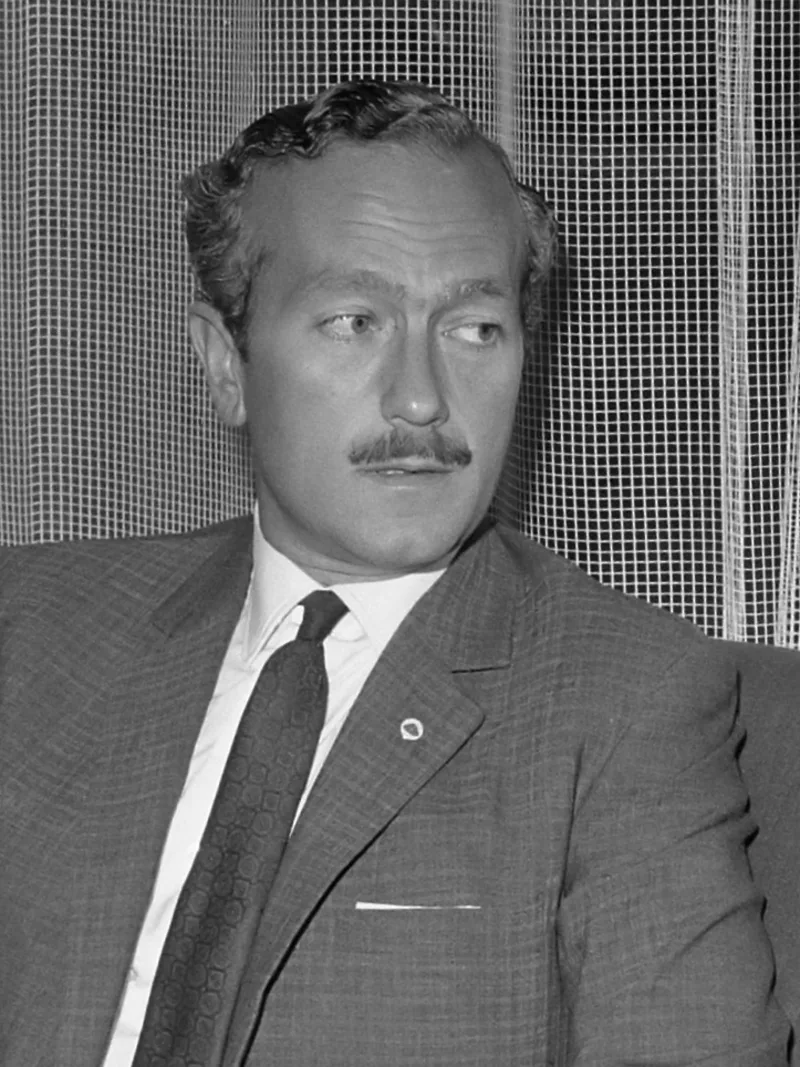
Team Lotus was the motorsport sister company of Lotus Cars, run by founder and chief designer Colin Chapman. It competed in Formula One and many other categories, and it became one of the most successful racing teams of all time. The Lotus name returned to Formula One in 2010 under a different structure, and that dispute over the name is part of the story.
Where did Team Lotus come from?
Colin Chapman founded Lotus Engineering Ltd in 1952 at Hornsey, and the company's sports cars soon won acclaim, the Mk 6 in 1953 and the Mk 8 in 1954. The racing side separated from the company in 1954, giving it room to chart its own course.
Chapman then turned to Grand Prix racing. Two Lotus 12s ran at Monaco in 1958 with Hill and Allison aboard, and Lotus 16s took over later that year. In 1960 Chapman switched to a mid-engined design, the Lotus 18. The company grew so fast that it had to move to new premises at Cheshunt.
A tiny sister company that won seven constructors' titles, then lost its name and its works team in one turbulent decade.
How did Lotus win its first Formula One races?
The first Formula One victory for a Lotus car came in 1954, in the non-Championship Cornwall MRC race, won by John Coombs in a Lotus Mark VIII. The first Formula One victory for a Lotus Formula One car came in 1960, when Innes Ireland won the non-Championship Glover Trophy in a Lotus 18.
Stirling Moss then gave Lotus its first world title victory at Monaco, driving a Lotus 18 for the privateer outfit run by Rob Walker. The works team's first Grand Prix win in the championship arrived when Ireland took the 1961 United States Grand Prix in a Lotus 21.
How did Jim Clark and Graham Hill win titles for Lotus?
Jim Clark dominated the early 1960s. In 1963 he drove the Lotus 25 to seven wins and the World Championship. The 1964 title was still open at the final race in Mexico, but problems with Clark's Lotus and Hill's BRM handed it to John Surtees in a Ferrari. In 1965 Clark returned with six wins in the Lotus 33 and took the championship.
Clark's career ended tragically in 1968. The season opened with a 1-2 at the South African Grand Prix, with Clark and Hill finishing first and second, and that was Clark's last win. On 7 April 1968 he was killed at Hockenheim while driving a Lotus 48 in a non-championship Formula Two event. Hill then won the 1968 World Championship in a Lotus 49.
Clark had also made history in America. He won the 1965 Indianapolis 500 by a lap in a Lotus 38, the first mid-engined car to win the race, and the Lotus name became synonymous with innovation.
Why did Chapman's engineering matter so much?
Chapman built the team's reputation on new ideas. The Lotus 25 introduced the monocoque chassis to Formula One, the 49 used the engine as a stressed member, and the 63 became the first mid-engined car in F1 to race with four-wheel drive. Those designs changed how the sport built cars.
Chapman was also an innovator as a team boss. In 1968 Team Lotus became one of the first works teams to paint its cars in sponsor livery, using the red, gold and white of Imperial Tobacco's Gold Leaf brand. The first Formula One car in that livery was Hill's Lotus 49B at the 1968 Spanish Grand Prix at Jarama.
How did the Lotus 72 change Formula One?
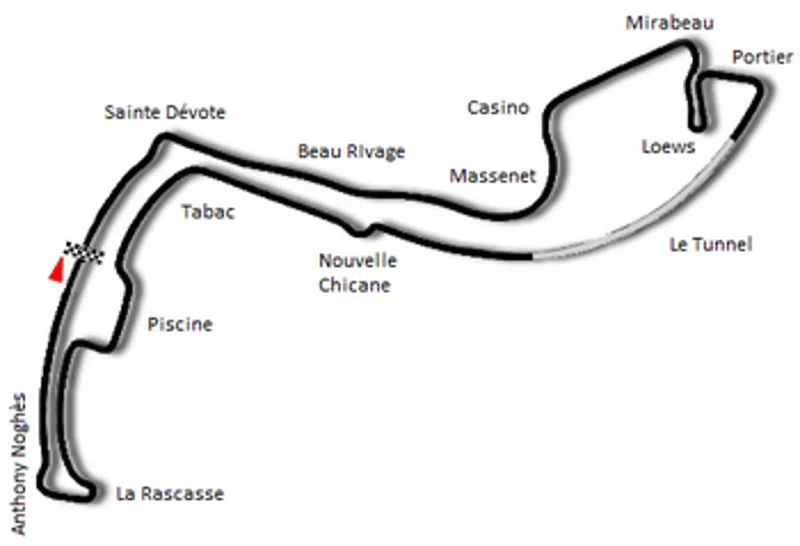
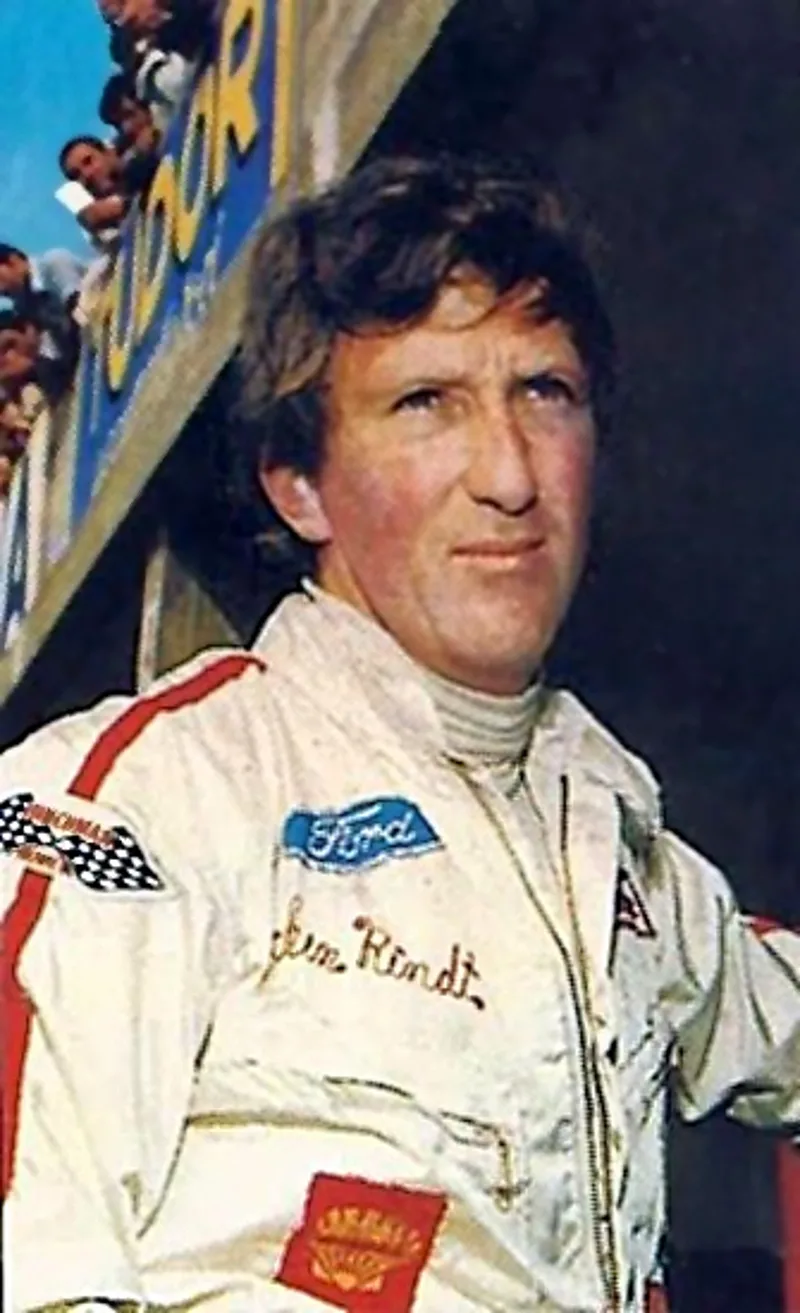
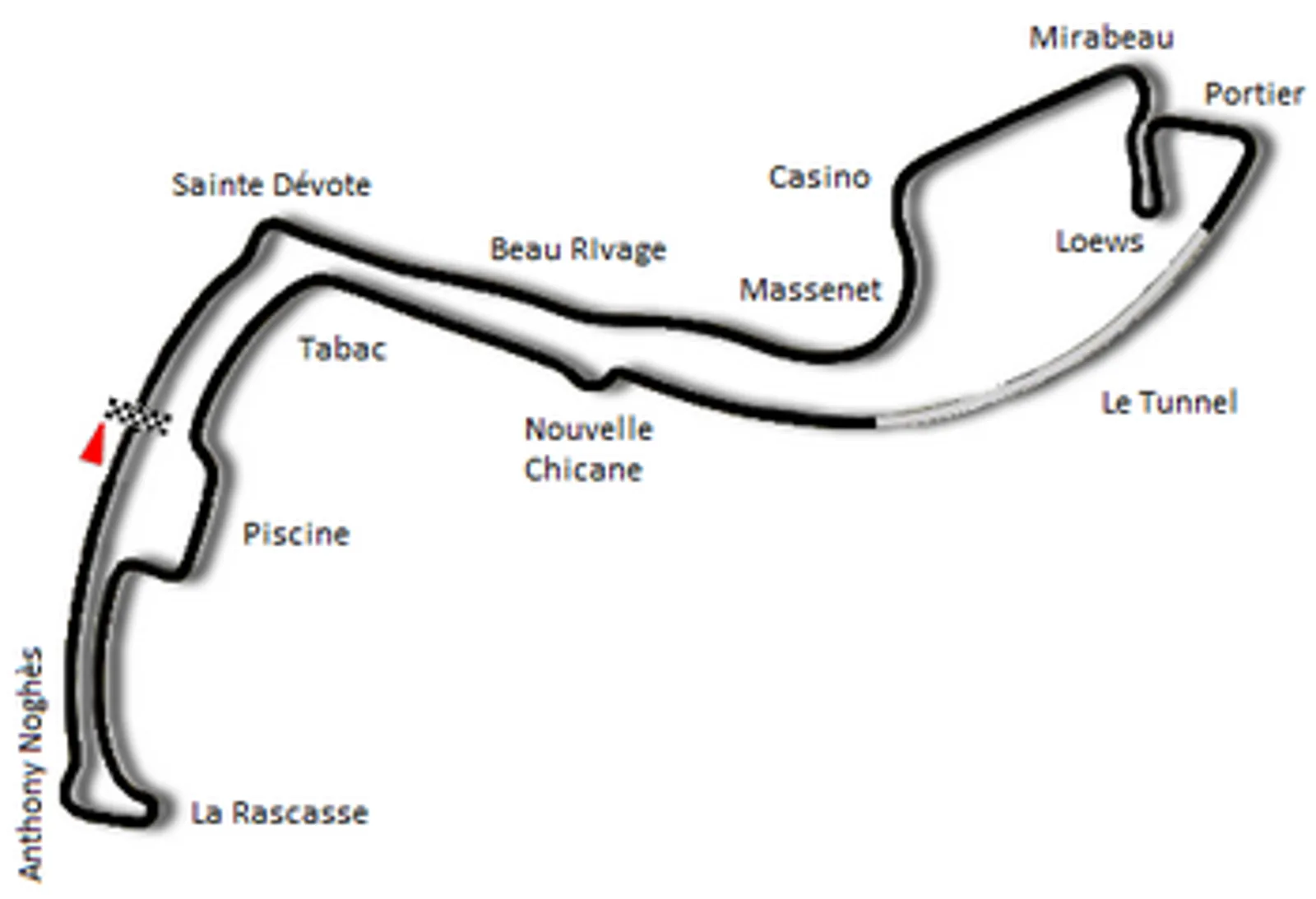
For 1970 the team introduced the Lotus 72, a wedge-shaped car with torsion bar suspension, hip-mounted radiators and inboard front brakes. It originally had suspension problems, but once those were solved, it showed its superiority. Jochen Rindt won Monaco in the old 49 after Jack Brabham crashed on the last lap, and then he led the championship until a fatal accident at Monza, caused by a broken brake shaft.
Rindt had refused to wear crotch straps, believing they slowed his exit in the event of fire. When the car hit the barrier head-on, he submarined forward and the lap belt inflicted fatal injuries. His death did not stop his title. A rookie, Emerson Fittipaldi, won the US Grand Prix that autumn, and Rindt became the only posthumous world champion.
The 72 was then pushed hard. In 1972 the team ran black and gold John Player Special livery, and Fittipaldi became world champion at 25, a record that stood as the youngest until 2005. Team Lotus also won the manufacturers' title for a sixth time in 1973. At the 1973 Spanish Grand Prix the team became the first constructor to achieve 50 Grand Prix victories.
How did the Lotus name survive Chapman's death?
Colin Chapman died of a heart attack in December 1982 at the age of 54, while working on an active suspension development programme. Hazel Chapman kept the operation going, with Peter Warr as manager, yet several Formula One designs struggled for a time.
Gerard Ducarouge built the Renault turbo 94T in five weeks in 1983, and Goodyear tyres in 1984 helped Elio de Angelis finish third in the title race. The team was third in the Constructors' Championship that year, which was a promising sign.
Ayrton Senna was hired when Nigel Mansell left at the end of 1984, and the 97T scored victories at Imola, Portugal and Belgium in the season that followed. The team lost third place to Williams on countback, even though it had won three races. In 1986 Senna took eight pole positions and won in Spain and Detroit in the 98T, and the team regained third, passing Ferrari.
Senna then moved to McLaren in 1988, and Nelson Piquet arrived from Williams. The 99T had active suspension and won at Monaco and Detroit, but the 100T in 1989 was a failure, and Piquet left for Benetton at the end of that year. The Lotus-Honda years taught a hard lesson: a Honda engine alone was not enough to win races.
Why did Team Lotus collapse in 1994?
After a 1990 deal for Lamborghini V12 engines, Derek Warwick scored a sixth place at the Canadian Grand Prix. Camel withdrew its sponsorship at the end of 1990, and the team's finances began to slide.
Former Team Lotus employees Peter Collins and Peter Wright relaunched the team in December 1990. Mika Hakkinen and Julian Bailey signed for 1991, and at San Marino they finished fifth and sixth. For 1992 the team used Ford HB V8 engines in the Lotus 107, designed by Chris Murphy. Hakkinen scored 11 points that year, and the team finished fifth in the Constructors' Championship.
In 1993 Herbert finished ninth in the Drivers' Championship with three fourth places. At Brazil he lost third to Michael Schumacher shortly before the end of the race, at Europe he made only one pit stop for tyres, and at Britain he finished close behind Riccardo Patrese's third-placed Benetton after retirements by Senna, Brundle and Hill. Alessandro Zanardi scored one sixth place at Brazil, the last race with both Lotus cars in the points.
Debts kept growing, and the team could not develop its cars. For 1994 it switched to Mugen Honda engines, but Herbert was punted off at the first corner of the Italian Grand Prix after qualifying fourth. The team applied for an Administration Order the following day. An Administration Order was made on 12 September 1994, and the company was compulsorily wound up by the Court on 13 February 1995, with an estimated deficiency of GBP 12,050,000.
| Period | Engines or context | Key result |
|---|---|---|
| 1963 | Lotus 25 | Clark wins seven races and the World Championship |
| 1965 | Lotus 33 and Lotus 38 | Clark wins six races for the title; Indianapolis 500 won by a lap |
| 1968 | Ford Cosworth DFV, Lotus 49 | Hill wins the World Championship; one of the first works teams to use sponsor livery |
| 1970 | Lotus 72 | Rindt wins the title posthumously |
| 1972 | Lotus 72 | Fittipaldi becomes world champion at 25 |
| 1973 | Lotus 72 | Manufacturers' title for a sixth time; 50th Grand Prix victory as a constructor |
| 1978 | Lotus 79 | Mario Andretti wins the World Championship |
| 97T era | Lotus 97T | Wins at Imola, Portugal and Belgium |
| 1986 | 98T | Senna wins in Spain and Detroit; eight poles; third in the Constructors' Championship |
| 1992 | Lotus 107 | Fifth in the Constructors' Championship |
| 1993 | Lotus 107 | Sixth in the Constructors' Championship with 12 points |
How did the Lotus name return in 2010?
In 2010 the Malaysian government backed a new entry, Lotus Racing, led by Tony Fernandes. The entry was admitted to the 2010 season, and it was renamed Team Lotus in September 2010 after Fernandes acquired the rights of the original Team Lotus from David Hunt.
A dispute followed. Group Lotus backed a rival entry, Lotus Renault GP, and the two claimed the name. On 27 May 2011 the High Court gave permission to Fernandes to use the Team Lotus name, while also finding that Group Lotus could race with the historic black and gold livery. For 2011 two entries carried the Lotus name at the same time.
In 2012 Lotus Renault GP was renamed Lotus F1 Team, while Fernandes' team was renamed Caterham F1 Team after he bought Caterham Cars. Lotus F1 Team competed for four seasons before reverting to Renault.
What is the legacy of Team Lotus?
Its record in the sport is hard to match. Its results in the 1960s and 1970s, including seven Constructors' Championships and six Drivers' Championships, were built on Chapman's relentless experimentation. It also won the Indianapolis 500 in the United States between 1962 and 1978.
Its story is a warning as well as a record. Many top drivers were seriously injured or killed in Lotus machinery, and Chapman faced criticism for the structural fragility of his designs. The team's collapse in 1994 showed how much its success depended on a strong financial base, and its name still carries the weight of that history.