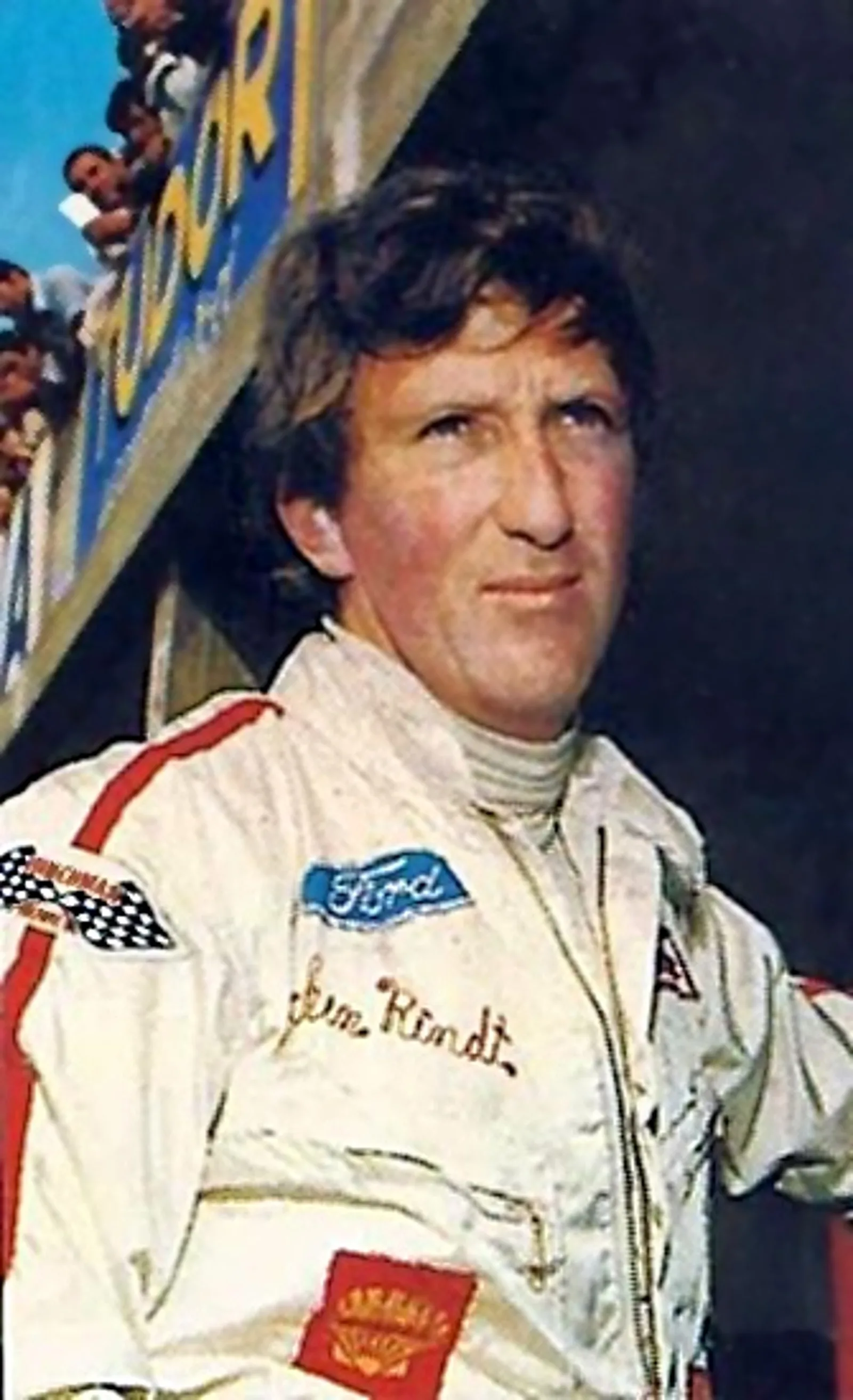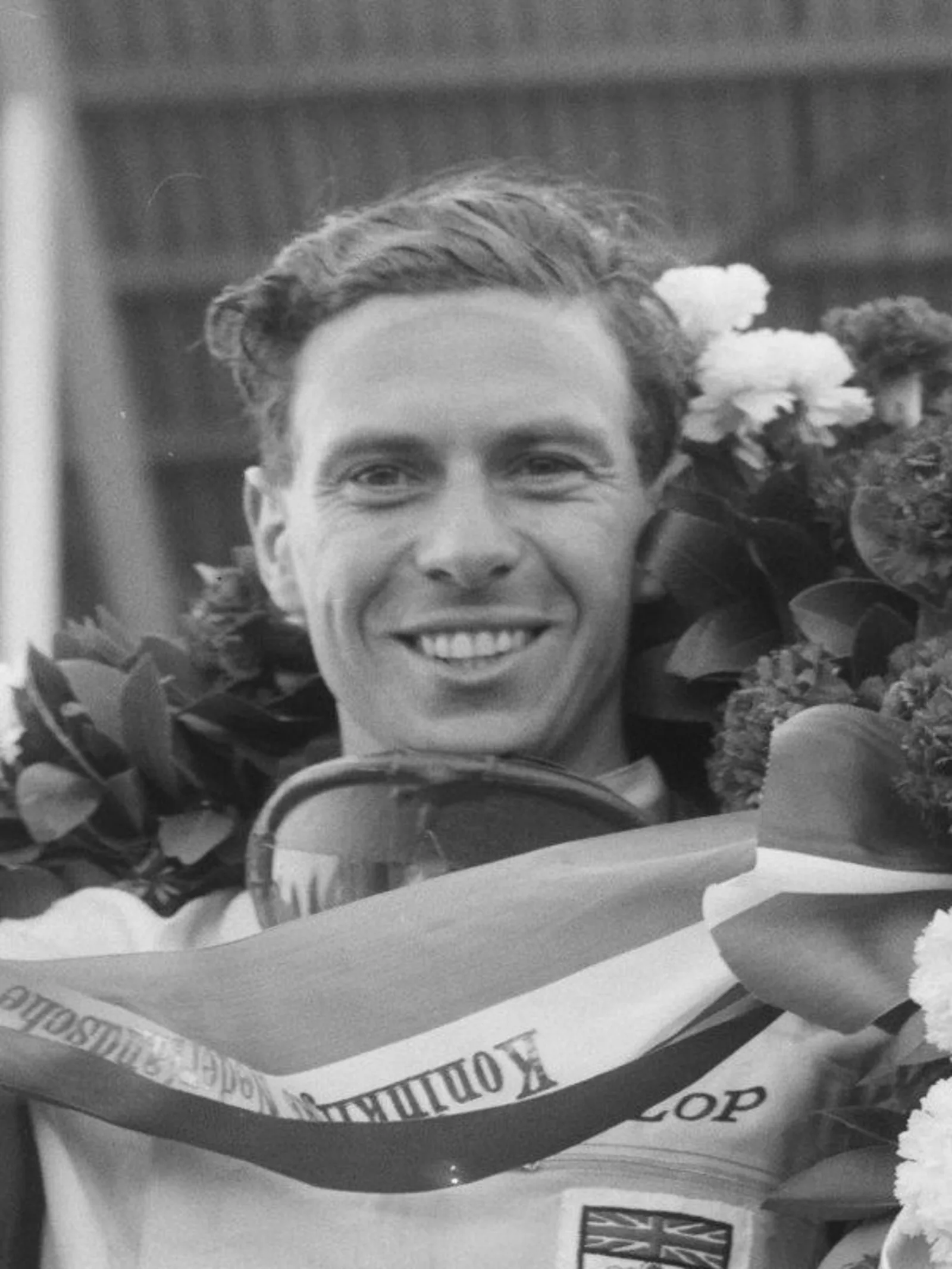
Two world titles with Lotus, a 1965 Indianapolis 500 win and Grand Prix records that remain among the best the sport has produced.
Jim Clark was a Scottish driver who won the Formula One world championship in 1963 and 1965 with Lotus. He also won the 1965 Indianapolis 500 and held the Grand Prix records for wins and pole positions when he was killed at Hockenheim in April 1968.
Jim Clark was one of the most gifted racing drivers of the 1960s, and he won two Formula One world championships with Lotus. To date, he is the only driver to win the Indianapolis 500 and a Formula One title in the same year.
Who was Jim Clark?
Jim Clark was a Scottish driver who raced in Formula One between 1960 and 1968. He won the world championship in 1963 and 1965, both with Lotus, and at his death held the record for most Grand Prix victories and pole positions.
His talent went well beyond single-seaters. He won in sports cars and touring cars, took part in a NASCAR race and a rally, and raced in American open-wheel events. Few drivers adapted as quickly to unfamiliar machinery, and he frequently posted competitive times with whatever setup he was handed, preferring that the car stay unchanged.
A driver who could make almost any car competitive, and whose percentage records still stand near the top of the sport.
How did Clark's racing career begin?
Clark began in local road rallies and hill climbs, although his parents disapproved. His first event was at Crimond in June 1956, driving a DKW Sonderklasse, and he was soon competing in a Sunbeam-Talbot of his own. By 1958 he was racing for the Border Reivers team, and he had won 18 races in national events.
The most important moment came on Boxing Day 1958 at Brands Hatch. Clark finished second to Colin Chapman in a Lotus Elite, and Chapman was impressed enough to offer him a seat in one of his Formula Junior machines. That invitation led directly to his first single-seater races and to the team that would make his name.
How did Clark's Formula One career start?
Clark made his Formula One debut at the 1960 Dutch Grand Prix on 6 June, standing in for John Surtees, who was busy with the Isle of Man TT. His car retired on lap 49 with a final drive failure. His next start, the Belgian Grand Prix at Spa-Francorchamps, brought fifth place and his first championship points.
He had already made a name in the lower formulae. In March 1960 he won the first race of the new Formula Junior category at Goodwood, and he went on to take that year's championship ahead of John Surtees. Strong performances in Formula Two then earned him a place in the Lotus Formula One team for the rest of the season.
What happened at the 1961 Italian Grand Prix?
The 1961 Italian Grand Prix at Monza is the most painful episode of Clark's early career. Wolfgang von Trips and Clark collided, and von Trips's Ferrari was thrown into the barrier and back into the crowd. Von Trips was killed along with fifteen spectators, and Clark was initially charged with manslaughter before the case was dropped.
How did Clark win his two world titles?
Clark's first title came in 1963, when he won seven of the ten races on the calendar in the Lotus 25. Seven wins was a then-record haul for a single season, and the same year gave Lotus its first Constructors' Championship.
That season included a famous win at Spa-Francorchamps in heavy rain. He carved through a crowded field and finished nearly five minutes clear of the runner-up, a winning margin that stands as the widest gap on record.
The 1964 season was a lesson in reliability. An engine oil leak cost him the championship, which went to John Surtees, and a tyre failure ended his Indianapolis attempt that year. He returned to the top in 1965. Driving the Lotus 33, he took six victories and won the championship again.
What happened at the 1963 Indianapolis 500?
Clark made his Indianapolis 500 debut in 1963 and finished second behind Parnelli Jones, earning Rookie of the Year honours. The result remains debated. Officials had warned that any car leaking oil would be black-flagged, and when Jones's car began to leak late in the race, officials were ready to act until the owner persuaded them the leak was minor.
Lotus founder Colin Chapman later argued that officials were biased against a British team with a rear-engined car. Neither Lotus nor engine supplier Ford protested the result. Jones had led 167 of the 200 laps, while Clark led 28, and a win gained through a disqualification would not sit well with spectators.
What made the 1965 Indianapolis 500 historic?
In 1965 Clark won the Indianapolis 500 in a Lotus 38, the first mid-engined car to win the race. He missed the Monaco Grand Prix to make the trip, and his result made him the only driver to win Indianapolis and the Formula One championship in the same year.
He led 190 of the 200 laps and averaged 240 km/h (over 150 mph), a then-record speed for the race. He was the first non-American winner of the Indianapolis 500 in 49 years.
How did the 3-litre era change Lotus's fortunes?
From 1966 the regulations moved to 3-litre engines, and Lotus lost much of its edge. The season opened with the Lotus 33 fitted with a 2-litre Coventry-Climax unit, and points did not arrive until the British Grand Prix. He also took third at the Dutch Grand Prix.
From the 1966 Italian Grand Prix, Lotus used the complicated BRM H16 engine in the Lotus 43, and the 1966 United States Grand Prix went to Clark in that car. He also finished second at Indianapolis in 1966, behind Graham Hill.
1967 brought a new partnership. Lotus switched to Ford-Cosworth power, and the Lotus 49 with its DFV engine scored its first win at Zandvoort in 1967, with Clark at the wheel. He added wins at the British, United States and Mexican Grands Prix, then won the 1968 South African Grand Prix, his last Formula One win.
How strong was Clark in the Tasman Series?
Clark raced in the Tasman Series, a championship for older Formula One cars that ran in Australasia during the southern summer. He won the series in 1965, 1967 and 1968, and he claimed more wins than any other driver in its history.
His last major victory came at Sandown International Raceway in Melbourne, where he won the 1968 Australian Grand Prix. Chris Amon's Ferrari 246T finished just 0.1 seconds behind after 55 laps, the closest finish in the history of that race.
Clark's success was not confined to single-seaters. The 1964 British touring car title also fell to him in a Lotus-Cortina, and he won every race he entered that year, and he also drove a Lotus Cortina in the RAC Rally of 1966.
How dominant were Clark's Grand Prix seasons?
Clark's records rest on percentages as much as totals. From 72 championship starts he took 33 pole positions and 25 wins, and he claimed eight Grand Chelems, meaning pole position, fastest lap, victory and leading every lap in the same race.
Eight Grand Chelems came within a 32-race span over three years, a run that few drivers have approached. In 1963 he led 71.47% of the laps in the season, a record that stood until Max Verstappen surpassed it in 2023. In 1963 and 1965 he also equalled Alberto Ascari's record of 100% of possible championship points.
In races he finished, Clark held the lead for 70.3% of the laps and covered 68.0% of the total distance at the front. Across his career he scored 274 championship points from 34 finishes, which is 47.2% of his starts.
How did Clark die at Hockenheim?
Clark died on 7 April 1968 at the Hockenheimring in West Germany. He had originally been pencilled in for a sports car race at Brands Hatch, but he chose a Formula Two event at Hockenheim, partly because of his contractual obligations with Firestone.
He had won the season opener in South Africa and was leading the world championship when he arrived in Germany. During the opening heat, on lap five, his Lotus 48 left the circuit and hit trees. He suffered a broken neck and a skull fracture, and he died before reaching hospital.
The cause was never definitively identified. Investigators concluded that a deflating rear tyre was the most likely explanation, and many contemporaries, including John Surtees and Jack Brabham, were adamant that Clark would not have made a driving error. Graham Hill went on to take the 1968 title and dedicated it to his late teammate.
What is Clark's legacy?
Clark is remembered for speed combined with smoothness, and for an ability to adapt to almost any machine. Jackie Stewart said Clark never bullied a car, and Juan Manuel Fangio went further, calling him the greatest driver ever. That reputation rests on a combination of precision and calm.
Many of his total records were later overtaken, because later drivers started more races and cars became more reliable. His percentage records, by contrast, remain unbeaten or near the top. In 2020 The Economist ranked him second among champion drivers, behind Fangio, and in 2024 Motor Sport named him the greatest racing driver of all time.
His honours include a place in the Indianapolis Motor Speedway Hall of Fame from 1988, the International Motorsports Hall of Fame from 1990 and the Scottish Sports Hall of Fame, which admitted him in 2002 as part of its first intake.
Memorials are spread across the places that shaped him. A life-size statue stands in Kilmany in Fife, the village of his birth. The Jim Clark Motorsport Museum is in Duns, and a memorial stone sits near the modern Hockenheim circuit. He is buried at Chirnside in Berwickshire, and the Jim Clark Rally is held in the region each year.
What do Clark's career numbers show?
Clark's career numbers combine championship success, Indianapolis glory and dominance in the races he started. The table gathers the headline figures in one place, from his birth and death dates to his title, race and series results. Several of the figures are rates rather than totals, which is why they stand out.
| Measure | Detail |
|---|---|
| Born | 4 March 1936, Kilmany House Farm, Fife |
| Died | 7 April 1968, Hockenheimring, West Germany |
| Grand Prix starts | 72 championship races |
| Grand Prix wins | 25 |
| Pole positions | 33 |
| Fastest laps | 28 |
| Grand Chelems | 8 |
| World titles | 1963 and 1965, both with Lotus |
| Indianapolis 500 | 1965 winner in a Lotus 38 |
| Tasman Series titles | 1965, 1967 and 1968 |
| Championship points | 274 |