A Kent circuit that began as a grassy hollow used by cyclists, became Britain's first post-war purpose-built track and hosted the British Grand Prix 12 times.
A Kent circuit at West Kingsdown, Brands Hatch offers a 2.433 mi (3.916 km) Grand Prix layout and a shorter Indy Circuit set in a natural amphitheatre. Its post-war racing history began in April 1950, and it staged the British Grand Prix 12 times before 1987.
Brands Hatch is a motor racing circuit at West Kingsdown in Kent, England. It began as a grassy hollow used by local cyclists, became England's first post-war circuit built for racing in 1950 and hosted the British Grand Prix 12 times between 1964 and 1986. It is owned and operated today by Jonathan Palmer's MotorSport Vision organisation.
What layouts does Brands Hatch use?
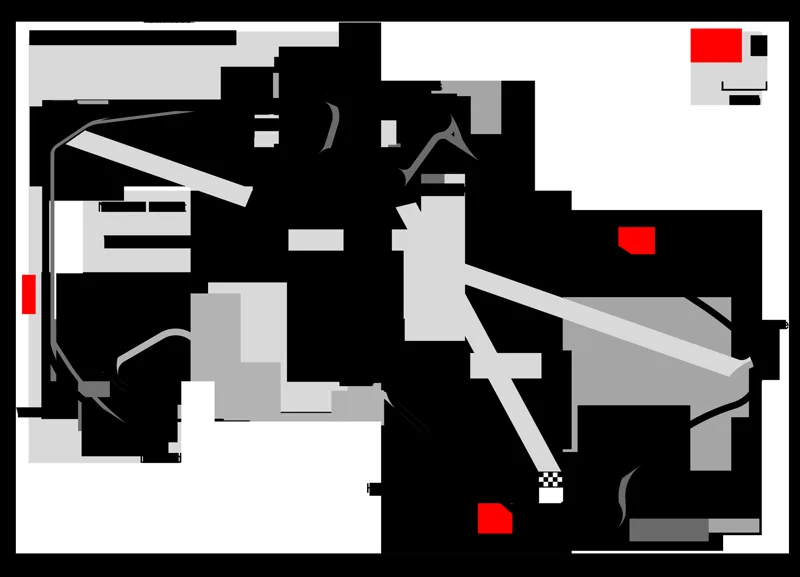
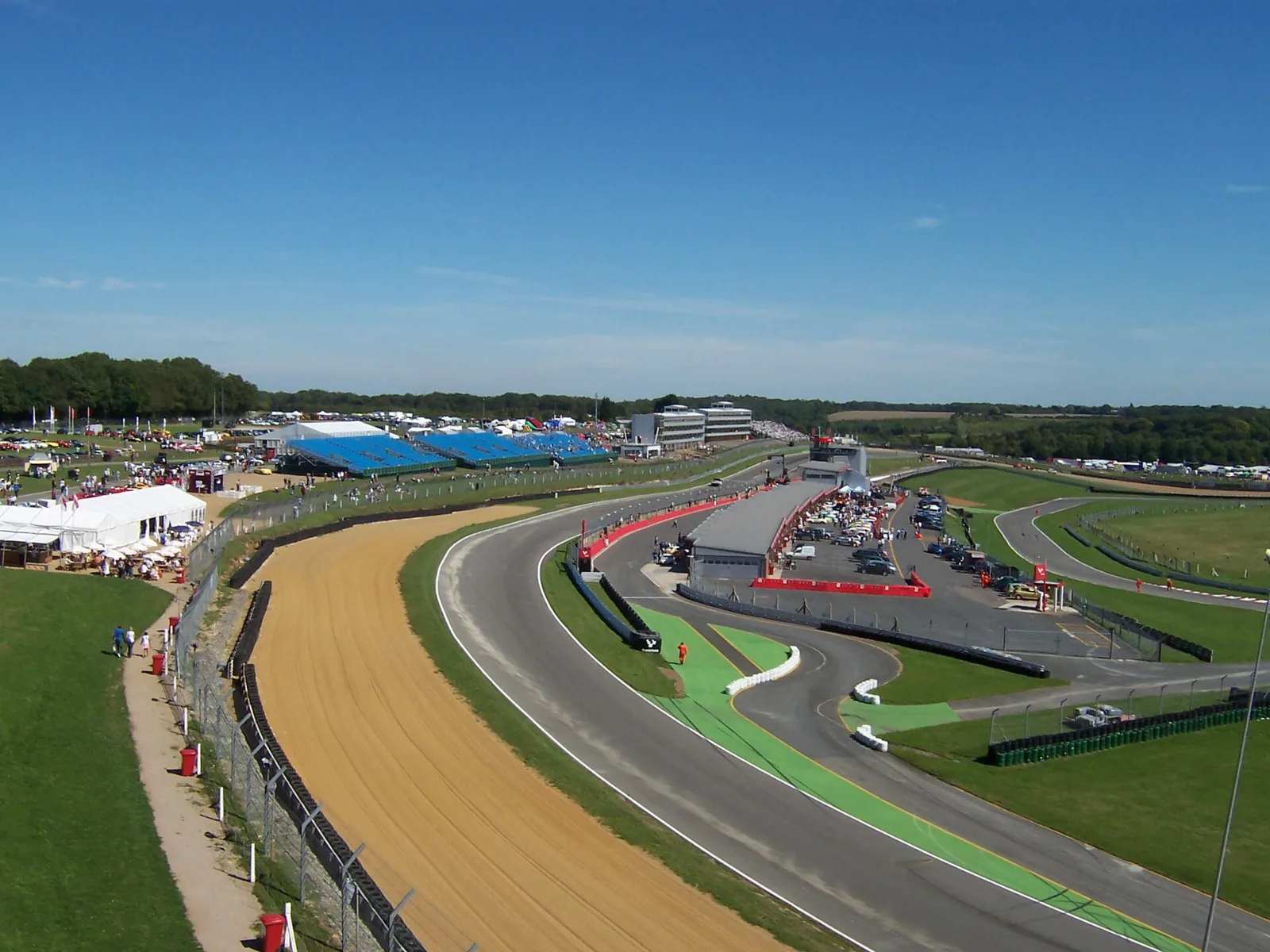
The circuit has two main configurations. The Indy Circuit is 1.198 mi (1.928 km) long and lies entirely within a natural amphitheatre, so spectators can see almost all of it from almost anywhere. The Grand Prix layout is 2.433 mi (3.916 km) long and has staged several Formula One races, although noise limits mean only a few meetings a year use the full loop.
The Grand Prix loop begins on the Brabham Straight and drops into Paddock Hill Bend, a right-hander with gradients of 8%. It then climbs through Druids, a hairpin reached after an uphill braking zone at Hailwood Hill. The lap continues through Graham Hill Bend, Cooper Straight, Surtees, Pilgrim's Drop and Hawthorn Hill, where the most significant changes in elevation occur, before the woodland section and the blind Sheene curve.
A separate British Rallycross Circuit, designed by the four-times British Rallycross Champion Trevor Hopkins, was completed around 1981 and runs for about 0.9 mi (1.4 km). It shares parts of the main track, including the Druids hairpin and the approach to Paddock Hill Bend.
From a farm hollow used by cyclists to a Formula One venue, Brands Hatch built its reputation on racing through an amphitheatre.
How did the Brands Hatch site begin?
Brands Hatch was first a natural grassy hollow shaped like an amphitheatre. The fields of Brands Farm were used by Gravesend cyclists under Ron Argent, who had the farmer and landowner Harry White's permission. The first race on the site was held in 1926, a 4 mi (6.4 km) contest between cyclists and cross-country runners.
Motorcyclists followed and laid out a three-quarter-mile anti-clockwise track in the valley. Four local motorcycling clubs joined forces in 1932 and held their first meeting that March. After the Second World War, when the site had been used as a military vehicle park and damaged by bombing, the motorcycle racing resumed. In 1947 the managing director Joe Francis persuaded the BBC to televise a grass track meeting, the first motorcycle event shown on British television.
How did Brands Hatch become a motor racing circuit?
The 500 Club persuaded Joe Francis in 1950 that the future lay in car and motorcycle road racing, and the club and the owners invested 17,000 pounds in a tarmac surface. The opening meeting took place on 16 April 1950, setting up Brands Hatch as England's first post-war circuit designed for racing. The RAC had approved it after a demonstration in February, and a young Stirling Moss was among the drivers involved.
The Half-Litre Car Club organised the first race meeting, which drew 7,000 spectators to see 500cc single-seaters race across ten events. Don Parker won the first race. Moss was the standout driver that summer, winning all five of the races he entered at the June meeting, and the tarmac circuit was lengthened to 1.000 mi (1.609 km) and ran anticlockwise.
The site grew steadily through the early 1950s. Les Leston raised the lap record to 71.15 mph (114.50 km/h) in 1952, and raised spectator banks were introduced in 1953. That year Parker won the Autosport Formula 3 Championship, taking seven races at Brands, and the Daily Telegraph International drew around 50,000 people.
How did the circuit change in the 1950s?
In 1953 and 1954 the track gained Druids Bend, a lengthened circuit and a pit lane, and the racing direction was reversed to clockwise. The change created Paddock Hill Bend as a fast, sweeping downhill right-hander. A quarter-mile extension took the cars up the other side of the valley to Druids, and the circuit reached 1.240 mi (1.996 km).
The transformation brought bigger crowds. The Boxing Day meeting of 1954 drew 15,000 spectators, and in 1956 the venue gained a telephone system linking race control, the grandstand and the marshals' posts. The only permanent grandstand at a British motor sport circuit had been bought second-hand from the defunct Northolt pony-trotting stadium, and a hospital with an operating theatre also opened on site.
The first Formula One cars raced at Brands on 14 October 1956. Archie Scott Brown won a 15-lap race at 75.66 mph (121.76 km/h), setting a new lap record, although the Boxing Day meeting that year was cancelled because of the Suez Crisis. Jim Clark made his Brands debut at the Boxing Day meeting in 1957, finishing second behind Colin Chapman.
What was the 1960 extension?
In January 1960 Kent County Council gave planning permission to double the track's length, offering drivers a choice of long and short circuits. The new 2.650 mi (4.265 km) layout kept the original circuit and added a longer section, with South Bank becoming a long, uphill sweep that made the approach to Clearways much faster.
The new track debuted in August 1960 with the Silver City Trophy, a non-championship Formula One race. Jack Brabham won it by 4.4 seconds from Graham Hill, after Jim Clark's gearbox failed having led 22 of the 50 laps. Clark and Brabham shared the fastest lap at 1min 40.6sec, which was 94.82 mph (152.60 km/h).
The track was then sold to Grovewood Securities, and John Webb took charge of it through Motor Circuit Developments. The company organised the Silver City Trophy again in 1961, when Stirling Moss won over 76 laps of the Grand Prix circuit ahead of Jim Clark and Tony Brooks.
When did Brands Hatch host the British Grand Prix?
The British Grand Prix arrived in Kent in 1964 and alternated with Silverstone until 1986. The table below records the winners of the British and European Grands Prix held at Brands Hatch, with the winning speeds shown where they are known, so readers can see how the cars pushed the average speed up over two decades.
| Year | Race | Winner | Winning speed |
|---|---|---|---|
| 1964 | British Grand Prix | Jim Clark | 94.14 mph (151.50 km/h) race average |
| 1966 | British Grand Prix | Jack Brabham | 95.49 mph (153.68 km/h) |
| 1968 | British Grand Prix | Jo Siffert | Won in a Lotus 49B delivered that morning |
| 1970 | British Grand Prix | Jochen Rindt | 108.69 mph (174.92 km/h) |
| 1974 | British Grand Prix | Jody Scheckter | 115.73 mph (186.25 km/h) |
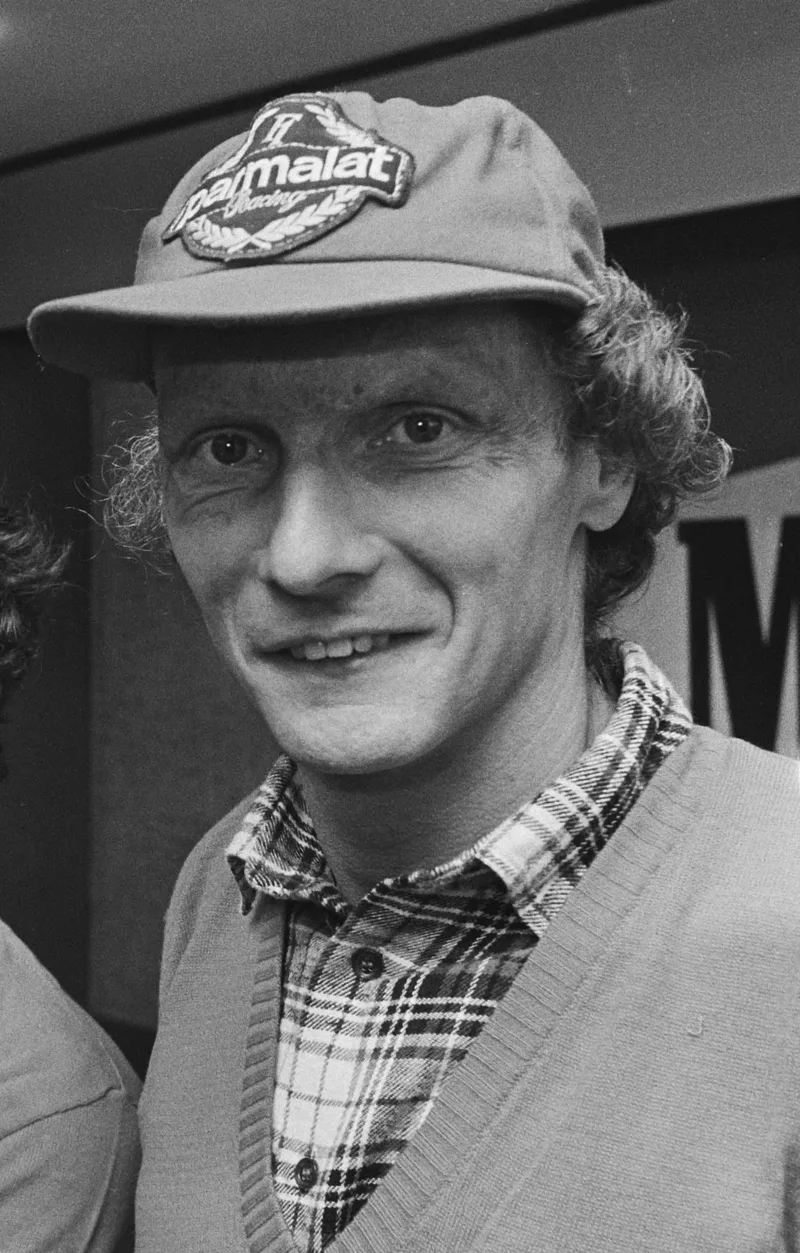
| 1982 | British Grand Prix | Niki Lauda | 124.650 mph (200.605 km/h) |
| 1983 | Grand Prix d'Europe | Nelson Piquet | 124.411 mph (200.220 km/h) |
| 1984 | British Grand Prix | Niki Lauda | 124.382 mph (200.173 km/h) |
| 1985 | Grand Prix d'Europe | Nigel Mansell | 125.795 mph (202.447 km/h) |
| 1986 | British Grand Prix | Nigel Mansell | 129.007 mph (207.617 km/h) |
The 1966 British Grand Prix was won by the works Brabham-Repco of Jack Brabham, ahead of Denny Hulme, and the 212-mile race took 2hrs 13mins 13.4secs. The 1986 race was the last British Grand Prix at Brands, and Piquet took pole at 140.53 mph (226.16 km/h), the quickest lap ever set there up to that point.
Which drivers made the biggest mark at Brands Hatch?
Jo Siffert's 1968 victory came in a Lotus 49B that was completed in the paddock and entered by the private Walker-Durlacher team, a remarkable result for a private entrant. Jochen Rindt won the 1970 race by less than 33 seconds, and Jody Scheckter won the 1974 race in a Tyrrell.
Tom Pryce won the 1975 Race of Champions for the UOP Shadow team. He closed on Jody Scheckter's Tyrrell and passed it when Scheckter's engine failed. That was Pryce's first and only Formula One win, and he died two years later at the 1977 South African Grand Prix.
Ayrton Senna made his European car racing debut at Brands on 1 March 1981, finishing fifth in a Formula Ford 1600 race. A fortnight later, in heavy rain, he won by 9.4 seconds in a Van Diemen RF81, his first win.
What were the most serious incidents at Brands Hatch?
Motor racing at Brands has had fatal moments. George Reid Crossman was killed during the final race of the 1965 Formula 3 season, and Tony Flory and Stuart Duncan also died in the mid-1960s. In October 1971 Jo Siffert was killed at the Rothmans World Championship Victory Race when his BRM lost control on lap 15 and hit the bank at Hawthorn Hill. That accident led to a three-year programme of safety modifications before the 1972 season.
The 1986 British Grand Prix produced a first-lap crash at Paddock Bend that ended Jacques Laffite's career. He broke both legs in a head-on collision with the wall, and the race stoppage gave Nigel Mansell the chance to take the restart in the spare Williams. In 1988 Johnny Herbert suffered major leg fractures in a crash during the Formula 3000 race.
Which other series have raced at Brands Hatch?
Brands hosted an unusually wide range of racing. The Race of Champions, sponsored by Daily Mail, ran as a non-championship event. Formula Ford also arrived in 1967, when the first race on 7 July was won by Roy Allan in a Lotus 51. Formula 5000 started at Brands at Easter 1969, when Peter Gethin won the first race in a McLaren M10A with Chevrolet power.
Sports cars were a constant feature. The Six Hours endurance race was run from 1962 and became a round of the World Championship of Makes, with Jacky Ickx and Jochen Mass winning the 1976 edition in a Porsche 935/2 Turbo after a deluge halted the race for an hour. The BOAC 500 was won in 1967 by Phil Hill and Mike Spence in a 7-litre Chaparral.
Touring cars and other categories followed later. The World Touring Car Championship visited in 2006, when SEAT took a 1-2-3, and the DTM first visited on 2 July 2006, with 21,500 fans watching Mattias Ekstrom win. The British Superbike Championship and the World Superbike Championship have also used the circuit many times, and in 1999 a record crowd of about 100,000 attended the Superbike round, drawn largely by Carl Fogarty's following.
How did ownership change over the decades?
Motor Circuit Developments owned the circuit by 1971, and the company's single-seater formulas included Formula Atlantic. In October 1985 John Foulston, chairman of Atlantic Computers, secured the future of Brands Hatch with a 5.25m pound bid, and the Brands Hatch Leisure Group followed.
In December 1999 Octagon agreed to buy the group, including Brands Hatch, Cadwell Park, Oulton Park and Snetterton, for 120 million pounds. MotorSport Vision completed its purchase of Brands and the other Octagon venues in January 2004, and Jonathan Palmer then began a programme of improvements for spectators and competitors.
Why does Brands Hatch have a curfew?
The circuit has a curfew of 18:30 because a housing estate lies close to the Clearways bend. Engines may not fire before 08:30 and must be shut off by 18:30. Despite this, the track holds race meetings almost every weekend in the season, from small club series to major international events that attract up to 50,000 spectators.
Early autumn evenings still allow racing in darkness, and the Britcar 'Into the Night' event has become a regular fixture.
What are the lap records at Brands Hatch?
Nelson Piquet's Williams FW11 set an unofficial all-time record of 1:06.961 in the second qualifying session for the 1986 British Grand Prix. Mansell's Williams FW11 set the official Grand Prix-layout mark, 1:09.593, at the final Formula One race held at the circuit, in July 1986.
The lap record for the current Grand Prix layout is 1:12.276, set by Adam Carroll in an A1GP car at the 2009 round. On the Indy Circuit the record is 0:38.032, set by Scott Mansell in a Benetton B197 during the 2004 EuroBOSS season. On two wheels the Grand Prix record is 1:24.066, set by Kyle Ryde on a Ducati Panigale V4 R at the July 2026 British Superbike round.
What events are held at Brands Hatch today?
The current calendar runs from January to November. It includes the Winter Stages rally in January, TCR UK and GT World Challenge Europe in the spring, and the British Touring Car Championship in May and October. Brands Britannia takes place in May and August, the Formula Ford Festival in late October, and the British GT Championship in late September.
Looking ahead, the circuit is listed for a Formula E London ePrix in 2027. Its calendar also includes the Revolve24 Circuit Challenge, an ultra-distance cycling event held there since 2015 with races of 24, 12 and 6 hours.