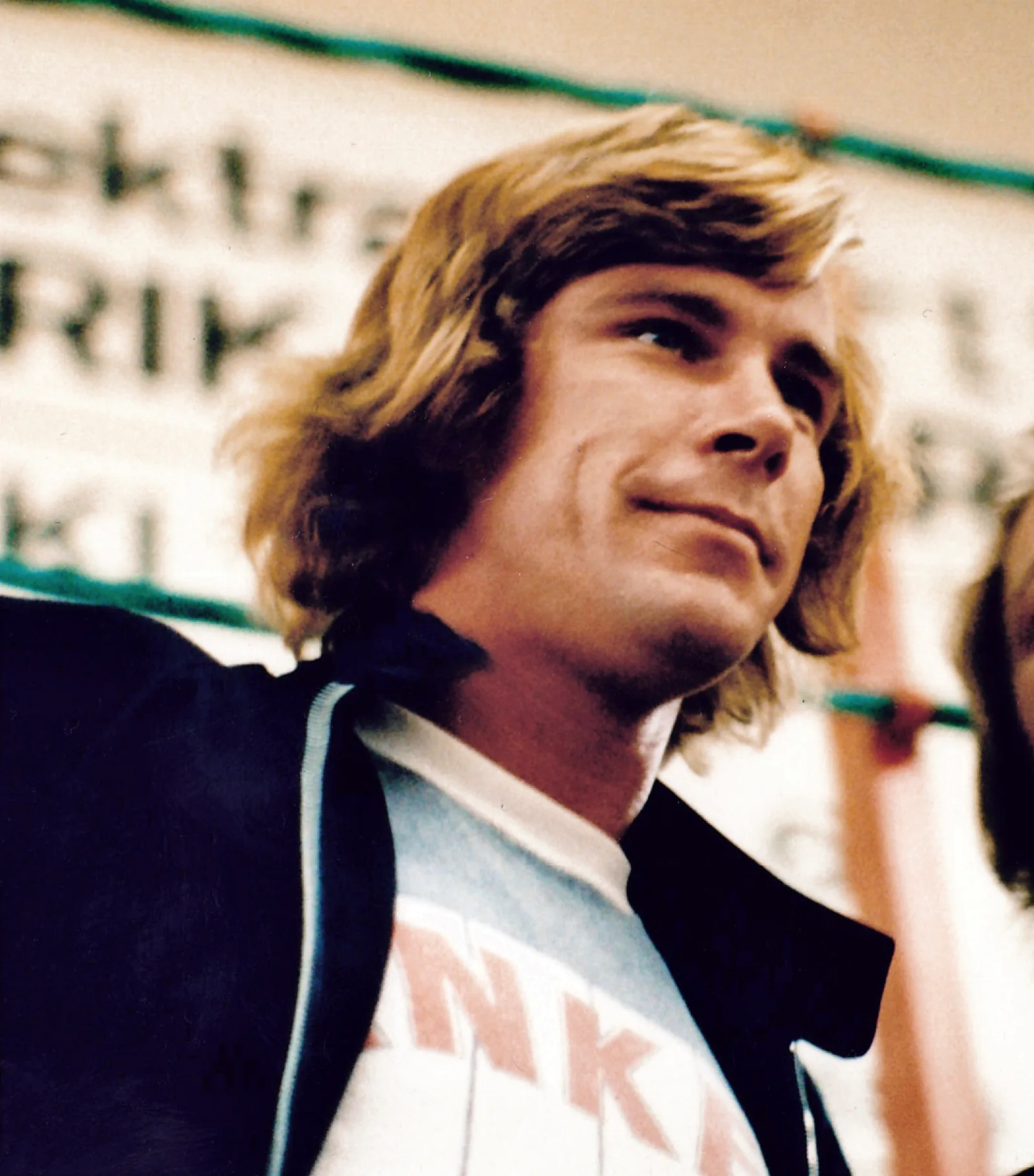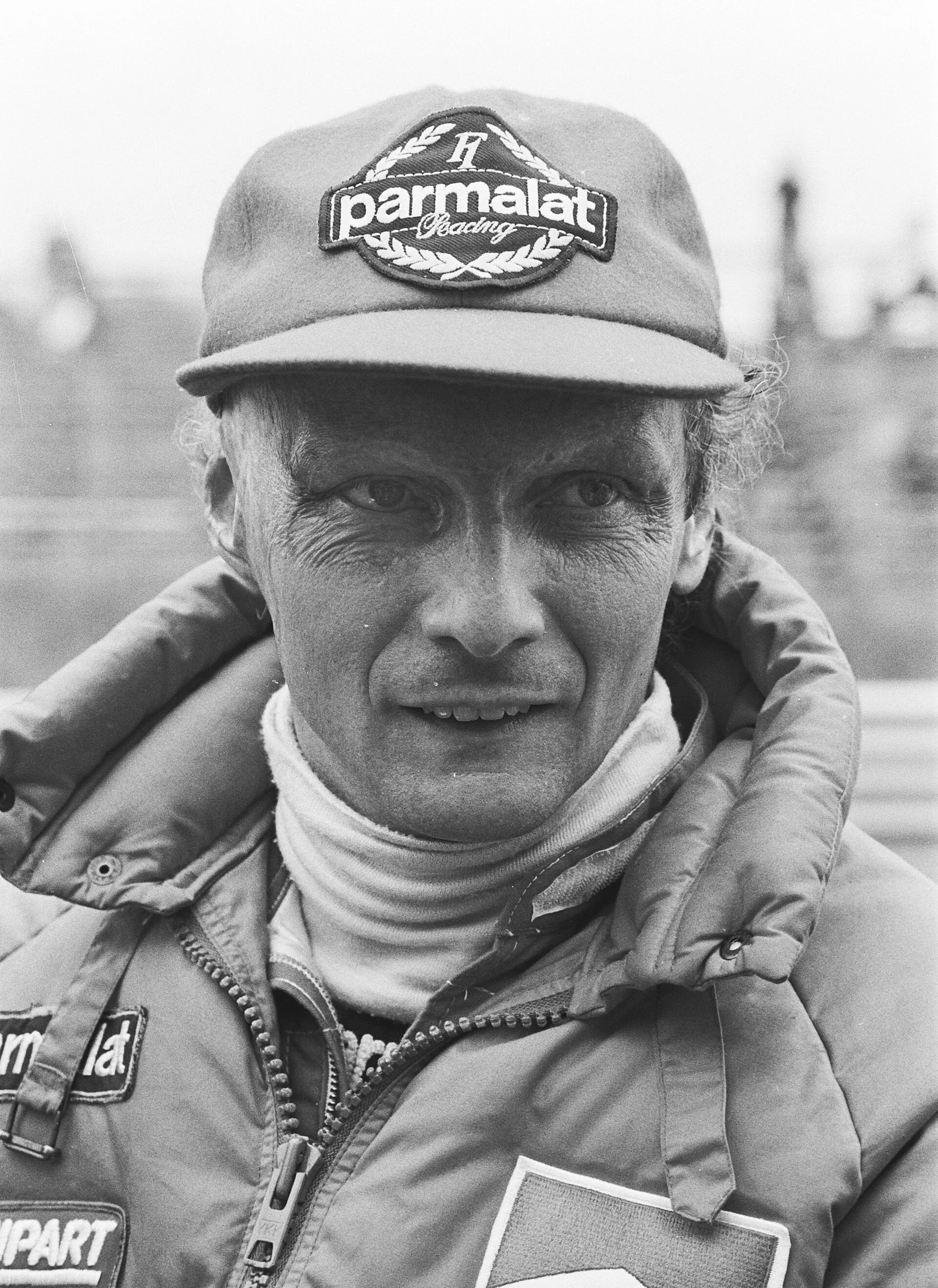
Three world titles with Ferrari and McLaren, a near-fatal crash at the 1976 German Grand Prix and a comeback six weeks later.
Niki Lauda was an Austrian racing driver who won three Formula One world titles for Ferrari and McLaren. He raced in Formula One from 1971 to 1979 and from 1982 to 1985, winning 25 Grands Prix, and he returned to racing six weeks after a severe crash at the 1976 German Grand Prix.
Niki Lauda was an Austrian driver who won three world championships and returned to the cockpit after life-threatening burns. He competed at the top level between 1971 and 1979, then again between 1982 and 1985, with spells at Ferrari, Brabham and McLaren, and later senior roles at Jaguar and Mercedes.
Born in Vienna in 1949, Lauda pushed past family opposition and borrowed money to reach the top category. His 1976 accident at the Nurburgring and his comeback six weeks later defined his reputation, while his work in aviation and team management extended his influence far beyond the driver's seat.
How did Niki Lauda get into Formula One?
Lauda came from a Viennese family in the paper manufacturing business, and his relatives did not approve of his interest in motor racing. He started in a Mini, moved into Formula Vee and then drove private Porsche and Chevron sports cars. When his career stalled, he took a 30,000 pound bank loan, secured against a life insurance policy, and bought a place in the March team's Formula Two squad in 1971.
He was quickly promoted to the March Formula One team and made his debut at the 1971 Austrian Grand Prix. The team's 1972 season was a disaster, and at Mosport Park in the Canadian round both March cars were thrown out of the result, with the exclusions falling within three laps of each other. Lauda still stood out that year, winning the British Formula Two Championship, and his speed impressed March principal Robin Herd.
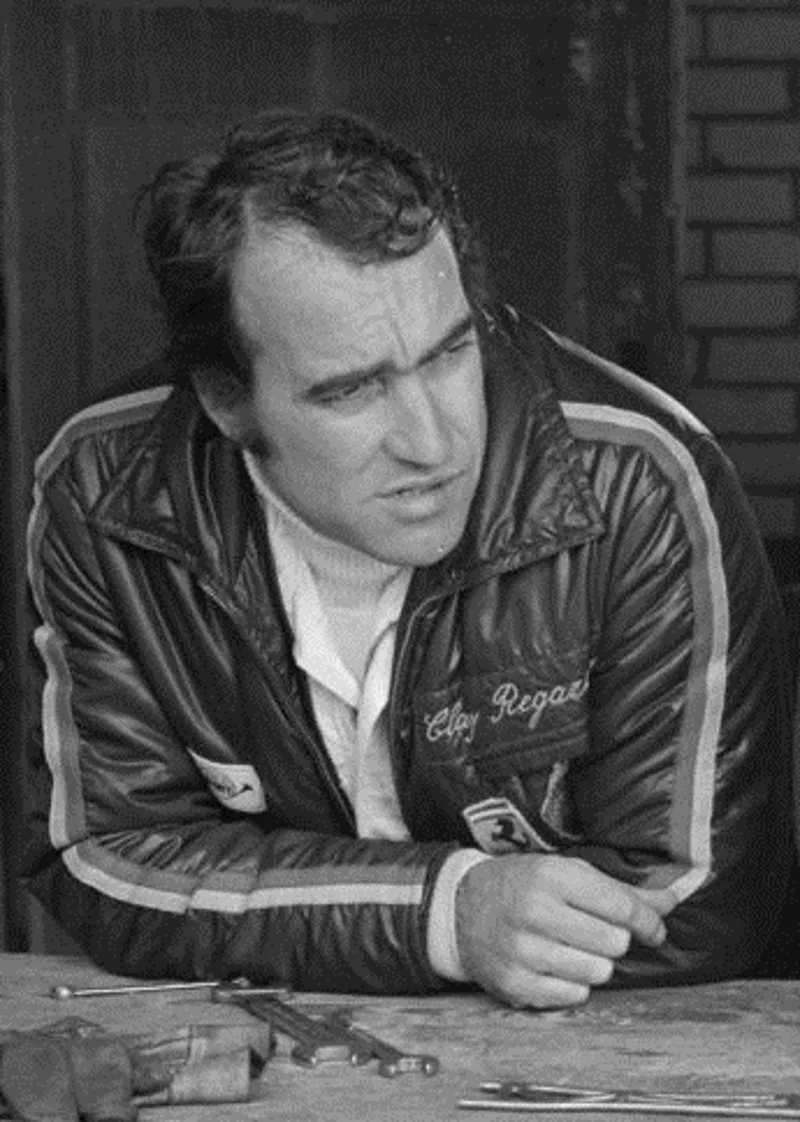
In 1973 he borrowed again, this time to buy a seat with the BRM team. The BRM was fast and easy to drive but unreliable, and Lauda ran third at Monaco before a gearbox failure ended his race. That result caught the attention of Enzo Ferrari, who was told by BRM teammate Clay Regazzoni that Lauda was a driver to watch.
Back in the cockpit six weeks after the Nurburgring fire, he went on to win a third world title.
Why did Ferrari sign Lauda in 1974?
Ferrari signed Lauda for 1974 after Regazzoni spoke highly of him, and the contract paid enough to clear his debts. Luca di Montezemolo was rebuilding the Italian team at the time, and Lauda repaid the faith with a second-place finish on debut at the Argentine Grand Prix. He won his first Grand Prix at the Spanish Grand Prix, three races later.
That Spanish win was Ferrari's first since 1972. Lauda took six consecutive pole positions during the season, but inexperience and mechanical unreliability held him to one more victory, at the Dutch Grand Prix. He ended the table in fourth place and put a great deal of effort into testing and improving the car.
How did Lauda win his first world title in 1975?
Lauda won the 1975 world title with the Ferrari 312T after a slow start to the season. He won four of the next five races, and third place at the Italian Grand Prix at Monza confirmed the championship. The title helped Ferrari take its first Constructors' Championship in 11 years, and he finished the year with a win at Watkins Glen.
The early part of 1975 had been frustrating, with no better than fifth in the first four rounds. Lauda then became the first driver to go round the Nurburgring Nordschleife in under seven minutes, a remarkable time on a circuit that was two miles longer than the version used today.
At the German Grand Prix that year he led for nine laps before a puncture cost him the lead. He still climbed to third place after a damaged front wing and a destroyed tyre were repaired in the pits. He was known for handing his trophies to the local garage that serviced his car in exchange for a wash and a service.
What happened at the 1976 German Grand Prix?
On 1 August 1976 Lauda's Ferrari left the track on the second lap of the Nurburgring, hit an embankment and burst into flames. He was trapped in the wreckage and badly burned on the head and hands. A week before the race he had urged drivers to boycott it over the circuit's safety arrangements, but a majority voted to race.
The crash happened at the Bergwerk, a fast left-hand kink. The car also made contact with Brett Lunger's Surtees. Unlike Lunger, who was not trapped, Lauda was stuck in the burning car until Arturo Merzario released his seatbelt and pulled him out. Guy Edwards and Harald Ertl also reached the scene.
The helmet Lauda wore had been modified and did not fit properly. After the impact its foam compressed and the helmet slid off, leaving his face exposed to the fire. Hot toxic fumes he breathed in also harmed his lungs. He was conscious and standing at first, but later fell into a coma, and in hospital he was given the last rites.
He lost most of his right ear, the hair from that side of his scalp, his eyebrows and his eyelids. Surgery was restricted to restoring the eyelids and their function. For the rest of his life he wore a cap to cover the scarring, and sponsors paid to advertise on it. The corner where he crashed was named Lauda Links, or Lauda Left.
Ferrari replaced him with Carlos Reutemann and stayed away from the Austrian Grand Prix as a protest against what it saw as what it regarded as favouritism toward James Hunt in the Spanish and British rounds. Lauda had won four of the first six races that season, so his absence reshaped the title fight.
How soon did Lauda return after the crash?
Lauda missed only two races before returning. He appeared at the Monza press conference with fresh burns still bandaged, and six weeks after the crash he finished fourth at the Italian Grand Prix. By his own account he was terrified throughout that race, yet he was back in contention for the championship.
He later said he had been absolutely petrified. Nigel Roebuck, the Formula One journalist, recalled seeing him in the pits peeling blood-soaked bandages from his scarred scalp. He wore a specially adapted crash helmet to cope with the discomfort, and his return showed a single-mindedness that came to define his career.
Why was the 1976 title decided by one point?
The 1976 title was settled at the Japanese Grand Prix, where Hunt finished third and beat Lauda by a single point. Lauda had qualified third in torrential rain but retired after two laps, deciding that the conditions were too dangerous to continue. Hunt had entered the race three points behind.
Hunt had closed the gap while Lauda was out, with wins in Canada and the United States. He and Lauda were friends away from the track, and their on-track rivalry, though intense, was regarded as clean. Hunt led much of the Japanese race, but blistered tyres and a pit stop cost him places before he recovered to third.
Lauda later said the rain made the car unsafe to continue, and that his watering eyes made matters worse. The fire had damaged his tear ducts, so he could not blink normally.
Why did Lauda leave Ferrari after 1977?
Lauda won his second title in 1977 through consistency rather than outright pace, clinching it at the United States Grand Prix. He had never warmed to Carlos Reutemann, the driver who replaced him after the crash, and he felt Ferrari had let him down. He had announced that he would leave at the end of the season, but he left early.
Lauda said Reutemann's arrival added pressure rather than taking it away. The final straw was Ferrari's plan to add the little-known Gilles Villeneuve as a third entry at the Canadian round. He recorded his experiences in My Years With Ferrari, published in 1978.
Why did Lauda quit Formula One in 1979?
Lauda's Brabham years, from 1978 to 1979, brought two unsuccessful seasons. He retired the car in nine of 14 races in 1978 and endured poor pace in 1979. In late September 1979, during practice for the Canadian Grand Prix, he told team principal Bernie Ecclestone he wanted to retire immediately.
His one Brabham victory came in Sweden in 1978, in the BT46B fan car. Rival teams protested its legality, but Ecclestone did not want a protracted fight over the car, so the Swedish win stood. Brabham never used the fan car in Formula One again, and Lauda's other results included second places at Monaco and in Great Britain.
In 1979 he also found success away from the factory team. Driving for Ron Dennis's Project Four squad in the BMW M1 Procar Championship, he won three races and took the series title. Decades later he won a Procar exhibition race before the 2008 German Grand Prix.
How did Lauda win his third title in 1984?
Lauda returned to McLaren in 1982 for a reported $3 million salary and won the Long Beach Grand Prix in his third race back. He won his third championship in 1984, beating teammate Alain Prost by half a point. The margin came from half points awarded for the shortened Monaco Grand Prix.
His title was decided in Portugal, where he started 11th while Prost, by contrast, began from the front row. Lauda drove a calculating race, passing car after car and setting the fastest lap, and he finished second behind Prost. That result gave him enough points to take the championship.
The 1984 season was dominated by the McLaren pair, who won 12 of the 16 races between them. Lauda won five and Prost won seven. Lauda rarely matched his teammate in qualifying, but his Austrian Grand Prix win that year remains the only home victory by an Austrian driver to date.
Why did Lauda retire after 1985?
Lauda retired at the end of the 1985 season, having announced his decision at the Austrian Grand Prix. The year was hard, with eleven retirements from 14 starts, and his last win came at the Dutch Grand Prix. His final race in Adelaide ended with brake failure while he was leading.
He missed the Belgian Grand Prix after breaking his wrist in practice, and John Watson stood in for him at the European Grand Prix at Brands Hatch. He took fourth at San Marino and fifth in Germany. At the Dutch race he fended off Prost's late charge to win, the last Grand Prix victory of his career.
Adelaide hosted the inaugural Australian Grand Prix. Lauda qualified 16th, drove a steady race and led by lap 53. On lap 57, close to the far end of the Brabham Straight, the ceramic brakes on his McLaren gave out on the street circuit, and he crashed. Keke Rosberg, who won that race, took his McLaren seat for 1986.
What career figures did Lauda achieve?
Lauda raced in Formula One for 13 seasons and won 25 Grands Prix. He also took 24 pole positions and 24 fastest laps, and he finished on the podium 54 times, the most at the time of his retirement. Those figures sit alongside three world titles and a record seven years between his second and third titles.
| Season | Team | Milestone |
|---|---|---|
| 1971 | March | Formula One debut at the Austrian Grand Prix |
| 1974 | Ferrari | Debut with second place in Argentina; first win in Spain |
| 1975 | Ferrari | First world title; four wins in five races after a slow start |
| 1976 | Ferrari | Crash at the Nurburgring; comeback at Monza; title lost by one point |
| 1977 | Ferrari | Second world title, clinched at the United States Grand Prix |
| 1978 | Brabham | Fan car wins the Swedish Grand Prix |
| 1979 | Brabham and Project Four | Retires from Brabham; BMW M1 Procar Championship title |
| 1982 | McLaren | Long Beach win in the third race back |
| 1984 | McLaren | Third world title by half a point over Alain Prost |
| 1985 | McLaren | Last Grand Prix win at the Dutch Grand Prix; final race in Adelaide |
What did Lauda do after racing?
Lauda built a second career in aviation, founding and running airlines including Lauda Air from 1985 to 1999 and Niki from 2003 to 2011. He also returned to motorsport in senior roles, first as a consultant at Ferrari in 1993, then as team principal of Jaguar and, from 2012, as chairman of Mercedes.
At Jaguar he led the team from mid-2001 until the end of 2002, when it made him redundant along with 70 other key figures. At Mercedes he took part in the negotiations that brought Lewis Hamilton to the squad in 2013, and he watched the team win six consecutive Constructors' Championships from 2014 to 2019.
In aviation, Lauda took over the charter airline Amira Air in 2016 and renamed it LaudaMotion. After Air Berlin collapsed in 2017, the Niki name and its assets passed to LaudaMotion. He had an airline transport pilot's licence and occasionally flew as captain on his own airline's services.
What is Lauda's legacy in motorsport?
Lauda is remembered as a three-time champion who returned to the cockpit six weeks after a crash that nearly killed him. In 1993 the International Motorsports Hall of Fame honoured him, and and his story was dramatised in the 2013 film Rush. His death in 2019 brought tributes from across the paddock.
His legacy was visible at the 2019 Monaco Grand Prix, where red caps were worn as a tribute by fans and drivers. Mercedes painted its halo red with the words Niki we miss you, and Lewis Hamilton, who won the race, dedicated the victory to Lauda.
Other honours include a 2005 Austrian postage stamp and a 2008 ESPN ranking that placed him 22nd among the greatest drivers of all time. Lauda wrote five books between 1975 and 1996 and provided Grand Prix commentary for German and Austrian television from 1996. He was portrayed in the 2024 Netflix miniseries Senna.