Giugiaro styling, a 3,453 cc straight-six and a series that put Formula One drivers in identical cars.
The BMW M1 was a mid-engined sports car that BMW built from 1978 to 1981 as a homologation special for racing. It used a 3,453 cc straight-six making 277 PS (204 kW; 273 hp), and only 453 cars were made. It was BMW's first mass-produced mid-engined car.
Built between 1978 and 1981, the BMW M1 began life as a racing project inside the company's motorsport division. Its engine, a 3,453 cc straight-six developed by Paul Rosche, made 277 PS in road trim, while Italian and German specialists handled the body, chassis and final assembly.
Where did the M1 come from?
The M1 began as a competition project inside BMW's motorsport division, which wanted a car to take on Porsche in Group 5. Engineers aimed for a strictly mid-engined layout, but the rules demanded 400 road-going cars that BMW could not build in time on its own.
Lamborghini was the obvious partner. The Italian company agreed to help with the chassis, prototypes and manufacturing, and the tubular steel space frame was the work of Gianpaolo Dallara. Lamborghini's finances then deteriorated, so the prospect of Italian production faded and BMW took back control in April 1978 after seven prototypes had been built.
Work on the car was far from finished at that point. A group of former Lamborghini engineers set up Italengineering to complete the design, and that engineering was finished less than 10 miles from the Lamborghini works. Delays and changes to the Group 5 rules also meant the car would race in Group 4 instead.
Taken together, the story explains why the M1 is unusual. It was conceived for the track, shaped by a partnership that did not last, and finished by BMW itself. It is also the first car solely developed by BMW M, the company's motorsport arm.
Homologation is the process of getting a racing car approved for a class by proving that a set number of road-going examples exist. In the M1's case that number was 400, which is why BMW looked for a partner. That requirement shaped everything that followed, from the choice of Lamborghini to the later move into Group 4.
The M1 therefore sits at the meeting point of two ambitions: a racing programme that needed numbers, and a manufacturer that could not produce those numbers alone. Much of the car's character follows from that tension.
Built to homologate a racer, the M1 became BMW's first mass-produced mid-engined car and a reference point for what followed.
Who designed and built the body?
Giorgetto Giugiaro styled the fibreglass body, drawing on the 1972 BMW Turbo concept car. Italian firm TIR made the bodies in Reggio Emilia, the Modenese firm Marchesi made the chassis, and Italdesign completed the body and interior in Turin. Each partly finished car then went to Baur in Germany for final assembly by hand.
The division of labour was unusual for a car of this kind. Rather than building the M1 in a single plant, BMW spread the work across several specialist companies in two countries and pulled the threads together in Munich. Each stage depended on the one before it, so the car moved through a chain of workshops rather than a single production line.
Italdesign's Turin facility did more than shape a body shell. It also finished the interior, so the cabin passed through the same hands as the exterior before the cars moved on to the next stage.
Several companies each left a mark on the car, which is unusual for a production model. The body, chassis, engine and assembly all came from different hands, and that split is central to how the M1 was built.
What engine did the M1 use?
The M1 used a 3,453 cc M88/1 petrol straight-six with six separate throttle bodies, twin cams and four valves per cylinder. Paul Rosche developed it, and the road version produced 277 PS, or 204 kW and 273 hp, at 6,500 rpm, along with 330 Nm (243 lb ft) of torque at 5,000 rpm.
Rosche was also the engineer behind BMW's S14 and S70/2 engines, so the M1 unit came from a designer with a long run of race-bred BMW power units behind him. That pedigree places the M1 unit alongside those other BMW engines.
Fuel reached the cylinders through Kugelfischer-Bosch mechanical injection, and Magneti-Marelli supplied the ignition system. Hand-built M88/1 units came from BMW in Munich, so the power unit was never the responsibility of the car's assembly partners.
Separate throttle bodies give each cylinder its own air supply, which tends to sharpen throttle response when the driver presses the pedal.
The unit also reached the South African 745i, where 209 cars were built from 1984 to 1986. A version of the engine also appeared in the E24 M6 and the E28 M5.
Power went through a 5-speed manual from ZF Friedrichshafen, fitted with a 40% locking limited slip differential. That combination gave the driver direct control over a car whose engine sat behind the seats.
How did the M1 handle and brake?
The steering was unassisted rack-and-pinion, while double wishbones carried adjustable coil springs and gas-filled Bilstein dampers. The ventilated steel brakes measured 300 mm (11.8 in) on the front axle and 297 mm (11.7 in) on the rear axle. Softer bushings in the road version eased the ride.
Wheels were Campagnolo alloys measuring 7x16 inches at the front and 8x16 inches at the rear. Pirelli P7 tyres were fitted, with the front pair 205/55 VR15 and the rear pair 225/50 VR15, so the rear tyres were the wider pair.
The chassis story and the suspension story point the same way. The car was built for circuit racing, and the road version kept that foundation while gaining softer bushings for a more comfortable ride. That mix of track purpose and road use runs through the car's whole story.
Cabin and equipment
Reflecting its racing roots, the cabin was basic, with leather and cloth trim. Many parts were taken from other BMW models, so much of the cabin came from existing BMW production.
The equipment list was modest but still included air conditioning, power windows and a stereo. Buyers could not adjust the seats, and only left-hand drive cars were offered.
Those choices show what the car was for. It was built to be driven, and the cabin reflected that priority.
Production run and rarity
Production totalled 453 cars, a small number that makes the M1 a scarce homologation car. Of those, 399 were road-going units and 53 were built for motorsport.
Series production ran through several hands. Bodies left Italy, the completed cars travelled to Munich for inspection, and each car was checked before delivery.
How did the Procar series work?
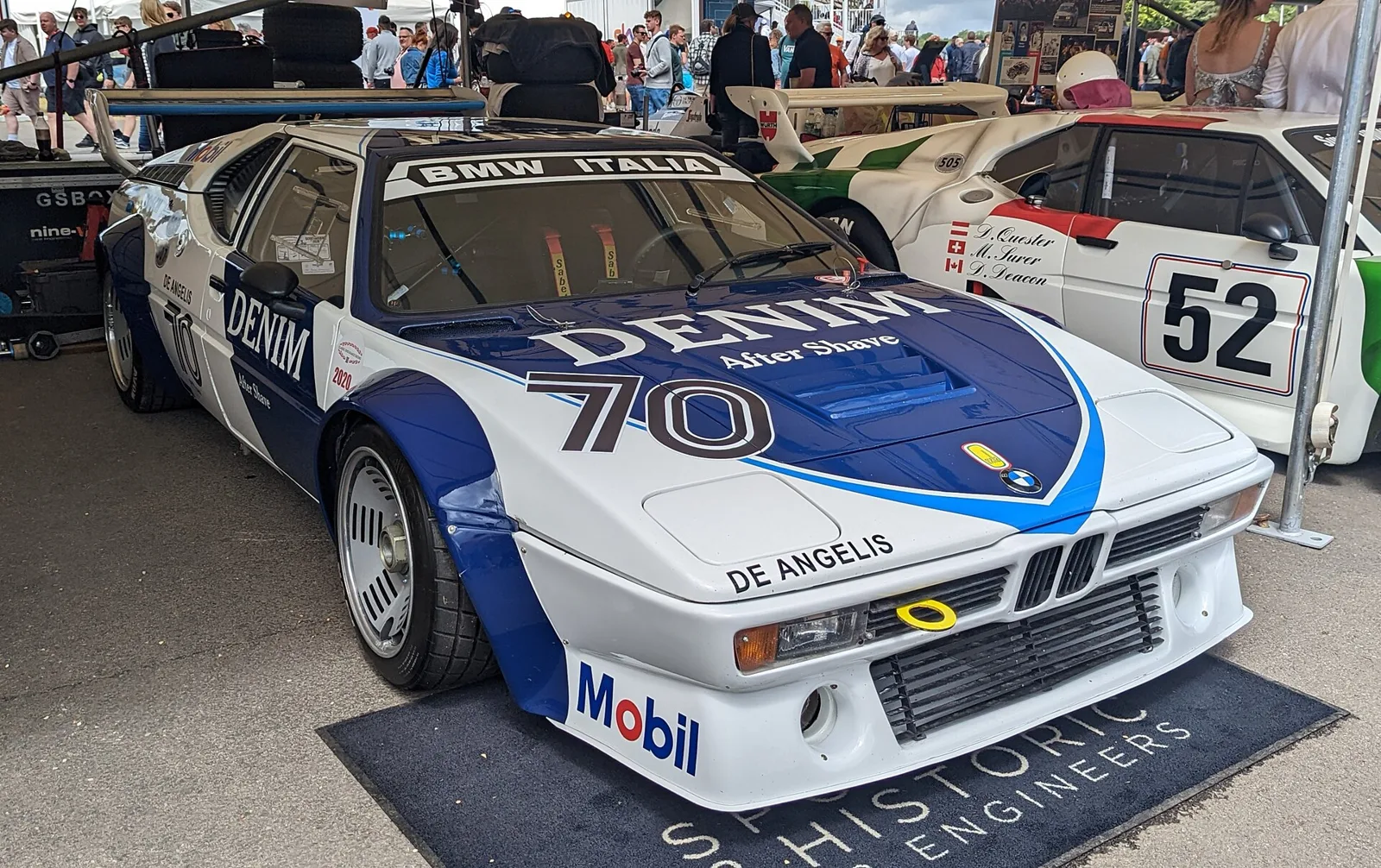
The Procar BMW M1 Championship launched in 1979 as a series tied to BMW's plans for Group 4 entry. It ran as a support series for Formula One events, and many Formula One drivers raced in identical M1s. The format kept every car on equal terms.
Niki Lauda won the 1979 Procar season and Nelson Piquet won the 1980 season, so the championship had different winners in consecutive years.
The cars were racing-modified M1s, so the series showed the car in its competition form rather than as a road model. That gave the championship a clear identity separate from the production line.
Le Mans, rallying and the last campaigns
Between 1981 and 1986 the car appeared at the 24 Hours of Le Mans, where it was a competitive entrant. For Le Mans purposes the car was classed as Group B, a category that had originally been planned for road-based GT racing before Group C prototypes took its place.
Endurance racing rewards a car that can run for hours without losing pace, and the M1's Le Mans appearances show that it could hold its own in that test.
The Art Car was a memorable entry. In June 1979, the trio of Herve Poulain, Manfred Winkelhock and Marcel Mignot drove an M1 whose body had been painted by Andy Warhol, finishing 2nd in class and 6th overall at the 1979 24 Hours of Le Mans.
Rallying was the next step. BMW France converted an M1 Pro Car to Group B rally specification in 1982, and the car kept competing in the seasons that followed.
The 1984 season was the most successful for the car in rallying. Bernard Beguin, a former ERC champion, claimed consecutive wins at the Rallye de La Baule and the Rallye de Lorraine, then took second at the Rallye d'Antibes. The M1 was not campaigned after 1984.
Did the M1 inspire later BMW models?
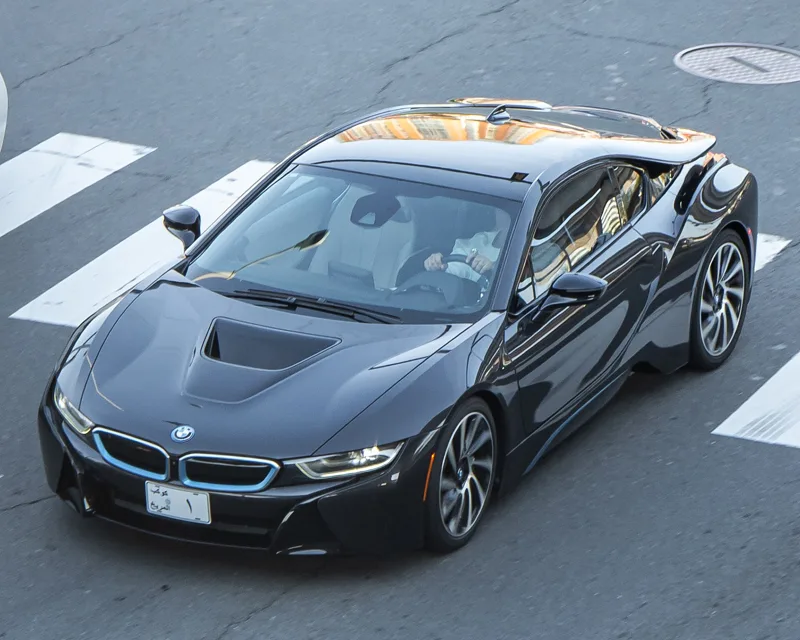
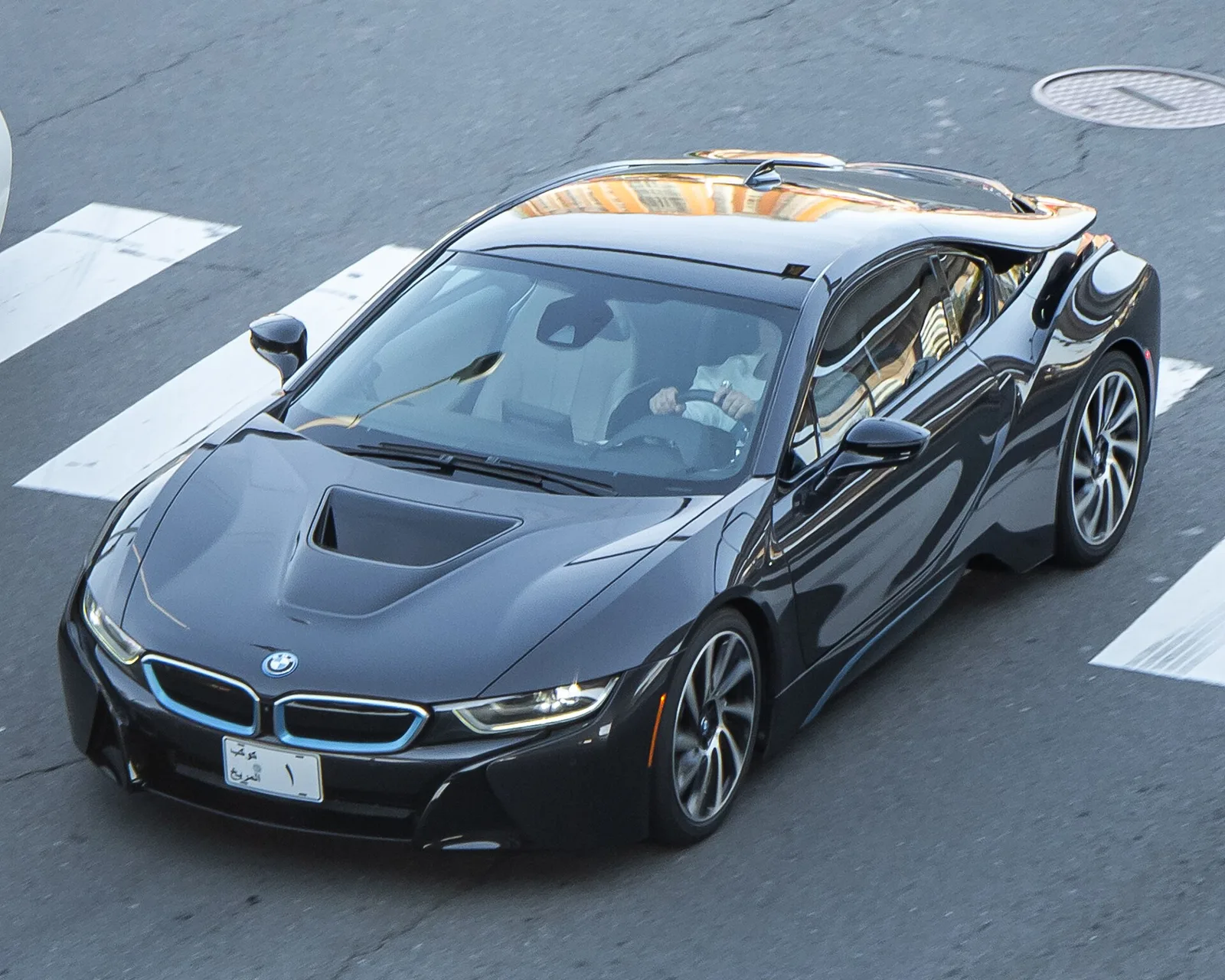
Not directly. BMW explored several mid-engined concepts after the M1, but none reached production until the Vision EfficientDynamics study was turned into the i8. Series production of customer cars began in April 2014, and Benoit Jacob designed the production version.
Put simply, the M1 was the first mid-engined BMW built in volume, and the i8 became the second. In the years between, BMW's concept cars explored the same layout without reaching production.
Concepts that carried the M1 forward
The M1 Homage concept marked the 30th anniversary of the M1 in April 2008. The concept debuted that year at the Villa d'Este Concorso d'Eleganza, and BMW's in-house team had produced the design.
The concept used a mid-engined layout, and its styling picked up ideas from the first M1 as well as the BMW Turbo show car. Because it was a design exercise, no specifications were released.
Concept cars let a manufacturer test ideas without committing to production. The Homage was a clear example, because it marked an anniversary rather than previewing a model.
The Vision M Next arrived in June 2019 as a plug-in hybrid sports car. Its claimed total output is 441 kW (591 hp; 600 PS), and the concept is also claimed to reach 100 km/h in 3 seconds and to top out at 300 km/h (186 mph). The claimed all-electric range is 100 km (62 miles).
The March-BMW M1/C prototype
A heavily modified M1 known as the March-BMW M1/C, also called the March 81P, took to the track as an IMSA GTX/GTP sports prototype. British constructor March Engineering designed, developed and built it, working with BMW on the project.
The March car was built for a different class of racing than the road-going M1. Its designer was a British constructor rather than BMW, which makes it a separate chapter in the car's story.
Recognition and reputation
Sports Car International ranked the M1 tenth in 2004 among the top sports cars of the 1970s. The placing put a low-volume car among the standout sports cars of its era.
The M1's reputation rests on rarity and motorsport. Few were built, the car raced in several championships, and its ideas returned in later concepts. Those three threads explain why it still draws attention among enthusiasts.
A ranking of this kind ties the car to the decade in which it was built, rather than to the later concepts that borrowed its name. That link is why the original remains the reference point for everything that followed.
What are the BMW M1 specifications?
The table lists the core figures for the road-going M1, which combined a 3,453 cc straight-six with a 5-speed manual gearbox and unassisted steering. Production figures appear in the final row, with road-going and motorsport units shown separately for clarity to anyone comparing the two.
| Specification | Detail |
|---|---|
| Model code | E26 |
| Built | 1978 to 1981 |
| Engine | 3,453 cc M88/1 straight-six |
| Output | 277 PS (204 kW; 273 hp) at 6,500 rpm |
| Torque | 330 Nm (243 lb ft) at 5,000 rpm |
| Top speed | 265 km/h (165 mph) |
| Transmission | 5-speed manual by ZF Friedrichshafen |
| Limited slip | 40% locking |
| Brakes | Ventilated steel, 300 mm (11.8 in) front, 297 mm (11.7 in) rear |
| Wheels | Campagnolo 7x16 front, 8x16 rear |
| Tyres | Pirelli P7, 205/55 VR15 front, 225/50 VR15 rear |
| Production | 453 cars (399 road, 53 motorsport) |