From a 1962 partnership and customer cars to fan-car controversy, turbo titles and a collapse in 1992.
Brabham was a British racing car maker and Formula One team founded in 1962 by Jack Brabham and Ron Tauranac. It won drivers' titles in 1966, 1967, 1981 and 1983, and built customer cars for many categories. The team withdrew from Formula One in 1988 and collapsed in 1992.
The Brabham team began as a company that sold racing cars to other drivers, and it grew into a Formula One constructor that carried its founder's name. Jack Brabham and designer Ron Tauranac ran it through its most successful years, and its drivers won titles in 1966, 1967, 1981 and 1983. The story ends with a withdrawal from Formula One in 1988 and a financial collapse in 1992.
Who founded the Brabham team?
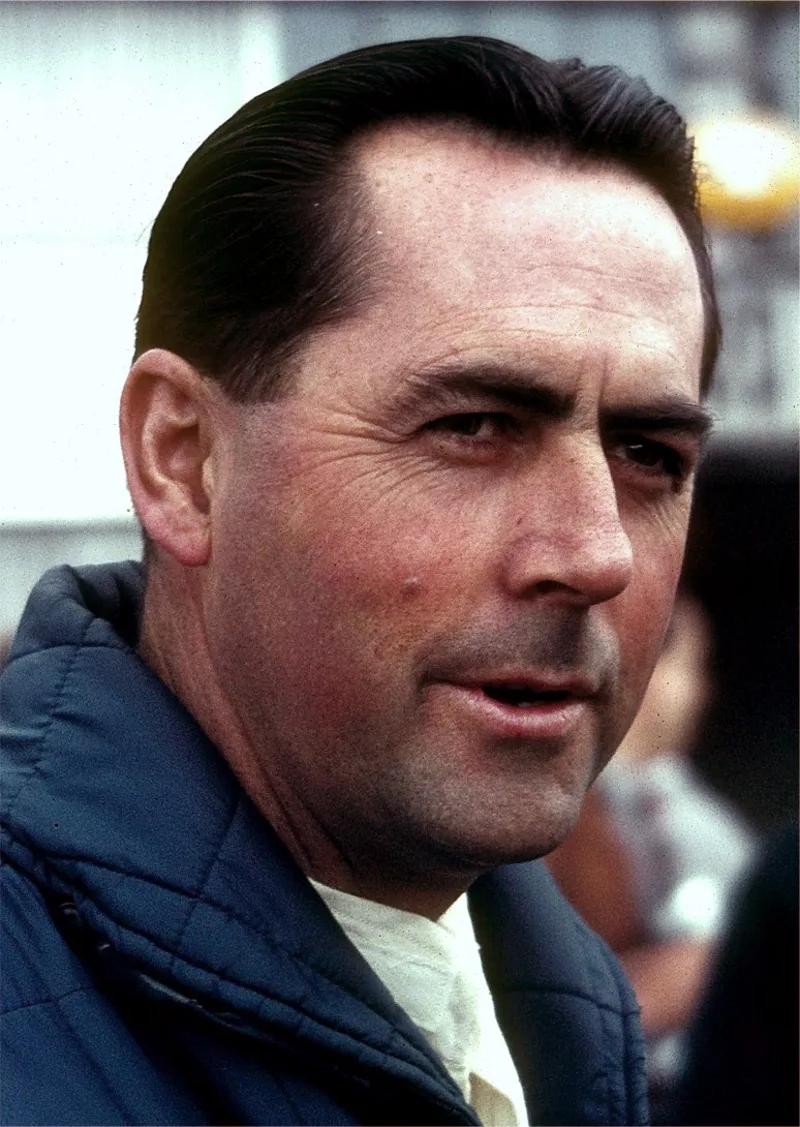
Jack Brabham and Ron Tauranac founded the company in 1961 as Motor Racing Developments, and the Formula One entry ran through the Brabham Racing Organisation from 1962. The two men had met in Australia, where both were building and racing cars. Brabham had won the 1959 and 1960 drivers' titles with Cooper, while Tauranac designed the first cars.
The partners set out to sell racing cars to customers rather than to run a Formula One team straight away. The business would sell customer cars in the same market Cooper served. They deliberately kept both founders' names out of the company name, and Tauranac built the first car in secret while Brabham was still with Cooper.
That first car was built for Formula Junior and unveiled in the summer of 1961. The name did not last. The cars became known as Brabhams, with type numbers that began with BT, standing for Brabham Tauranac.
Brabham left Cooper in 1962 to run the Brabham Racing Organisation, which raced cars built by Motor Racing Developments. The first works car, the BT3, appeared at the 1962 German Grand Prix. Dan Gurney partnered Brabham from 1963, and Gurney won the 1964 French and Mexican Grands Prix.
In those early years the team was a solid midfield presence rather than a champion. It finished third or fourth in the Constructors' table for three years, although reliability problems often spoiled good form.
A team built on customer cars that won titles in its own name and ended in a 1992 collapse.
How did Brabham win its 1966 and 1967 titles?
Jack Brabham won the 1966 drivers' title, and team-mate Denny Hulme took the 1967 crown. The Brabham team won the Constructors' title in both seasons, using Repco V8 engines introduced for 1966 when capacity was raised to 3 litres. Reims-Gueux had already marked his first win in a car bearing his own name.
The FIA doubled the engine capacity limit to 3 litres for 1966, and suitable engines were scarce. Brabham turned to Repco, an Australian firm that had never built a Formula One engine before. Its V8 was based on an aluminium block from the Oldsmobile F85, a road car project from the American maker.
The French Grand Prix at Reims-Gueux in 1966 was the decisive moment. Brabham won it in a car bearing his own name, becoming the first driver to do so in a world championship race. That win was the start of four straight victories for the Australian, and he took his third drivers' title that year.
In 1967 the title went to Denny Hulme. Hulme had better reliability through that season, possibly because Brabham was willing to try new parts first. The Constructors' title that year meant the team had won that prize in both of its strongest seasons.
What happened under Bernie Ecclestone?
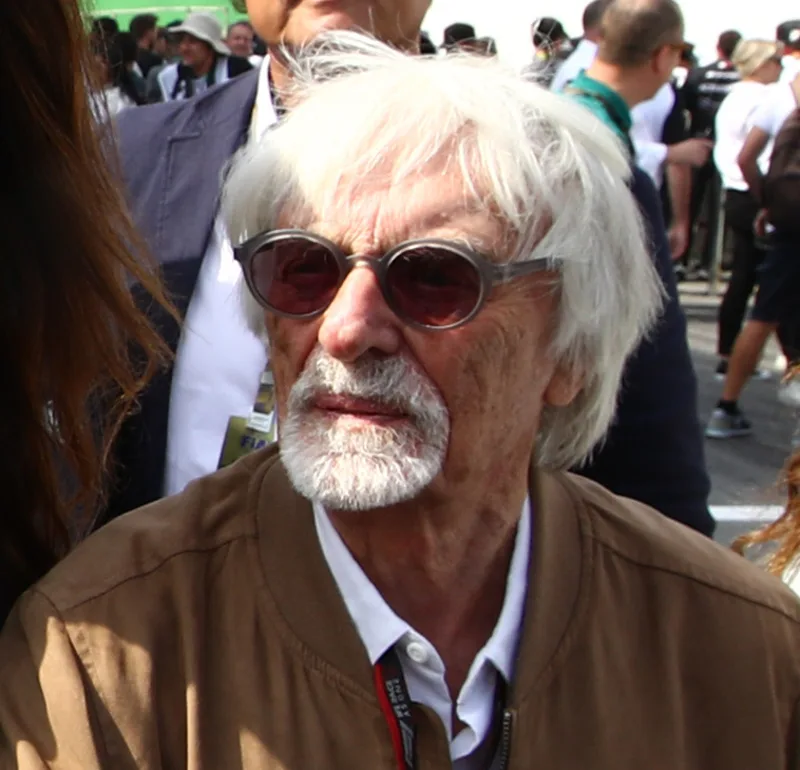
Jack Brabham sold his share of the company to Bernie Ecclestone at the end of 1970. Ecclestone then ran the team through most of the 1970s and 1980s, promoting Gordon Murray to chief designer for 1973. Under him Nelson Piquet won the drivers' titles of 1981 and 1983.
Before Murray was promoted, Ron Tauranac had designed the 1971 BT34, a car with two radiators placed in front of the front wheels. Graham Hill drove it, and the team scored only seven championship points that season.
Murray's BT42 gave Carlos Reutemann seventh place in the 1973 drivers' table. The team then improved. In 1974 Reutemann took the first three wins of his Formula One career, and Brabham came a narrow fifth in the Constructors' standings.
The 1975 season opened well when Carlos Pace won at Interlagos, the circuit in his native Sao Paulo. Reutemann also won the German Grand Prix, a result that carried him to third in the drivers' standings. The team was still constantly outperformed by Ferrari and McLaren, and tyre wear slowed its cars in many races.
Ecclestone signed Alfa Romeo flat-12 engines for 1976, and the engines came free of charge to the team. The trouble was that the BT45 became unreliable and overweight with them. John Watson lost a near-certain win at the 1977 French Grand Prix at Dijon after running short of fuel on the final lap. Carlos Pace died in a light aircraft accident that same year.
What was the fan car and why did it matter?
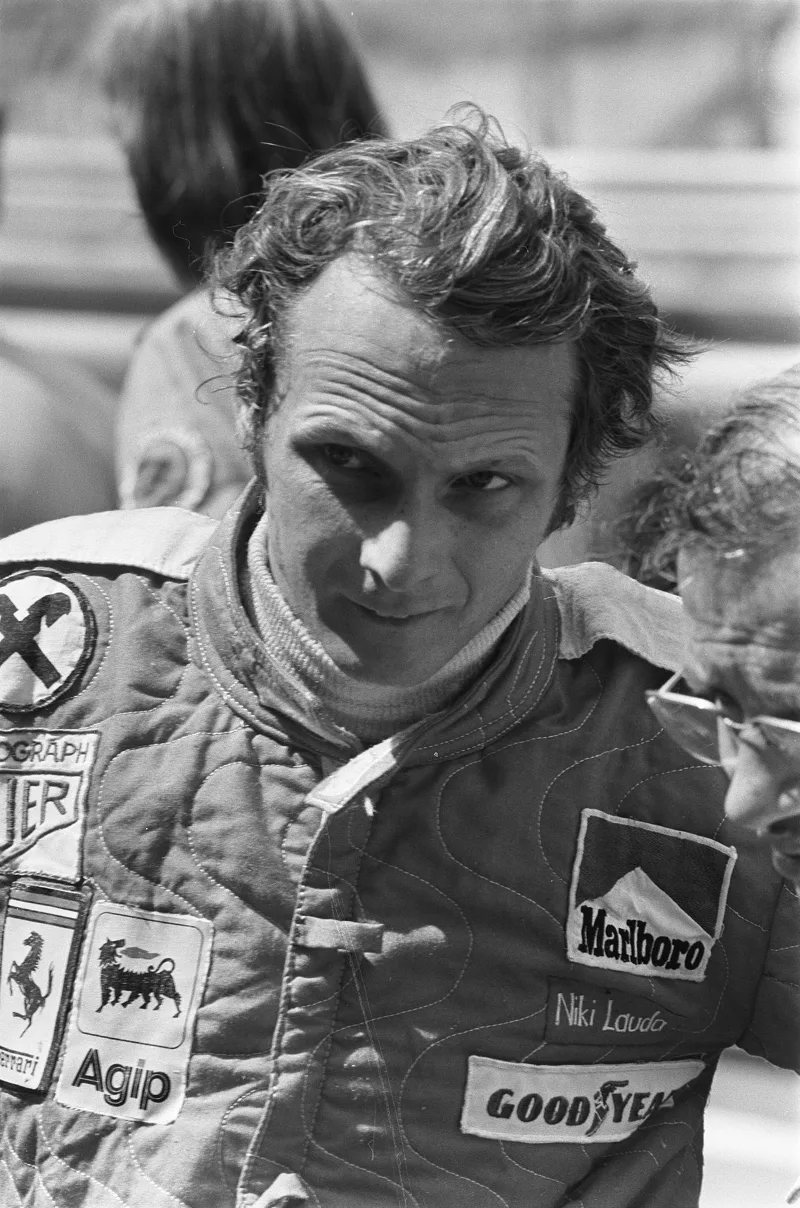
The fan car was the BT46 variant of 1978, which drew air from beneath the car to create downforce. The team said the fan was for engine cooling. Niki Lauda won two races in the BT46 that year, one of them with the fan car, before the FIA closed the loophole the design had used.
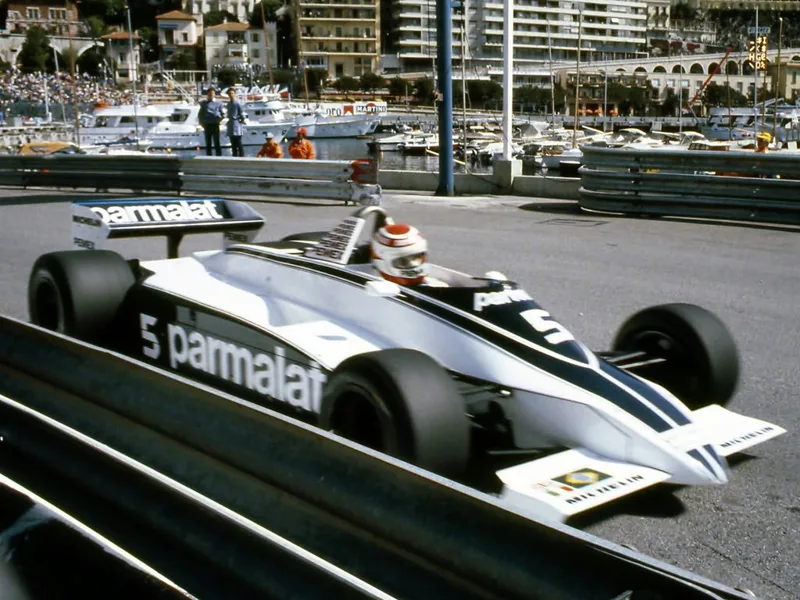
For 1978 Gordon Murray's BT46 brought in a number of new ideas to deal with the weight and packaging problems caused by the Alfa Romeo engines. Lauda had been a two-time world champion at Ferrari, and the deal that brought him to Brabham was backed by the dairy group Parmalat, which covered the cost of ending his Ferrari contract.
The fan itself sucked air from beneath the car and generated enormous downforce. The team presented it as a cooling aid, but the design exploited a gap in the sporting regulations. The FIA later closed that gap.
The 1979 season was much harder. The BT48 was a full ground-effect car with a new Alfa Romeo V12, and its handling was unpredictable. The team slipped to eighth place in the Constructors' table, and Lauda retired after practice at the Canadian Grand Prix that year.
Which drivers won titles for Brabham?
Three drivers carried Brabham to its drivers' titles: Jack Brabham in 1966, Denny Hulme in 1967 and Nelson Piquet in 1981 and 1983. Other notable drivers included Carlos Reutemann and Niki Lauda, who won races for the team without taking a championship with it.
Piquet's first season with the team came in 1979, and it was the start of the most successful period of the team's later years. He scored three wins in 1980 and finished second in the drivers' table, then took the 1981 title with three wins. The team finished second in the Constructors' table that year, behind Williams.
In 1983 Piquet became the first driver to win the championship in a turbo-powered car. The BT52 won four Grands Prix that season. Piquet added two more wins in 1984 at the Canadian and Detroit Grands Prix, and his 1985 French Grand Prix victory was the last win the team recorded.
Other drivers shaped the team too. Jochen Rindt replaced Hulme in 1968, and Jacky Ickx won the 1969 German and Canadian Grands Prix. Elio de Angelis died in a testing accident at Paul Ricard in 1986, and Stefano Modena later took the team's last podium with third at the 1989 Monaco Grand Prix.
What did Brabham add to racing technology?
In 1963 Brabham became the first F1 team to design its cars with a wind tunnel. It introduced full-width rear wings at the 1968 Belgian Grand Prix, and it pioneered carbon-carbon brakes in 1976. In 1982 it also brought refuelling and tyre changes back into the race.
The aim was less drag and cars that stayed planted rather than lifting at speed. The team's engineering was often conservative in other respects, particularly in its reluctance to move to monocoque chassis early, which makes its wind tunnel work stand out all the more.
Carbon-carbon brakes arrived in 1976, but the early system was not reliable. Carlos Pace crashed at 290 km/h (180 mph) at the Osterreichring that year, and the accident showed the risks of the new technology. By 1979 the team had a working carbon-carbon brake system, using structural carbon discs and carbon pads.
Refuelling and tyre changes returned at the 1982 British Grand Prix. The team refuelled and re-tyred in 14 seconds during tests, which allowed drivers to start with little fuel and on soft tyres. Refuelling was banned for 1984 and returned between 1994 and 2009, while tyre changes remained part of the sport.
The BT55 of 1986 was the last of the team's cars to adopt a fully composite monocoque. Top-level single-seater cars now all use composite chassis, and Brabham's late adoption came from a reluctance to build an entire chassis from composites until their behaviour in a crash was understood.
Brabham at a glance
| Period | Leadership | Notable drivers | Highlights |
|---|---|---|---|
| 1962-1970 | Jack Brabham and Ron Tauranac | Jack Brabham, Dan Gurney, Denny Hulme, Jochen Rindt, Jacky Ickx | Drivers' titles in 1966 and 1967; Constructors' titles in 1966 and 1967 |
| 1971 | Ron Tauranac, as designer | Graham Hill | Seven championship points |
| 1970-1988 | Bernie Ecclestone | Carlos Reutemann, Carlos Pace, John Watson, Niki Lauda, Nelson Piquet | Drivers' titles in 1981 and 1983; last win in 1985 |
| 1989 | Joachim Luthi | Stefano Modena, Martin Brundle | Third at the Monaco Grand Prix; ninth in the Constructors' table |
| 1990-1992 | Middlebridge Group | Damon Hill, Mark Blundell, Eric van de Poele | 10th in 1991; final finish 11th in Hungary in 1992; collapse in 1992 |
Did Brabham race outside Formula One?
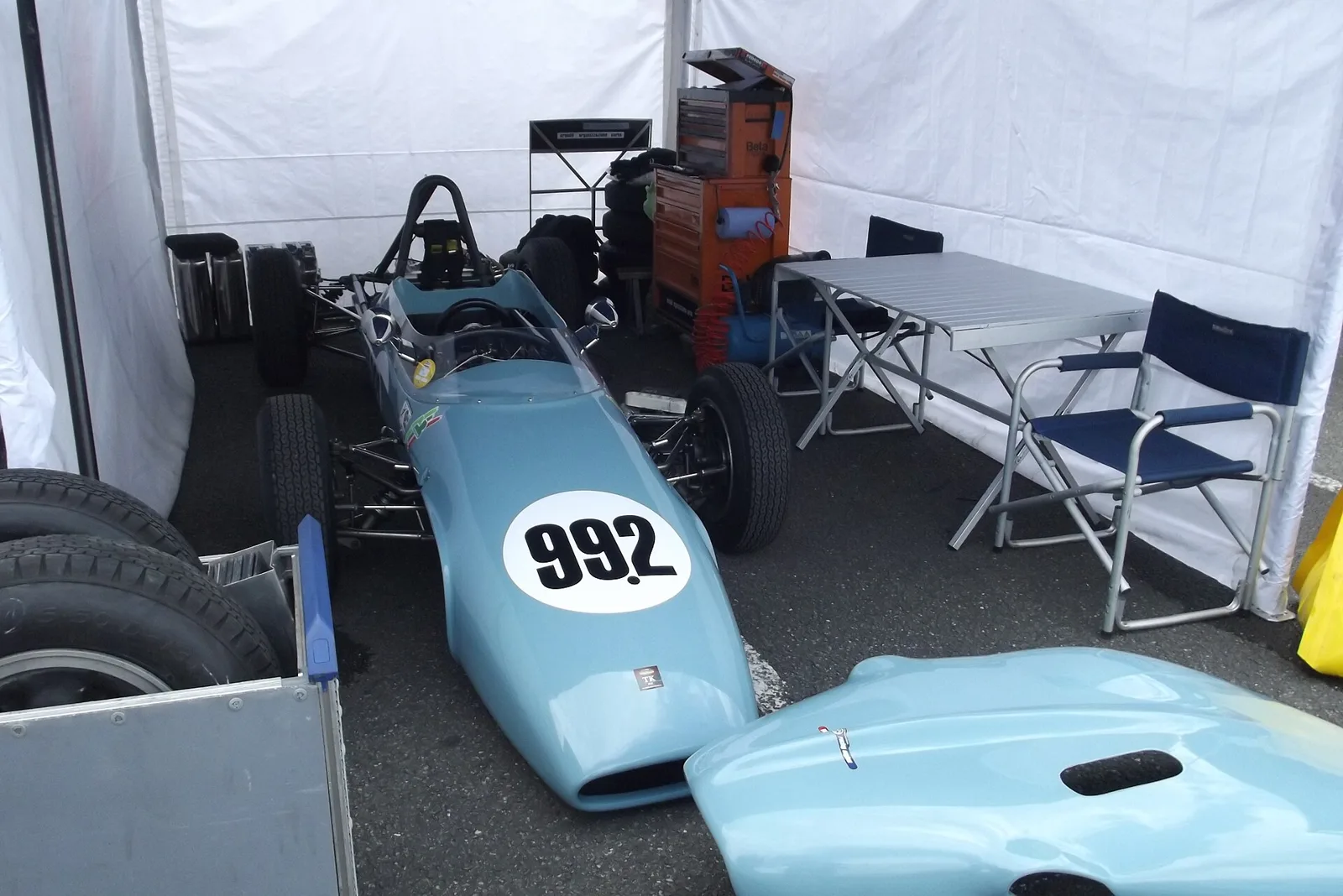
Yes. Brabham cars raced at the Indianapolis 500 in the mid-1960s and early 1970s, and the BT18 won 11 consecutive Formula Two races. The company also sold Formula Three cars in large numbers, while its sports car output stayed small by comparison.
The BT12 was raced by Jack Brabham at the 1964 Indianapolis 500 and was entered again in later years. No Brabham car ever won at Indianapolis.
The BT15 Formula Three car was among the most successful of the lower-formula designs. The company sold 58 units, and those cars won 42 major races. Customers could buy cars that matched the standard of the works team, which helped build the company's reputation.
Sports cars were a smaller part of the business. Just 14 sports car models came out of the works across 1961 to 1972, because Tauranac did not enjoy designing them and could spare only a little time from the single-seater business.
Why did the Brabham team end?
BMW left Formula One in August 1986, and Brabham withdrew from the championship in 1988 after Ecclestone announced the team's withdrawal at the Brazilian Grand Prix. Later owners ran the team on borrowed money, and it collapsed in 1992 after running out of funds.
Walter Brun, who had taken over the team from Ecclestone, sold it on to Joachim Luthi. Luthi ran the BT58 with a Judd V8 in 1989. Modena's third place at Monaco was the team's last podium, and the team finished ninth in the Constructors' table that year.
Middlebridge Group, owned by Koji Nakauchi, took control for 1990. It paid for the team with a loan of 1 million pounds from Landhurst Leasing, but the team stayed underfunded. The team finished 10th in the 1991 Constructors' table, and it struggled to qualify for races.
Damon Hill took the team's final finish, 11th at the 1992 Hungarian Grand Prix. The team then ran out of funds and collapsed. Middlebridge could not repay the 6 million pounds that Landhurst had provided, and Landhurst went into administration. Its managing directors were later found guilty of corruption and imprisoned.
What happened to the Brabham name?
The Brabham name was not used by a racing team for years after the collapse. In 2009 Franz Hilmer tried to enter a cost-capped team under the name for the 2010 season, but the entry was not accepted. The Brabham family then obtained legal recognition of its exclusive rights to the brand.
In September 2014 David Brabham announced Project Brabham, a plan to return the name to racing with a crowdsourcing business model. David is the son of Sir Jack Brabham. The project aimed at endurance racing and planned LMP2 entries for endurance racing.
Brabham Automotive later announced a BT62 GTE entry for 2021. The name's place in the sport rests on the team's titles, its technical firsts and its long run in Formula One.