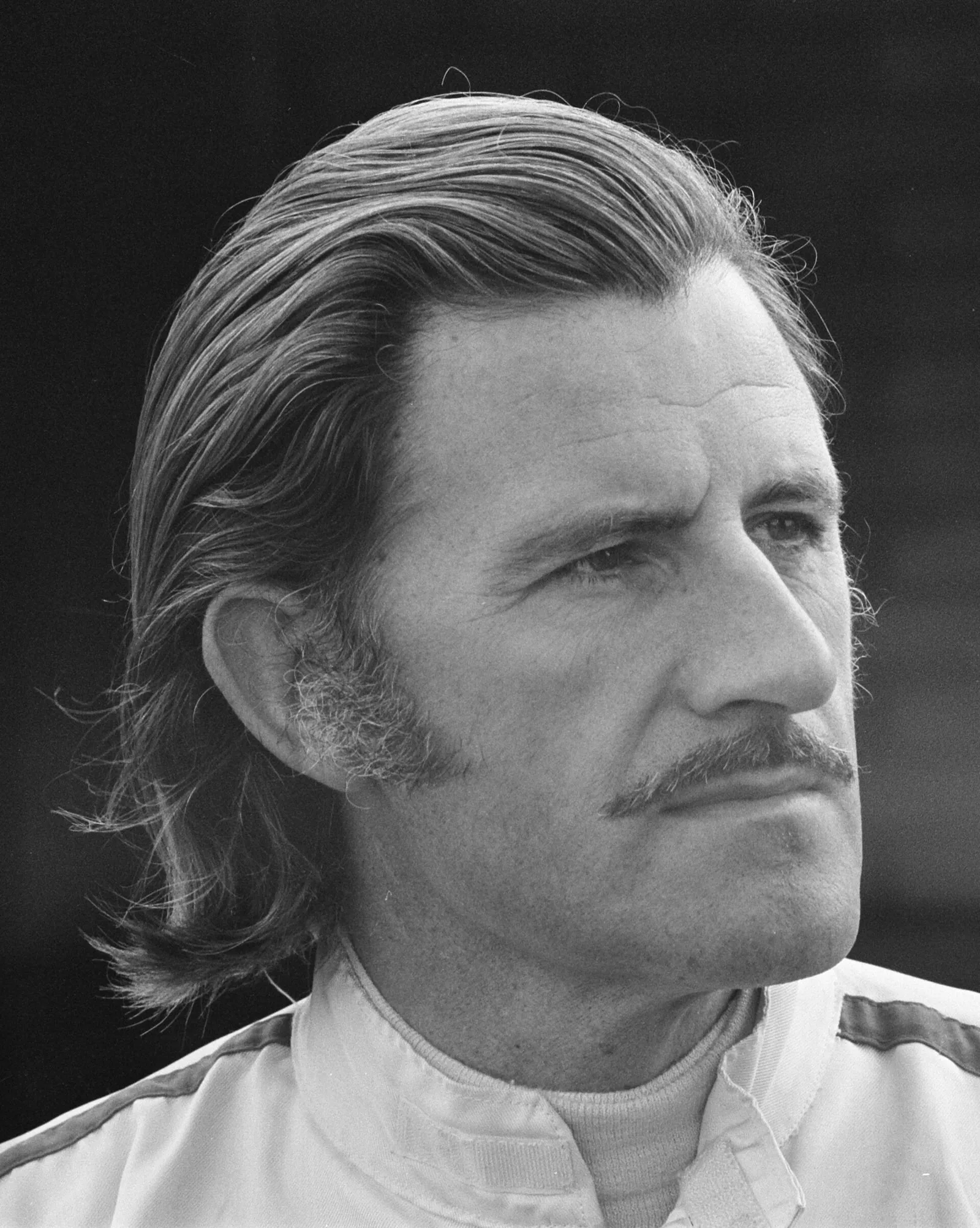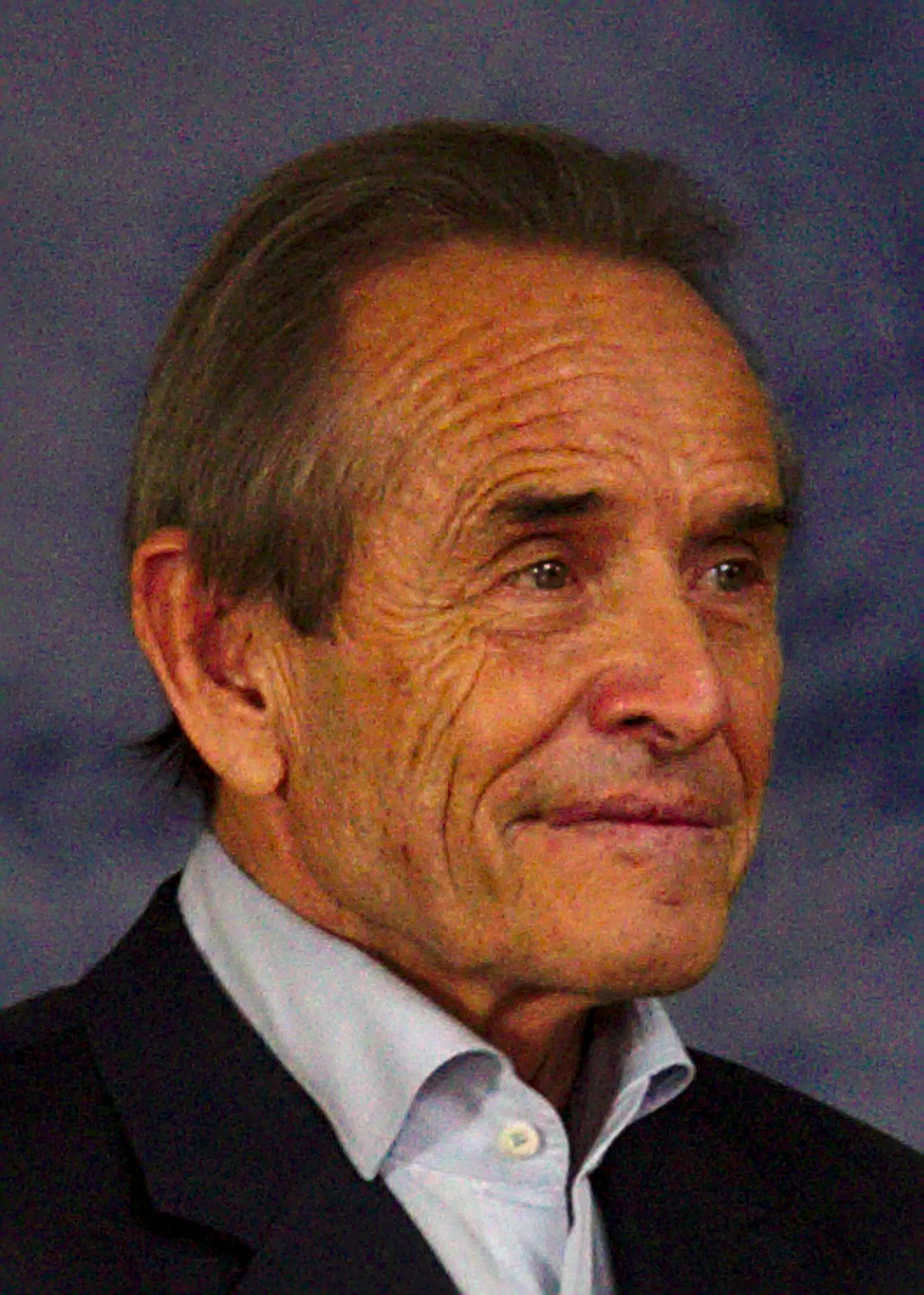
A Brussels-born driver who finished runner-up in the 1969 and 1970 Formula One championships, won Le Mans six times and took the Paris-Dakar Rally in 1983.
Belgian driver Jacky Ickx competed in Grand Prix racing between 1966 and 1979 and finished runner-up in 1969 and 1970. He won Le Mans six times, took two World Endurance titles with Porsche and won the 1983 Dakar Rally, across a career that spanned 14 seasons.
Jacky Ickx spent 14 seasons in Formula One, but his lasting reputation rests on endurance racing, where he became known as Monsieur Le Mans. The Belgian's career also took in touring cars, Can-Am, a stock car entry at Daytona and the Paris-Dakar Rally, which he won in 1983.
Who is Jacky Ickx?
Jacky Ickx, born in Brussels, raced in Formula One from 1966 to 1979 and finished runner-up in 1969 and 1970. He also won the 24 Hours of Le Mans six times, two World Endurance Championships and the 1983 Dakar Rally.
He was born on 1 January 1945 in Brussels, and his father was a motoring journalist. His success across many categories is why he is so often called one of the most adaptable drivers in the history of the sport.
Eight Grands Prix, six Le Mans wins and a Dakar title make Ickx one of the most versatile drivers the sport has produced.
How did Ickx start in motorsport?
Ickx began in motorcycle road racing and trials, after his father bought him a 50 cc Zundapp motorcycle. He took the 50 cc class at the 1962 Mettet Grand Prix road race, and in 1963 he beat Roger De Coster, who later became motocross world champion, in the Belgian 50 cc trials title race.
He soon took the European 50 cc trials title and then moved to touring cars. In 1965 he won the national saloon car championship in a Lotus Cortina, and a year later he won the Spa 24 Hours in a BMW 2000TI.
How did his Formula One career begin?
Ickx made his first Grand Prix start at the Nurburgring in 1966, driving a Matra Formula Two car entered by Ken Tyrrell. A first-lap collision with John Taylor at Flugplatz ended both cars' races, and Taylor later died of burns after his car caught fire.
He returned to the Nurburgring in 1967 with another Matra F2 car. Only two drivers qualified quicker than him, and although he retired after 12 laps with broken front suspension, he set the fastest lap among the F2 runners. At Monza that year he made his Formula One debut in a Cooper, finishing sixth.
What did the Ferrari years in 1968 achieve?
Ferrari signed Ickx for 1968, and he took his maiden Grand Prix victory in heavy rain at Rouen. He started from the front row at his home race at Spa-Francorchamps and finished third there, and he ended the season fourth in the standings with 27 points.
A broken left leg from a practice crash in Canada cost him the next race and the United States Grand Prix. He returned for the season finale in Mexico, and he had already shown his ability in the rain at Brands Hatch and Monza, where he took third places.
Why was 1969 a turning point at Brabham?
Ickx moved to Brabham in 1969, partly at the urging of John Wyer, the team for which he had enjoyed considerable success in sports cars. Gulf Oil wanted him kept in the fold, and his form improved after Jack Brabham broke a foot in testing.
He won in Canada and at the Nurburgring, where he also took pole and the fastest lap in the last Formula One race held on the old layout. A second place in Mexico gave him the runner-up spot behind Jackie Stewart.
How close did Ickx come to the 1970 title?
He came close, but a fiery accident at the Spanish Grand Prix left him with severe burns and a long recovery. He returned after 17 days, and later that season he won the Austrian and Canadian Grands Prix before a win in Mexico closed the year.
Rindt died in an accident during qualifying at Monza, and Ickx was the only driver still able to overhaul his points total. A fourth place at Watkins Glen ended that chance. In a 2011 article in Motor Sport he said he was glad he had not won the title against a man who could not defend his position.
What were the Ferrari years from 1971 to 1973 like?
In 1971 he won at Zandvoort in the rain on Firestone wet tyres, but retirements prevented a title challenge against Jackie Stewart. At the Nurburgring, the pair fought on and off the track, and Ickx's last Formula One victory came there at the 1972 German Grand Prix.
The Nurburgring was the favourite circuit of Ickx, and he and Stewart fought there from 1968 to 1973. Stewart had called the track the Green Hell and was a driving force behind the 1970 driver boycott, which led to safety work including new run-off areas and armco. Ickx felt that making the circuit safer took the challenge out of the sport.
The 1973 Ferrari 312B3 was no longer competitive, and Ickx left the team after the British Grand Prix. He drove a McLaren at the German Grand Prix and finished third behind the Tyrrells of Stewart and Francois Cevert.
Ferrari's sports car programme was still winning, and Ickx drove several of those victories himself. Its Formula One side, though, was outclassed and even skipped some races, notably at the Nurburgring, and that was something Ickx would not accept.
How did the Lotus and Ensign years go?
Ickx joined Team Lotus in 1974, and a third place in Brazil was his best start of the year. He took the non-championship Race of Champions at Brands Hatch, having gone around the outside of Niki Lauda at Paddock Bend. He finished third at the British Grand Prix.
Lotus's 1975 season was a disaster, and he left the team midway through it. He returned in 1976 with Walter Wolf Racing before swapping seats with Chris Amon at Ensign. At the Dutch Grand Prix he ran the third fastest lap and was often the fastest car on track before an engine expired ten laps from the end.
He competed sporadically after a crash at the United States Grand Prix in 1976, and in 1979 he replaced an injured Patrick Depailler at Ligier. He retired from Formula One at the end of that season.
In 1975 Ickx generally qualified about 0.8 seconds slower than his teammate, Ronnie Peterson, at Lotus. He was stood down after the French Grand Prix with a promise from Chapman that he might return once a competitive new Lotus was ready to race.
How dominant was Ickx at Le Mans?
Six victories at the 24 Hours of Le Mans gave him a record that stood until 2005. His first win came in 1969 with Jackie Oliver in a Ford GT40, after he had walked calmly to his car at the start, ignoring the traditional running start that he considered dangerous.
The 1969 race ended in a close duel with Hans Herrmann's Porsche 908, decided by less than 110 metres (120 yards). From 1970 drivers could start strapped in, a safety change Ickx had argued for.
The 1969 race was also the first appearance of the Porsche 917 at Le Mans, and it was expected to dominate. None of the 917s finished, and a privately entered driver, John Woolfe, died in one on the first lap after not having belted himself in.
Three of his wins came with Derek Bell, and from 1976 he was a factory driver for Porsche. He called the 1977 race his favourite win, after he went from 42nd place to the lead, and his 1982 win came in the faster Porsche 956.
What role did Ickx play in the 1984 Monaco Grand Prix?
In 1984 Ickx was race director at Monaco, and he stopped the race before half distance because of heavy rain. Alain Prost was winning at the time, and the decision cost him full points, which later mattered in the title fight.
Prost was leading when the race was stopped, with Ayrton Senna and Stefan Bellof closing in. Prost took the win but received half points for it, 4.5 in total. He later lost the 1984 World Championship to his McLaren teammate Niki Lauda by half a point.
How did Ickx's history with Stefan Bellof end?
Stefan Bellof was a young German who set lap records at the Nurburgring in 1983 and was promised a Ferrari seat for 1986. In 1985 he was racing a private Porsche 956 when he and Ickx collided at Spa-Francorchamps, and Bellof died an hour later.
Bellof tried to pass on the left at Eau Rouge, and the two cars collided and crashed. Bellof died after hitting a barrier at Raidillon head-on, while Ickx was shaken but not injured. The accident was the end of his professional circuit racing career, which he ended at the close of that season.
Did Ickx win the World Endurance Championship?
Yes. He won the World Endurance Championship in 1982 and 1983 with Porsche, the second of those titles coming in a season when a younger teammate was quicker on lap times.
Ickx retired from professional circuit racing at the end of 1985, after the Spa collision in which Stefan Bellof died.
What other races did Ickx win?
He won the 1977 Hardie-Ferodo 1000 at Bathurst with Allan Moffat in a Ford XC Falcon, and he won the 1979 Can-Am series title at the Riverside finale. He also entered the 1969 Daytona 500, although a practice crash in a car owned by Junior Johnson ended his hopes of racing.
Ickx was also selected for the 1978 and 1984 International Race of Champions, and he consulted for the Oreca team on a Mazda 787B at Le Mans in 1991.
How did Ickx's Dakar Rally career develop?
Ickx entered 14 editions of the Dakar Rally between 1981 and 2000. The 1983 title came in a Mercedes-Benz G-Class, and his daughter Vanina later followed him into the rally.
He still appears at historic events, including the Goodwood Festival of Speed, usually for Porsche, Ferrari and Genesis. He also continues as Clerk of the Course for the Monaco Grand Prix.
What honours did Ickx receive?
Ickx was named an honorary citizen of Le Mans before the 2000 race, the first sportsperson so honoured. He received the ACO Spirit of Le Mans trophy in 2004, the Paris Palme d'Or in 2012 and was named Belgian Sportsman of the Year in 1982.
Porsche marked his 75th birthday in 2019 with a special edition 911, the Carrera 4S Belgian Legend Edition. It was painted in X-Blue with white trim around the side windows, a reference to his helmet design, and he was inducted into the Motorsports Hall of Fame of America in 2020.
How do his results break down by category?
Formula One and Le Mans form the core of his record, but he also won in touring cars, rallying and the Can-Am series. The table below sets out his main results in each category, with the years in which they came.
| Category | Period | Key results |
|---|---|---|
| Formula One | 1966 to 1979 | Eight race wins, 13 pole positions, 14 fastest laps, 25 podiums; runner-up in 1969 and 1970 |
| Le Mans 24 Hours | 1969 to 1982 | Six overall wins, a record until 2005 |
| World Endurance Championship | 1982 and 1983 | Two titles with Porsche |
| Spa 24 Hours | 1966 | Overall win in a BMW 2000TI |
| Sebring 12 Hours | 1969 and 1972 | Two wins |
| Daytona 24 Hours | 1972 | Win alongside Mario Andretti, completing the Triple Crown |
| Dakar Rally | 1981 to 2000 | 14 entries, winner in 1983 |
| Can-Am series | 1979 | Series title at Riverside finale |