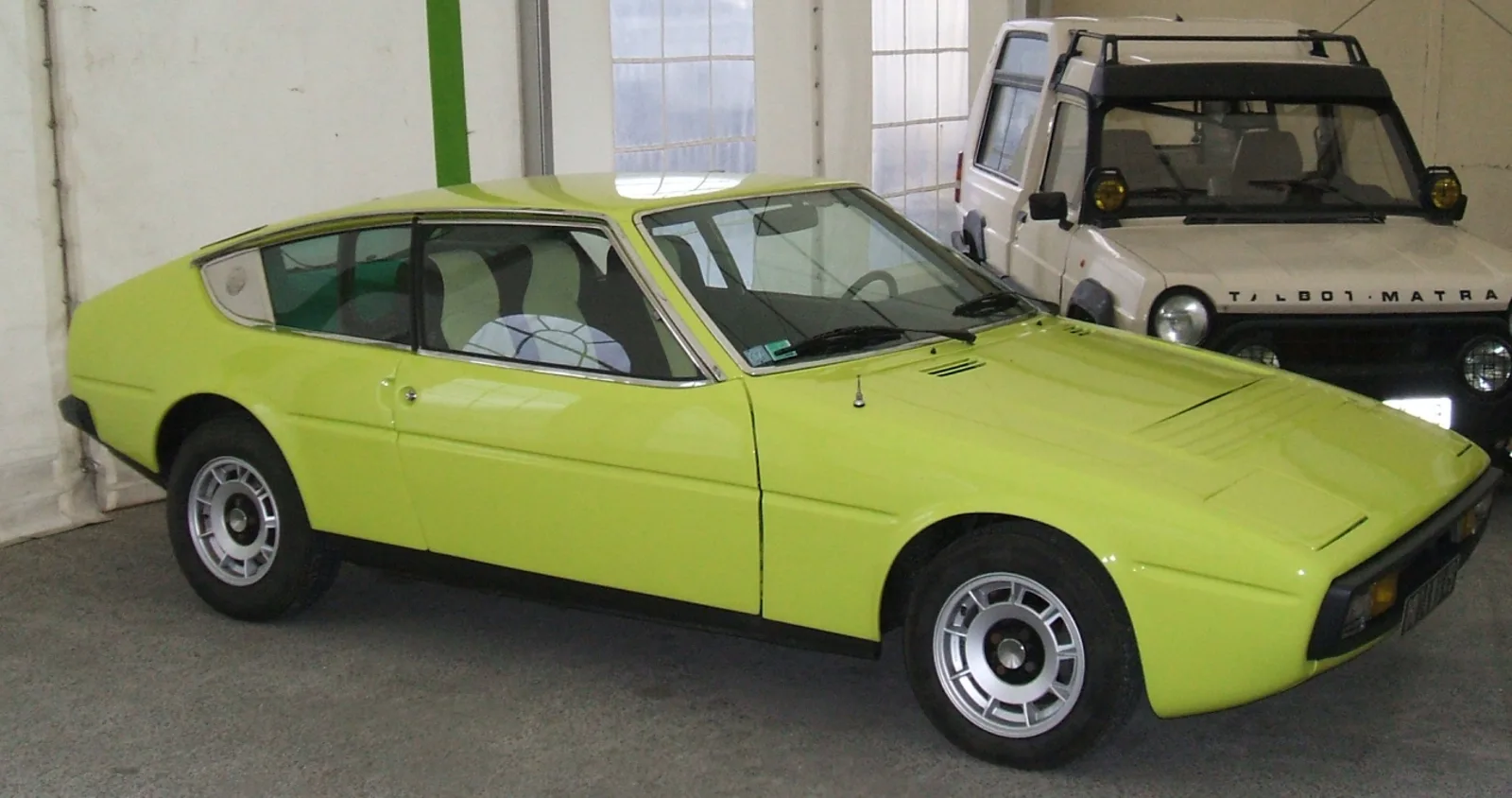
From a 1945 aviation start to Le Mans victories, the Espace minivan and a 2003 bankruptcy, the story of a French group whose name meant aerospace and cars.
Matra was a French conglomerate founded in 1945 whose car arm, Matra Automobiles, won the 24 Hours of Le Mans in 1972, 1973 and 1974. It built the Bagheera and the Renault-partnered Espace, and the group went bankrupt in 2003.
Matra was a major French industrial conglomerate, and its name stood for Mecanique Aviation Traction. Its businesses spanned aerospace, defence, automotive, motorsport, transport and telecommunications. The group's car arm, Matra Automobiles, built a run of distinctive road cars and Le Mans winners before the company collapsed in 2003.
Where did Matra begin?
Matra was established during 1945 and immediately began work on an ambitious twin-engine aircraft that was intended to be the fastest propeller-driven plane in the world. By 1951 an aircraft using a Matra-built engine had broken the sound barrier in horizontal flight, the first time that had been done in Europe.
Aviation gave the group its technical identity. In 1961 Matra was appointed the first prime contractor for satellites in the early European space programme, which placed it at the centre of the continent's space effort.
A French group that began with aircraft engines, won Le Mans three years running and ended with its cars sold off.
How did Jean-Luc Lagardere shape the company?
Jean-Luc Lagardere became CEO in 1963 and remained a key figure for the following three decades. When he arrived the firm employed 1,450 people, and he steered it towards a broad conglomerate under the Matra brand, built on acquisitions.
During the 1970s Lagardere pursued a strategy of merging Matra with other companies or buying them outright. One example was Electronique Moderne de l'Oise, which became Matra Electronique after its acquisition in 1975. That same year the French space agency and the European Space Agency awarded Matra a contract for the loading bay of the new Ariane launch system.
Over the decades the group diversified into media, weaponry, aeronautics, automobiles and music distribution. In 1981 it bought the Hachette publishing company, and during the 1980s and 1990s it took on a range of transport projects, including the Vehicule Automatique Leger driverless metro.
How did Matra enter the car business?
Matra came to cars in 1964, when it became the owner of Automobiles Rene Bonnet, and it built a limited range of racing and sports cars through Matra Automobiles. Within a decade the road car division had been sold to Chrysler Europe, while the group concentrated on its other businesses.
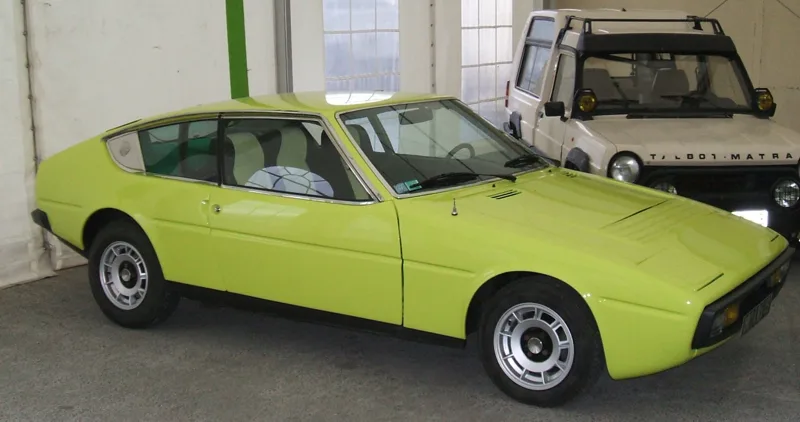
The first road car sold under the Matra name was the Renault-powered Djet, an update of the Bonnet Jet. It was followed by the 530, the Bagheera, the Murena and the Rancho, an early type of sport utility vehicle. At its peak Matra Automobiles was building 60,000 vehicles a year at its plant in Romorantin-Lanthenay.
The car arm changed hands several times. Chrysler Europe later sold Matra Automobiles to Peugeot, and the division was bought back by Lagardere in 1983. That buy-back set the stage for the partnership with Renault that produced the Espace minivan.
How did motorsport shape Matra's reputation?
Lagardere saw motorsport as a way to promote sales, so the company created Equipe Matra Sports, which entered the French Formula 3 championship in 1965. Its MS5 monocoque car went on to win both the French and European championships in the mid-1960s.
In Formula One Matra first raced as a constructor from 1967 to 1972, then returned as an engine supplier from 1975 until 1982. The team won the Drivers' and Constructors' championships in 1969, a high point for the company's racing side.
In sports car racing Matra competed from 1966 to 1974. It won the 24 Hours of Le Mans outright in 1972, 1973 and 1974, and it took the World Championship for Makes in 1973 and 1974. Matra then announced at the end of the 1974 season that it would withdraw from all motorsport.
Why did Matra leave motorsport?
Matra announced its withdrawal at the end of the 1974 season, at a time when the group was moving its focus onto other growing businesses. The early 1970s had already brought a major change, with the car division sold to Chrysler Europe.
The car business became a matter of ownership changes. Chrysler Europe passed Matra Automobiles on to Peugeot, and in 1983 Lagardere bought the division back. A strategic partnership with Renault followed shortly afterwards, and it was that alliance that brought the company its most successful product.
What was the Espace, and why did it matter?
The Espace was a minivan developed through the Renault partnership. It launched in 1984 and proved a commercial success over multiple decades, and Matra built the first three generations before Renault took the fourth in-house.
Because the Espace was so successful, a single vehicle type became extremely important to the fortunes of Matra Automobiles. When the Espace business was lost, the loss proved damaging to the firm's finances, and it weakened the car arm at a critical point.
Matra also worked on other Renault projects. Production of the Renault Avantime began in 2001. It was co-designed and built by Matra Automobiles, but it did not sell well and was widely regarded as a failure.
How did Matra's car business end?
On 27 February 2003 Matra Automobiles announced that it would close its Romorantin vehicle factory a month later. The division had been declared bankrupt, and the dismantling of the business followed the poor performance of the Avantime and the wider financial strain.
The Romorantin plant had once built 60,000 vehicles a year, so its closure marked the end of a major manufacturing base. The loss of that plant reflected how far the car business had shrunk from its peak.
During September 2003 Pininfarina acquired the engineering, testing and prototype businesses, and they were renamed Matra Automobile Engineering. On 13 January 2009 Pininfarina sold its share to Segula Technologies.
Did Matra make semiconductors?
Matra joined forces with the Harris Corporation to set up Matra-Harris Semiconducteurs, known as MHS, in 1979. The venture aimed to make the company a leading semiconductor operation in Europe, and it recorded a profit in 1984 after building a range of microprocessors and gate arrays.
Starting from Harris's CMOS fabrication process, MHS targeted high-performance, high-volume niches. It moved into microprocessors and gate arrays, and in 1981 it secured a licence from Intel to produce the 8086, 8088, 8051 and 8052 families using an NMOS process.
Alongside Intel's families, MHS also made Harris's 80C86 and 80C88 parts and memory product designs from Cypress Semiconductor. European consolidation then changed ownership, with AEG acquiring 50% of MHS in 1989.
What other products did Matra make?
Matra's range went well beyond aircraft, missiles and cars. It produced a fibreglass sailing dinghy called the Capricorne, a driverless metro, electric bicycles and scooters, and a personal computer named the Alice.
The Capricorne had an innovative double-bottom, self-bailing hull. Several hundred were sold and a class association briefly formed, yet the dinghy never took a meaningful share of the market from the International 420.
During 1983 Matra launched the Vehicule Automatique Leger, an automatic driverless light rubber-tyred metro. It later tried to produce a personal rapid transit system, which it named Aramis.
Matra also built electric bicycles and scooters, and it released the Alice personal computer. Its i-step Runner, Tourer and Force models, together with the i-flow, were made at Romorantin, the same town as the car plant.
What weapons did Matra develop?
Matra became one of Europe's leading missile makers. Its air-to-air range included the R.511, R.530, Super 530, R.550 Magic and MICA, and its weapons business grew through partnerships with British and Italian companies.
The surface-to-air R.422 and the Mistral anti-aircraft missile joined the line, along with the ARMAT anti-radar missile. Martel was made in association with Hawker Siddeley, while Otomat was made with Oto Melara as an anti-shipping weapon.
Matra also produced the BLG 66 Belouga cluster bomb, the Durandal anti-runway bomb and pods for the SNEB unguided rocket. Together they show how wide the weapons range had become, from air defence to ground attack.
What was Matra Hautes Technologies?
Matra Hautes Technologies was the defence arm of the firm. It covered aerospace, defence and telecommunications, and in February 1999 it was merged with the French aerospace group Aerospatiale to form Aerospatiale-Matra.
The defence side had been built through a series of combinations. In 1990 Matra Espace merged with the space division of GEC Marconi to create Matra Marconi Space, which the company claimed was the leading aerospace company in Europe at the time.
Six years later Matra Defense and BAe Dynamics merged to form Matra BAe Dynamics, a leading European weapons maker and, at the time, the third largest in the world. Its products included the Super 530 and MICA air-to-air missiles and the Mistral anti-aircraft missile.
On 10 July 2000 Aerospatiale-Matra merged with the Spanish firm CASA and the German firm DASA to become part of EADS, which later became the Airbus Group.
The defence side was organised into several joint divisions. Matra BAe Dynamics was 50% British Aerospace, formed in 1996 to bring together the missile business of BAe and half of the missile business of Matra Defense. Matra Marconi Space was 49% GEC, and Matra Nortel Communications was 50% Nortel.
How did Matra end as a conglomerate?
Matra was privatised in 1988, and in 1994 it became a subsidiary of the Lagardere Group. Privatisation, the sell-off of profitable businesses and the failure of the automotive division caught up with the company, which went bankrupt in 2003.
Lagardere's stake in Matra grew steadily. He acquired six per cent of the company in 1988, and by 1992 his stake had risen to 25 per cent. A 1994 share swap then gave him 93.3 per cent of Matra Hachette, which was formally merged into the Lagardere Group in 1996.
After the bankruptcy the remaining business concentrated on its interests in media and aerospace. Several former Matra assets still operate under the Lagardere name, so part of the group's legacy survives.
Matra key milestones
| Year | Milestone |
|---|---|
| 1945 | Matra established and starts a twin-engine aircraft |
| 1951 | Sound barrier broken in horizontal flight in Europe with a Matra engine |
| 1963 | Jean-Luc Lagardere appointed CEO |
| 1964 | Automobiles Rene Bonnet acquired |
| 1965 | Equipe Matra Sports enters French Formula 3 |
| 1972 to 1974 | Le Mans 24 Hours won outright in each year |
| 1984 | Espace minivan launched with Renault |
| 2001 | Renault Avantime production begins |
| 2003 | Matra Automobiles declared bankrupt |
| 2009 | Pininfarina sells its share of Matra Automobile Engineering |