A pan-European group built from French, British and Spanish makers, which Chrysler sold to Peugeot for a nominal dollar in 1978.
Chrysler Europe combined the Simca, Rootes and Barreiros businesses between 1967 and 1978. Weak profits and confused brands ended in a token US$1 deal with PSA, a French group that revived the Talbot name from 1979 and kept the Poissy and Ryton plants running.
Chrysler Europe was the group that ran Chrysler's European car and truck operations from 1967 to 1978, drawing on the French Simca, the British Rootes and the Spanish Barreiros companies. Weak profits and confused brands led Chrysler to sell it to PSA Peugeot Citroen for a nominal US$1, and the Talbot name carried the business forward from 1979.
What was Chrysler Europe?
Chrysler Europe was Chrysler's European business for eleven years, formed by joining three separate makers into one organisation. The company was the American group's attempt to gain a foothold where Ford had built a worldwide network and General Motors had Opel, Vauxhall, Bedford and Holden.
Chrysler had never had much success outside North America, and its European products were built around models that suited American tastes. Those models did not sell well in a market where even compact American cars were too large and thirsty, so the group leaned on the smaller Simca and Rootes ranges instead.
A group of French, British and Spanish makers that Chrysler sold to Peugeot for a nominal US$1 in 1978.
How did Chrysler build its European group?
Chrysler first took an interest in the French company Simca in 1958, buying 15% of its stock from Ford. In 1963 it raised its stake to a controlling 63% by buying further shares from Fiat, and in the same year it acquired 35% of the Spanish maker Barreiros.
Chrysler tried to buy into Leyland Motors in 1962 but failed. Instead it bought a 30% share in the Rootes Group in 1964, and it took over the remaining shares in 1967. That purchase completed the three-company structure. Barreiros was folded into Chrysler Europe in 1969 and renamed Chrysler Espana in 1970.
A smaller step was the Greek venture FARCO, which Chrysler bought in 1963 and renamed Chrysler Hellas. FARCO had been founded in 1961 by the Kontogouris brothers, but production there ended in 1967 without much success.
Why did the brands get so confused?
Chrysler systematically retired the older Rootes names, including Hillman, Humber, Singer and Sunbeam, in favour of its own name. The Simca name survived in France, but its vehicles were usually sold as Chrysler-Simca or simply Chrysler outside France. In 1970 Rootes became Chrysler (UK) Ltd, and Simca became Chrysler (France).
From 1976 British-built cars were badged as Chryslers, and the Simca badge appeared on French cars with the Chrysler pentastar in some markets. Commercial vehicles were sold under the Dodge name, while Spanish and other markets used the Dodge and Simca marques for locally built vehicles.
The result was a range that was hard for buyers to follow. Ford and General Motors had successfully woven together their British and German subsidiaries, while Chrysler was trying to sell two mismatched families of cars at the same time, and that confusion weighed on its image.
Which cars did the Rootes and Simca ranges bring in?
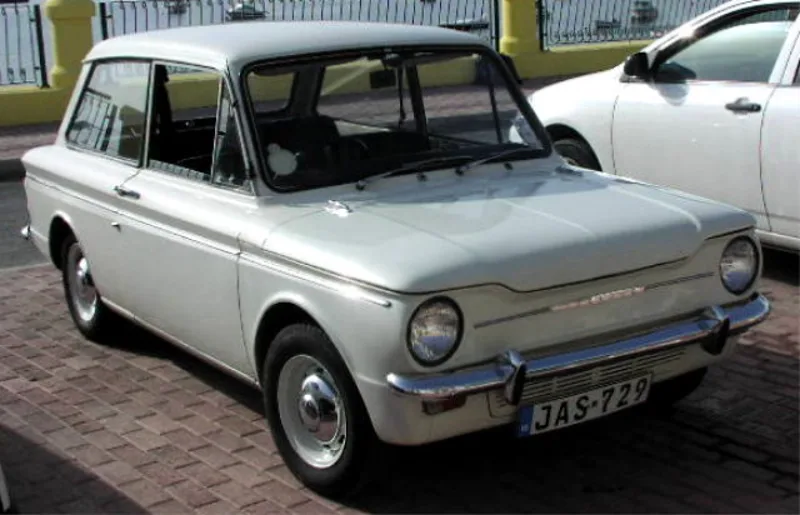
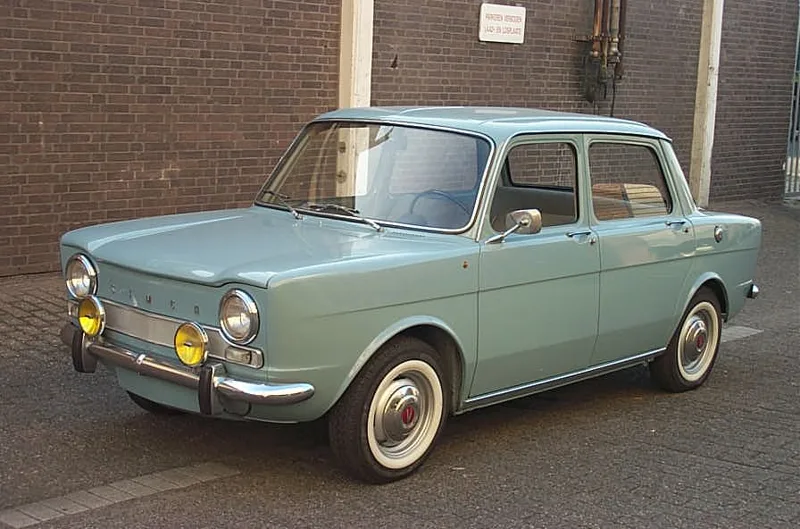
The inherited ranges included the Hillman Imp, the Hillman Hunter, the Sunbeam Rapier and Alpine coupe, the Sunbeam Alpine roadster, and the Simca 1000, 1100 and 1301/1501. Several were still in production beyond 1967, many with badge-engineered variants.
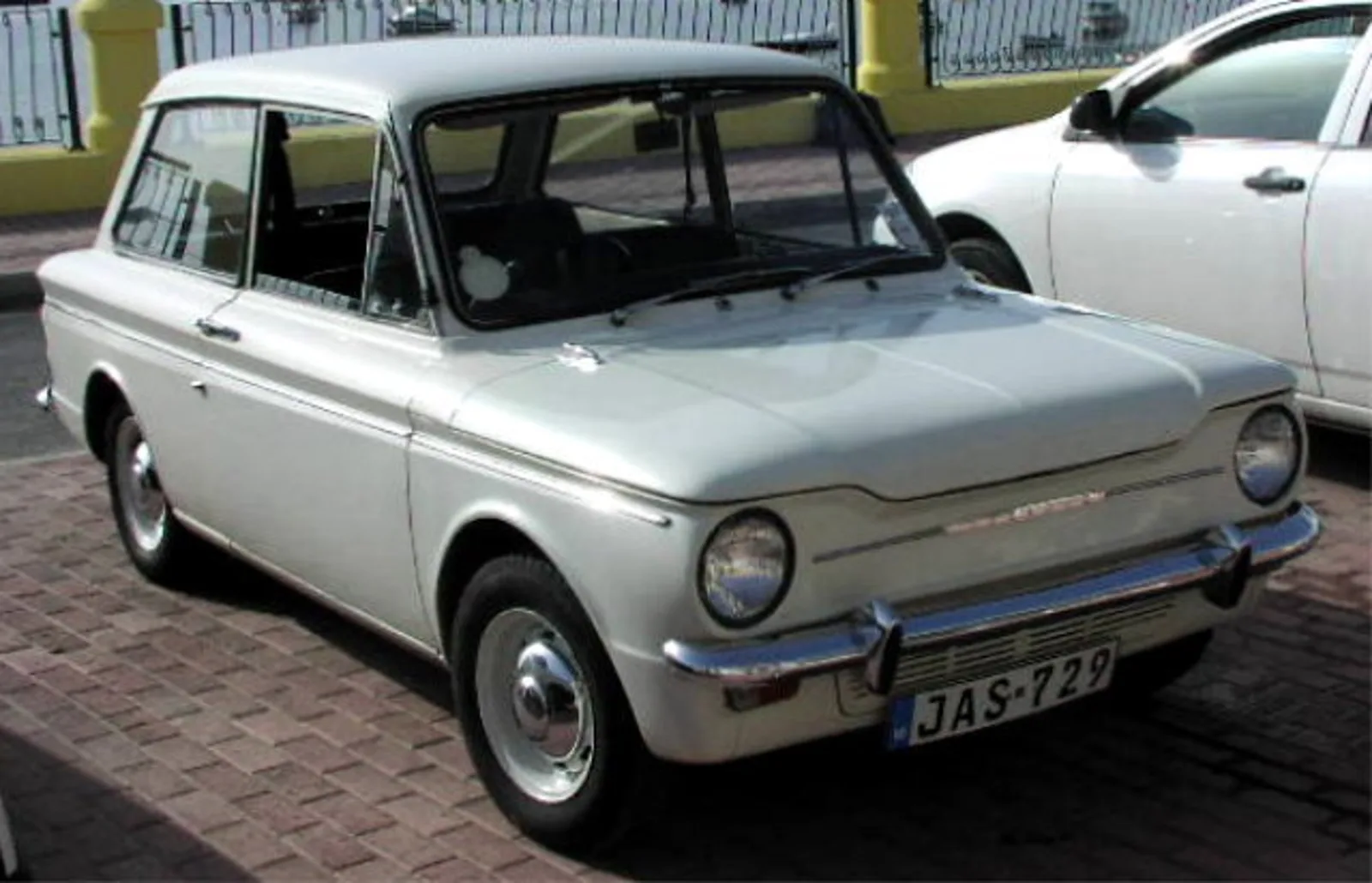
The Hillman Imp, built from 1963 to 1976, had derivatives including the Hillman Husky, the Singer Chamois and the Sunbeam Stiletto. The Hillman Hunter, built from 1966 to 1976, was the rear-wheel-drive family saloon that Chrysler kept alongside its newer front-wheel-drive models.
What was the Chrysler 180 and why did it struggle?
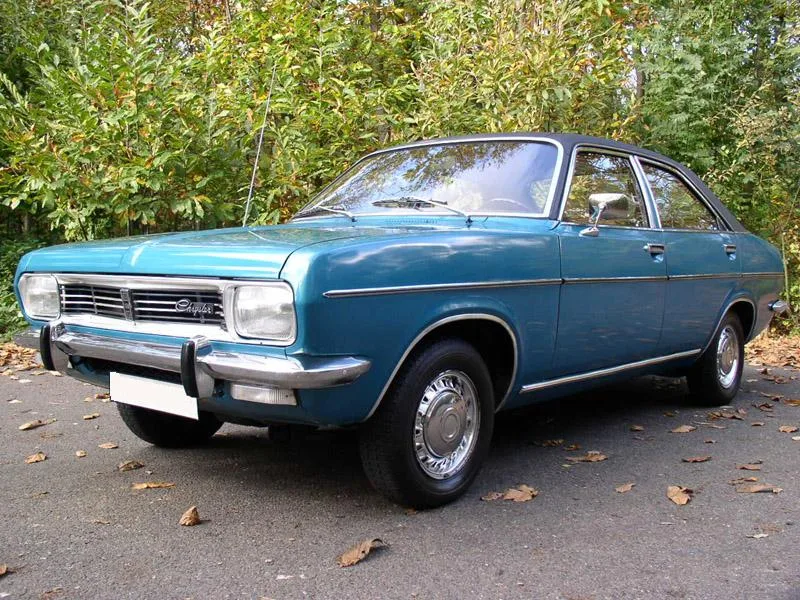
The Chrysler 180 range, built from 1970 into the early 1980s, was the first new European Chrysler and the first European-designed model to carry the Chrysler name. It combined two projects started separately by Rootes and Simca, which were successors to the Humber Hawk and Super Snipe and the Simca Vedette.
The 180 was meant to rival the Audi 100 and Ford Granada, and it was intended to raise the image of the brand above Simca and Humber. It was available only with four-cylinder engines and lacked a prestige image, so sales were disappointing even though it was a sizeable car.
Its assembly was moved from France to Spain, where protectionist trade policy guaranteed some domestic sales. Outside Britain, from 1977, it carried Chrysler-Simca badges across much of the continent, and PSA later turned it into a Talbot.
The Hillman Avenger, launched in 1970 and built until 1981, fitted between the Imp and the Hunter. It sold well in Britain but less well in export markets, where it appeared under names including Sunbeam and Plymouth Cricket in North America.
How did the Alpine and the Horizon change the range?
The British car designer Roy Axe, who had started his career with Rootes, unified the European range with the Simca 1307 family hatchback, which Britain knew as the Chrysler Alpine. It was assembled in France, Spain and Britain, and it was voted European Car of the Year for 1976.
The Alpine's front-wheel drive was unusual at the time, since most rivals still used rear-wheel-drive saloons. The Hillman Hunter stayed in limited production as a traditional alternative until 1979, and the Alpine replaced the Avenger at Ryton while the Avenger moved to Linwood.
The Horizon followed in 1978 as another pan-European model, a five-door front-wheel-drive hatchback similar in concept to the Volkswagen Golf. It was built in France, Spain and Britain, with Ryton producing it from 1980, and it won the European Car of the Year award for 1979. Chrysler kept building its own American Horizon until 1990.
What were the Sunbeam and the Matra models?
The Chrysler Sunbeam was built from 1977 to 1981 as a three-door supermini hatchback based on a shortened Avenger floorplan. Government grants helped pay for it, because it was designed to replace the Imp at the under-used Linwood plant in Scotland.
The Sunbeam was rear-wheel drive, which made it dated next to front-wheel-drive rivals such as the Ford Fiesta and the Volkswagen Polo, and few were ever seen outside Britain. The 1979 rename gave it the Talbot Sunbeam name before it was dropped with the Linwood plant.
The Matra Rancho was a leisure vehicle version of the Simca 1100, built from 1977 into the mid-1980s in partnership with Matra Automobiles. It was a niche product on an ageing car, but it sold well and is now seen as an early example of a crossover. Matra's P18 prototype became the basis for the first Renault Espace, and the Rancho is said to have influenced the look of the 1989 Land Rover Discovery.
Why did Peugeot buy Chrysler Europe?
Chrysler was in serious financial trouble in America, and its European business had weak profits even though Simca on its own had been consistently profitable. Lee Iacocca, the incoming chief executive, had shown little interest in Europe and moved quickly to cut it, selling the group to PSA Peugeot Citroen in 1978 for a nominal US$1.
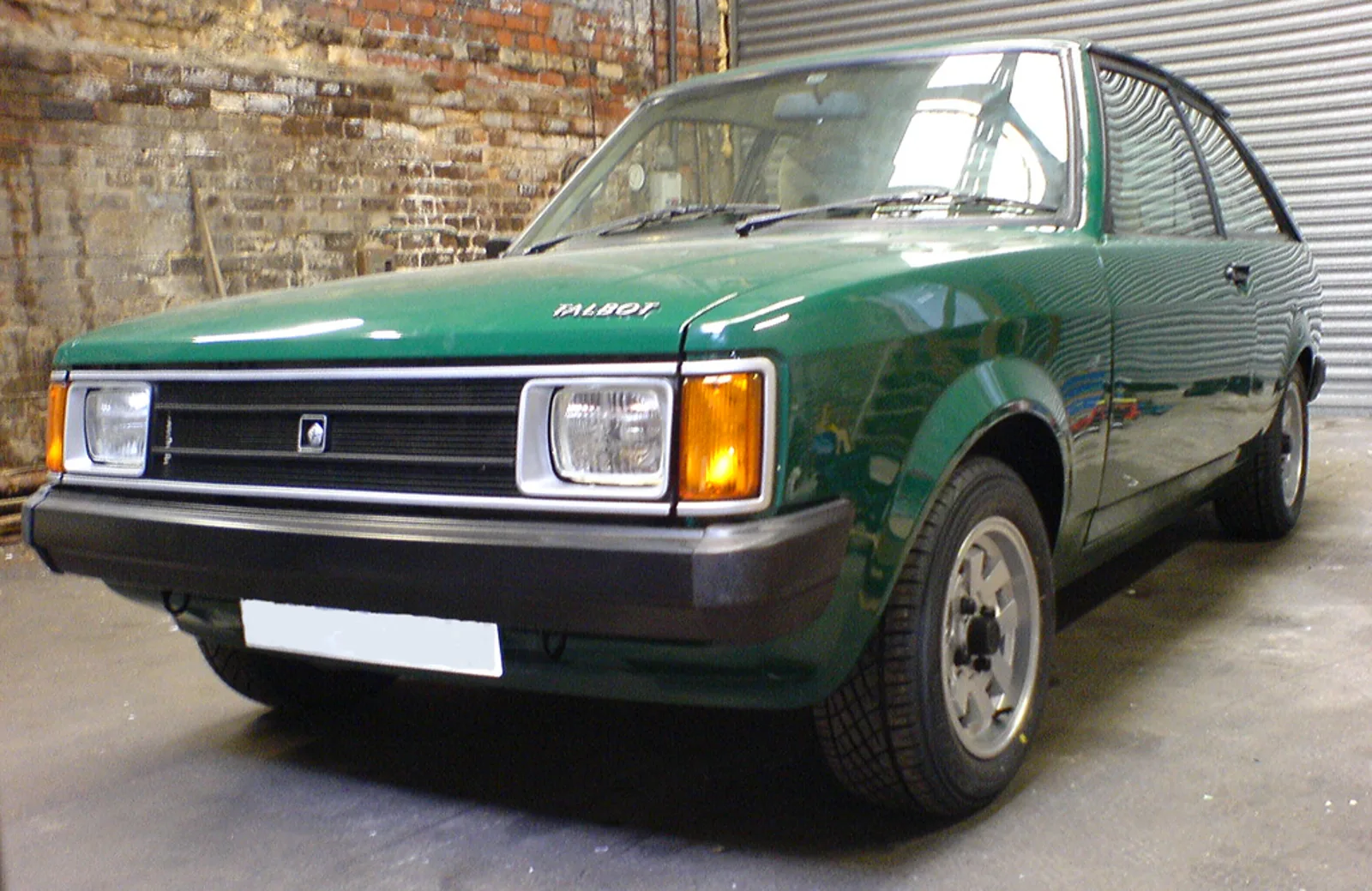
PSA took on the huge debts along with the factories and product line. Former Chrysler models in Britain and Simca models in France both used the revived Talbot marque from August 1979, but the rescue did not fix the group's weakest parts.
The Linwood factory in Scotland closed in 1981 after 18 years of use, ending production of the Avenger and the Sunbeam. Peugeot replaced the Sunbeam with the Talbot Samba, a supermini derived from the Peugeot 104 and built in France.
What happened to the Talbot brand?
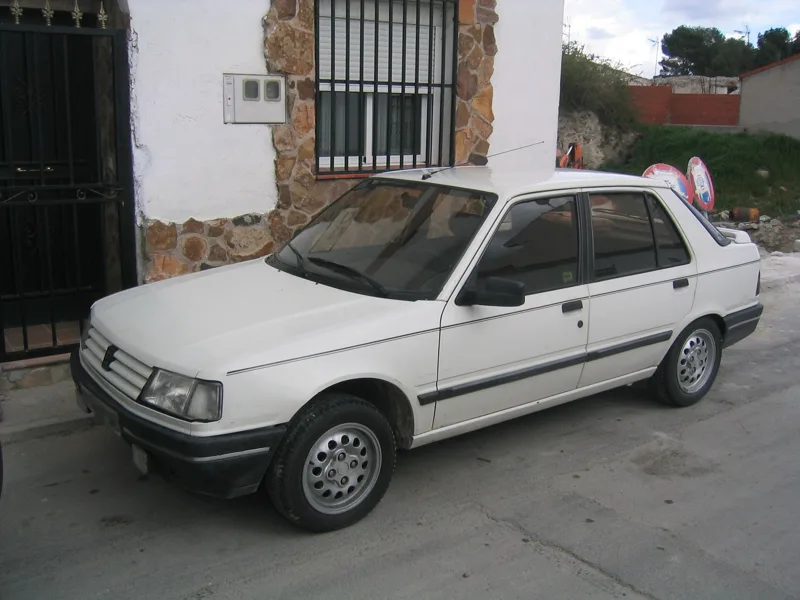
Peugeot kept the Talbot name on passenger cars until 1987, when falling sales led it to scrap the brand there. Commercial vehicles kept the Talbot badge until 1992, and the Peugeot 309 that replaced the Horizon went into production at the end of 1985.
The Talbot Tagora was a large saloon launched in 1980 as a successor to the 180 and the 2 Litre. It was not a strong seller and finished production after three years, having sold fewer than 20,000 cars. Peugeot added the Talbot Solara, an Alpine saloon, to the range in 1980.
The Samba, Alpine and Solara ceased in May 1986, and the Horizon kept going in Spain and Finland until 1987. After that Peugeot preferred to build new Peugeot models in its own name at the former Rootes factory and at the former Simca plant at Poissy.
Where did the factories and sites end up?
Peugeot kept the former Simca factory at Poissy, which became one of its most important assembly plants. The former Rootes research site at Whitley was sold to Jaguar in 1986, and it has been the headquarters of Jaguar Land Rover ever since.
The Ryton plant near Coventry produced the Peugeot 206 from the summer of 1998 until it closed in December 2006, when production moved to Slovakia. The Linwood plant had already closed in 1981. In Spain the former Barreiros plant at Villaverde, near Madrid, is now a Stellantis assembly plant.
Stellantis was created in 2021 when the PSA group merged with Fiat Chrysler Automobiles, which had itself been part of Fiat since 2009. Peugeot cars are now built in Britain at a former Vauxhall plant, and European designs are sold through Chrysler channels in the United States.
How did the commercial vehicles fit in?
Chrysler Europe's commercial vehicles were badged in several ways, including Commer, Karrier, Dodge and Fargo, and some were sold as DeSoto. From 1976 nearly all of them were marketed as Dodges, apart from a few municipal vehicles that kept the Karrier name.
The Commer 1500 and Dodge SpaceVan ran from 1960 to 1983, the Commer Walk-Thru from 1961 to 1979, and the Dodge 50 from 1979 to 1992 as its successor. The Commer Commando and Dodge 100 ran from 1970 to 1989. The Spanish heavy trucks from Barreiros were rebadged Dodge 300 in the 1970s.
After the commercial vehicle operations were sold to Renault, the Dodge name continued until 1987, when the remaining Dodge models were rebranded as Renaults.
How did the story unfold year by year?
| Year | Event | Detail |
|---|---|---|
| 1958 | Simca stake | 15% of stock bought from Ford |
| 1963 | Simca control | Controlling 63% after buying from Fiat |
| 1964 | Rootes stake | 30% of the Rootes Group |
| 1967 | Rootes takeover | Remaining Rootes shares acquired, Chrysler Europe operates from 1967 |
| 1970 | New names | Chrysler (UK) Ltd and Chrysler (France) formed |
| 1976 | British badging | Hillman replaced by Chrysler in Britain |
| 1978 | Sale to PSA | Sold for a nominal US$1 |
| 1979 | Talbot brand | Used from August 1979 |
| 1981 | Linwood closes | Closed after 18 years of use |
| 1987 | Talbot cars dropped | Passenger car brand scrapped |