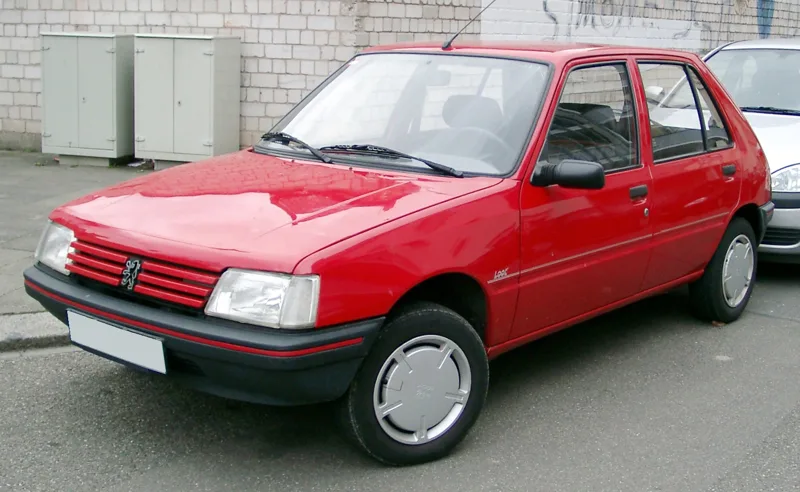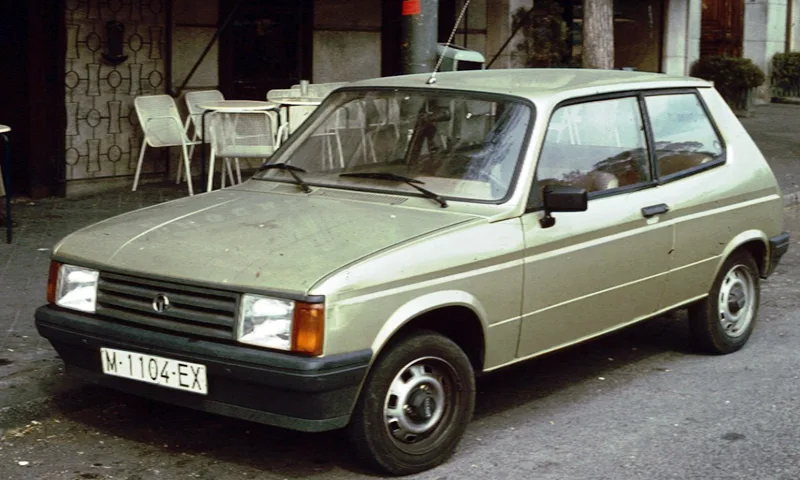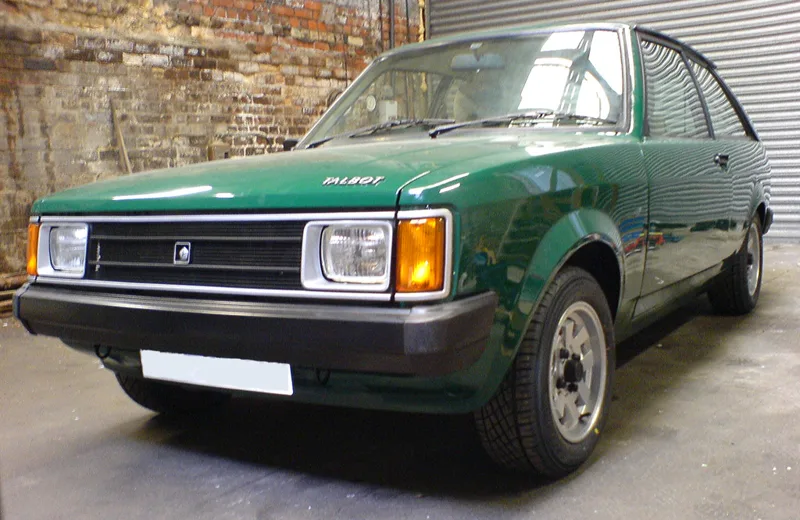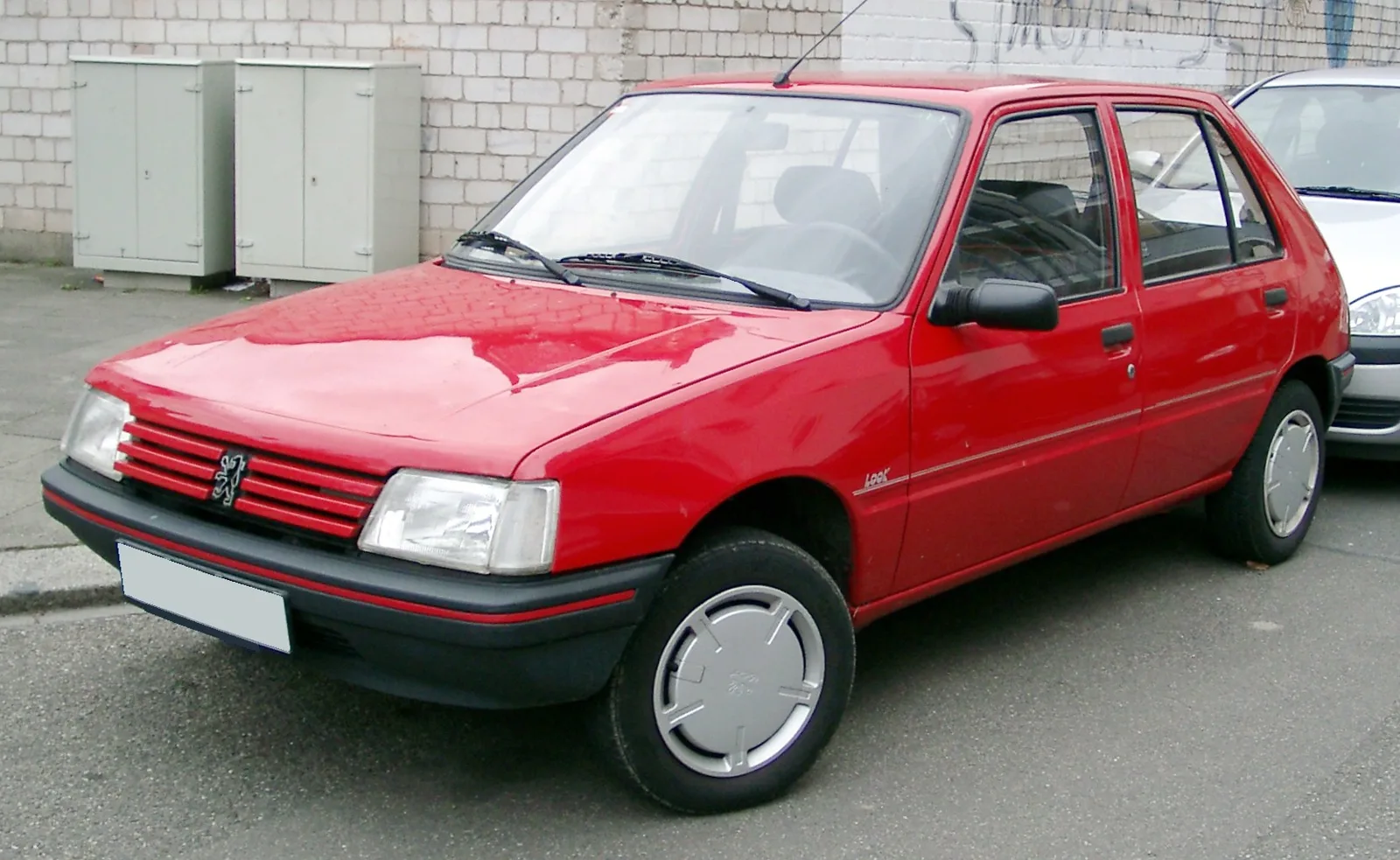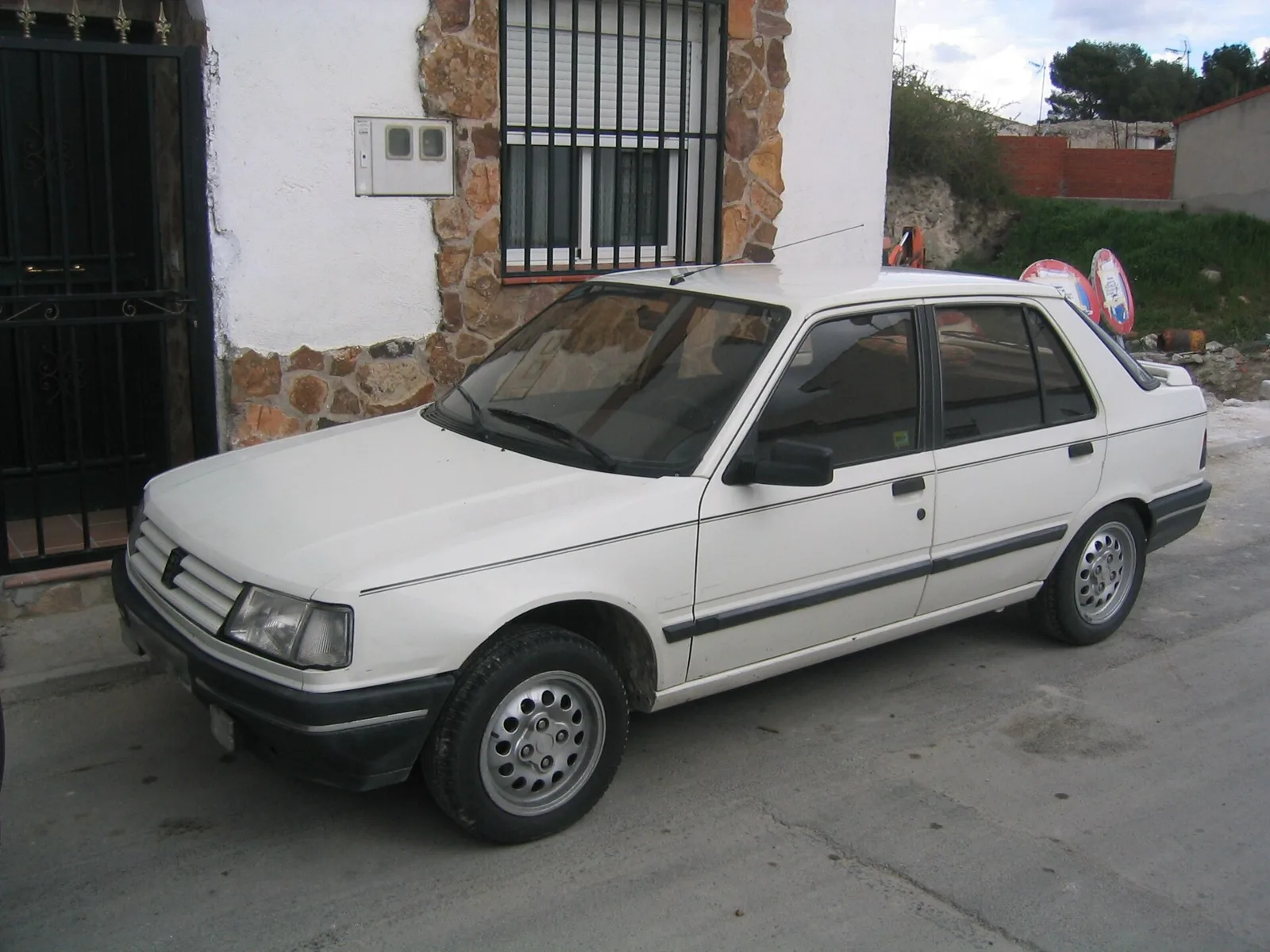
A 1985 family hatchback built in France, England and Spain, with a 205-based floorpan, Simca engines and a sporting GTi range.
The Peugeot 309 was a family hatchback built from 1985 to 1993, with a 205-based floorpan and Simca-derived engines at first. Built at Poissy and Ryton, it was a popular choice in Britain, and its GTi versions formed the sporting flagship.
The Peugeot 309 was a small family hatchback that PSA Peugeot Citroen built in France, England and Spain between 1985 and 1994. It began life as a Talbot project, and the group later folded the badge into Peugeot, after which the car became a notable seller in the United Kingdom.
Why did the 309 replace the Talbot Horizon?
The 309 succeeded the Talbot Horizon, a car that had started out as a Chrysler in Britain and as a Simca in France. PSA dropped the Talbot brand in 1985, so the new car went on sale as a Peugeot rather than under the Talbot Arizona name it had carried during development.
Development was carried out as project C28 by the former Chrysler and Simca side of the group. The styling came from the old Chrysler-Rootes studios in Coventry, while most of the engineering was done at the former Simca site in Poissy, in the Paris suburbs.
The one firm instruction from PSA management was to reuse as much existing architecture as possible. Engineers therefore stretched the floorpan and door shells of the Peugeot 205, and they carried over the Simca engines and transmissions that the Horizon had used.
The last passenger car sold as a Talbot was the Samba of 1981. Peugeot had considered a Samba based on the forthcoming Citroen AX, but the success of the 205 meant the group had little need for a third supermini, so the Samba was dropped in 1986 without a successor.
A Talbot project that became a Peugeot, the 309 left a sharp GTi and a Ryton-built legacy on British roads.
How did the 309's design take shape?
Peugeot's aerodynamic VERA studies helped shape the 309. The 1982 VERA Plus was claimed to have a drag coefficient of 0.22, and the VERA Profil followed in 1985. Many ideas tested on those concepts later appeared on production Peugeots.
Pininfarina styled most other Peugeots of the period, and that arrangement lasted until the 206 arrived in 1998. The 309 was an in-house design, and the decision to reuse the 205 door shells left it looking less balanced than the 205 and 405 that sat beside it.
The notched hatchback also bore a resemblance to the Dodge Shadow and Plymouth Sundance. Those American cars were created separately, reduced from a bigger base instead of enlarged from a smaller one, and they took over from the Horizon across the Atlantic.
Some of the 309's shape can be traced to its brief. The car needed to replace a Talbot yet still fit within the Peugeot range, so the design balanced a Chrysler-derived architecture with the new family look that the group wanted for its mainstream models.
Where was the 309 built, and how did production start?
Assembly started at the old Simca works in Poissy during late summer 1985, and the first French customers received their cars that October. Right-hand-drive cars were built at Ryton, the plant near Coventry that the group had acquired from Chrysler Europe.
Ryton completed the first British-market car in October 1985, and retail sales started in early 1986. The initial bodywork was the five-door hatchback alone, and the three-door bodystyle did not arrive until February 1987.
Peugeot's naming convention gave five-door models trim names beginning with G and three-door cars names beginning with X. That system carried over through the range, so the trim badge alone told a buyer how many doors the car had.
Ryton was significant because it was the first Peugeot to be built at the former Rootes factory. The plant later produced the 405, the 306 and the 206, and the 206 was the last vehicle built there before the plant closed in December 2006.
What engines were fitted to the 309?
The early cars used Simca-derived overhead valve petrol engines of 1118 cc and 1294 cc, with chain drive, and Peugeot XU units of 1580 cc and 1905 cc. Spanish-built cars also used the 1442 cc and 1592 cc Poissy engines that had appeared in the Simca 1307 and the Solara.
The first diesels arrived in July 1986 with the 1905 cc XUD engine in GLD and GRD models, and the SRD followed in 1987. Certain export markets received a 60 PS version of the 1769 cc diesel from the start, and France did not get the smaller diesel option until 1992.
The GTi used the 1905 cc XU9 engine, the same unit that powered the 205 GTi. In July 1989 the GTi 16 arrived with the 16-valve XU9J4 from the 405 Mi16, a limited run that was sold only in mainland Europe.
The Phase 2 car also introduced belt-driven TU engines, in 1124 cc and 1360 cc forms. They replaced the trusty Simca units during 1992, and the new engines were smoother and more modern than the earlier designs they succeeded.
What did the Phase 2 facelift change in 1989?
The Phase 2 car arrived in the summer of 1989 with a reworked rear end. The boot lip was lowered, the rear lamps took a smoked style and the front grille was slightly altered, which refreshed the look without changing the basic shape of the car.
The Phase 1 dashboard was a multi-piece unit designed by Talbot, and it developed squeaks and rattles as it aged. The update replaced it with a more solid interior, and the GTi received a colour-coded one-piece spoiler in place of the rubber spoiler of the early 1980s.
The Phase 2 car also brought the BE3 gearbox, which moved reverse to the position behind fifth gear instead of the earlier spot beside first. Retrospectively the BE3 is considered slightly less prone to failure than the earlier BE1 unit.
Which trim levels did the 309 offer?
The entry-level XE and GE models used the Simca 1118 cc or 1294 cc engines and offered sparse equipment, including a rear bench seat and small wheel covers. Options included a rear wash-wipe and a pop-up sunroof, and some markets also received a diesel E.
The L and GL models ran through the car's entire production life, with the GL adding better seat coverings, a dashboard clock and full-size wheel covers. The turbodiesel GLD Turbo later added alloy wheels from the 205 GTi 1.6, along with uprated suspension and front fog lights.
The GLX was the comfort-oriented five-door, fitted with a digital clock and a tachometer, plus a sliding glass moonroof and sports seats similar to those of the 205 XS. Central locking and front electric windows came with the 1.6 model.
The GR Profile was a 1294 cc five-door aimed at rivals such as the Austin Maestro HLE. It combined aerodynamic changes with low rolling resistance tyres, and the brochures promised three extra miles per gallon at a steady 75 mph.
The SR Injection was the sporting top model, with the 115 PS (85 kW) XU5 engine borrowed from the 205 GTi 1.6, alloy wheels and remote central locking. Many enthusiasts thought the SR handled more neatly than the GTi.
The GTi used the 1905 cc XU9 with 130 PS (96 kW). It arrived in February 1987 as a three-door, and the five-door followed soon after. Catalysed versions in some markets made 122 PS (90 kW; 120 hp), and the non-catalysed car was discontinued in 1992.
The GTi 16 was introduced in July 1989 with the 160 PS (118 kW; 158 hp) 16-valve engine. It was built only in left-hand drive, because the right-hand-drive version needed changes to clear the exhaust, and Peugeot UK chose not to import it, since UK GTi sales ran at only about 1,000 a year.
The UK Goodwood was a limited GTI with full black leather trim, and a wooden steering wheel and gear knob were available at no cost. Only 398 were built, finished in metallic pinewood green with anthracite Speedline alloys, and many took until 1994 to find buyers.
How many 309s were built, and how many remain?
Peugeot built 1,635,132 309s between 1985 and 1993. That total included 18,262 GTi models and 5,896 GTi 16 cars, and production wound down in late 1992 as the 306 approached. Only two Vital models were left on sale in July 1993.
By 2018, only 481 309s remained on UK roads, with another 1,378 registered but kept off the road under SORN. By September 2022 the number of GTis on the road had fallen to 41, while 313 more were registered but off the road.
Those survival figures show how few sporting 309s remain in regular use on British roads, which makes the GTi and GTi 16 scarce among enthusiasts today.
How was the 309 built in India?
Premier Automobiles Limited began assembling the 309 in India in 1995, with five-door bodies only. The initial model was the GL with the TU3 petrol engine, and waiting-list buyers could choose a diesel GLD from 1997.
Indian-built diesels used the smaller 1527 cc TUD5 unit instead of the XUD engines of Europe. It produced 57 hp (43 kW) and was also used by Maruti Udyog, which made the local engine a shared component in the Indian market.
Labour and servicing problems hurt the car in the marketplace. Once Premier had linked up with Fiat in a second tie-up, Peugeot ended its own partnership in November 1997, and sales of the 309 continued into 1998.
What was the 309 Automatic and the van version?
The automatic 309 arrived in 1987 and was offered only with five doors. It was initially built around the 1.6-litre XU5 engine and later with a lower-tuned 1.9-litre XU9J1 producing 105 PS (77 kW; 104 bhp), with equipment broadly matching the GR.
The XA and XAD were three-door vans with minimal equipment and no rear seats, introduced in February 1987. The XA first used the 1118 cc or 1294 cc Simca petrol engines, while the XAD took the 1905 cc diesel. After the 1989 facelift the petrol versions switched to a 1124 cc TU engine.
What are the Peugeot 309 specifications?
| Specification | Detail |
|---|---|
| Type | Small family hatchback, front-wheel drive |
| Production | 1985 to 1993; 1,635,132 built |
| Launch | Poissy from late summer 1985; right-hand drive from Ryton in October 1985 |
| Early petrol engines | 1118 cc or 1294 cc Simca OHV; 1580 cc or 1905 cc Peugeot XU |
| Diesel | 1905 cc XUD, 65 PS (48 kW); 1769 cc export unit at 60 PS (44 kW) |
| GTi | 1905 cc XU9, 130 PS (96 kW); 122 PS (90 kW) catalysed |
| GTi 16 | 1905 cc XU9J4, 160 PS (118 kW; 158 hp); 148 PS (109 kW) catalysed |
| Phase 2 engines | 1124 cc and 1360 cc TU series from 1992 |
| Automatic | Five-door only from 1987; 1.6 XU5 or 1.9 XU9J1 at 105 PS (77 kW; 104 bhp) |
| Vans | XA and XAD three-door vans from February 1987 |
| VERA Plus concept | Drag coefficient 0.22 (1982 study, not a production figure) |
| UK survival, 2022 | 41 GTis on the road; 313 registered but off the road |