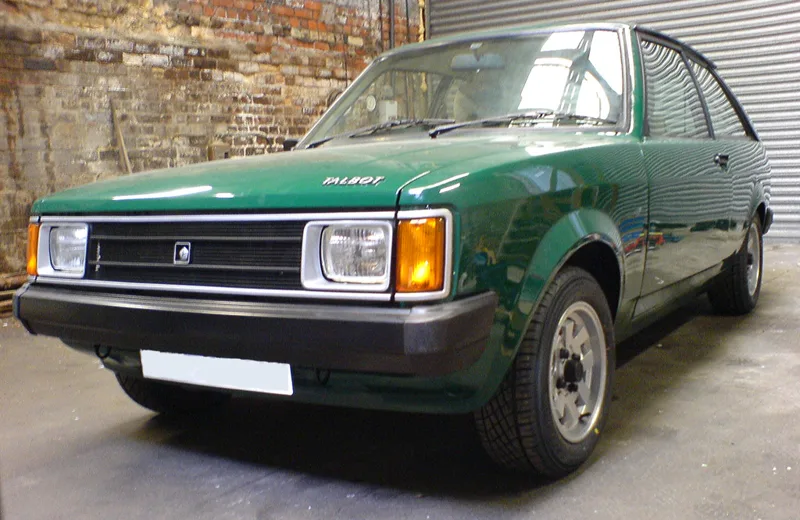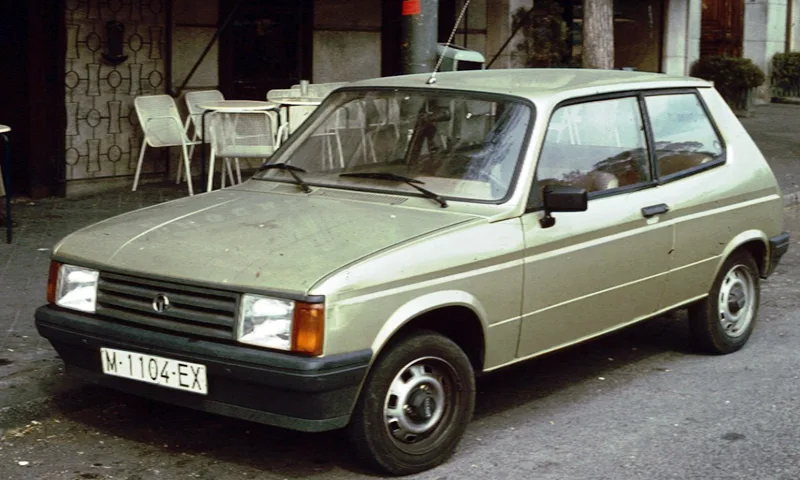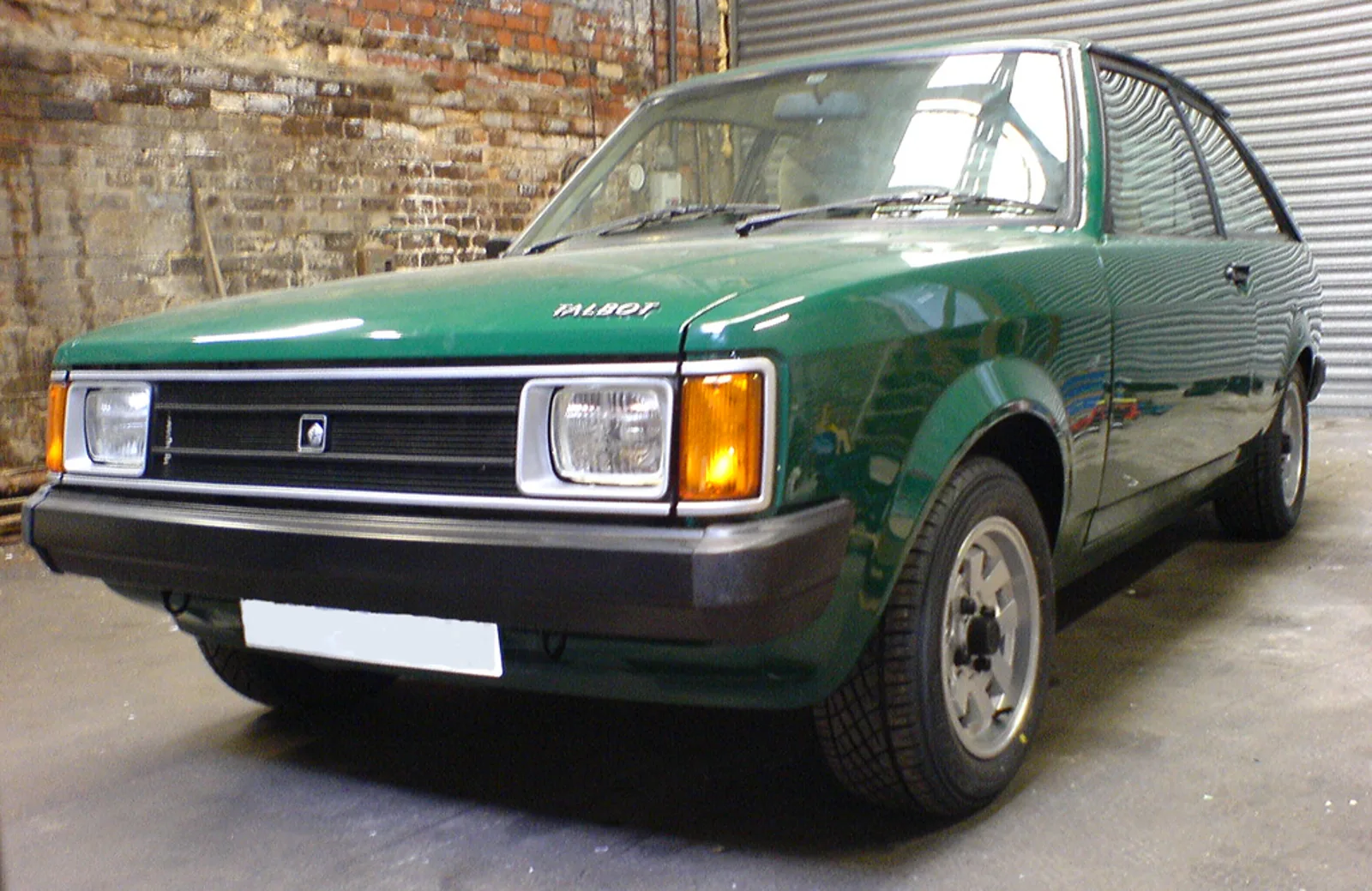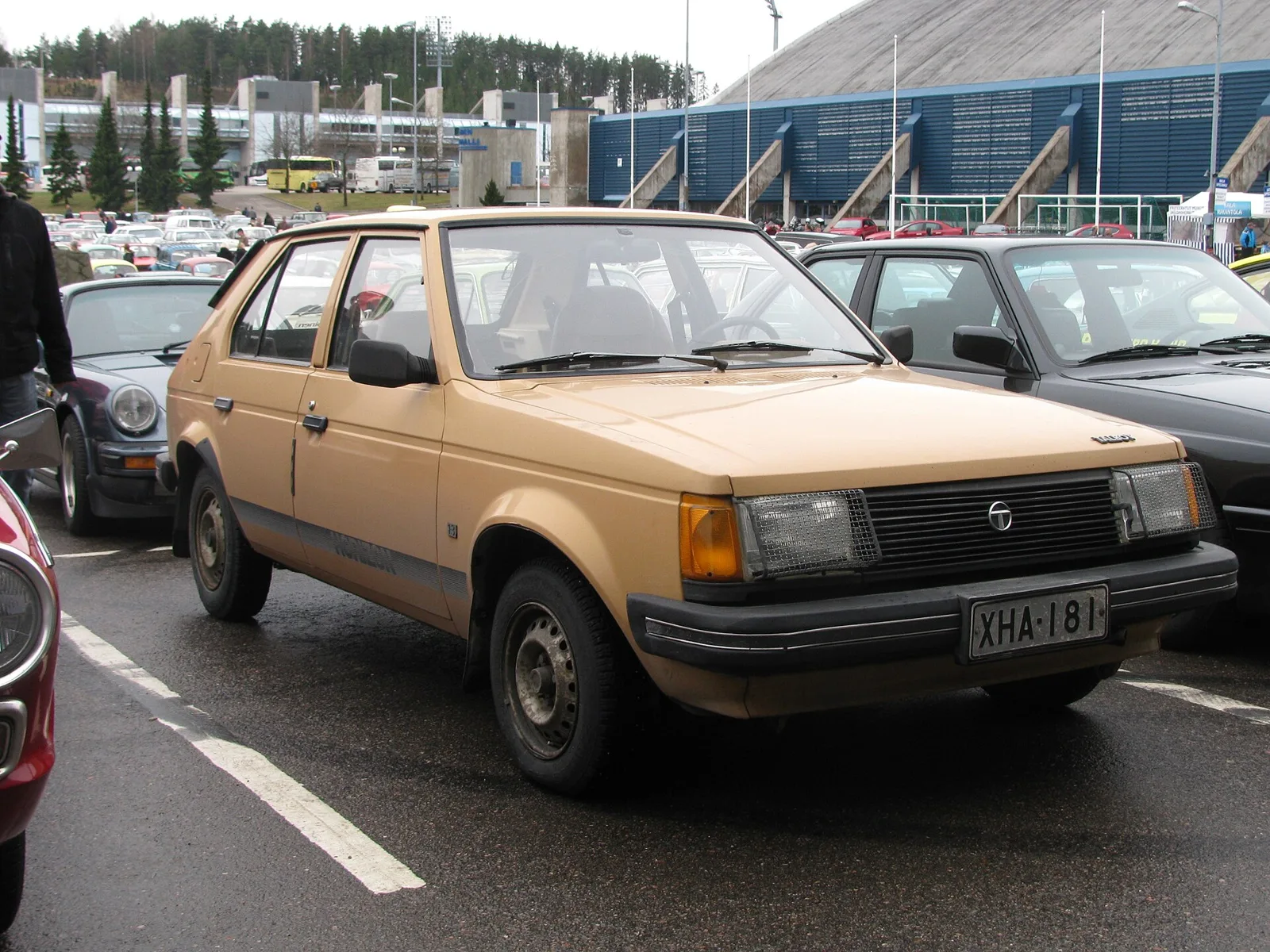
A Chrysler Europe hatchback from 1978 that won the 1979 European Car of the Year title, then sold under the Talbot badge until 1987.
Designed by Chrysler Europe, the Horizon was a five-door hatchback that won the 1979 European Car of the Year title. Peugeot's takeover of Chrysler Europe changed its badge to Talbot, and Chrysler Europe and Peugeot built 1,070,222 hatchbacks in Europe across nine years.
The Talbot Horizon was a C-segment five-door hatchback built by Chrysler Europe and sold between 1978 and 1987. It took the 1979 European Car of the Year award and was Chrysler's first world car. Peugeot's takeover of Chrysler Europe then moved the car from Simca and Chrysler badges to Talbot.
Where did the Horizon come from?
Chrysler Europe developed the Horizon under codename C2, with design at the Whitley studio in the United Kingdom and engineering at Poissy in France. Roy Axe designed it as the successor to Simca's older 1100 and the Hillman Avenger. Sales began in summer 1978, as a Simca in France and a Chrysler elsewhere in Europe.
The Horizon was meant as a world car for buyers on both sides of the Atlantic, but its European and North American versions differed substantially. In practice it was essentially a shortened Alpine, which gave it an unusually wide track for its length. Peugeot bought Chrysler's European division in 1978, and the car was then sold as a Talbot across Europe.
Production of the rear-engined Simca 1000 ended as the Horizon arrived. The Simca 1100 stayed in production in France until 1981, sold for a time as a cut-price alternative, but the two cars competed in much the same segment and the older model's sales plummeted.
The first Chrysler world car, shaped by Simca engineering and sold under three badges.
When did the Horizon win European Car of the Year?
In 1979, a year after launch, the Horizon collected the European Car of the Year title. Reviewers had already liked its sharp looks, smooth ride and sure-footed handling. Its SX version, shown at the Paris Motor Show in October 1978, also drew attention for an early trip computer.
The trip computer drew on three inputs: a clock, a fuel-flow meter on the feed to the carburettor and distance data from the odometer feed. Together they reported fuel consumption and average speed, plus distances and times, and the units could be metric or imperial. Later, the computer was offered on lower-spec trims such as the GLS.
What were the Horizon's series and trim levels?
The original Series I ran from 1978 to 1982 and was rebadged as a Talbot in 1979. The Series II arrived in July 1982 with a five-speed gearbox, black bumpers and a raised parcel shelf that enlarged the boot. The Series III arrived in 1985 with reworked cabin trim, new gauges and redesigned door panels, and ran until 1987.
By 1985 buyers had fewer paint colours and trim levels to choose from. Many cars made in 1985 and 1986 were painted in pale green or cream, a contrast with the adventurous colours of the car's introduction.
Trim names varied with engine size. The 1100 came as LE, LS, GL and GLE, the 1300 as LS, GL, LX and GLS, and the 1500 as LS, GL, EX, GLS, S and SX. A 1.9-litre LD diesel was also offered, and the basic LE lacked even a rear parcel shelf.
How did the Horizon sell in Britain?
In Britain the Horizon was a front-wheel-drive hatchback offered beside the rear-drive Avenger. Early sales were held back because it was a French import, and they improved once manufacture moved to Britain. Newer rivals such as the Ford Escort Mark III and Vauxhall Astra then dominated the segment, and sales slipped.
The Horizon overlapped rather than replaced the rear-drive Sunbeam and Avenger, which had been on sale since 1970. The Sunbeam continued alongside the Horizon in the UK until 1981, the same year the Avenger's production ended.
The Avenger stayed on sale until 1981, after Peugeot had taken over the company and launched no direct replacement. Production of Horizons in Britain ended in 1986, shortly before the Ryton-built Peugeot 309 arrived in January 1986. The Ryton factory itself remained open until December 2006.
What engines and suspension did the Horizon have?
The Horizon's engines were Simca-designed OHV units of 1.1, 1.3 and 1.5 litres, mounted across the engine bay, with four-speed gearboxes and torsion bars at launch. Later cars used the PSA BE gearbox, and automatic transmission was offered on most 1500 models. The XUD9 diesel joined the range in certain models.
The XUD9 was a 1905 cc diesel and the first example of that engine available in the UK. Every UK-market diesel Horizon was built in Spain, and the Chrysler 180 had offered diesel power in Spain during the 1970s.
Some Series II cars carried an electronic LED econometer that lit a ring of lights around the speedometer dial. Higher trims could have an LED tachometer, a line of green, yellow and red lights above the steering column that lit in 250 rpm steps.
Where was the Horizon built?
The Horizon was built mainly at Poissy in France and Ryton in England, with further production at Villaverde in Spain and by Saab-Valmet in Finland. Chrysler Europe and Peugeot built 1,070,222 hatchbacks over nine years, while United States production reached 1,639,799 Horizon and Omni hatchbacks.
Finnish-built cars carried a lot of Saab parts, mostly in the cabin and wiring. Saab-Valmet produced 2,385 cars able to run on kerosene or turpentine. UK-built cars carried 60% British-made parts at the time.
How did the American Omni and Horizon differ?
North American cars wore Dodge Omni and Plymouth Horizon badges. Although they looked similar apart from the headlights, they were substantially revised, with different engines, front MacPherson struts and bodywork that could not be swapped with the European car. The American cars were nearly 20 cm (8 inches) longer, mainly because of their larger 5-mph bumpers.
The American cars drew their engines and gearboxes from Volkswagen, later Peugeot, and Chrysler offered its own engines as an option from 1981. The family grew into three-door Omni O24 and Charger models, GLH performance variants and the Plymouth Scamp and Dodge Rampage pickups. The American L platform outlived the European car and ended production after the 1990 model year.
Was there a Group B rally Horizon?
Yes, although it never reached production. In 1982 Talbot and Lotus began a Group B rally car based on the Horizon, with a mid-engined Lotus type 911 unit powering the rear wheels. Only two prototypes were built before the project was dropped, and Peugeot then developed the all-wheel-drive 205 T16.
The project aimed to succeed the Talbot Sunbeam Lotus, and it stopped at the prototype stage.
A Horizon Turbo concept from 1984 featured a cream leather cabin and a sportier body kit, and it is held at the Coventry Transport Museum.
What are the Talbot Horizon specifications?
| Specification | Detail |
|---|---|
| Body | Five-door hatchback only |
| Segment | C-segment family car |
| Production | 1978 to 1987 model years |
| Engines | Simca-designed OHV units from 1.1 to 1.5 litres |
| Diesel | PSA XUD9, 1.9-litre (1905 cc); UK-market diesels built in Spain |
| Transmission | Four-speed at launch, later PSA BE gearbox; five-speed from Series II |
| Suspension | Torsion bars |
| Award | European Car of the Year, 1979 |
| European output | 1,070,222 hatchbacks over nine years |
| US output | 1,639,799 Horizon and Omni hatchbacks |
Taken together, the figures describe a family car built in four countries and sold under three badges, with large volumes on both sides of the Atlantic.