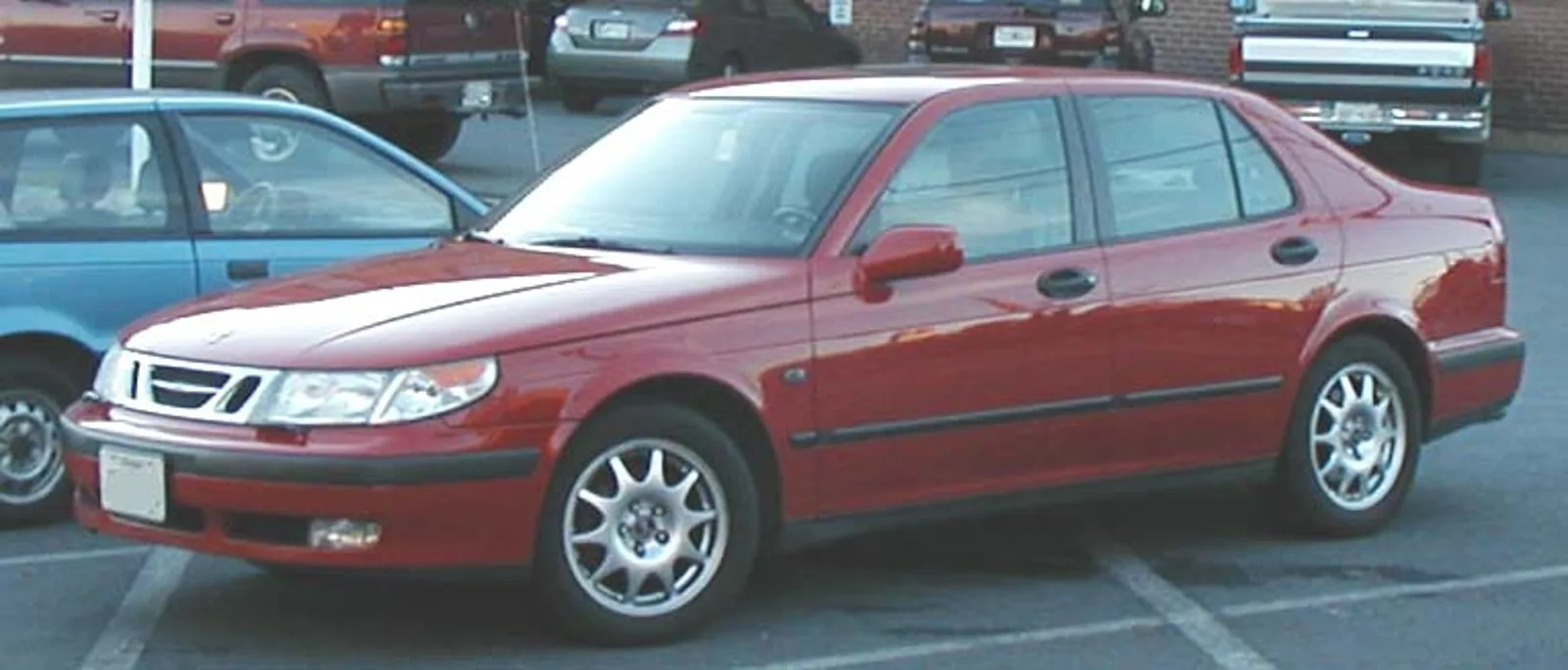
A Swedish marque from aircraft roots, with the Saab 99 and 900, a General Motors era, a 2011 bankruptcy and a final closure in 2023.
Saab was a Swedish car maker that grew out of an aircraft company formed in 1937. It built the 99 and 900, spent most of its later years under General Motors, went bankrupt in 2011 and was closed by its last owner in 2023.
Saab Automobile was a Swedish carmaker that grew out of an aircraft company and became known for engineering that was ahead of its time. It sold its last cars under the Saab name in the years before a 2011 bankruptcy, and its brand later passed to a succession of owners. This history follows the marque from its aviation roots to its final closure in 2023.
Where did Saab begin?
Saab started life as Svenska Aeroplan AB, an aerospace and defence company created in 1937 in Linkoping. It was set up to build aircraft for the Swedish Air Force, a job it took on as Europe moved toward war. As the conflict drew to a close, the company looked for new markets to diversify into.
An automobile project began in 1945 under the internal name Project 92, named after the next number in the company's aircraft sequence. In 1948 a site at Trollhattan was converted for car assembly, and the car headquarters settled there and has remained since.
From aircraft roots to a cult following, Saab built some of the most distinctive cars of its era before the brand was lost.
What was the Saab 92 and what came after it?
The company built four prototypes, known as Ursaab or original Saab, before the production 92 entered service in December 1949. About 20,000 of the early cars were sold by the mid-1950s, which gave the new maker a foothold in Swedish motoring.
The 92 was redesigned in 1955 as the 93, and the engine gained a third cylinder. The 95 estate followed in 1959, and the 96 arrived in 1960 as the first Saab to be widely exported. It sold nearly 550,000 examples and carried the company's reputation abroad.
Early models shared several unusual features, including three-cylinder two-stroke engines that needed oil added to the petrol, front-wheel drive and a freewheel that let the driver downshift without using the clutch. Front shoulder belts were also an early feature.
Why did the Saab 99 matter so much?
Launched in 1968, the 99 broke decisively from the 92 layout after 19 years without a wholly new Saab model. Its feature list included a curved windscreen, bumpers that could spring back into shape, lamp cleaners and reinforced doors, all of which helped define the brand for decades.
The design by Sixten Sason was as revolutionary as its engineering. The hockey stick profile graphic introduced with the 99 still shapes the marque's design language, which is why the car is so often cited as the start of the modern Saab.
How did Saab-Scania shape the 1970s?
In 1969 Saab AB merged with the commercial vehicle maker Scania-Vabis to form Saab-Scania AB, a group under the Wallenberg family umbrella. The merger brought more resources to the car division, which expanded its range during the decade.
The 99 range gained a combi coupe body in 1973, a shape that became synonymous with Saab. The millionth Saab car was produced in 1976, a milestone that reflected how far the marque had grown since the 92.
The 900 arrived in 1978 as the replacement for the 99. Nearly one million 900s were built, which made it the best-selling and most celebrated Saab. A convertible followed in 1986, and the car still has a devoted following among enthusiasts.
What did the Fiat link and the 9000 bring?
The partnership with Fiat, struck in 1978, gave Saab a rebadged Lancia Delta marketed as the Saab 600 and a joint platform project. That project produced the 9000 in 1985, which rode on a Type Four chassis shared with an Alfa Romeo sister car, the Fiat Croma and the Lancia Thema.
The 9000 was the first proper luxury car Saab had built, but it did not reach its planned sales volume. Its shortfall foreshadowed the commercial problems the company would face as it looked for a new owner in the decades that followed.
How did General Motors become involved in 1989?
In 1989 the car division of Saab-Scania was restructured into the independent Saab Automobile AB, with General Motors and Investor AB each holding half. GM paid US$600 million and gained the right to purchase the rest within a decade.
The new company opened a factory in Malmo that autumn, in the old Kockums shipyard. The plant aimed for 60,000 cars a year, rising to 90,000 by 1995, but it built only 10,176 cars in 1990 before it was shut in June 1991.
Under GM review the Malmo works switched to a standard assembly line, and the plant had built 20,664 cars in about two years. The experiment showed how difficult it was to combine a worker-led factory with a volume car programme.
What changed for Saab in the 1990s?
GM's involvement produced a new 900 in 1994, which shared its platform with the Opel Vectra. The car was a commercial success, and the company returned to profit in 1995 after seven years without one, although the model never matched the cult status of the classic 900.
In 1997 the company marked its fiftieth anniversary as a car maker by introducing the 9-5 at its owners' convention. The 900 was facelifted and renamed the 9-3, and a wagon version of the 9-5 followed later in the decade.
How did the GM years end in the 2000s?
GM exercised its option in 2000, spending US$125 million to make Saab a wholly owned subsidiary. The first product of the closer relationship was the all-new 9-3 in 2003, a sport sedan that dropped the iconic hatchback in favour of a conventional four-door body.
Under GM direction the 9-2X and 9-7X reached the American market, based on Subaru and Chevrolet models. Both sold poorly and were axed within a few years. GM also cancelled a 9-5 replacement early on.
As the economy slowed, GM announced in December 2008 that the brand was under review, with the possibility of sale or closure. Saab's managing director described the move into administration as the best route to independence, while the Swedish government declined to own car factories.
Who tried to buy Saab in 2009 and 2010?
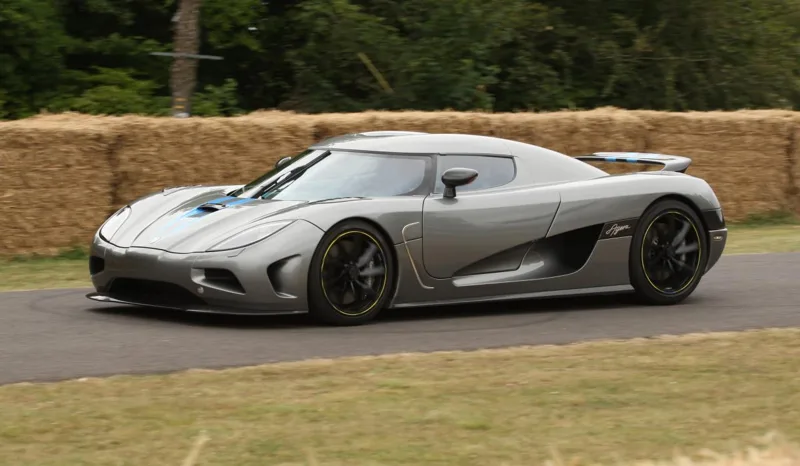
Koenigsegg said on 16 June 2009 that it wanted to buy the brand from GM, backed by Norwegian investors and the Chinese carmaker BAIC. GM consented, but Koenigsegg withdrew on 24 November 2009, citing delays and the difficulty of coordinating the parties involved.
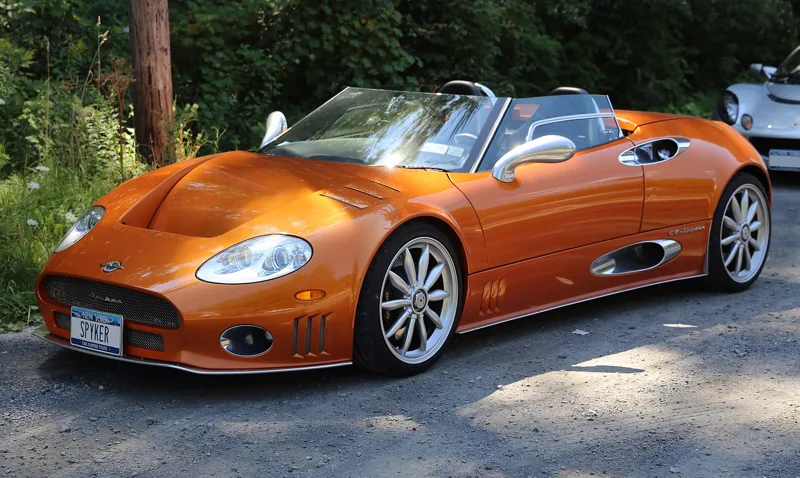
The sale that followed went to Spyker, which completed the purchase in February 2010. The deal included US$74m in cash up front, with the rest in Spyker shares and a loan from the European Investment Bank, which the Swedish government guaranteed.
How did Saab end up in bankruptcy?
Saab began to run out of money in early 2011, and suppliers stopped deliveries to the Trollhattan plant. Production was halted in April 2011, and Spyker and Saab could not cover the losses. A joint venture with Hawtai collapsed in May, and a later deal with Chinese partners ran into GM's refusal to license its technology to a Chinese owner.
With no alternatives left, Saab filed for bankruptcy on 19 December 2011 after a three-year fight for survival. Under Swedish law, a company that files for bankruptcy can still be bought out of it, which set the scene for the NEVS rescue.
Spyker's US$3 billion damages claim against GM, filed in the United States in 2012, was dismissed in 2013, and the circuit court upheld that result in 2014. The litigation showed how deeply the licensing dispute had shaped the company's final months.
What did NEVS do with the Saab name?
On 13 June 2012 a press conference announced that the bankrupt estate of Saab Automobile had been bought by National Electric Vehicle Sweden, known as NEVS. The plan was to build electric cars, starting with an electric version of the 9-3 and developing a successor called PhoeniX.
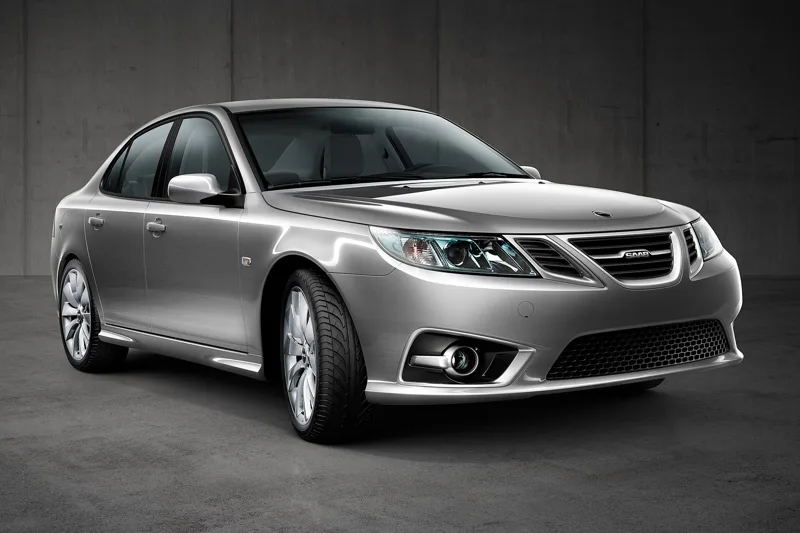
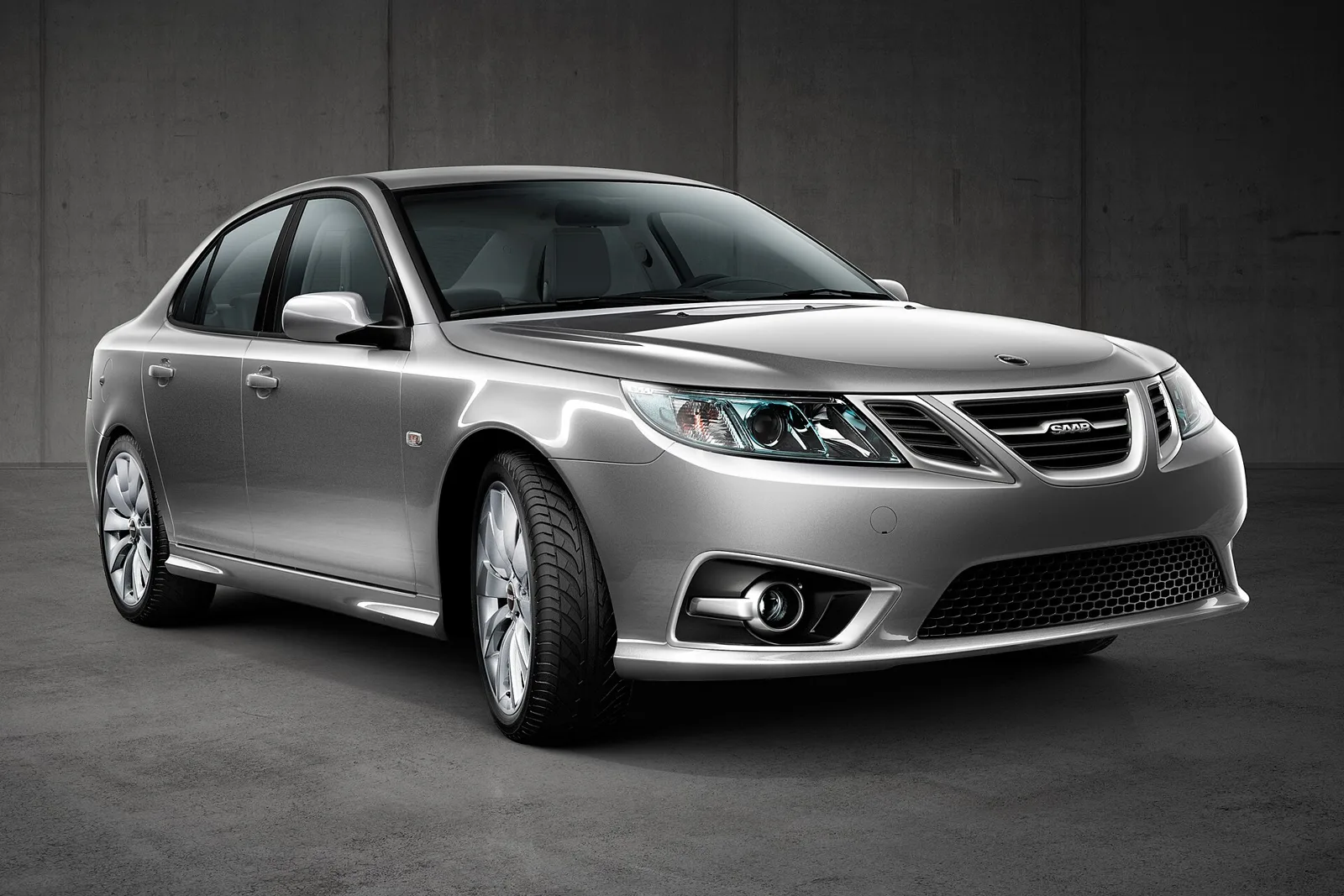
The first pre-production NEVS-built Saab rolled off the line in September 2013. NEVS resumed full output on 2 December 2013, initially building the petrol 9-3 Aero sedans that had been produced before the bankruptcy while suppliers were rebuilt.
Production stopped in May 2014 and NEVS sought bankruptcy protection. Saab revoked the right to use the brand name, and the licence was cancelled later. NEVS was acquired by Evergrande in 2019, and it was closed in March 2023 in a hibernation mode that avoided formal bankruptcy.
Which engineering firsts did Saab claim?
Saab's list of innovations is long. The 1958 GT 750 was the first Saab with seatbelts as standard, and in 1963 the range brought diagonally split brakes, a first among volume makers.
Other firsts included headlamp wipers and washers in 1970, heated front seats in 1971 and a turbo engine with a wastegate in 1976. The pollen filter arrived in 1978, direct ignition in 1985 and the Trionic engine management system in 1991.
The company also pioneered a rear-passenger protection system and an active head restraint, reflecting its wider focus on occupant safety. Safety testing was built into the design process, including the Algtest, a manoeuvre named after elk, a common hazard on Swedish roads.
What motorsport did Saab contest?
The brand also appeared in the Trans Am Series in 1966 with a 96 and an 850. Don Knowles took two SCCA titles in the Showroom Stock B class, in 1978 and 1979 in a Saab 99, and in 1980 he shared the inaugural Longest Day of Nelson 24-hour race with Bill Fishburne.
Erik Carlsson and Tom Trana were among its works drivers, with Simo Lampinen, Stig Blomqvist and Per Eklund also in the squad, and the team had stopped competing by 1980. Years later, a new squad returned to the historic Midnattssolsrallyt with four Saab 99 Turbos, driven by former champions.
Why do Saab owners have such loyalty?
Saab owners have long been described as offbeat intellectuals and enthusiasts. Albert Muniz, a marketing professor at DePaul University, called the owner culture Snaabery, and found camaraderie among drivers and a strong dislike of rival brands.
Ruhr University psychologist Rudiger Hossiep found Saab drivers to be far more involved with their cars than average Volkswagen owners, while the brand's strongest markets were Sweden, Britain and America.
What are the key figures for Saab?
| Specification | Detail |
|---|---|
| Aircraft company | Svenska Aeroplan AB, founded 1937 |
| First production car | Saab 92, December 1949 |
| Saab 96 sales | Nearly 550,000 examples |
| Saab 900 | Nearly one million built |
| GM 1989 stake | 50 percent, with US$600 million invested |
| Malmo output | 10,176 cars in 1990 |
| Full GM control | 2000, for US$125 million |
| Spyker purchase | February 2010, US$74m cash up front |
| Bankruptcy | 19 December 2011 |
| NEVS production restart | 2 December 2013 |
| NEVS closure | March 2023 |