Saab's compact executive car ran in two generations, produced the Viggen and Aero models and was the last car built under the Saab name in Sweden.
The Saab 9-3 was a compact executive car built in two generations from 1998 to 2012. Its Viggen model used a 2.3-litre turbo engine rated at 230 PS, and the car returned briefly under NEVS in 2013 and 2014 before production ended in May 2014.
The Saab 9-3 was a compact executive car from the Swedish maker Saab, built in two generations from 1998 to 2012. The first generation used the GM2900 platform and the second used the GM Epsilon platform. The 9-3 was assembled again briefly by NEVS in 2013 and 2014, when the Saab name was kept on the Aero sedans.
Why was the first 9-3 a rebadged 900?
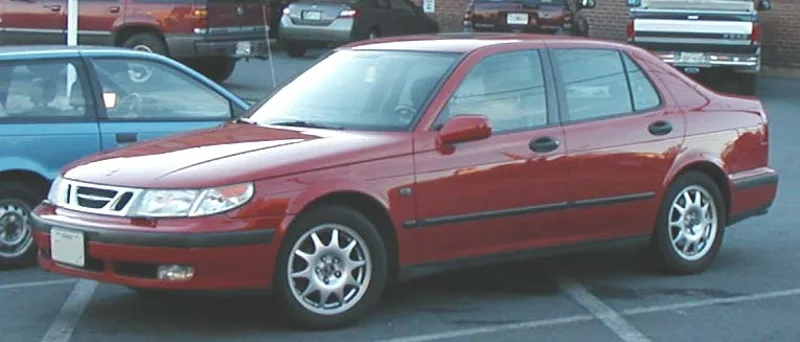
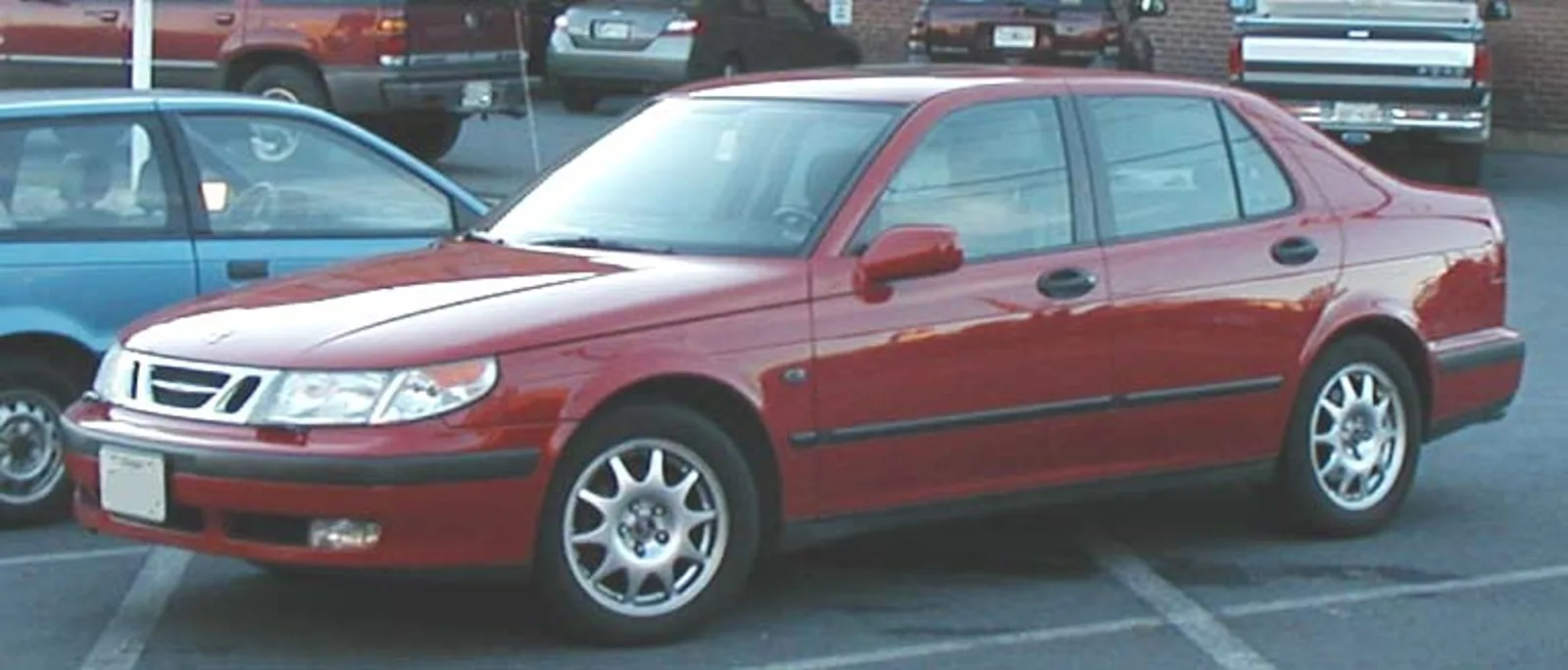
Saab began badging its smaller car as the 93 in the 1998 model year, to match the naming of the larger 95. The car was launched in 1998 for the 1999 model year, and in essence it was a rebadged second-generation Saab 900 from the 1994 to 1998 period. The name was pronounced nine-three, and it has no connection with the earlier Saab 93 built between 1955 and 1960.
Saab claimed that the new car included 1,100 changes over the outgoing 900. These included revised suspension with more wheel travel, quicker steering, and better crash protection through stronger A-pillars, door sills and B-pillars.
The first generation was called the OG 9-3 by enthusiasts and carried the internal body style code 9400. It came as a three-door or five-door hatchback and as a two-door convertible, and it was the first Saab to use a CAN bus electrical system similar to the one in the 9-5.
A compact executive car that began as a rebadged 900, produced a Viggen and ended as Saab's last built.
How did the first-generation engines work?
The 9-3 used a variety of versions of the Saab H engine. The base turbo unit, the B204E, produced 154 PS (113 kW; 152 bhp) in low-pressure turbo form. US cars received the full-pressure B204L with 185 PS (136 kW; 182 bhp) as standard, and SE models for 1999 could be fitted with the 200 hp HOT version.
The 2000 model year brought a move to Trionic 7 engine management. The Trionic 7 engines were the B205E, the B205L and the B205R HOT, the last rated at 205 PS (151 kW; 202 bhp). The 9-3 was also Saab's first car with a diesel, which came from the same supplier as the Opel Vectra and Astra G engines.
Saab's Night Panel, carried over from the 900, let drivers dim most of the instrument lighting while keeping essential information visible. Turbocharged engines used a direct ignition module mounted on top of the engine, which connected directly to the spark plugs.
What was the Saab 9-3 Viggen?
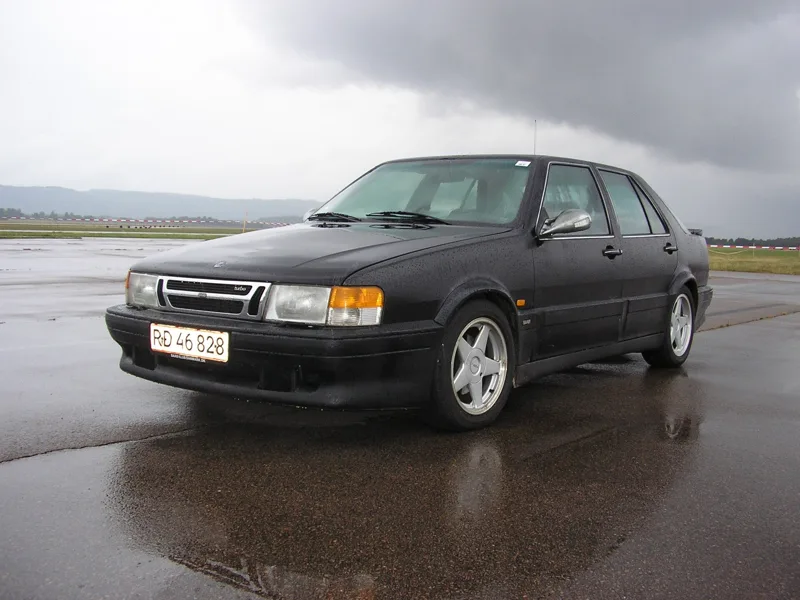
The Viggen was a limited-edition, higher-performance 9-3 sold from 1999 to 2002. It took its name from the Saab 37 Viggen aircraft, which translates as Thunderbolt, and it was developed with input from the Tom Walkinshaw Racing group. Its styling and chassis drew on the 230 bhp Saab 900 Concept Coupe built by Saab's special vehicles team.
The Viggen used the 2.3-litre B235R engine with a 9.3:1 compression ratio and Nimonic exhaust valves. Power started at 225 PS (165 kW; 222 bhp) and later rose to 230 PS (169 kW; 227 bhp) on 1.0 bar of boost from a Mitsubishi TD04-HL15-5 turbocharger. Only a five-speed manual gearbox was offered.
Other changes gave the car a sharper edge. Buyers got stiffer, lowered springs, firmer dampers, a heavy-duty clutch and stronger driveshafts, along with a larger rear wing and model-specific 17-inch alloy wheels. Traction control arrived in the 2001 model year and was later offered on the SE.
How many Viggens were built?
In total 4,600 Viggens were made by Valmet Automotive in Finland until production ended in June 2002. The UK received 500 of them, and 426 three-door Viggens were imported into the United States for 1999, most of them in blue. Valmet alone built the Viggen in all three body styles.
Reviews were divided. Evo magazine placed the car among its 10 worst ever tested, criticising the torque steer in low gears. Motor Trend praised its crisp turn-in and grip, and Jalopnik later called the Viggen the last great true Saab.
How did the second generation differ?
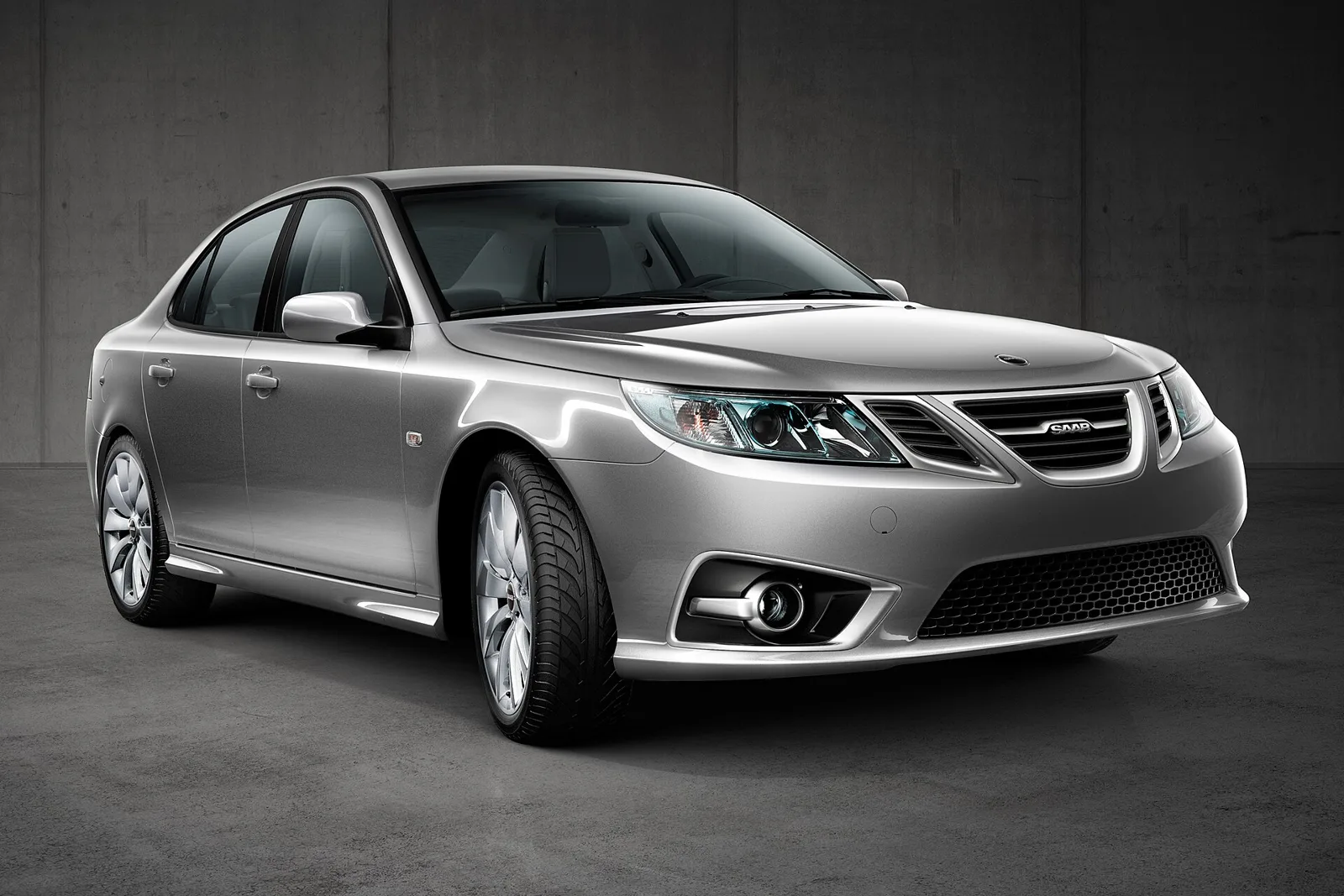
The second-generation 9-3 went on sale in July 2002 for the 2003 model year, after a concept called the 9-3X previewed it at the January 2002 Detroit show. It dropped the hatchback layout, and it was offered as a saloon and an estate, with a convertible added from 2004 and the estate arriving for the 2006 model year.
At launch the car was front-wheel drive only. It used Saab Active Head Restraints II and ReAxs rear suspension bushings that altered toe under braking to reduce understeer. The 9-3 was also a key car in the global GM Epsilon platform, which spawned the Opel Vectra and the Chevrolet Malibu.
What engines did the second generation use?
The petrol cars switched to a 2.0-litre straight-four Ecotec engine from General Motors. Three turbocharged versions were offered, with power set by boost: the 1.8t at 112 kW, the 2.0t at 131 kW and the 2.0T at 157 kW. The gearbox choice was a five-speed manual, or the Sentronic five-speed, which was a conventional automatic.
Trim levels were Linear, Vector, Arc and the Aero at the top. In the United States the Linear was only sold with the 2.0t, and the Aero gained a sunroof, larger wheels and a six-speed manual while keeping the 2.0T engine. A 2.8-litre turbo V6 arrived in 2006 and became the only Aero engine in the US.
Diesel engines came from Fiat from late 2004, starting with a 1.9 TiD in 120 and 150 PS versions. The twin-turbo TTiD arrived in 2008 and was offered with 180 PS. The 2010 model year dropped the V6 for the 2.0-litre turbo across the range.
What were the Aero and Turbo X versions?
The Turbo X was launched in 2008 to celebrate 30 years of Saab turbocharging. It used the 2.8-litre V6 with 280 PS (206 kW; 276 bhp), an XWD all-wheel-drive system with an electronic limited-slip differential, and larger brakes. Its dashboard and shift lever used a carbon-fibre look.
The 2009 model year took the Turbo X's XWD and power upgrades across the Aero range, which made the Aero the most capable model in the line. The XWD system had been introduced in March 2008, first in the Aero and then in other trims.
What was the Aero Carlsson?
In 2010 Saab marked 50 years since Erik Carlsson's first win for the company, a RAC Rally victory in a Saab 96. To celebrate, 96 Aero Carlsson 9-3s were built. Each one had XWD, a 2.8-litre V6 with 280 PS (206 kW) and 400 Nm of torque through a six-speed Sentronic automatic.
The Aero Carlsson could accelerate from 0 to 60 mph in 6.9 seconds, and from 50 to 70 mph in 6.3 seconds. It was one of the strongest models Saab offered in its final years.
What was the 9-3 ePower?
Saab unveiled the 9-3 ePower electric car at the 2010 Paris Motor Show. Based on the SportWagon, it had a 35.5 kWh lithium-ion battery, with a top speed of 150 km/h (93 mph) and a range estimated at 200 km (120 mi).
A trial fleet of 70 demonstrators was meant to run in Sweden by the end of 2011. After NEVS took over the company, it began building 200 units for testing in Qingdao, China in April 2014, with the electric 9-3 later produced in China from 2017.
Why did the third-generation car never reach production?
Work on a third-generation car began in 2007 at General Motors facilities in Russelsheim and Detroit. GM put Saab under review in December 2008, and an attempted sale to Koenigsegg failed in 2009. Spyker bought the company in February 2010, and the new management wanted a design language that set Saab apart from GM.
Jason Castriota led a new scalable platform, and the PhoeniX concept was shown at the Geneva Motor Show in March 2011. Planned replacements were to be renamed 900, with a 1.6-litre BMW turbo engine. Saab filed for bankruptcy in December 2011 before the car could be finished.
Did NEVS build any more 9-3s?
National Electric Vehicle Sweden resumed building the 2014 Aero sedan on December 2, 2013 at the former Trollhattan plant. The 220 PS 2.0-litre direct-injected turbo Ecotec engine powered the car, and it went on sale in Sweden on December 10.
Because the car no longer met the latest pedestrian safety tests, only 1,000 cars of each body style could be sold in Europe as a low-volume maker. Production ended in May 2014, after Qingbo Investment failed to reach a financing agreement. Early cars came in only two colours, black and silver. The Saab automobile era in Sweden closed at that point.
How did the 9-3 earn its reputation?
The 9-3 won several Top Safety Pick awards from the US Insurance Institute for Highway Safety, including a Gold award in 2006 and Top Safety Pick honours for 2007 to 2009. Wards Automotive also named the 2.8-litre V6 among its 10 best engines of 2006. The IIHS awards were given in the midsize luxury category, which showed the car standing out against its rivals in that class.
A 2010 reliability survey found that 93.1 percent of cars had no defect requiring service at 50,000 km, and that 84.2 percent still had none at 100,000 km. Those figures helped the car earn a reputation for reliability in the middle class.
What are the Saab 9-3 specifications?
| Specification | Detail |
|---|---|
| First generation | 1998 to 2003, GM2900 platform, 326,370 built |
| Second generation | 2003 to 2012, GM Epsilon platform |
| Viggen engine | 2.3 L B235R, 9.3:1, 230 PS (169 kW; 227 bhp) |
| Viggen production | 4,600 cars, 1999 to 2002 |
| Second-generation 2.0T | 157 kW (210 hp) |
| 2008 2.8T V6 | 255 PS (184 kW; 252 bhp) |
| Turbo X | 280 PS (206 kW; 276 bhp), XWD |
| Aero Carlsson | 96 cars, 2010, 0 to 60 mph in 6.9 seconds |
| Final build | 47 convertibles, February 22, 2012 |