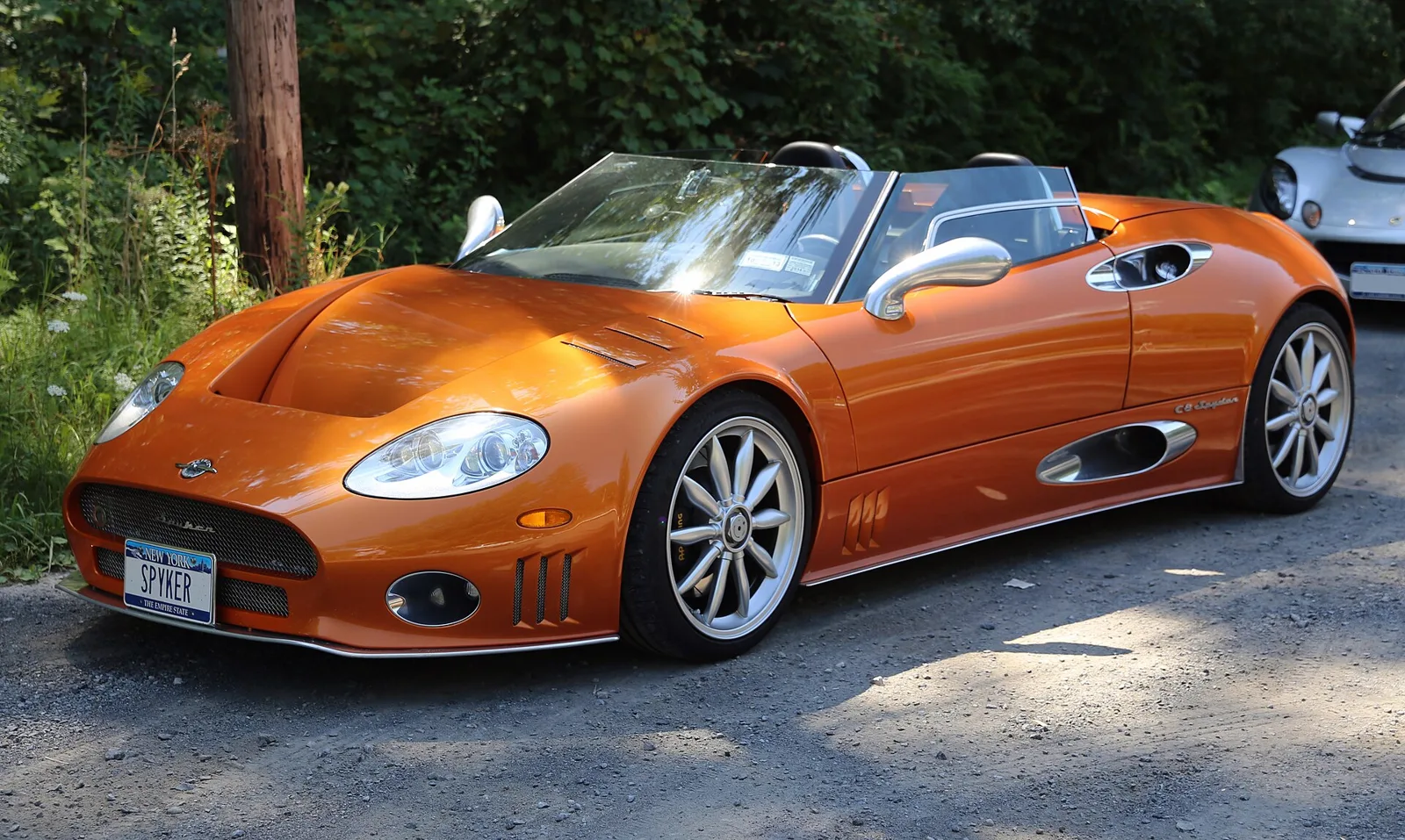
A Dutch sports car brand with an aero-engine heritage, a short Formula One stint, a costly Saab purchase and a long run of bankruptcies.
A Dutch sports car maker with a historic name, Spyker's modern company dates from 1999. It built Audi V8 powered C8 cars, ran a Formula One team, and bought Saab in 2010 before a run of bankruptcies. Its name still ties back to the historic Dutch maker of cars and aircraft.
Spyker Cars is a Dutch sports car brand, now owned through the holding company Spyker N.V. Its modern form dates from 1999, when Victor Muller and Maarten de Bruijn revived the name, and it went on to build Audi-engined sports cars, race a Formula One team and buy Saab in 2010. A string of bankruptcies followed, and the brand's trademark rights were sold in 2025.
What is the Spyker marque?
The name belongs to a historic Dutch company that made both cars and aircraft. The modern brand keeps that link alive in its logo, which places an aircraft propeller over a spoked wheel, and its motto, Nulla tenaci invia est via, which loosely means that no road is impassable to the tenacious.
The holding company that owns the brand was formerly named Swedish Automobile N.V., a name adopted during the Saab period. The sports cars built under the Spyker name have continued to carry aero-engine references in their details.
A Dutch sports car brand that bought Saab in 2010, then spent the next decade in bankruptcy courts.
How did the modern Spyker begin?
The reborn company was founded in 1999 by Victor Muller and Maarten de Bruijn. Since 2000 the firm has produced cars including the C8 Spyder and the C8 Laviolette, and the first car de Bruijn created was a prototype called the Spyker Silvestris, which inspired the C8 model.
De Bruijn was the head designer and founder, but he left the company in 2005, and Simon Koop became the main designer. De Bruijn then founded Silvestris Aquamotive, a business that builds speed boats with aluminium space frames.
The company's early financial story was tied to a stock market listing. Spyker listed on the Euronext Amsterdam Stock Exchange on 27 May 2004 at 15.50 euros, and the share price later fell to a low of 8.28 euros in April 2005 before rebounding sharply in early 2006.
What were the C8 sports cars like?
The C8 Laviolette and C8 Spyder used a 4172 cc Audi V8 that produced 400 bhp (298 kW; 406 PS). It went from 0 to 97 km/h in 4.5 seconds and topped out at 300 km/h (190 mph), and the C8 was approved for sale in the American market on 14 July 2005.
The first car in the line was the C8 Spyder. Twelve variants have been sold since production began in 2000, and power runs from 400 on the original car to 620 on the top version of the C8 Double 12S.
The C8 Double 12 S ran from 2002 to 2006 and came from the factory in five performance levels, from Stage I at 400 h.p. up to Stage V at 620 h.p. Customers chose the level that suited their needs, which made the car one of the most adjustable models in the range.
The C8 Spyder T followed from 2003 to 2007. Its twin-turbo system was developed in conjunction with Cosworth in England, and its engines were capable of 525 h.p. with 0-60 mph times of 4.0 seconds.
The CA Aileron, a long-wheelbase car, was shown at Geneva in 2008, and a convertible version arrived the year after. The range was further extended by the W12-powered C12 La Turbie, which arrived in 2006 with 500 horsepower and a 0-60 mph time of under 4 seconds.
Did Spyker race in Formula One?
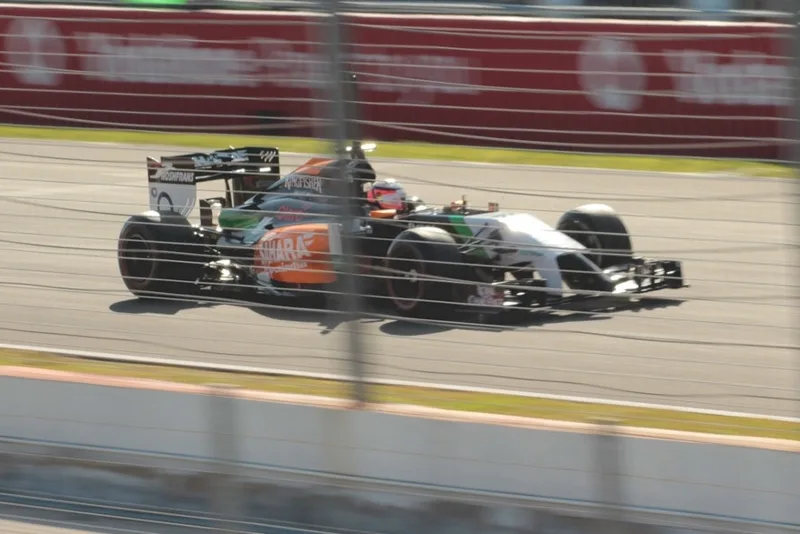
In September 2006 Spyker bought the Midland F1 team, paying US$106.6 million for the squad. It ran under the Spyker MF1 name for the last three rounds of 2006, and in the 2007 season it competed as Spyker F1 with engines supplied by Ferrari.
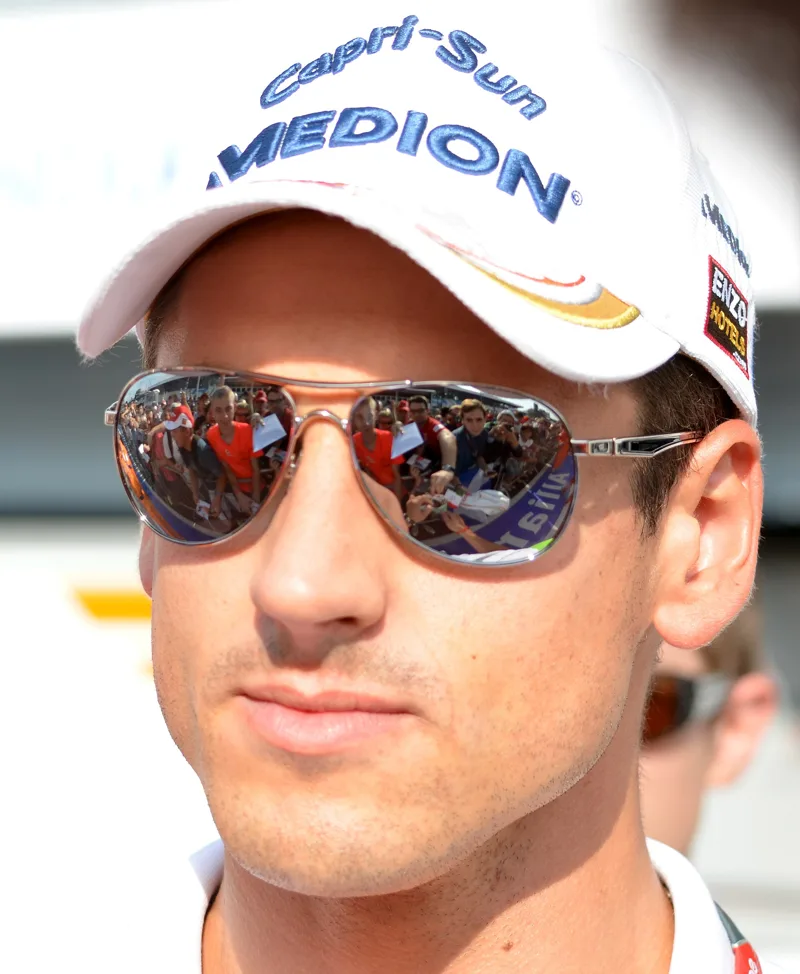
Adrian Sutil shared the car with Christijan Albers up to the European Grand Prix; Markus Winkelhock then stepped in as reserve, and Sakon Yamamoto covered the rest of the year. The team struggled with many retirements, though Sutil's single championship point came in Japan.
At the end of 2007 the team was sold to a consortium led by Vijay Mallya, and it was renamed Force India for the 2008 season. Spyker's Formula One interest had lasted little more than a year in full competition.
What happened to the C12 and D12 projects?
Before a single car was built, Spyker dropped the whole C12 programme in October 2007, including the La Turbie and its sister model, the Zagato. The company wanted to focus its resources on other models,. The decision let the company concentrate on the models it still expected to build.
The D12 Peking-to-Paris SUV, a high-performance model, was revealed at Geneva in 2006. Mass production, first planned for mid-2008, was delayed, and its V12 was replaced with a Volkswagen W12 rated near 500 bhp (373 kW; 507 PS). The model was then renamed the D8.
In April 2011 Muller said the D8 would reach production in early 2013 at a price of 186,000 pounds. By March 2013 that had slipped to 2016, and the plans were eventually dropped. A proposed E8 or E12 saloon to rival the Maserati Quattroporte and Porsche Panamera never reached production either.
Why did Spyker buy Saab?
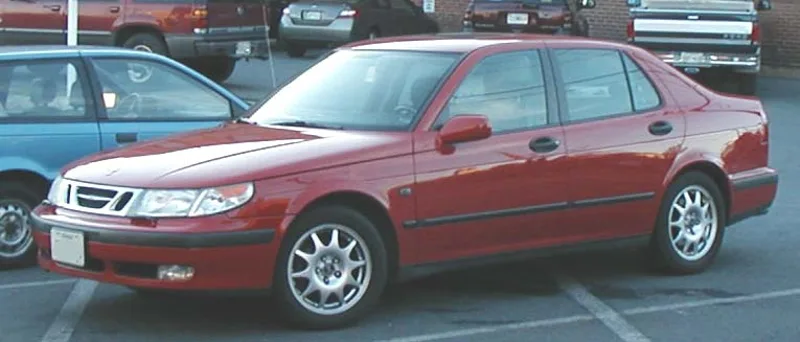
In late 2009 Spyker moved to acquire Saab Automobile, after the collapse of the Koenigsegg deal with General Motors. GM entered talks with Spyker, but it stopped negotiations on 18 December because of concerns about links between a major Spyker shareholder and organised crime syndicates.
Muller revived the deal by revising the bid and buying the shareholder's shares through Tenaci, a company he controlled. Spyker then agreed on 26 January 2010 to buy Saab for US$394 million, with US$74 million paid in cash and the rest, US$320 million, in Spyker shares. GM would continue to supply engines and transmissions to Saab.
Spyker completed the purchase on 23 February 2010. Both Spyker and Saab were to become subsidiaries of a parent called Swedish Automobile, and the name change was approved by shareholders on 15 June 2011, when the company became Swedish Automobile N.V.
How did the Saab business end in bankruptcy?
By the end of 2010 Saab Automobile had run out of money, and Spyker could not fund its losses. Production halted on 30 March 2011 after suppliers refused to deliver parts on credit, and it briefly restarted before stopping again in June 2011.
The sale of Spyker's sports car unit to Vladimir Antonov, expected at 15 million euros, fell through in March 2011. Swedish Automobile then tried to sell Spyker Cars to North Street Capital for 32 million euros, but the offer was declined, and a sale of Saab to Youngman and Pang Da was rejected by GM.
Saab Automobile filed for bankruptcy on 19 December 2011. In June 2012 the business was sold to the Chinese-Swedish group National Electric Vehicle Sweden, and the holding company then took the Spyker N.V. name.
Did Spyker sue General Motors?
Yes. In August 2012 Spyker announced a lawsuit against GM over the Saab bankruptcy, claiming damages of US$3 billion. The case was heard in Detroit in June 2013, and Judge Gershwin Drain dismissed it, finding that GM had a contractual right to approve or reject the sale.
Spyker took the case to the 6th Circuit appeal court in Cincinnati, where the hearing took place in October 2014. The judge ruled for GM, finding that its blocking of the sale rested on reasonable business worries about who would profit from its licensed technology.
How did Spyker's finances hold up?
Youngman acquired a 29.9% stake in Spyker in August 2012 for 10 million euros. Two joint ventures followed, Spyker P2P for luxury sports utility vehicles and Spyker Phoenix for premium cars on the Saab PhoeniX platform, with Spyker holding 25% and 20% stakes.
Spyker recorded losses every year from 2007, and its all-time sales peak came in 2006, with 94 cars sold. Between 2000 and 2010 the firm sold about 290 cars, a small output for a company with a listing and a Formula One team.
Spyker lost its Euronext Amsterdam listing on 16 September 2013 after failing to reach a restructuring agreement. In late 2014 it was ordered to leave a rented factory and to pay 152,000 euros in overdue rent, and the company sought a moratorium on payments on 2 December 2014.
What happened to Spyker's restructuring?
The Central Netherlands District Court first declared Spyker bankrupt on 18 December 2014, but it changed its view on 29 January 2015 once Spyker had appealed. The court granted the petition for financial restructuring, and an administrator worked with the board during the process.
Spyker reached a settlement with its creditors, who were owed a combined 44 million euros, and each was to receive 12,000 euros. The largest creditor, Saab GB, agreed to a payment of 61,000 euros. The company completed its restructuring plan on 29 July 2015 and resumed regular business.
Where does Spyker stand now?
Spyker filed for bankruptcy again in January 2021, and the trustee, Mr D. Steffens, took control of the case. By then the company had no factory, staff, parts or tools left, since those had been laid off, sold or lost earlier.
In its August 2025 bankruptcy report the trustee announced the sale of Spyker's trademark rights, which ruled out a restart by Muller. In October 2025 Muller and the trustee of two Spyker subsidiaries reached a final settlement, which gave the company's founder full control over the business he had started.
What is the C8 Preliator?
The most recent model in the line was the C8 Preliator, announced at the 2016 Geneva Motor Show with a plan to build only 50 examples. It was powered by a supercharged 4.2-litre Audi V8 making 525 hp, which took it from 0 to 100 km/h in 3.7 seconds and gave it a maximum of 322 km/h.
It could be ordered with a 6-speed Getrag manual or a 6-speed ZF automatic. Like earlier Spyker cars it used aviation-inspired touches such as NACA-styled air inlets, and it gained a head-up display and phone pairing over Bluetooth.
What are the key Spyker figures?
| Item | Detail |
|---|---|
| Reborn company | 1999, Victor Muller and Maarten de Bruijn |
| C8 engine | 4172 cc Audi V8, 400 bhp (298 kW; 406 PS) |
| C8 Double 12 S | 400 to 620 h.p., Stages I to V, 2002 to 2006 |
| Listing | Euronext Amsterdam, 27 May 2004, 15.50 euros |
| Sales peak | 94 cars in 2006 |
| Formula One | Midland F1 Racing for US$106.6 million, 2006 |
| Saab purchase | US$394 million, agreed 26 January 2010 |
| C8 Preliator | 50 planned, 525 hp, 2016 |
| Trademark sale | Announced in August 2025 |