From a 1958 London start-up to the DFV, Ford's backing, a run of owners and a V12 hypercar engine: the company that powered Formula One for a generation.
Cosworth Engineering was founded in London in 1958 by Mike Costin and Keith Duckworth, both former Lotus engineers. Its DFV engine dominated Formula One for two decades, and the company has since passed between owners including Ford, Audi and Mahle.
Cosworth is a British engineering company that built some of Formula One's most successful racing engines. Founded in London in 1958, it has 176 Formula One wins as an engine supplier, third most behind Ferrari and Mercedes. Its Double Four Valve design, the DFV, defined the sport for a generation.
Who founded Cosworth and where did it start?
Mike Costin and Keith Duckworth started the business in London in 1958, and its name joins their two surnames. Both had worked at Lotus Engineering, and early revenue came almost entirely from Lotus, which kept a close tie with Colin Chapman.
Duckworth left Lotus when the company was founded, while Costin remained for a time as a key Lotus engineer. Costin worked on Cosworth projects in his private time, a split that shows how closely the two businesses were tied at the start.
Early series production engines were sold almost entirely to Lotus, and the racing engines up to the Mk.XII went to Team Lotus. Formula Junior engines began to bring in non-Lotus revenue, and a new American class, Formula B, gave the company the sales that secured its finances.
Today the company has sites in Northampton, Cottenham, Silverstone and Indianapolis, which reflects how far the business has spread from its London roots.
A London start-up built on Lotus work became the engine behind Formula One's most successful racing machinery.
How did Cosworth reach Formula One through Ford?
The breakthrough came with the FVA, a four-valve double overhead camshaft design. Ford bought the rights to it in 1966, and the contract covered a four-cylinder Formula Two proof of concept and a pure Cosworth V8 for Formula One. That V8 became the DFV.
Colin Chapman, who ran Team Lotus, helped convince Ford to back Keith Duckworth's plan for a light 3,000-cubic-centimetre Formula One engine. Ford felt that GBP 100,000 was adequate to spend on the objective, and the project went ahead on that basis.
The FVA itself dominated the 1.6-litre Formula Two category until 1971. Its cylinder head ideas fed straight into the DFV, which is why the Formula Two engine and the Formula One engine are often discussed together.
Why was the DFV so dominant?
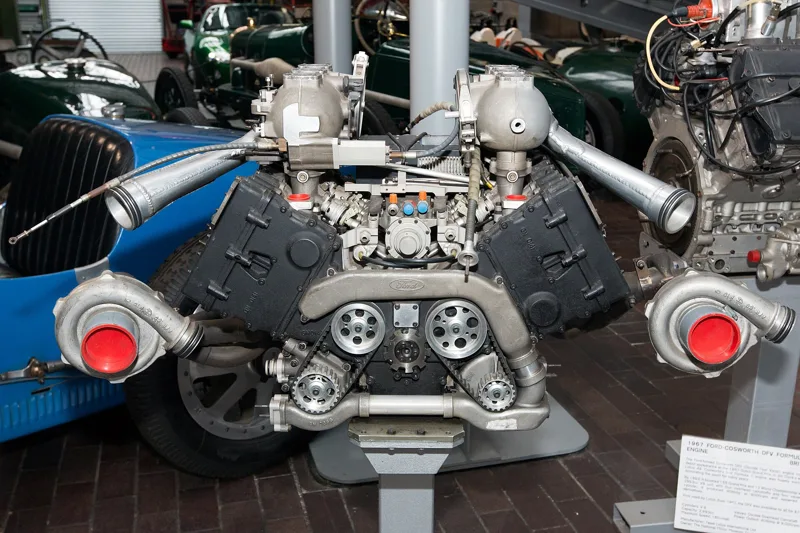
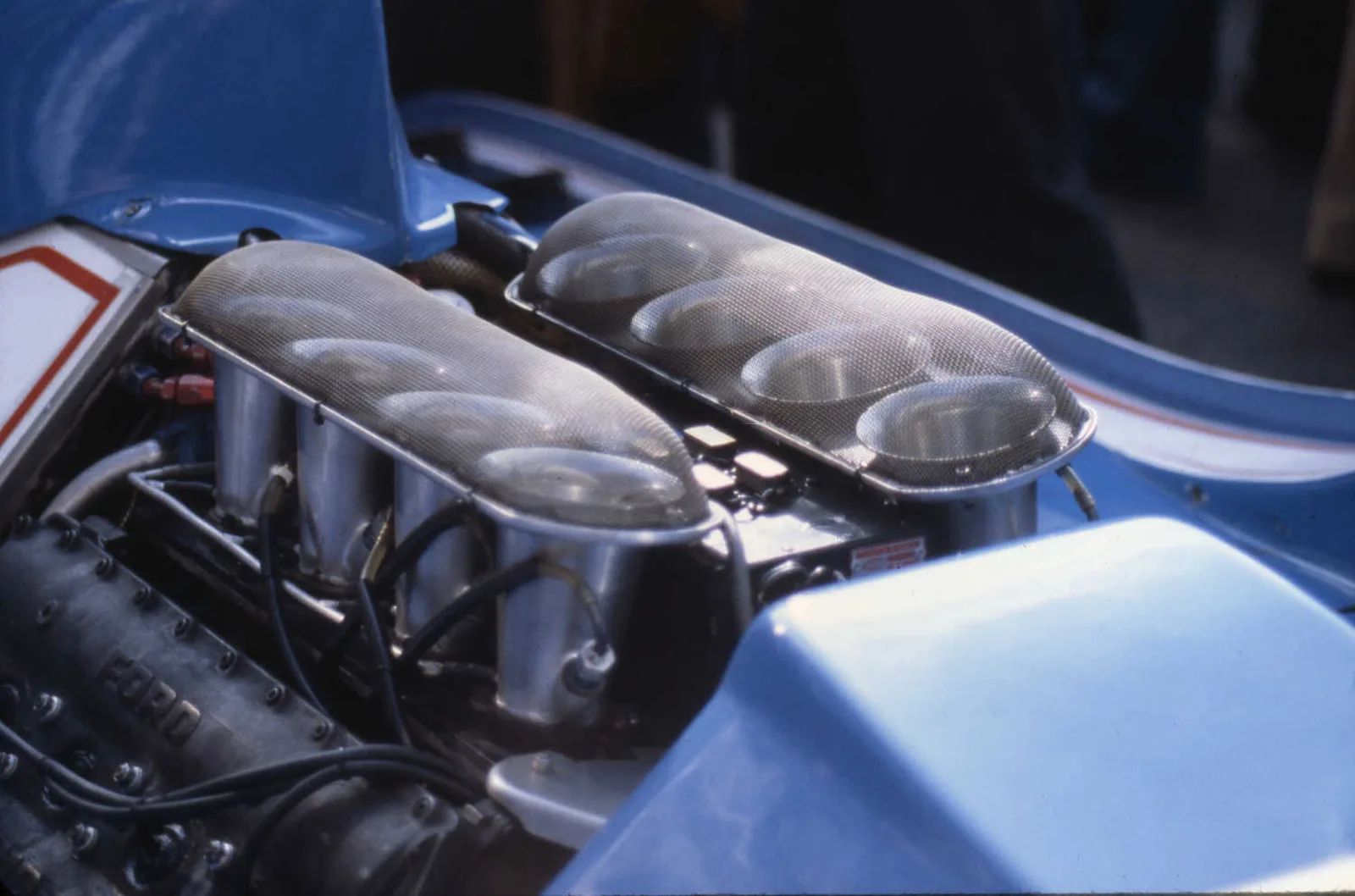
The DFV, short for Double Four Valve, was a single 90-degree V8 that became the most successful engine in Formula One history. It won a record 155 World Championship races, and 167 races in total over a career that lasted more than 20 years. The last World Championship race win came at Detroit in 1983, for a Tyrrell driven by Michele Alboreto.
Its debut win came at the 1967 Dutch Grand Prix, when Jim Clark drove a Lotus 49 to victory with it. From 1968 it was available for purchase by any Formula One team. During the 1970s almost the entire field used one, the notable exceptions being Ferrari, BRM and Alfa Romeo, which won with V12 engines.
The engine was lighter than the V12 rivals it faced, and it was built into the car as a structural member, with load-bearing arms stressing the block. That approach suited Colin Chapman's designs well. The original DFV made 410 bhp (306 kW; 416 PS) at 9,000 rpm, less than some 12-cylinder engines, but its power-to-weight ratio was better.
| Season | Engine | Notable result |
|---|---|---|
| 1967 | DFV | Jim Clark wins the Dutch Grand Prix in a Lotus 49 |
| 1983 | DFV | Last World Championship race win, Detroit, for Tyrrell |
| 1986 | GBA turbo V6 | Debut at the San Marino Grand Prix; first points with Jones fourth and Tambay fifth in Austria |
| 1989 | HB V8 | Benetton wins the Japanese Grand Prix |
| 1994 | EC (Zetec-R) | Michael Schumacher wins the Drivers' title with Benetton, the last Ford-powered F1 title |
| 1995 | ECA | Frentzen third at Monza with Sauber |
| 1996 | JD V10 | Johnny Herbert third at Monaco |
| 1997 | VJM V10 | Barrichello second at Monaco, Stewart Grand Prix's first points |
| 2006 | CA2006 V8 | Williams begins using Cosworth V8s |
| 2010 | CA2010 V8 | Supplies Williams, Hispania, Lotus Racing and Virgin Racing |
| 2013 | Customer engine | Last premier-class racing engines, supplied to Marussia |
What engines came after the DFV?
The DFY arrived in 1982 with 520 bhp at 11,000 rpm, but it could not match the turbocharged cars of the day. Cosworth built the DFZ as an interim 3.5-litre design for 1987, and the DFR was the final DFV evolution. The DFR scored its last points with Tyrrell in 1990, including two second places for Jean Alesi.
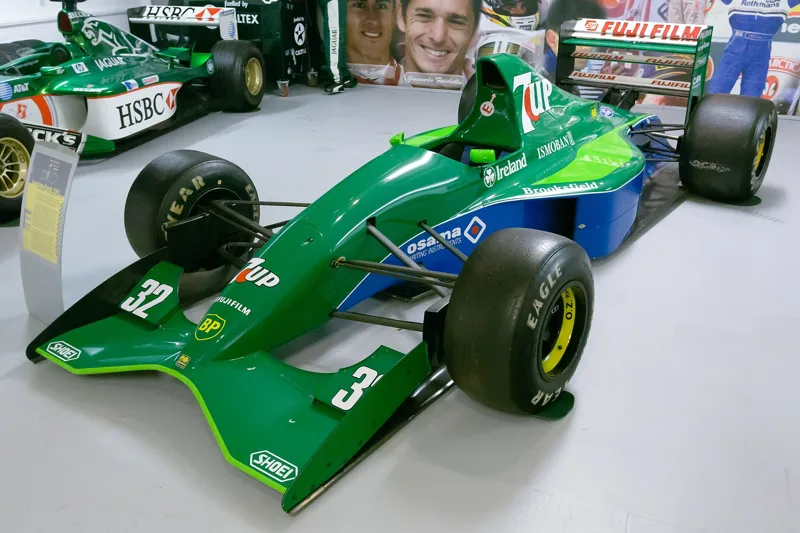
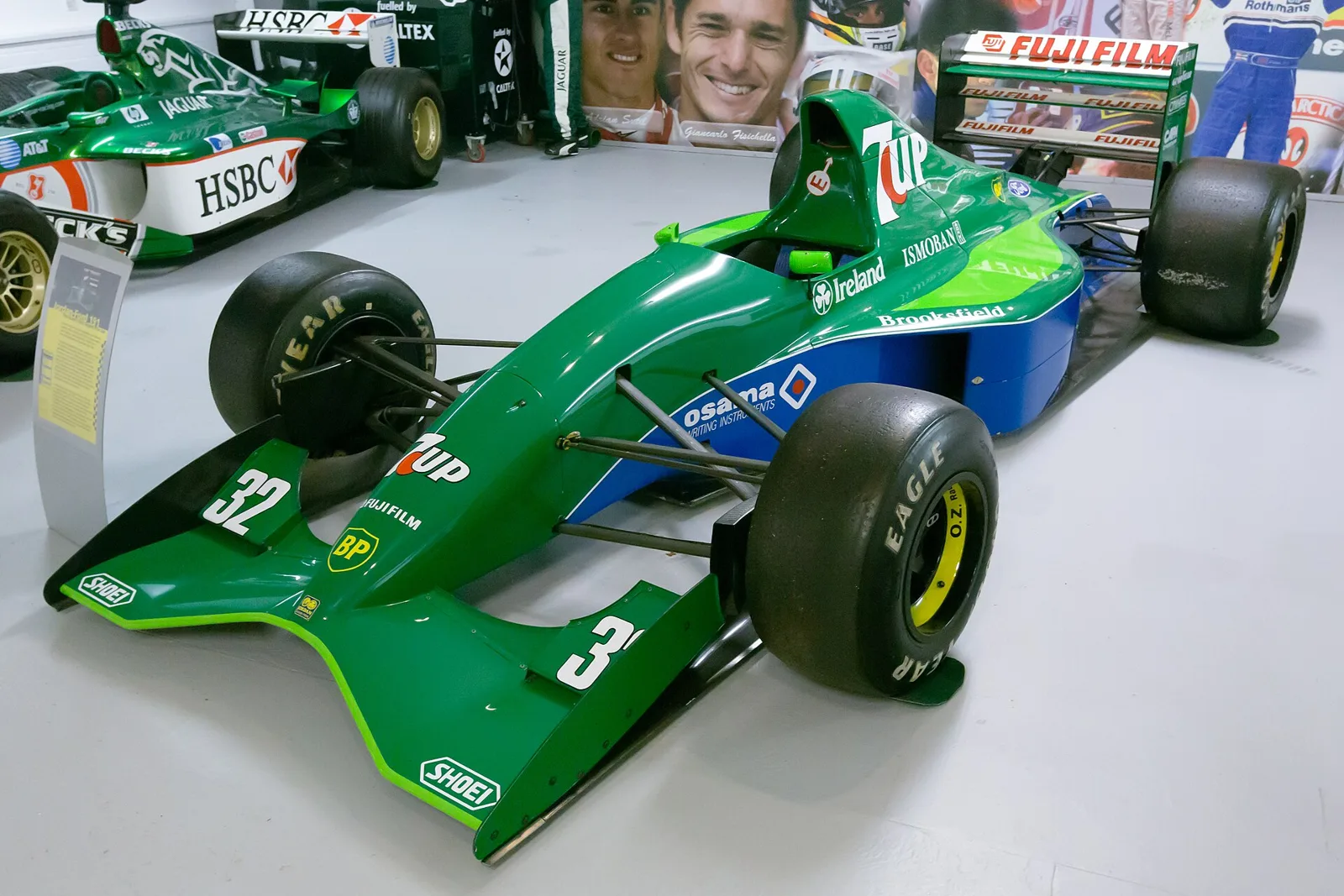
The HB V8, designed by Geoff Goddard, replaced the DFV family. It debuted with Benetton midway through 1989 at the French Grand Prix, and it won the Japanese Grand Prix that year. Customer units followed in 1991, when they went to the fledgling Jordan Grand Prix team.
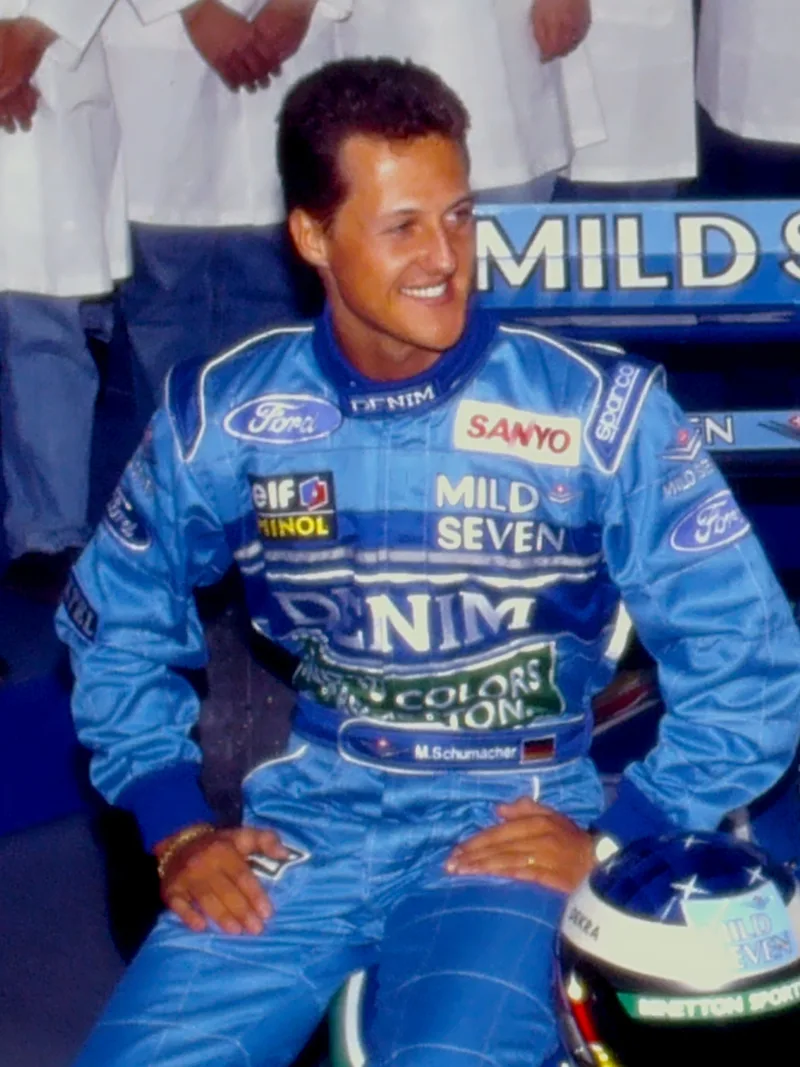
The HB evolved into the EC, which was badged Ford Zetec-R, and Michael Schumacher won the 1994 Drivers' title with Benetton on it. That was the last Ford-powered Formula One title. For 1995 the regulations moved to 3-litre engines, and the ECA served Sauber, whose best result was Heinz-Harald Frentzen's third place at Monza.
The JD V10, a 72-degree engine, arrived for 1996 and was used by Sauber, with Johnny Herbert taking a third place at Monaco that year. The VJ and VJM developments followed, and Rubens Barrichello's second place at Monaco in 1997 gave the newly formed Stewart Grand Prix its first points.
What was the turbo V6 Cosworth built for 1986?
The GBA turbo V6, designed by Keith Duckworth and Geoff Goddard, was Cosworth's answer to the turbo era. Its first road test took place on 21 February 1986 at Boreham in Essex, where Alan Jones drove the new Lola THL2 for Haas Lola, with snow on the ground and the engine running a conservative boost setting.
The engine made its Formula One debut at the 1986 San Marino Grand Prix, the third round of the season. Jones qualified 21st and retired after 28 of the race's 60 laps with overheating. He recorded the engine's first finish with 11th place at the Belgian Grand Prix, and Jones and Patrick Tambay then took fourth and fifth in Austria, the V6's first points.
The V6 produced approximately 900 bhp, the most powerful Formula One engine Cosworth designed and built. Benetton took it over for 1987 after BMW left the sport, and Teo Fabi took the engine's first podium with third in Austria. Thierry Boutsen's third place in the final race of the year, in Australia, was its last podium.
How did ownership change after Duckworth?
Duckworth sold his stake to United Engineering Industries in 1980, but he kept his life presidency and his day-to-day technical role. UEI was taken over by Carlton Communications in 1988, and Carlton had little interest in an engineering business. The traditional engineering company Vickers plc bought Cosworth in 1990.
Vickers handed the company to Audi in September 1998. Audi retained the engineering arm, renamed Cosworth Technology, while the race engine business, Cosworth Racing, and the electronics firm Pi Research went to Ford. Audi later sold Cosworth Technology to Mahle GmbH in December 2004, and it was renamed MAHLE Powertrain on 1 July 2005.
On 15 November 2004 Ford sold Cosworth Racing to Champ Car owners Gerald Forsythe and Kevin Kalkhoven. Pi Research went to them in December 2004 as well, creating the Cosworth Group, which kept the Cosworth name in motorsport.
Which teams used Cosworth engines after 2000?
Cosworth's customer relationships continued through the 2000s, and the list of teams changed with each owner. Ford bought Stewart in 2000 and renamed it Jaguar Racing. After Ford pulled out at the end of 2004, Red Bull Racing kept using Cosworth V10s until it switched to a Ferrari V8 for 2006.
Williams began testing the CA2006 2.4-litre V8 in November 2005 and used Cosworth V8 engines from 2006. Toro Rosso ran detuned V10 engines based on the 2005 units that year. In 2007 Williams switched to Toyota power, which left Cosworth without that partner.
Cosworth won the tender to provide a standard engine after Honda withdrew in December 2008. In 2010 the company returned as the supplier for Williams, Hispania Racing, Lotus Racing and Virgin Racing. The CA2010 used the same 2.4-litre V8 base as the CA2006, but it was retuned for an 18,000 rpm limit that replaced the earlier 20,000 rpm.
What did Cosworth build outside Formula One?
Cosworth was just as active away from Formula One. The BDA series began with a 1601 cc engine for the Ford Escort, and the Sierra RS500 came to dominate touring car racing from 1987 to 1992.
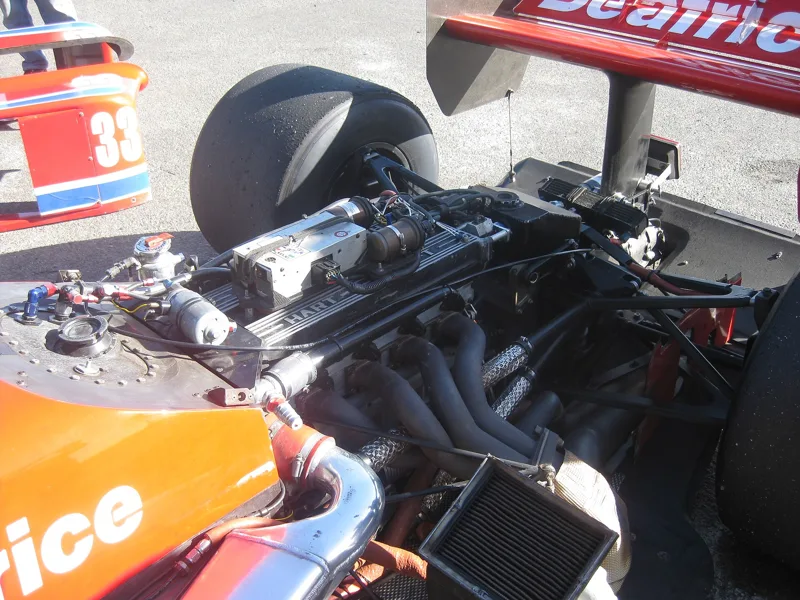
In IndyCar the DFX turbo became the standard engine in 1975, ending the reign of the Offenhauser, and the company later built a series of X-series engines for Champ Car. In 2003 Cosworth supplied a Chevrolet Gen 4 engine, the XG, to IRL teams, and Sam Hornish Jr. won three races with it that season.
The company also worked with Mercedes-Benz on the 190E 2.3-16, where the WAA race engine was detuned to 185 bhp for road use. From 2017 Cosworth had an engineering partnership with Aston Martin on a naturally aspirated V12 for the Valkyrie, which develops 1,000 hp at 10,500 rpm.
More recently Cosworth designed a 3,994 cc V12 for the Gordon Murray T.50 in 2020, producing 663 PS at 11,500 rpm. Bugatti also chose Cosworth to develop a V16 engine as part of the hybrid powertrain for the Tourbillon.
Did Cosworth build its own Formula One car?
Yes, though the project never raced. In 1969 Cosworth tried to build a complete Formula One Grand Prix car, designed by Robin Herd. It used a four-wheel drive transmission designed by Keith Duckworth and a magnesium version of the DFV. The car was planned for the 1969 British Grand Prix but was withdrawn, and the project was cancelled when Herd left to form March Engineering.
What is Cosworth's legacy?
Cosworth's legacy is its engine record, with class titles from Formula Atlantic to touring cars alongside its Formula One results. Its last premier-class racing engines went to the Marussia F1 Team in 2013.
The company's history also shows how a small engineering firm could shape the sport. It earned its early money from Lotus and Formula Junior, won Ford's backing on the strength of the FVA, and built the DFV that defined Formula One for a generation.
Today the company uses that expertise beyond motorsport. In 2008 it won a $5.4 million US Navy contract to develop a heavy fuel engine for the RQ-21A Blackjack unmanned aerial vehicle, and it has diversified into electronics, component manufacturing and engineering consultancy since 2006.