A British driver who came back from a near-career-ending Formula 3000 crash, won three Grands Prix and took the 1991 Le Mans race with Mazda.
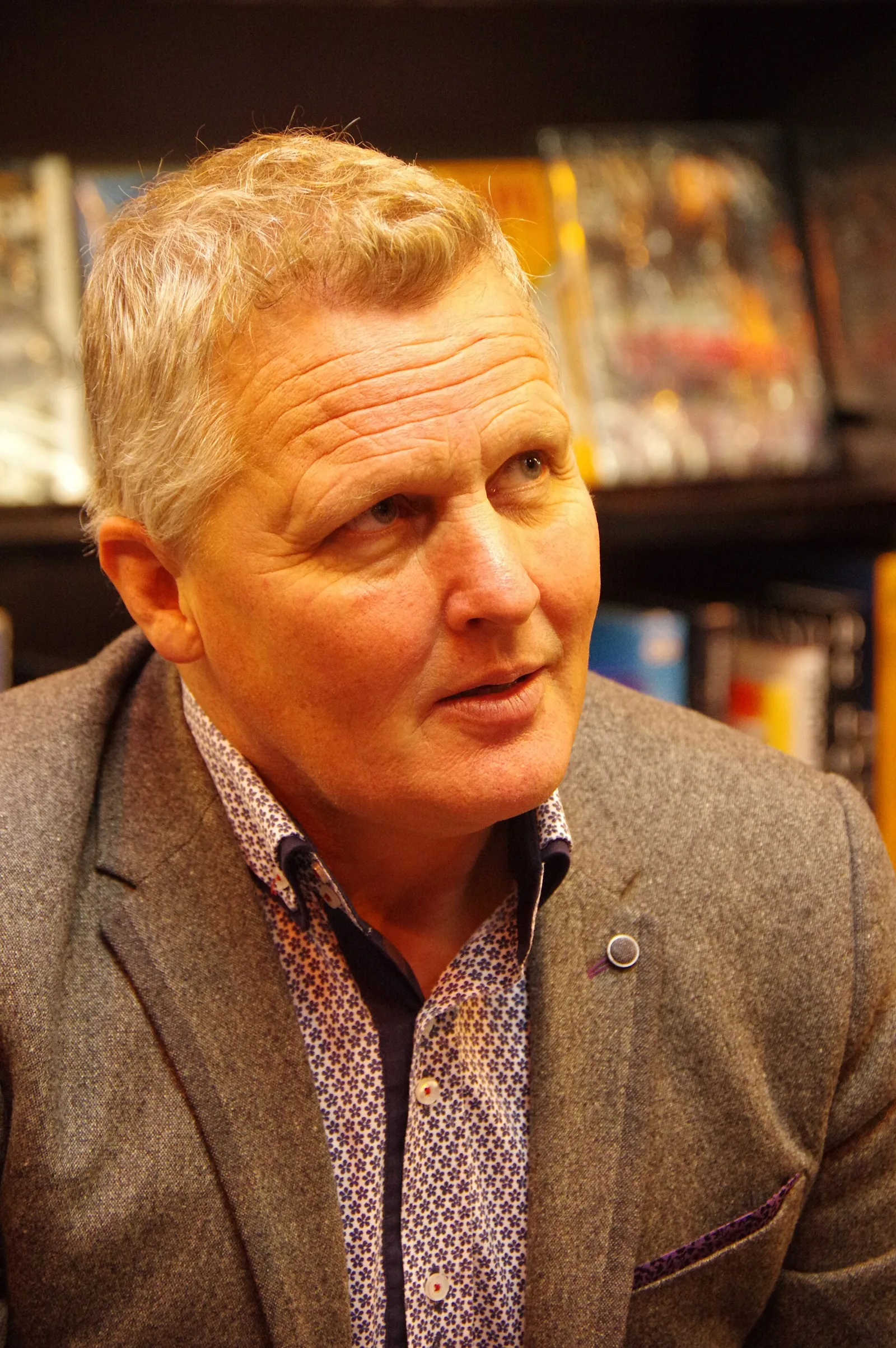
Born on 25 June 1964, Johnny Herbert raced for Britain in Formula One from 1989 to 2000 and won three Grands Prix. He took the 1991 Le Mans overall victory with Mazda and later worked as a Sky Sports F1 pundit.
Johnny Herbert was a British racer who competed in Formula One from 1989 to 2000, winning three Grands Prix along the way. He also took the 1991 Le Mans 24 Hours for Mazda and the 2002 Sebring 12 Hours for Audi, before moving into television punditry.
Who is Johnny Herbert?
John Paul Herbert was born on 25 June 1964 and is a British former racing driver and broadcaster. His Formula One career ran from 1989 to 2000, during which he drove for Benetton, Lotus, Ligier, Sauber, Stewart and Jaguar. His best championship placing was fourth in 1995.
After leaving the cockpit he was a pundit for Sky Sports F1 between 2012 and 2022. His career is notable for the range of machinery he drove, from single-seaters and touring cars to sportscars and the Indianapolis 500 test program.
Three Grand Prix wins, a Le Mans overall victory and a comeback from a crash that threatened his career.
How did Herbert rise through Formula Ford and Formula 3?
Herbert won the Formula Ford Festival at Brands Hatch in 1985, and that result caught the attention of Eddie Jordan. The pair worked together and went on to win the 1987 British Formula 3 title, which set Herbert on his path toward Formula One.
In August 1987 a guest appearance in the ESSO MG Metro Turbo Challenge at Silverstone gave him pole and a long spell at the front, until clutch trouble ended the run a lap from the finish. In October the same year he shared a Ford Escort in a celebrity race at Brands Hatch with Bobby Gee and finished third.
What happened in Herbert's 1988 crash?
In 1988 Herbert was pushing for the title in International Formula 3000 when a major shunt at Brands Hatch involved his car. Gregor Foitek's car nudged his at Pilgrim's Drop, sending him into the barrier head-on, and after bouncing across the track he hit the opposite barrier head-on again.
He sustained severe ankle and foot injuries in the crash. The threat of amputation passed after multiple surgeries and months of physiotherapy, but the injuries permanently limited his mobility and forced him to change the way he drove.
How did his 1989 Formula One debut go?
Herbert returned to racing at the start of 1989 and scored points on his Formula One debut at the Brazilian Grand Prix in Rio de Janeiro. He drove for Benetton, run by Peter Collins, a mentor and friend of long standing, and finished fourth, 10.5 seconds adrift of Mansell's race-winning Ferrari.
His Benetton teammate, Alessandro Nannini, took sixth place, 7.7 seconds behind him. The results were encouraging, but Herbert's form did not hold. The team changed under new management with Flavio Briatore, and after failing to qualify for the Canadian Grand Prix, following a fifth place in the round before at Phoenix, he was dropped and replaced by McLaren test driver Emanuele Pirro.
He went back to Formula 3000, this time in the Japanese series, and a call from Tyrrell soon followed. From 1990 he became a fixture in Formula One, switching to the Lotus team, then managed by Peter Collins.
How did the Lotus years shape his career?
Herbert's first race for Lotus was the 1990 Japanese Grand Prix, which came after Martin Donnelly suffered a career-ending crash at Jerez. In 1991 he was back at Lotus for the Canadian round, after Julian Bailey had left. Clashes between Grands Prix and his Japanese F3000 meetings meant he gave up the seat to Michael Bartels at other rounds.
After almost three years without a points finish, he took sixth in South Africa in 1992 in a two-year-old Lotus chassis. He repeated that result in France, by which time the team had introduced its more competitive 107. Poor reliability and bad luck denied him further points.
His teammate was the highly rated Mika Hakkinen, the future world champion. Across 24 races together, Herbert outqualified him fourteen times, which was evidence of his speed. 1993 was his most successful season with Lotus, when he finished fourth three times.
1994 brought a different picture. The team was hit by financial problems, and Herbert used an upgraded Mugen Honda engine introduced for the Italian Grand Prix to qualify fourth. Hopes of a strong result were lost in a multi-car collision at the first corner. Lotus lacked the resources to fix the problem, so he used a spare car with an older-specification engine that did not last long. His final race for the team was the Portuguese Grand Prix.
What did his 1991 sportscar success involve?
Herbert took overall victory at Le Mans in 1991 for Mazda, sharing the car with Bertrand Gachot and Volker Weidler. He had also guested in the ESSO MG Metro race with Gachot, a future Formula One driver, and the two would later share that Le Mans success.
During 1991 he also took part in two rounds of the Fuji Long Distance Sports Car Series, finishing fourth both times in a Mazda 787B. At the July round he stopped his car to help a fellow competitor who had suffered a puncture at high speed. That act earned him the Sportsman Award at the 1991 Autosport Awards.
How did the 1994 to 1995 Benetton seasons unfold?
Late in 1994 Tom Walkinshaw bought out Herbert's Lotus contract, and he joined Ligier before moving to Benetton for the final races of the season. He had no points that year, but he was kept on as Michael Schumacher's teammate for 1995.
As the number-two driver at Benetton, Herbert found the job difficult. The B195 had been designed around Schumacher's driving style, and the World Champion also forbade him from looking at his telemetry. Even so, he took his first podium with second place in Spain, which gave Benetton its first one-two since 1990.
His first Grand Prix victory came at Silverstone, where Hill and Schumacher had come together. Rumours before the race suggested that test driver Jos Verstappen would take his seat. He followed that with another win in similar circumstances at Monza, and he finished fourth in the drivers' championship.
Why did his Sauber and Stewart years matter?
After Benetton, Herbert drove for Swiss team Sauber from 1996 to 1998 and scored two podiums. The first came at the 1996 Monaco Grand Prix, which brought his only points of that season, and the second at the 1997 Hungarian Grand Prix. The 1997 campaign was his most productive at Sauber, with several scoring finishes.
In 1999 he moved to Stewart Grand Prix, where he was regularly outqualified by his younger teammate Rubens Barrichello. The 1999 season still produced a third and final Grand Prix victory, on a wet day at the European round. In Malaysia he came fourth, a race he later called his best since the accident.
Stewart was bought by Ford and became Jaguar, and Herbert endured a frustrating and pointless season in 2000. He ended the year being stretchered away at Malaysia after a suspension failure caused a heavy crash.
What did Herbert do after leaving Formula One?
In 2001 Arrows team owner Tom Walkinshaw employed him as development and test driver. In August that year, the day after the Belterra Resort Indy 300 at Kentucky Speedway, he tested a Dallara bought by Mecom Racing from Target Chip Ganassi Racing. The car had been driven by Tony Stewart at the 2001 Indianapolis 500.
He set a lap that would have split the front row for the race, with the car set up by Jeff Ward.
How did his sportscar and touring car work develop?
Since leaving Formula One, Herbert concentrated on sportscar racing and tried to repeat his Le Mans win of 1991. He was a front runner in the American Le Mans Series and a challenger for the 2003 crown, and in 2002 he won the 12 Hours of Sebring with Audi.
In 2004 he won the Le Mans Series championship with Jamie Davies in an Audi R8, taking wins at Monza and Spa along the way. In 2007 he drove for the factory Aston Martin team at Le Mans in an Aston Martin DBR9 in the GT1 class, alongside Peter Kox and Tomas Enge. The car finished ninth overall and fourth in its class.
In 2008 he won the first season of the Speedcar Series. In 2009 he made his British Touring Car Championship debut for Team Dynamics in a Honda Civic at Silverstone. He finished eighth in the second race and scored three points, but was forced to retire on lap thirteen of the final race after contact with Jason Plato.
How did his time at Jordan and Spyker end?
In 2005 Herbert took a sporting relations role at Jordan Grand Prix, which was renamed Midland F1 for the 2006 World Championship. Spyker Cars bought the team in September of 2005 and renamed it Spyker MF1, and one of the new owners' first decisions was not to renew Herbert's contract.
How did his broadcasting career develop?
From 2012 until 2022 he was a frequent contributor to Sky Sports F1. He appeared as one of the insiders on Sky Race Control during practice, qualifying and races, sharing the panel with other commentators.
In 2013 and 2014 he mentored six contestants on the ITV4 GT Academy reality series. The aim was to turn Gran Turismo players into real drivers who could race in the Dubai 24 Hour. Herbert also runs the Johnny Herbert Karting Challenge each year for charities, held at Capital Karts in London.
What is Johnny Herbert's legacy?
Herbert is remembered for three Formula One victories, a fourth-place finish in 1995 and a Le Mans overall win in 1991. He also returned to Formula One after a 1988 crash that left him with permanent mobility problems.
His memoir, What Doesn't Kill You: My Life in Motor Racing, was published in 2016 and covers his racing life in detail. His charity karting event, now in its twentieth year, carries his name into a new generation of drivers.
What were Herbert's main results?
| Year | Series | Team | Result |
|---|---|---|---|
| 1985 | Formula Ford Festival | Brands Hatch | Winner |
| 1987 | British Formula 3 | Eddie Jordan | Champion |
| 1988 | International Formula 3000 | Championship contender | Career-threatening crash at Brands Hatch |
| 1989 | Formula One | Benetton | Fourth in Brazil; points on debut |
| 1992 | Formula One | Lotus | Sixth in South Africa and France |
| 1993 | Formula One | Lotus | Fourth place three times |
| 1991 | 24 Hours of Le Mans | Mazda | Overall winner |
| 1995 | Formula One | Benetton | Fourth in the championship; wins at Silverstone and Monza |
| 1996 to 1998 | Formula One | Sauber | Two podiums |
| 1999 | Formula One | Stewart | Third and final Grand Prix win, European Grand Prix |
| 2002 | 12 Hours of Sebring | Audi | Winner |
| 2004 | Le Mans Series | Audi | Champion with Jamie Davies |
| 2007 | 24 Hours of Le Mans | Aston Martin | Ninth overall; fourth in GT1 |
| 2008 | Speedcar Series | Speedcar | Winner of the first season |
| 2009 | British Touring Car Championship | Team Dynamics | Eighth in race two, scoring three points |
The results show a driver who won in several different categories, from open-wheel racing to endurance events. The Le Mans and Sebring victories sit alongside his Grand Prix wins as the clearest marks of his career.