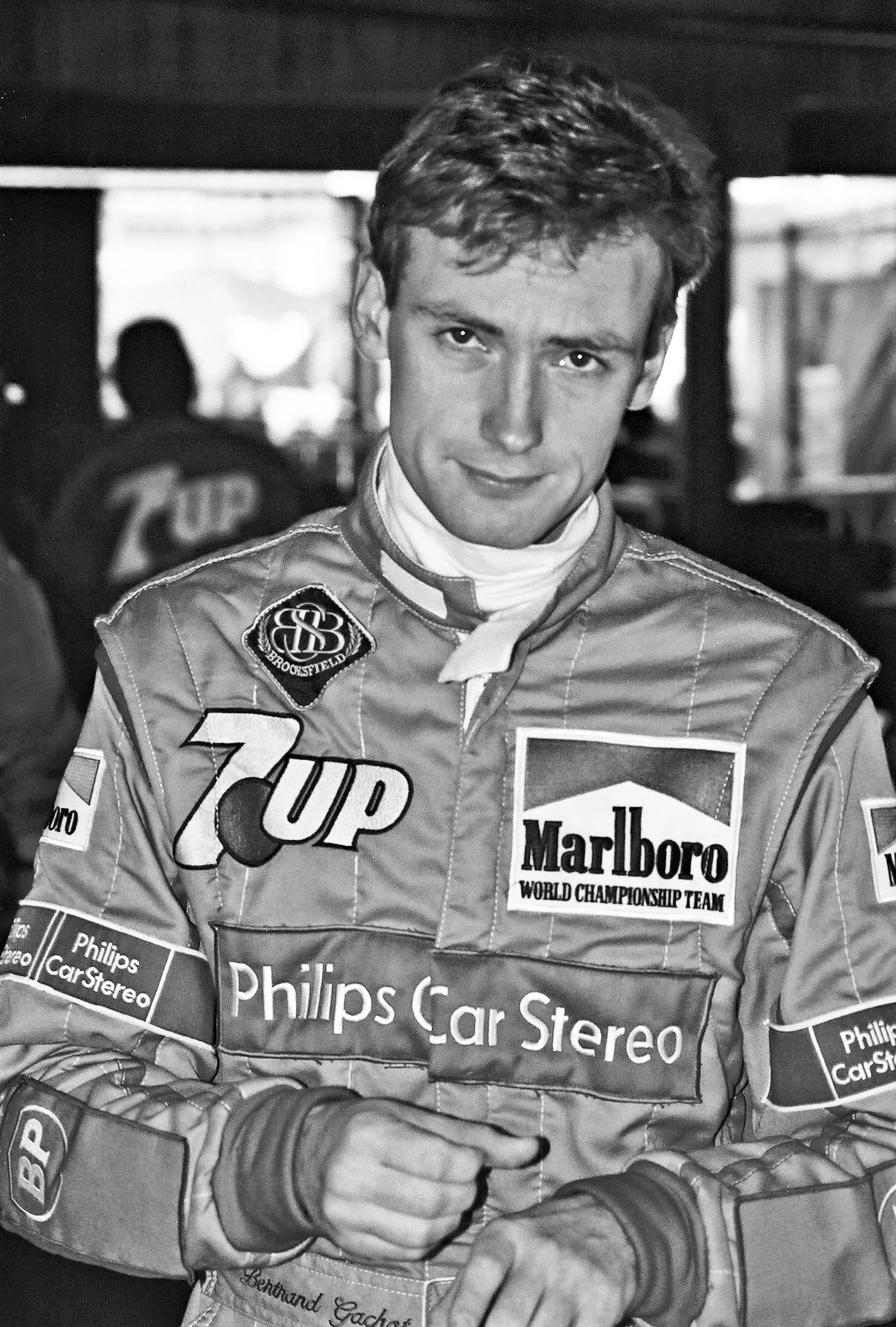
Gachot won Le Mans in 1991 and was a promising Formula One driver until a road rage case sent him to prison, after which his career drifted through small teams.
Bertrand Gachot raced in Formula One from 1989 to 1995 and won the 1991 Le Mans 24 Hours with Mazda. A prison sentence in 1991 interrupted his career, and he later became chief executive of Hype Energy Drinks.
Few drivers of his generation combined Formula One, Le Mans glory, a prison sentence and a later career in business quite like Bertrand Gachot. He raced in Formula One from 1989 to 1995, and in endurance racing he won the 24 Hours of Le Mans in 1991 with Mazda. His Formula One career was then interrupted by a prison sentence, and he later built a business portfolio alongside his driving.
How did Gachot reach Formula One?
Gachot was born in Luxembourg City to a French father and German mother, and he began karting at the age of 15. He attended the Winfield racing school at Paul Ricard in 1983 and then won titles in Formula Ford, progressing through Formula 3 and Formula 3000. He reached Formula One in 1989 after a steady rise through the junior ranks.
His junior record was strong. He finished third at the Formula Ford Festival in 1984 and won the European Formula Ford series in 1985 with Pacific Racing. In 1986 he won the British Formula Ford 2000 series, with a fierce rivalry against Mark Blundell, and in 1987 he finished second in British Formula 3 behind Johnny Herbert.
Formula 3000 followed in 1988. He took pole position at Silverstone and finished second to Roberto Moreno, who went on to win the championship, while Gachot finished fifth in the final standings. By then he was regarded as one of the most promising young drivers in the sport.
A talent who won Le Mans in the same year his career was interrupted, and who then built a different career around his name.
What were the Onyx, Coloni and Jordan years like?
Gachot joined the newly formed Onyx team in 1989, having helped attract its Moneytron sponsorship from businessman Jean-Pierre Van Rossem. He was partnered with Stefan Johansson. The team was well funded but late in preparing its car, and he needed to pre-qualify. He made the grid for the French Grand Prix, starting 11th, but battery problems dropped him to 13th and last.
Van Rossem then dismissed him after he complained about too little testing time, and his grievances were aired in an Onyx press release. He was replaced by JJ Lehto. A short spell with Rial at the end of the season ended in failed qualifying attempts, and the team folded over the winter.
In 1990 he moved to the small Italian outfit Coloni, which used a Subaru flat-12 engine. The engine was overweight and underpowered, and the car rarely ran for more than a few laps. Subaru withdrew after the British Grand Prix, and Gachot failed to make the grid all season, even after the car switched to a Cosworth DFR engine.
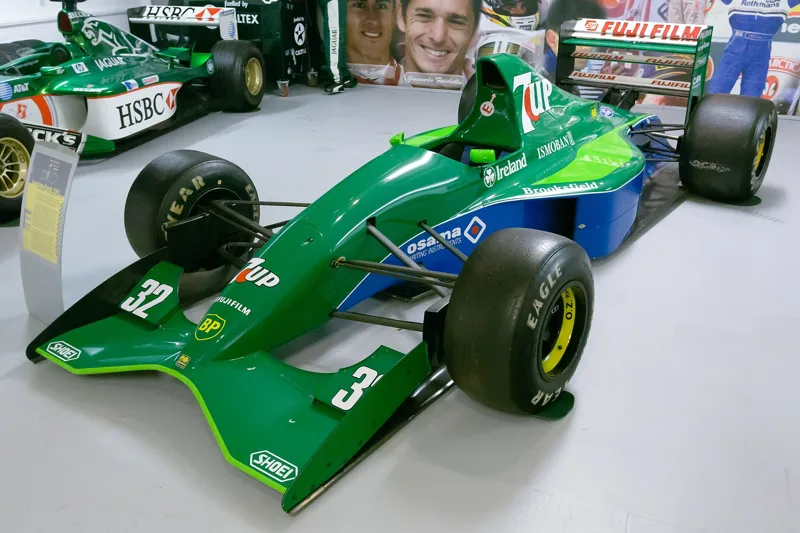
Despite that, he was still highly regarded and was signed to lead the new Jordan Grand Prix team for 1991. The Gary Anderson-designed Jordan 191 used Ford HB engines and was sponsored by 7-Up. It became a regular points scorer after early reliability problems, and Gachot finished fifth in Canada and sixth twice. At the Hungarian Grand Prix he set the fastest lap after a late tyre change.
Why was Gachot jailed in 1991?
On 10 December 1990 Gachot was due to meet Jordan and representatives of 7-Up, but he was running late and was caught up in a road rage incident with a taxi driver near Hyde Park Corner in London. His car bumped the back of the taxi, causing no real damage. He said the driver pulled him by the tie and raised a fist, and Gachot sprayed him with CS gas. He was arrested and charged with actual bodily harm and possession of a prohibited weapon.
The trial at Southwark Crown Court was set for the week before the 1991 Belgian Grand Prix. Gachot had claimed self-defence and expected a fine or a suspended sentence. Instead he was sentenced to 18 months in prison, first at HMP Brixton and later at HMP Northeye in Bexhill-on-Sea, after an unsuccessful appeal.
The case caused a wave of public support. Belgian racing driver Pascal Witmeur organised a campaign with flags, T-shirts and graffiti at the Spa-Francorchamps track during the 1991 Belgian Grand Prix. Team owner Eddie Jordan replaced Gachot with Michael Schumacher, whose performance at Spa led to a drive with Benetton. Gachot later said he had about 10,000 letters of support.
How did Gachot return to Formula One with Larrousse and Pacific?
After two months in prison the Court of Appeal reduced his sentence and he was released. He had missed four Grands Prix. He returned to the paddock at Suzuka hoping to retake his Jordan seat, but the team refused. Larrousse then gave him a drive for the Australian Grand Prix, replacing the injured Eric Bernard, and although he failed to qualify, the team offered him a seat for the following season.
In 1992 he drove for Larrousse in a Venturi chassis with a Lamborghini V12 engine. The car suffered reliability and financial problems, and Gachot and teammate Ukyo Katayama managed only six classified finishes between them from 31 starts. Gachot scored the team's only point of the year with sixth at Monaco. He also finished fourth for Mazda at Le Mans that year.
He left Formula One in 1993 and raced for Dick Simon Racing in CART, finishing 12th at the Molson Indy Toronto in a one-off drive. He also raced in Japanese touring cars for Honda. Meanwhile he helped Keith Wiggins' Pacific team prepare for its Formula One entry, and he became a shareholder before being signed as the number one driver for 1994.
The 1994 PR01 was a car designed for another team and was not competitive at first. Gachot outqualified Roland Ratzenberger at the opening round, giving Pacific its debut, but the team never beat Simtek to the grid that season. Gachot started four more races without finishing one.
For 1995 Pacific ran the new PR02 with Cosworth ED engines, and the reliable package meant the car could finish races. The team's finances were tight, so Gachot stood down mid-season to let pay drivers take his seat. When one planned replacement was refused a superlicence, he returned to the car. He finished eighth in the Australian Grand Prix, which equalled the team's best result, and that was his final Grand Prix before Pacific folded.
Did Gachot win Le Mans in 1991?
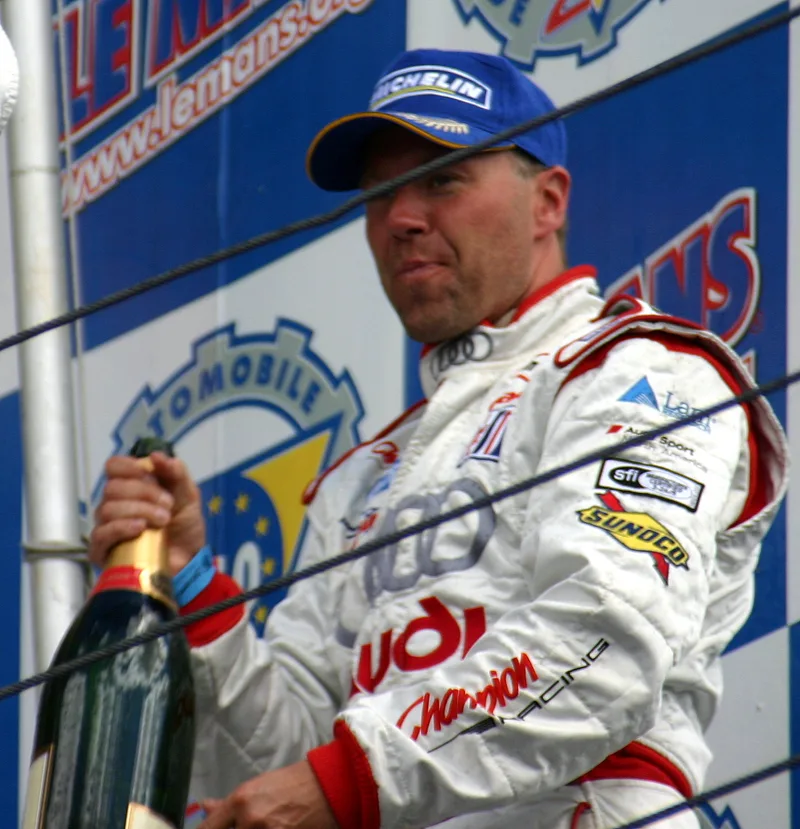
Yes. Gachot won the 1991 24 Hours of Le Mans in a Mazda 787B, sharing the car with Johnny Herbert and Volker Weidler. The win came before his trial, and it was one of the few high points of a difficult year for him.
In 1996 he formed his own sports car team with the aim of racing at Le Mans again. The Welter Racing LM94, which had factory support and an engine from SsangYong, did not qualify for the race. A later entry at the Coupes d'Automne in 1996 qualified third but did not finish, and Gachot then drove in occasional sports car and GT races for a variety of manufacturers.
What business ventures did Gachot pursue after Formula One?
He began building a business portfolio after leaving Formula One. In 1997 he signed a distribution agreement with Hype Energy Drinks, a company started in 1994 by the founder of Hard Rock Cafe, Brian Cox. The brand had sponsored motorsport, including Formula One. By 2000 Gachot had taken a leadership role and cut the product range to four flavours.
Hype Energy returned to the Formula One paddock in 2014 with sponsorship of Andre Lotterer, and in 2015 it sponsored Force India, the team that had once been Jordan, where Gachot had raced. By 2017 the brand was working with musicians such as Migos, Mike WiLL Made It and Prince Royce. Gachot remains chief executive of the company and also owns the F1i.com news site.
What is a superlicence and why did it matter in 1995?
The FIA superlicence is the licence needed to compete in Formula One. In 1995 Pacific's plans depended on it: Katsumi Yamamoto was refused one for the two Japanese races, so Gachot retook the seat. Test driver Oliver Gavin was also refused a superlicence before the Australian finale.
That refusal meant Gachot was forced back into the car for the Australian Grand Prix, the final Grand Prix of his career. The Frenchman finished eighth after much of the field had retired, which matched the team's best result. Pacific folded at the end of that season.
How did Gachot's Jordan years differ from Onyx?
At Onyx he ran in the points until battery problems dropped him to 13th at the French Grand Prix, and he then lost his drive after complaining about testing time. At Jordan the Gary Anderson-designed 191 became a regular points scorer, and Gachot took fifth in Canada and sixth twice.
Jordan was sponsored by 7-Up and powered by Ford HB engines. The Jordan years also brought a fastest lap at the Hungarian Grand Prix in 1991, set after a late tyre change, before the events of December 1990 changed his fortunes.
What was the Winfield racing school?
The Winfield racing school at Paul Ricard was a driving school in France. In 1983 Gachot attended it alongside future Formula One drivers Damon Hill, Jean Alesi and Eric Bernard, who were competing for the Volant Elf prize, a season in Formula Renault backed by Elf. Bernard won that prize, and Gachot went on to other categories.
Gachot then dropped out of university to focus on racing. In 1984 he competed in Formula Ford 1600, finishing third at the Formula Ford Festival, and in 1985 he won the European Formula Ford series with Pacific Racing.
Career summary
| Measure | Detail |
|---|---|
| Born | 23 December 1962, Luxembourg City |
| Formula One seasons | 1989 to 1995 |
| Le Mans win | 1991 with Mazda |
| Prison sentence | 18 months, reduced after two months |
| Missed Grands Prix | 4 |
| Best Grand Prix result | sixth at Monaco in 1992 |