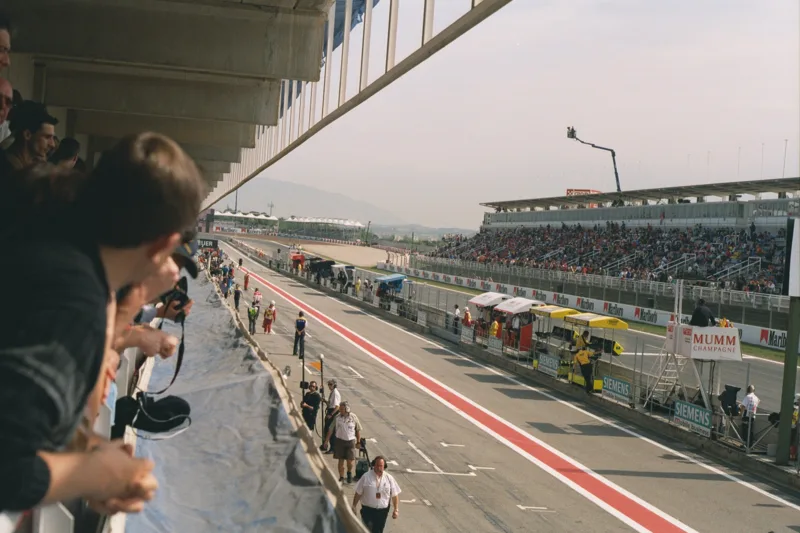
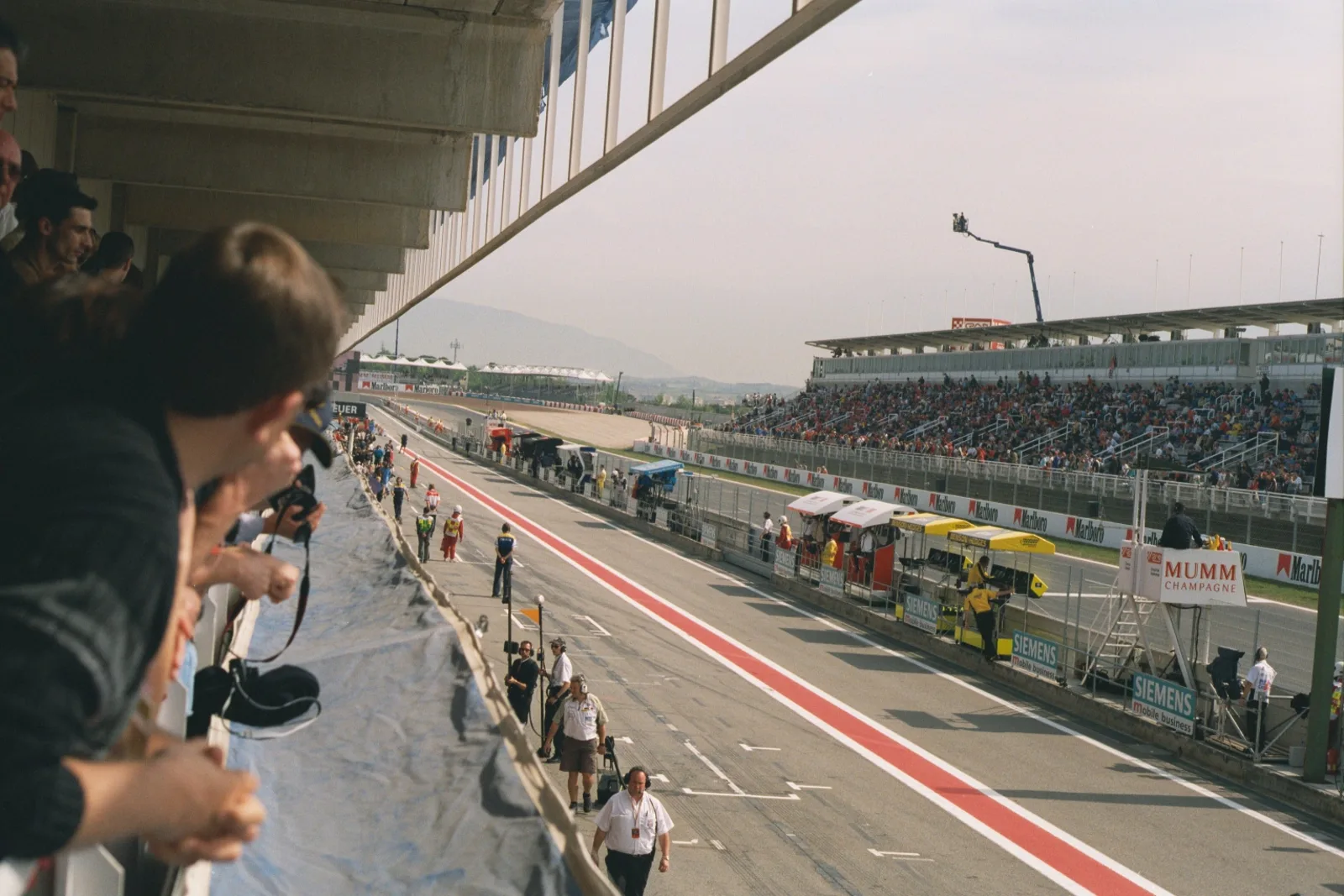
Juan Pablo Montoya took his maiden Formula One win from pole, Barrichello's refuelling delay cost Ferrari, and a no-overtaking pact that never happened shaped the start.
Montoya took the 2001 Italian Grand Prix from pole for Williams at Monza on 16 September. Barrichello was second for Ferrari, 5.175 seconds behind, and Ralf Schumacher took third for Williams. It was Montoya's maiden Formula One victory and the 15th round of the season.
Juan Pablo Montoya won the 2001 Italian Grand Prix at Monza on 16 September 2001 from pole position, taking his first Formula One victory and the first for a Colombian driver. Rubens Barrichello finished second for Ferrari, and Ralf Schumacher completed a Williams podium in third. It was the 15th round of the season, and it was run in sunshine on a weekend overshadowed by events in the United States.
Monza is 5.793 km (3.600 mi) long and runs clockwise. The race was the 72nd Italian Grand Prix and the second round held in Italy that season, after San Marino in April. Before the race, Michael Schumacher had already won the drivers' championship at the Hungarian Grand Prix, where Ferrari had also secured the constructors' title, so the championship fight was over.
A weekend shaped by September 11
The race came only days after the September 11 attacks in the United States. The FIA confirmed that the race would go ahead as scheduled, and Ferrari's president, Luca di Montezemolo, said his team would approach it as a normal racing event rather than a traditional Ferrari festival. The Automobile Club d'Italia urged fans to behave in keeping with the gravity of the situation.
Several ceremonies and liveries were changed as a mark of respect. Podium celebrations were cancelled, the pre-race flypast by the Italian display team was called off, and Ferrari stripped its cars of advertising and painted the nose cones black. Jaguar fitted black engine covers, and Jordan replaced its sponsor's branding with the flag of the United States on the engine cover.
Michael Schumacher was reluctant to take part, and he later called it a bad sign to be racing after the attacks. His brother Ralf also felt the event should not have gone ahead.
A maiden win from pole for Montoya, a refuelling delay for Barrichello and a Monza weekend shaped by September 11.
Testing, entries and car set-ups
After the Belgian Grand Prix on 2 September, the teams tested between 4 and 7 September. Barrichello was fastest on the first two days at Mugello, but the second day was disrupted six times after BAR's Takuma Sato went off, suffered an electronic failure and had a faulty anti-stall system. On the final day Michael Schumacher set 1:24.226, four-tenths ahead of Panis.
Two drivers changed. Minardi replaced Tarso Marques with Alex Yoong, who was backed by the Magnum Corporation and granted a super licence after a two-day test at Mugello. Yoong became Malaysia's first Formula One driver. At Prost, Tomas Enge replaced Luciano Burti, who was still recovering from a concussion and facial bruising sustained in the previous race at Spa.
Because Monza's high average speed rewards low drag, teams ran the lowest downforce they could. Ferrari fitted Carbon Industrie brake discs instead of its usual Brembo discs, Williams gave Montoya a revised FW23, and Benetton brought a new front wing. Jordan used a front wing with a single profile instead of its usual two.
Practice and qualifying
The start of the first practice session was moved from 11:00 to 10:50 so that it coincided with a one-minute silence observed across Europe. Michael Schumacher was fastest in the dry opening session at 1:25.524, ahead of Coulthard and Barrichello. Heidfeld crashed into the wall at Variante Ascari with 15 minutes left, and Raikkonen lost control under braking and hit the barrier at Variante Goodyear, losing a front wheel.
In the second session Ralf Schumacher set the fastest time at 1:24.667 after 13 minutes, with Montoya second despite going off the circuit several times at the first chicane. Irvine spun into the gravel at Ascari with brake problems and ended his session early. Heidfeld, who never went onto the circuit, was still eighth fastest.
Montoya set the best time of the third session, 1:25.558, on a damp track that had been slow to dry after a thunderstorm. Burti lost control at Tosa and damaged his front suspension, which kept him out of the final session. As the circuit dried, Michael Schumacher set the weekend's fastest time of 1:23.178, with Barrichello fourth at the end after briefly leading, and Montoya and Trulli separating the two Ferraris.
Montoya took pole with 1:22.216, his second consecutive pole and his third of the season. Barrichello was 0.312 seconds slower, and he went into a gravel trap during his lap. Michael Schumacher was third after making an error on his third run, which was the first race since the 2000 Austrian Grand Prix in which Barrichello had qualified ahead of him.
Ralf Schumacher, whose car alternated between understeer and oversteer, was fourth, and Trulli fifth on soft Bridgestone tyres. Coulthard was sixth, and Hakkinen seventh, although Hakkinen crashed heavily at the Curva di Lesmo on his final timed run and stopped qualifying for 15 minutes. The two Saubers were eighth and ninth, with Heidfeld ahead of Raikkonen, and De la Rosa completed the top ten. Button was 11th, Frentzen 12th and Irvine 13th after brake balance problems.
Fisichella took 14th in the spare Benetton after a hydraulic failure on his race car. Villeneuve was 15th and Panis 17th, and Alesi was 16th after brake balance and handling trouble. Verstappen and Bernoldi qualified 18th and 19th for Arrows, Enge took 20th in his first Formula One qualifying session, and the two Minardis started at the back, with Alonso 21st ahead of Yoong in 22nd.
What happened at the start?
Michael Schumacher tried to organise a pact under which no driver would overtake at the first two chicanes. Villeneuve, Benetton's Flavio Briatore and Arrows owner Tom Walkinshaw refused, and the race began without it. Montoya kept his pole advantage into the first corner, with Barrichello second, and Ralf Schumacher passed his brother at the Variante Goodyear chicane.
The pact had been designed to reduce the risk of accidents at the start. Michael Schumacher had been worried by the September 11 attacks, by the death of a fire marshal in a pile-up at the start of the previous year's race, and by a serious accident in a CART race in Germany the day before, in which Alex Zanardi lost both legs. Heidfeld and Fisichella had to start from the pit lane after their car problems.
Button hit Trulli on the opening lap after braking too late on the slippery outside line into the chicane. Button later retired on lap five with an engine failure. Coulthard's engine also failed, on lap seven. By the end of the first lap Montoya led Barrichello by half a second, with Michael Schumacher, Ralf Schumacher, Coulthard and De la Rosa behind.
How did Barrichello take the lead?
Montoya had a blister on one of his rear tyres, which made him slide under braking, and he was slow out of the Variante della Roggia chicane. Barrichello took the lead at the entry to the second Lesmo on lap nine and began to pull away.
Irvine retired on lap 14 when a cylinder in his engine stopped working. Verstappen had already fallen back, and he was passed by Alesi and Raikkonen. Yoong spun at the Lesmo on lap 16 but continued, and by then the leaders were a long way clear of the rest of the field.
Why did Barrichello lose the lead on the stops?
Barrichello's first stop on lap 19 went wrong when his refuelling rig failed after being reprogrammed. Ferrari's mechanics switched to his team-mate's rig, which kept him stationary six to seven seconds longer than planned. He rejoined third, behind Michael Schumacher, and the ten-second cushion he had built over Montoya was gone.
Michael Schumacher had been the first of the leaders to stop, on lap 18, and he had rejoined fourth. Hakkinen lost second on lap 19 and retired at the Rettifilio chicane two laps later after losing all of his gears. Verstappen retired on lap 26 with a loss of power.
Montoya made his pit stop on lap 28 and rejoined third behind Barrichello, and Ralf Schumacher moved into the lead. Ralf's crew adjusted his front wing, but his car still suffered excess oversteer. Ralf then made his only stop, on lap 35, and built a gap of 6.1 seconds over Barrichello before rejoining in fourth.
How did Montoya take the lead for good?
Montoya regained the lead when Barrichello made his second stop for fuel on lap 41. Barrichello rejoined in third, directly behind Ralf Schumacher, and he began to close on him over the following laps. At the completion of lap 42 the order was Montoya, Ralf, Barrichello, Michael Schumacher, De la Rosa and Villeneuve.
Barrichello slipstreamed Ralf on the start-finish straight into the Rettifilio chicane at the start of lap 47 and braked later than him at the end of the straight. Ralf then ran wide onto the concrete run-off at the Variante Goodyear chicane while trying to defend, and he let Barrichello through for second on the inside. He did so knowing the stewards would give him a stop-and-go penalty for cutting the first chicane.
Montoya was never threatened after that. He won by 5.175 seconds from Barrichello, with Ralf third and Michael Schumacher fourth.
Results at a glance
| Position | Driver | Team | Note |
|---|---|---|---|
| 1 | Juan Pablo Montoya | Williams | Maiden win from pole; 1 hour 16 minutes 58.393 seconds |
| 2 | Rubens Barrichello | Ferrari | 5.175 seconds behind after a slow first stop |
| 3 | Ralf Schumacher | Williams | Completed the Williams podium |
| 4 | Michael Schumacher | Ferrari | Fourth after his second stop for fuel |
| 5 | Pedro de la Rosa | Jaguar | First points for Jaguar since the Canadian Grand Prix |
| 6 | Jacques Villeneuve | BAR | Sixth, completing the points scorers |
Raikkonen was the last driver on the lead lap in seventh. Alesi, Panis and Fisichella came next, and Heidfeld, Enge and Alonso were the last cars still classified. Bernoldi retired with a crankshaft sensor problem on the same lap, the final retirement of the race, after Yoong had spun into the gravel at the first Lesmo.
What did the result mean for the championship?
Michael Schumacher extended his lead in the drivers' table to 50 points over Coulthard, while Barrichello's second place narrowed his deficit to Coulthard to three points. Ralf Schumacher stayed fourth, and Montoya's victory lifted him to fifth. Ferrari kept its constructors' lead, now 80 points ahead of McLaren, whose advantage over Williams fell to eight points.
Sauber stayed fourth in the constructors' table, while BAR took over fifth place. With two races remaining, the title picture was settled, but the battle for the runner-up spot was still open.
How did the paddock react?
Out of respect for those who died on September 11, no champagne was sprayed on the podium. Montoya said he was so happy and pleased with his maiden win. He was not frustrated at going 14 races without a victory, because he had not expected to win during the season.
Barrichello said Ferrari had put on a good show despite his slow stop, and that he believed the two-stop plan had been the right move. Ralf said Williams finishing first and third was a great achievement, although his tyres had caused him problems.
Alesi attacked the role of Briatore in stopping the drivers from keeping the pact, and he said some team principals had threatened their drivers. Villeneuve argued that the place for such a discussion was not the racing circuit. FIA president Max Mosley said he disagreed with the pact, and he said the drivers should have raised their concerns in the months before the race.
Ross Brawn said Ferrari had chosen a two-stop strategy to beat Williams on the high-speed circuit. Jean Todt admitted the refuelling problem at Barrichello's first stop had possibly cost him the win. Button apologised to Trulli for the opening-lap collision, and De la Rosa said the result had lifted the team's morale.