A first-corner pile-up removed Michael Schumacher, a McLaren pair ran away from the field and a missing seal later threatened Hakkinen's win.
Mika Hakkinen won the 2000 Austrian Grand Prix for McLaren from pole position, with David Coulthard second and Rubens Barrichello third for Ferrari. The race was held at the A1-Ring on 16 July 2000, and a first-lap collision ended Michael Schumacher's race.
The 2000 Austrian Grand Prix was the tenth round of the season, and Mika Hakkinen controlled it from pole to the flag. A multi-car collision at the first corner ended Michael Schumacher's race and reshaped the title picture. McLaren later faced an investigation into a missing seal on its winning car, which led to a points penalty for the team.
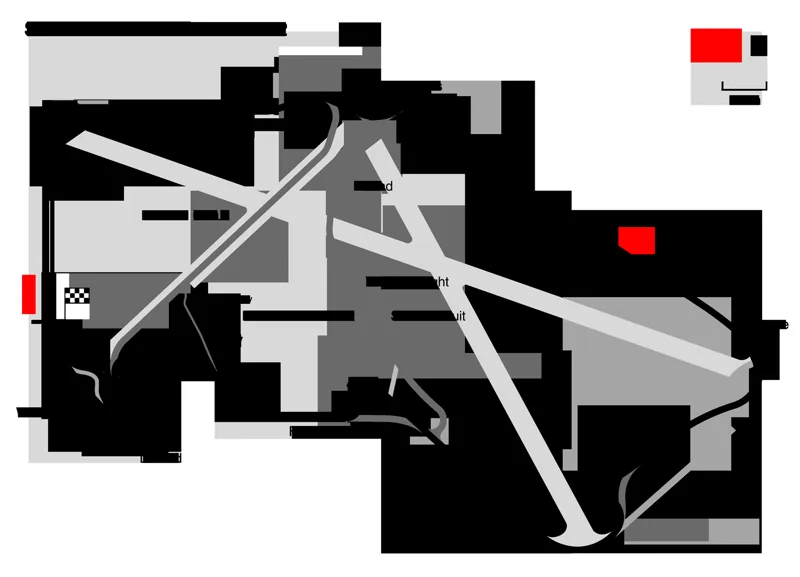
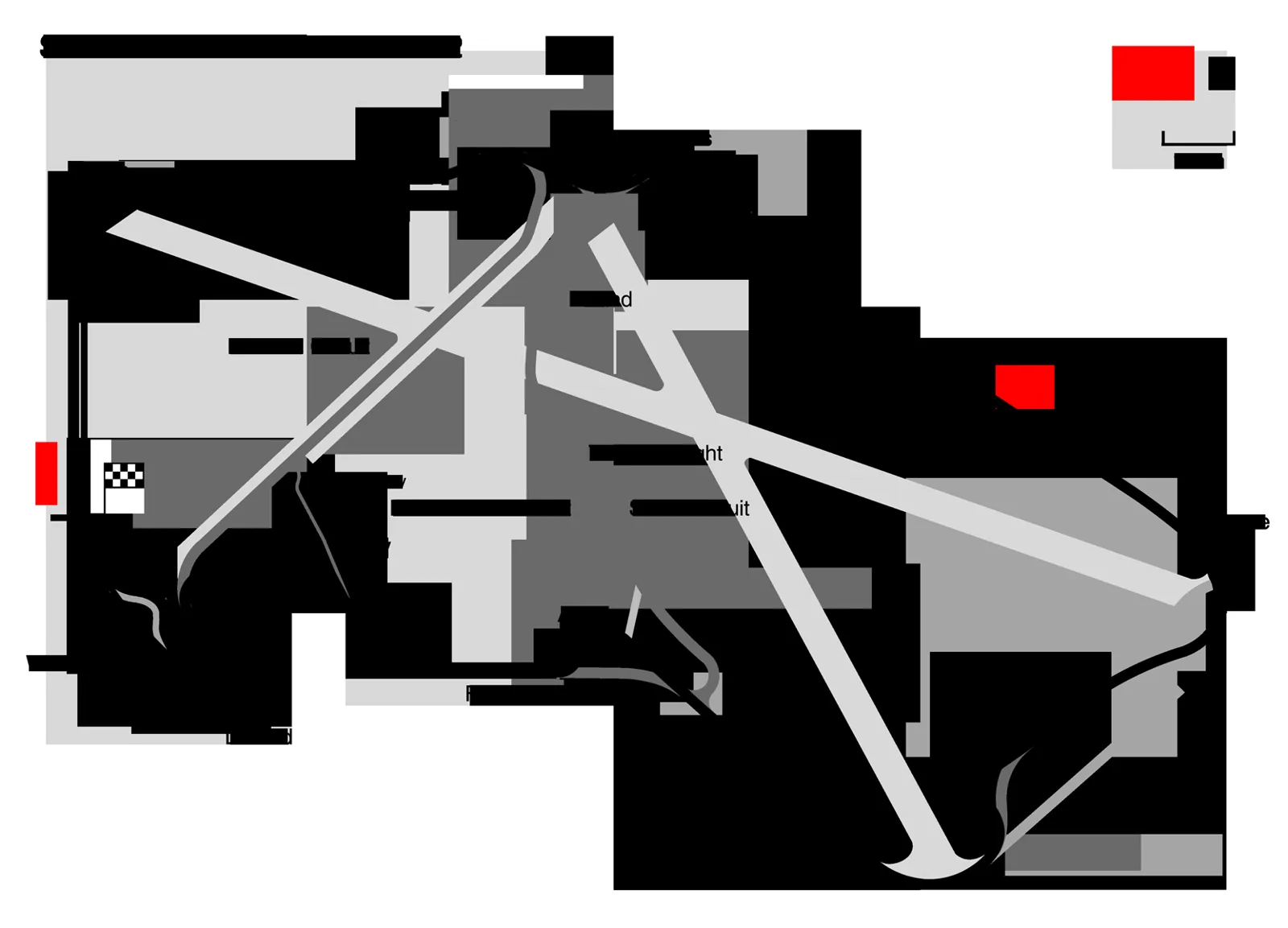
The race took place at the A1-Ring, a 4.326 km (2.688 mi) circuit near Spielberg in Styria, where 85,112 spectators came on 16 July 2000. Before the event, Schumacher led the drivers' championship with 56 points, ahead of David Coulthard on 44 and Hakkinen on 38. Ferrari led the constructors on 88 points, six clear of McLaren.
The teams had spent the weeks before the race testing. Six of them worked for three days at Silverstone from 4 to 6 July. McLaren and Ferrari concentrated on set-up at Mugello, with Ferrari adding a day at its Fiorano test track, while Williams and British American Racing (BAR) used the Circuito do Estoril.
Several teams changed their cars for the weekend. McLaren brought an extractor profile that had not been used at the French Grand Prix, along with a tweaked rear suspension and a new Mercedes-Benz engine. BAR finished an aerodynamic package it had developed with Honda in a wind tunnel. Jordan's new EJ10B was held back because its bodywork had to pass FIA safety tests, so the older EJ10 raced for the last time in Austria.
Organisers also made modest safety changes. New kerbs were laid across the track with flagstones inside to stop dust gathering on the racing surface, and an extra row of tyres was added at each corner to absorb impacts.
Who won the 2000 Austrian Grand Prix?
Mika Hakkinen won for McLaren from pole position, covering 71 laps in 1'28:15.818 at an average speed of 208.792 km/h (129.737 mph). David Coulthard was 12.5 seconds behind in second, and Rubens Barrichello took third for Ferrari. It was Hakkinen's second win of 2000 and his 16th in Formula One.
Hakkinen led from the start until his only pit stop on lap 38. He emerged in second, because Coulthard was then ahead of him on track. Coulthard led for three laps before his own stop on lap 42, and he rejoined behind Hakkinen. Coulthard then set the race's fastest lap, 1:11.783 on lap 66, but he was unable to close the gap.
One first-lap collision ended the race for the championship leader, and Hakkinen turned a clean lead into a win.
What happened on the opening lap?
The start produced a chain of collisions at the first corner. Ricardo Zonta ran into the back of Michael Schumacher's Ferrari, sending it into a 180-degree spin. Diniz lost control while avoiding Verstappen and veered across the track into Fisichella at about 200 km/h (120 mph). Schumacher retired from the race.
Barrichello was reportedly told to let Michael Schumacher through before the second corner, because Schumacher was on a two-stop strategy. McLaren used team orders as well, so that the driver who reached the first corner first could not be challenged.
Trulli ran into the back of Barrichello, sending the second Ferrari onto the gravel, and then struck Schumacher's right-front suspension. Diniz later collided with the sidepod of Mika Salo's Sauber and spun, while Ralf Schumacher also spun and was able to restart. Race director Charlie Whiting decided the incident did not justify stopping the race, and he deployed the safety car instead. It was withdrawn at the end of lap two.
Marshals cleared the debris and recovered the stricken cars while the field was held behind. Schumacher, who had been running the team's spare car, later said the race should have been stopped, a view that Fisichella shared. The restart saw Hakkinen lead from the front again.
Verstappen then took 15.5 seconds to replace a damaged front wing in the pits. Barrichello, nursing damage to his right-rear diffuser, and Frentzen both passed Button, who dropped to eighth on lap three. At the end of lap three the order was Hakkinen, Coulthard, Salo, De la Rosa, Herbert and Barrichello. Frentzen's Jordan suffered an engine failure on lap 5 and spun off on the oil dripping from its own car.
Practice and qualifying
Friday's sessions were held in dry conditions. Barrichello set an early time of 1:13.603 in the first session, but Coulthard then took the day's fastest lap, 1:12.464, in the second session after running onto the gravel. Hakkinen's first session was cut short when a mechanical fuel pump failure left him with one out lap. Irvine felt unwell after the second session and was diagnosed with a suspected appendicitis. Luciano Burti, a Jaguar test driver, replaced him for the rest of the race.
On Saturday morning Hakkinen was fastest in the third session at 1:11.355, with Coulthard second. In the closing session, Hakkinen set the quickest lap of the weekend, 1:11.336, despite running a wheel onto the grass and becoming stuck in the gravel trap before the start-finish straight.
Qualifying took place in a one-hour session with twelve laps allowed per driver, and the 107 per cent rule applied. Hakkinen took pole with a lap of 1:10.410, which was his fourth pole of the season and the 25th of his career. It was also his first pole since the San Marino Grand Prix more than three months earlier. Coulthard was three tenths slower in second, while Barrichello qualified third and Schumacher fourth, six tenths behind pole. Trulli took fifth on soft tyres, and Button used Ralf Schumacher's spare Williams to start 18th.
Further down the order, Herbert started 16th after a loose bracket broke his left-rear suspension at the Niki Lauda Kurve, and Ralf Schumacher qualified 19th, the weakest qualifying result for Williams that season. Zonta and Villeneuve took sixth and seventh, although both had spun during the session. Both Minardi drivers lacked grip and started 20th and 22nd, while Burti took 21st in his first Formula One qualifying session.
The 30-minute warm-up on race morning was topped by Barrichello, whose lap of 1:12.480 came with two minutes remaining. Coulthard was second and Hakkinen third, with Verstappen fourth after leading for part of the session. Hakkinen went into the gravel at the final right-hand turn, and Coulthard ran wide at the same corner, then needed a new nose cone after colliding with a Jordan.
How did the race settle into a McLaren procession?
After the opening chaos, Hakkinen and Coulthard drew away from the rest of the field. Coulthard stayed second on the dirty side of the track, and McLaren's team orders discouraged any challenge into the first corner. By lap 24 Hakkinen led by 10.9 seconds, and by lap 30 the gap had reached 15.2 seconds.
McLaren then displayed pit boards asking both drivers to reduce their revs and protect their engines. Hakkinen's lead grew beyond 17 seconds before he made his only stop on lap 38, and he emerged behind his teammate. Late on, he pushed to build a 12-second margin and prevent a formation finish.
Barrichello, who finished third, had been running with a loose car after contact with Trulli early in the race. He later explained that this stopped him from challenging De la Rosa at that stage.
Several other drivers fell away during the middle of the race. De la Rosa retired on lap 33 with a gearbox oil leak that Arrows had noticed through unusually high temperatures, which moved Button into sixth. Alesi made the first scheduled stop on lap 24, and on lap 43 he collided with his Prost teammate Heidfeld, after which both retired.
Ralf Schumacher made a pit stop for a new front wing on lap 8, the same lap on which Barrichello passed Salo for fourth. On the next lap Ralf went into the garage for repairs to his left-front brake, and he rejoined the race later on. Alesi had passed his Prost team-mate Heidfeld for tenth on lap 9, and Verstappen retired on lap 15 after his gearbox failed.
Penalties and the seal investigation
Diniz and Zonta were given ten-second stop-go penalties on lap 16 after television review of the first-lap accidents, and both served them straight away. Later in the race, Zonta retired on lap 60 with engine overheating, and Mazzacane was given a ten-second stop-go penalty on the same lap, which he served on lap 61.
At a routine post-race inspection, the FIA technical delegate Jo Bauer discovered that a necessary paper seal was missing from Hakkinen's electronic box. Samples of the box were taken, and checks of its software found no problem. The FIA concluded on 25 July that Hakkinen had gained no competitive advantage, so his victory stood.
McLaren, however, was deducted 10 points and fined $50,000 for breaching Article 7 of the 2000 Formula One Sporting Regulations, which covered maintaining safety and eligibility criteria during the event. The team did not appeal, and its managing director said the matter was closed. Norbert Haug of Mercedes-Benz Motorsport criticised the decision and argued the seal had never been fitted.
Results at a glance
| Position | Driver | Team | Note |
|---|---|---|---|
| 1 | Mika Hakkinen | McLaren | 71 laps in 1'28:15.818; pole and win |
| 2 | David Coulthard | McLaren | 12.5 seconds behind; fastest lap 1:11.783 |
| 3 | Rubens Barrichello | Ferrari | Podium after loose car early in the race |
| 4 | Jacques Villeneuve | BAR | Stayed out longer than other drivers |
| 5 | Jenson Button | Benetton | Gained on Barrichello by the finish |
| 6 | Mika Salo | Sauber | Third points finish of the season |
| DNF | Michael Schumacher | Ferrari | Retired after the opening-lap collision |
Herbert, Gene, Diniz and Wurz finished one lap behind the winner, with Burti and Mazzacane the final classified finishers. Villeneuve took fourth by staying on track longer than anyone else and setting quick laps.
Reaction after the race
The top three drivers collected their trophies and then answered questions. Hakkinen said he was happy to win, and he believed the result would lift his confidence for the rest of the season. He admitted the pit boards had left him unsure whether his car had a problem or whether he had been told to ease off. Coulthard said the race had let him drive conservatively, and that second place would not change his thinking about the title.
Frank Williams praised Button for driving very well in tough conditions and under heavy pressure at the end of the race. Villeneuve was pleased with fourth after a difficult start, saying his strategy let him go faster once the slower cars had been left behind. Salo was content with his third points of the season, though he had struggled with oversteer through the fast corners.
De la Rosa believed he might have reached lap 37 on a lean fuel map before he retired, and he praised his car and its engine. Heidfeld and Alesi both blamed poor communication with their team for their lap 43 collision.
Michael Schumacher said the race should have been stopped after the first-lap crash, though he praised the marshals who recovered the cars. He thought Zonta had overestimated his ability and said he would have a quiet word with him. Zonta insisted the crash was not his fault and sent an apology to Schumacher by fax. Fisichella agreed a red flag should have been shown, and Benetton's technical director Pat Symonds said the first-corner moves had ruined the race for drivers and spectators alike.
What did the result mean for the championship?
Schumacher's first-lap retirement reduced his lead in the drivers' table to six points over Coulthard, who was second on 50 points. Hakkinen was two points behind Coulthard, and Barrichello was eight points adrift of Coulthard. The title race was therefore still open for the rest of the season.
In the constructors' championship Ferrari kept first place with 92 points, while McLaren's 10-point deduction left it on 88. Williams moved to third on 19 points, pushing Benetton into fourth on 18, and BAR overtook Jordan for fifth on 12, with seven races still to run.