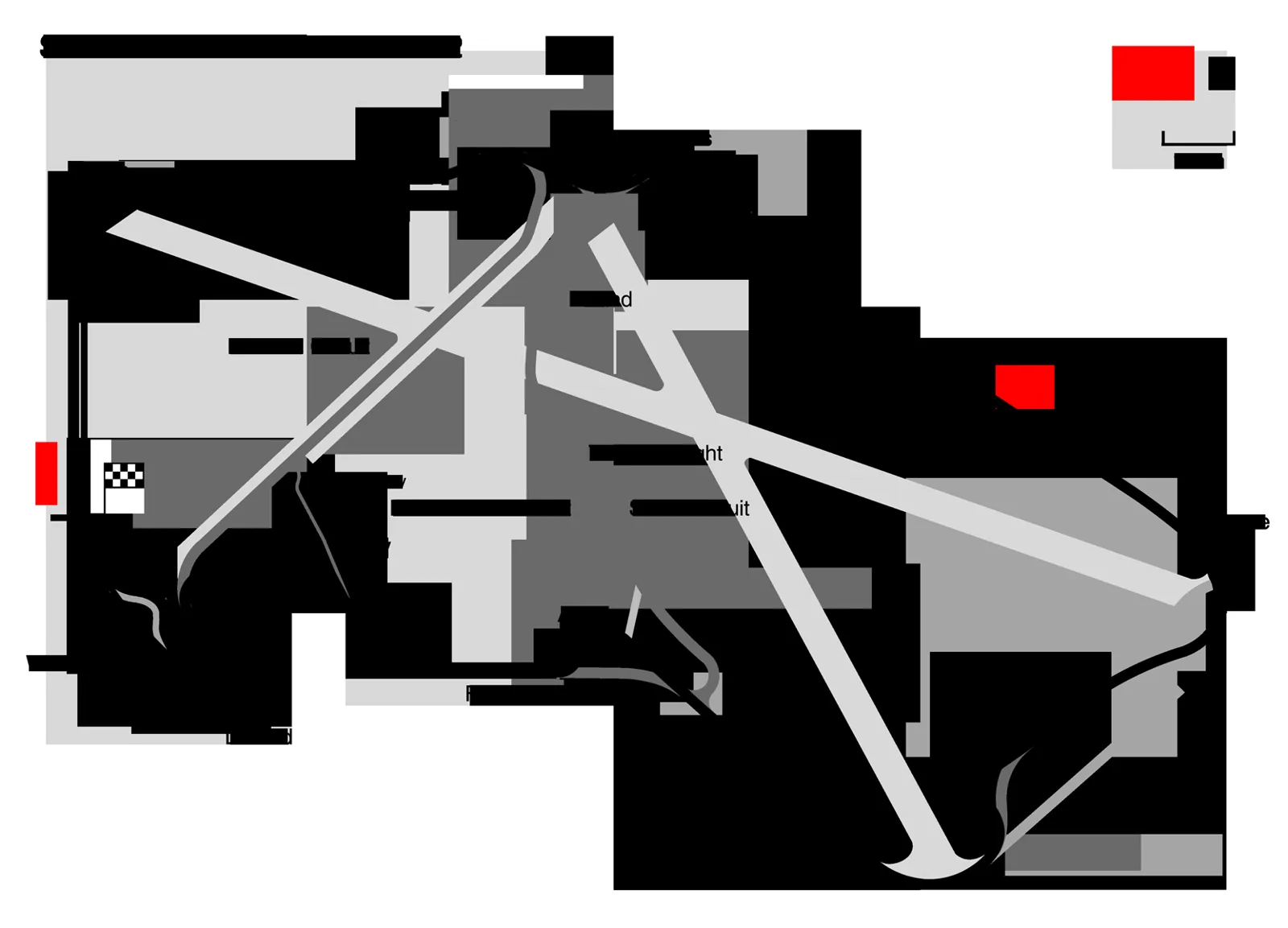

The April race at Silverstone ended with David Coulthard's win from fourth, after Barrichello's pole and early lead came undone.
The 2000 British Grand Prix was the fourth round of the 2000 Formula One World Championship, held at Silverstone on 23 April 2000, Easter Sunday. David Coulthard won the 60-lap race from fourth on the grid, Mika Hakkinen was second and Michael Schumacher third, and Coulthard moved up to second in the drivers' standings.
The 2000 British Grand Prix at Silverstone was held in April, on Easter Sunday, and it ended with David Coulthard winning from fourth on the grid. Rubens Barrichello took pole and led for most of the race, but a retirement on lap 35 handed the win to McLaren, with Mika Hakkinen second and Michael Schumacher third.
Why was the race held in April?
The Federation Internationale de l'Automobile moved the British Grand Prix from its traditional mid-July date to April, when average temperatures in Britain are lower. The move was needed partly because Easter fell later than usual that year, which pushed the Monaco Grand Prix into a congested calendar around July. The Spanish Grand Prix organisers also struggled to find marshals close to the Rally Catalunya, so that race could not move either.
The move was also linked to a disagreement involving the owners of Silverstone, the British Racing Drivers' Club, and Bernie Ecclestone, who was FIA vice-president, about which circuit should host the race. Ecclestone said he had scheduled the French Grand Prix for April and the British race for July, but internal politics in France had stopped the change. The race returned to July from the 2001 season and has been held in the summer ever since.
Barrichello's pole and early lead were undone by a lap-35 retirement, and Coulthard won the April race at Silverstone.
How did the teams prepare for Silverstone?
Teams tested at Silverstone from 11 to 14 April, with occasional rain making the track slippery. Barrichello was fastest on the first day and Ralf Schumacher on the second, while Michael Schumacher was quickest on the third and fourth days. Ferrari carried out shakedown testing of the F1-2000 at Fiorano on 15 April.
The testing was not without incident. Villeneuve hit a fox at the back of the circuit, which cut his running, and Ricardo Zonta crashed into a spectator enclosure at Stowe after his front-right suspension failed. BAR withdrew from testing after the accident. Michael Schumacher then persuaded the Silverstone authorities to enlarge the tyre wall at Stowe by one tyre in height and two in depth, and the gravel trap beside it was smoothed to stop cars becoming airborne.
A rule change on pit lane speed limiters also dominated the pre-race talk. The FIA allowed teams to use modified limiters as long as they were hard-coded below 50 mph (80 km/h), so that drivers could not secretly use traction or launch control. Most drivers welcomed the change because it reduced distraction in the pit lane, although some worried that they would not drive safely at the slower speed.
What was the championship picture before the race?
Michael Schumacher had won the first three races and led the drivers' championship with 30 points, followed by Barrichello on nine and Fisichella on eight. Hakkinen had only six points after McLaren's unreliability, and he trailed the leader by 24 points. Schumacher said he would not relax until the title was secured, and Hakkinen said he was not stressed because his car was excellent.
In the constructors' table Ferrari led with 39 points, ahead of McLaren on ten, Benetton on eight and Jordan and Williams on seven each. Coulthard, who was eighth in the standings, said that winning at Silverstone would mean more to him than it had the year before.
How did the wet Friday and Saturday practice go?
Friday's sessions began on a dry track in cold weather, but heavy rain fell after half an hour. Jordan's Heinz-Harald Frentzen led the first session at 1:27.683, almost half a second quicker than Irvine. Coulthard then had a hydraulic problem that caused a 14-minute red flag, and the recovery vehicle needed a tractor to get out of the mud near his car. Villeneuve nearly struck a marshal who was helping Coulthard. The stewards cut the second session short rather than extend it.
Michael Schumacher said the conditions made driving almost impossible and dangerous, because he could not see the cars ahead or judge the gaps. Jackie Stewart, a triple world champion, argued that the FIA had hurt Formula One's image by running the race in April.
Saturday's wet running produced its own incidents. Coulthard was fastest in the third session at 1:33.614, and Diniz spun at Club corner and damaged his nose. Button slid into the gravel at turn 14 and stopped near the barrier, and Irvine's Jaguar hit him while he tried to get out. Both drivers were unhurt, but their cars needed repairs. Hakkinen set the fastest time of the final session, 1:33.132, with a minute remaining on a gradually drying track.
Who took pole position at Silverstone?
Barrichello took pole with 1:25.703, his third in Formula One and Ferrari's first. Frentzen was second, just 0.003 seconds slower, even after he had lost control on the grass at Stowe. Hakkinen was third after a driver error and a set-up fault, and Coulthard fourth, the highest-placed British driver. Michael Schumacher was fifth.
The qualifying session was cloudy and the track was drying, with standing water still on the surface. Drivers went out early on wet-weather tyres hoping for rain that never came. At one stage 15 drivers held provisional pole. Verstappen briefly took the top spot in the closing seconds before spinning off to eighth, which was Arrows' best qualifying result since Salo sixth in 1998. Button was sixth, Ralf Schumacher seventh, Irvine ninth and Villeneuve tenth.
Trulli took 11th, ahead of Fisichella in the faster Benetton. Diniz was 13th, while the Minardi drivers Gene and Mazzacane completed the grid in 21st and 22nd. Irvine finished ninth despite his Jaguar carrying extra fuel that cost him two-tenths of a second.
What happened in the warm-up?
The rain had stopped by Sunday morning, but heavy fog stopped the medical helicopter from reaching the track or flying to hospitals. The FIA's Charlie Whiting delayed the half-hour warm-up by 100 minutes, and the drivers' parade was cancelled. Coulthard set the quickest time of 1:26.800, with De la Rosa and Ralf Schumacher second and third, and Hakkinen fourth in the other McLaren.
Hakkinen's race car then suffered a sensor failure, and he had to take the spare McLaren. Heidfeld's engine cover came off on the track, and yellow flags were waved while marshals cleared the debris.
How did the race start?
Barrichello held the lead into the first corner, with Frentzen second. Michael Schumacher was held up on the outside by the slow-starting Hakkinen and Button on his right. He turned left, but his tyres went onto the wet grass, and he and Hakkinen touched. Michael Schumacher had to slow and fell behind Button and Villeneuve. Coulthard overtook both his team-mate and Michael Schumacher as the pair fought.
Villeneuve moved from 10th to sixth by the end of the first lap, and Ralf Schumacher passed him for sixth on the second lap. Michael Schumacher later passed Villeneuve at Stowe and battled his brother for sixth. At the end of the first lap Barrichello led Frentzen by 0.4 seconds, followed by Coulthard, Hakkinen, Button and Villeneuve.
How did the first stint and the early stops play out?
Barrichello kept a gap of about a second over Frentzen, and by the 14th lap he was six-tenths of a second ahead of him, with Frentzen nine-tenths of a second ahead of Coulthard. Wurz was the first to pit, to make sure he had a clear track, and Salo and Fisichella stopped over the next few laps. Verstappen retired on lap 20 after an electrical fault in his engine, and Arrows could not fix it.
Frentzen and Ralf Schumacher pitted on lap 24, with Button one lap later. De la Rosa retired on lap 28 when his hydraulic clutch failed. Coulthard began gaining on Barrichello, who had clutch and electronic throttle problems. Two laps later Barrichello missed an upshift on the Hangar Straight, and Coulthard drew alongside into Stowe and went round the outside, fending off Barrichello's attempted block. Coulthard then pulled clear.
Hakkinen made his only stop at the end of that lap, from third, to change a flat-spotted tyre, and he rejoined eighth. Coulthard and Villeneuve pitted on lap 33, and Coulthard rejoined fourth behind Frentzen. Barrichello then lost control of his Ferrari's rear, due to an unstable engine, in the entry to Luffield on the way to the pits. He elected to enter the pit lane on lap 35 and could not leave his pit stall after a high-pressure hydraulic failure, so he retired.
How did Michael Schumacher and Coulthard decide the lead?
Michael Schumacher took the lead after Barrichello's retirement and set a new fastest lap of 1:26.797 on lap 36, widening the gap before his stop. He pitted on lap 38 for 8.8 seconds, which promoted Frentzen to the lead. Frentzen pitted on lap 42, handing the lead back to Coulthard. The Williams drivers stopped over the next two laps, which promoted Hakkinen and Michael Schumacher into second and third.
Michael Schumacher could not catch Hakkinen, as slower cars got in his way. Herbert made his last planned stop on lap 48 to re-pressurise his hydraulics. When the scheduled stops were complete, the top six were Coulthard, Hakkinen, Michael Schumacher, Frentzen, Ralf Schumacher and Button.
Hakkinen began closing on Coulthard on lap 51, when Coulthard was affected by a minor gearbox problem. Coulthard felt the issue but was not told by his race engineer, Pat Fry, that it was serious. On the same lap Frentzen had a gear selection problem that forced him into sixth gear and dropped him behind Ralf Schumacher and Button.
Heidfeld retired at Becketts on the next lap after spinning into the gravel with an oil pressure problem and an engine failure. Frentzen drove slowly into the pit lane to retire on lap 54. On lap 56 Hakkinen set the fastest lap of the race, 1:26.217, as he kept closing on Coulthard, despite the McLaren pit board telling him to slow down. Trulli passed Villeneuve for sixth into Priory on lap 57, and Villeneuve retired soon after with a gearbox problem.
Coulthard slowed in the closing laps to look after his car and held off Hakkinen to win his second successive British Grand Prix and the seventh of his Formula One career. Hakkinen finished 1.4 seconds behind, with Michael Schumacher third.
Top ten classification
| Position | Driver | Team | Notes |
|---|---|---|---|
| 1 | David Coulthard | McLaren | Second consecutive British win |
| 2 | Mika Hakkinen | McLaren | 1.4 seconds behind |
| 3 | Michael Schumacher | Ferrari | Eighth for most of the race |
| 4 | Ralf Schumacher | Williams | Fourth at the flag |
| 5 | Jenson Button | Williams | Exhaust broke, two points |
| 6 | Jarno Trulli | Jordan | Passed Villeneuve on lap 57 |
| 7 | Giancarlo Fisichella | Benetton | Seventh at the flag |
| 8 | Mika Salo | Sauber | Understeer in the final laps |
| 9 | Alexander Wurz | Benetton | Ninth at the flag |
| Tenth | Jean Alesi | Prost | Classified |
What did the result change in the championships?
Coulthard's win moved him from eighth to second in the drivers' standings, with 14 points. Hakkinen's second place lifted him from fourth to third on 12 points, and Michael Schumacher stayed in the lead on 34 points. Barrichello, who had led the race, dropped from second to fourth after his retirement.
In the constructors' table Ferrari kept the lead on 43 points, while McLaren closed to within 17 points. Williams moved up from fifth to third, and Benetton and Jordan dropped to fourth and fifth. Thirteen races remained in the season.
How did the drivers and teams react?
Coulthard said that passing Barrichello gave him an advantage during the pit stops. He added that Nigel Mansell's pass on Nelson Piquet at the 1987 British Grand Prix had been his inspiration, and he said his best years were still ahead of him. Hakkinen said the start had affected the race most, and that his car had been imbalanced because he had not had a good morning run.
Michael Schumacher was satisfied with third, admitting that he had been eighth for most of the race and that he was happy to see Barrichello take points from Hakkinen and Coulthard. Button was ecstatic to score two points for fifth, having been camped in a motorhome in the middle of the circuit a year earlier. Barrichello was disappointed to lose the chance of his first Grand Prix win after his clutch and throttle trouble, and Villeneuve was surprised how easily he had stayed ahead of Michael Schumacher, but disappointed that unreliability cost him a point.
Why was the race criticised?
FIA president Max Mosley and Bernie Ecclestone received heavy criticism for moving the race to April. Mosley said the governing body would move the event back to July if it could, rejecting the idea that it had deliberately picked a fight with Silverstone. The April date was never repeated.