From Minardi to Caterham, the career of a driver known for qualifying well and holding faster cars back, with one Grand Prix win at Monaco in 2004.
Trulli, an Italian former racer, competed in Formula One between 1997 and 2011 with Minardi, Prost, Jordan, Renault, Toyota and Lotus. His one Grand Prix victory came at Monaco in 2004, and he later raced in Formula E with his own team.
Jarno Trulli is an Italian former driver and motorsport executive who raced in Formula One from 1997 to 2011. He won the 2004 Monaco Grand Prix for Renault, and that same season gave him his best championship finish, sixth. He was known for qualifying well above what his cars deserved and for holding faster drivers behind him in races.
Who is Jarno Trulli?
Trulli was born on 13 July 1974 in Italy. His parents were motorsport enthusiasts, and they named him after the Finnish motorcycle champion Jarno Saarinen, who had been killed at Monza in 1973. He started karting at an early age and went on to win the Karting World Championship in 1991.
His karting success continued through the Italian championship and several other titles up to 1995. In 1996 he took the German Formula Three Championship, which opened the route to a Formula One seat with Minardi.
A qualifying specialist with one Grand Prix win, at Monaco in 2004, whose cars often trailed a line of faster rivals.
How did his first Formula One seasons unfold?
Trulli made his debut for Minardi in 1997. After seven races he took over from the injured Olivier Panis at Prost, and he impressed at once with fourth place in Germany. In Austria he led the race, but his engine failed while he was set to finish second.
He spent two seasons with Prost, and his first rostrum came in soaking conditions at the 1999 European Grand Prix. The team struggled in those years, and he concluded that a move to Jordan would bring better results.
What was his time at Jordan like?
Trulli joined the Irish squad in 2000, yet Jordan had lost the strength it had shown in the late 1990s. Across two seasons he never reached the podium, although his qualifying displays were excellent. Critics suggested he was better in qualifying than as a race driver, a charge he often rejected.
His contract with the personal manager Flavio Briatore, who also worked for Renault, led to a seat with the Anglo-French outfit for 2002.
How did he fare at Renault?
At Renault in 2002 he often out-qualified Jenson Button, although Button usually had the better of the races. Trulli stayed on for 2003 to partner Fernando Alonso, who won the Hungarian Grand Prix in the same car. Trulli struggled to match those results, although Germany brought a podium, the first since he had left Prost.
In 2004 he improved markedly. For the first half of the year he was the stronger Renault driver, collecting regular points and podiums. He then won at Monaco from pole position, the only Grand Prix victory of his career.
What went wrong at Renault in 2004?
A last-corner error in France let Ferrari's Rubens Barrichello onto the podium, and the team was furious. From that point his Renault future was in doubt. After France he collected no points, and in races he was often slower than he should have been. Later he claimed the team favoured Alonso.
Renault sacked him three races from the end of the season and brought in Jacques Villeneuve, the 1997 World Champion, even though Trulli was ahead of his teammate in the standings at that point. Toyota had already agreed to sign him for 2005, and he took the Toyota seat for the last two races of 2004, replacing Ricardo Zonta.
How did his Toyota years go?
In 2005 early podiums confirmed his speed, and at Indianapolis he qualified Toyota on pole for the first time. Through most of the year he outpaced his teammate, Ralf Schumacher, but a late slump cost him seventh place in the championship.
Back at Indianapolis in 2005, most of the grid, his own team included, did not race because of concerns over the Michelin tyres. The 2006 season began badly when David Coulthard tangled with him on the first lap in Australia. Trulli scored his first points in Canada, where he climbed from fourth on the grid to sixth, and he took fourth at the United States Grand Prix. He finished the year 12th overall.
In 2007 his first points came in Malaysia, where he finished seventh after qualifying eighth. He took sixth at Indianapolis, but a first-lap collision with Heikki Kovalainen in France ended his race, and he accepted responsibility. He finished the season 13th with eight points.
What was the 2008 season like?
Toyota hoped 2008 would be the step forward it needed, with Timo Glock as his new partner. Trulli began with fourth place in Malaysia and sixth in Canada. In France he finished on the podium in third, fending off Heikki Kovalainen and Robert Kubica in the final laps.
At the Brazilian Grand Prix he started on the front row beside pole-sitter Felipe Massa and finished eighth. His team-mate Glock was passed by Lewis Hamilton on the final corner, which gave Hamilton the title by one point from Massa. Trulli ended the year eighth in the standings with 31 points, four more than Glock.
What happened during 2009?
The 2009 season opened in Australia, where Toyota's qualifying times were thrown out over a flexible rear wing that breached the rules. Trulli therefore started from the pit lane, yet he still finished third. Penalised 25 seconds for overtaking Lewis Hamilton behind the safety car, he slipped to 12th.
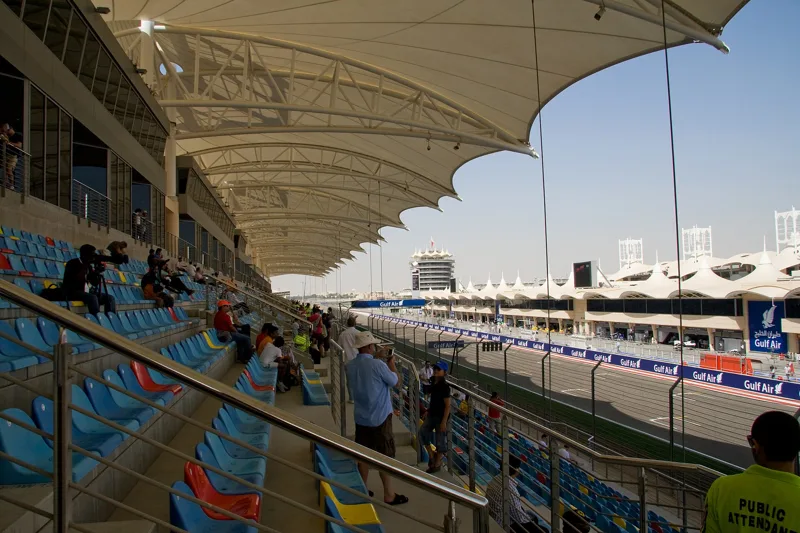
Hamilton was later disqualified from the results for misleading the stewards, and Trulli regained his third place. At Bahrain he took pole, then finished third after an unusual tyre strategy, and he set the fastest lap of his career. He has the record for the most starts before a first fastest lap. In Japan, Toyota's last home race, he qualified and finished second.
In Spain he was forced off at the second corner and collected by Adrian Sutil. In Brazil he hit Sutil again on the opening lap and blamed him for it. His open show of anger earned a fine of 10,000 dollars. He finished seventh at Abu Dhabi, scoring his last points for Toyota's Formula One team.
How did the Lotus years go?
Trulli was confirmed as a Lotus driver in December 2009, alongside Heikki Kovalainen. Only one of his first four races of 2010 ended in the finish, a worse record than his team-mate's. He suggested that the problems were confined to his own car, and he admitted his expectations had not been met.
Speaking to Autosport at the Lotus T127 launch, he said US F1 and Sauber had made contact with him. Late in 2009 Toyota had sent him to try a NASCAR stock car in North America, one prepared by Michael Waltrip Racing.
In 2011 he started with thirteenth in Australia, then retired with a clutch problem in Malaysia. He matched his best finish of thirteenth at Monaco. Reserve driver Karun Chandhok replaced him for the German Grand Prix, and he finished 14th in both Belgium and Italy, where it was confirmed that he would stay for 2012.
What happened at Caterham in 2012?
Team Lotus was renamed Caterham F1 before the 2012 season. He completed a single pre-season test before the team said on 17 February 2012 that Vitaly Petrov would take his place. He said he was really proud of having helped Caterham become a Formula One team.
He had been expected to stay in Formula One for 2012, but he retired before the season began.
His departure meant there was no Italian driver on the grid for the first time since 1969. That gap lasted until Antonio Giovinazzi raced at the 2017 Australian Grand Prix.
What did he do after Formula One?
The 2014-15 season saw Trulli race in the first FIA Formula E series with Trulli GP, his own outfit, which operated alongside Drayson Racing Technologies and Super Nova Racing. The team pulled out after its drivetrain failed scrutiny ahead of the first two races of 2015-16.
Away from the track he co-owns a vineyard in the Abruzzo region and makes his own wine. He also has a range of karts called Trulli Kart. His son Enzo has followed him into racing, first in karting and then in single-seaters from 2021.
What does his career look like at a glance?
| Years | Team | Notable result |
|---|---|---|
| 1997-1999 | Minardi, then Prost | Podium in the rain at the 1999 European Grand Prix |
| 2000-2001 | Jordan | Excellent qualifying, but no podiums |
| 2002-2004 | Renault | Monaco Grand Prix win from pole in 2004 |
| 2005-2009 | Toyota | First pole for Toyota at Indianapolis in 2005; third in France in 2008 |
| 2010-2011 | Lotus | Thirteenth at Monaco in 2011 |
| 2012 | Caterham | One pre-season test before being replaced in February |
How did his qualifying style work in practice?
Qualifying was his trademark. He regularly placed a slower car far higher on the grid than rivals with better machinery expected, and that gap built his reputation. Pole at Indianapolis for Toyota and at Monaco for Renault both came from the same ability to extract a lap from a difficult car.
Race craft was the other half of the picture. Once ahead he would defend hard, sometimes for an entire race, and the line of traffic that formed behind him gave rise to the Trulli Train nickname. Fans and commentators adopted the phrase because it captured how he could hold off quicker machinery.
Critics argued that this made him a qualifying specialist rather than a fast racer, a charge he frequently denied. The debate has followed his record ever since.
What is his lasting legacy?
Trulli is remembered for his qualifying skill and his defensive driving. His habit of holding faster cars back often left a line of vehicles behind him, which fans and the media dubbed the Trulli Train. His 2004 Monaco win remains his only Grand Prix victory, and his best championship finish was sixth.
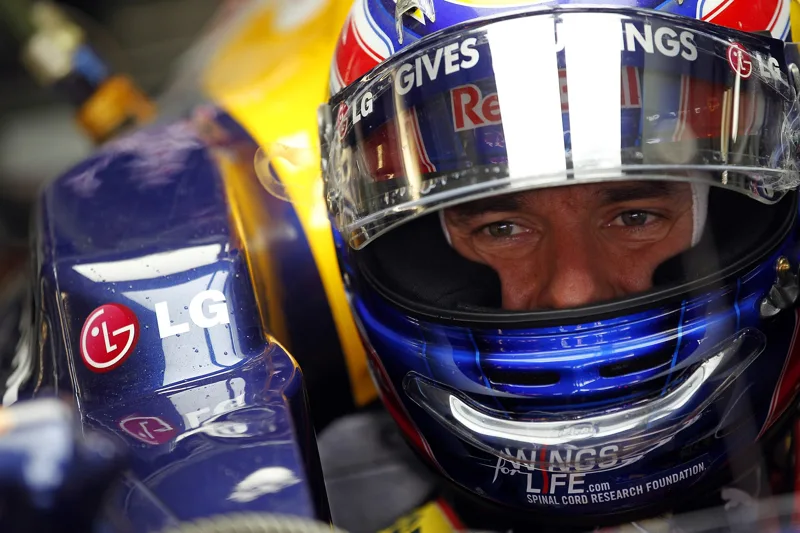
His helmet design changed several times. It began as white with a blue visor shape, turned chromed silver in 2004, and became red in his early Toyota years before reverting to a red design with white outlines in 2008. The Lotus years kept the same design in more ordinary shades.