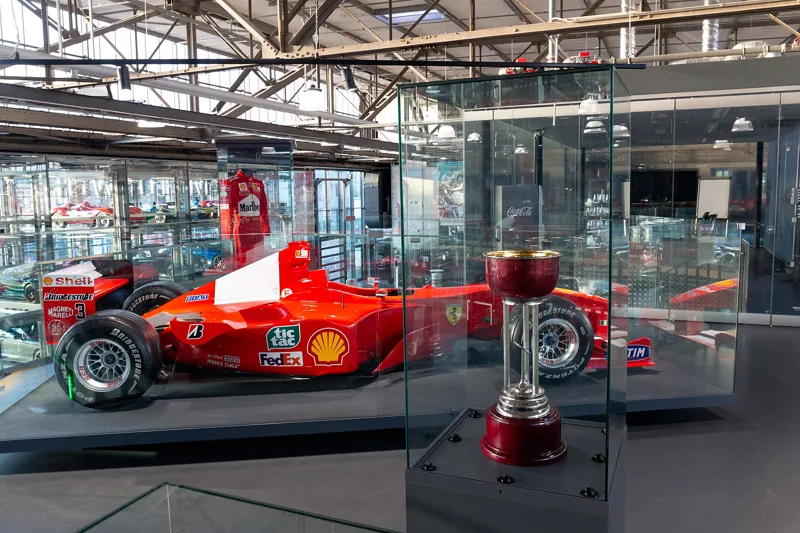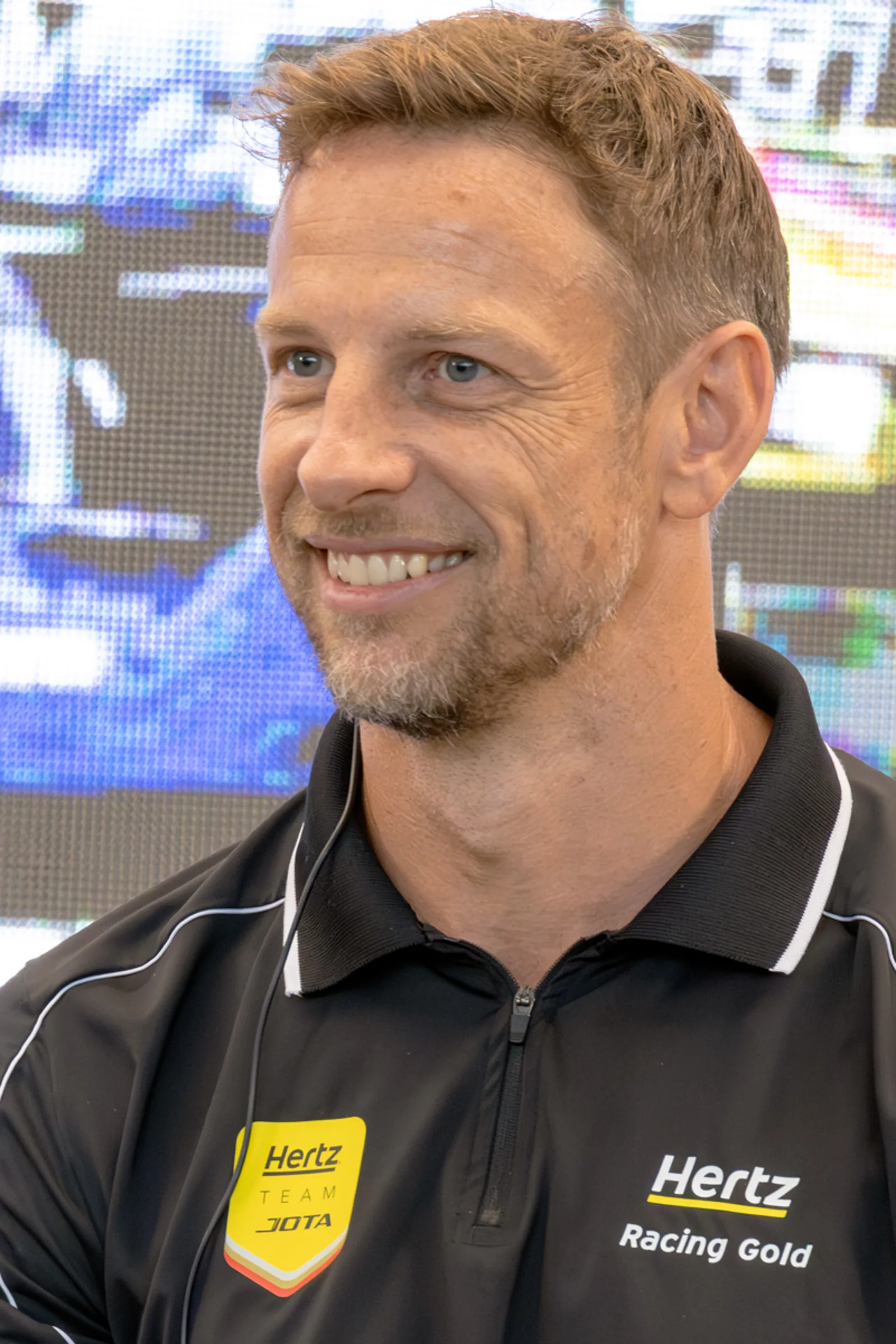
A smooth, precise driver who won the 2009 title with Brawn GP, spent seasons at McLaren and then became a Super GT champion.
Jenson Button was a British driver who competed in Formula One from 2000 to 2017. He won the 2009 world championship with Brawn GP and finished his Formula One career with 15 Grand Prix wins from 306 starts before becoming a Super GT champion in 2018.
Jenson Button is a former British racer whose Formula One career ran from 2000 to 2017. He won the world championship in 2009 with Brawn GP, a team formed from a management buyout of Honda, and finished his career with 15 Grand Prix wins from 306 starts.
Born in Somerset in 1980, Button began karting at eight and worked his way up through junior single-seaters. A call from Williams in late 1999 gave him a Formula One drive the following year, and he went on to spend time at Benetton, Renault, BAR, Honda and McLaren before retiring from full-time racing.
How did Jenson Button reach Formula One?
Button started karting in May 1988 at the age of eight, and in 1991 he won every one of the 34 races in the British Cadet Kart Championship. He moved into single-seaters in 1998, took the British Formula Ford title with nine victories, and then won three races in the 1999 British Formula 3 International Series. Those results led to a test and then a Formula One contract.
His father, John, introduced him to motorsport early, and a kart bought as a Christmas present in 1987 was followed by his first race at Clay Pigeon Raceway. In 1989 he won the British Super Prix at nine years old. Mentor Dave Spencer, who built his karts, later pushed him to drive more aggressively when he moved up to the Junior class.
In 1997 he became the youngest driver to win the European Super A Championship and the first Briton to do so. A year later he won the Formula Ford Festival at Brands Hatch, and the Autosport BRDC Award followed at the end of 1998.
A smooth driver whose 2009 title came from a team born out of Honda's exit from Formula One.
Why was Button's 2000 season so unusual?
Williams called Button in late 1999 to ask whether he was ready for Formula One, and he first thought the call was a joke. He beat Bruno Junqueira in a shoot-out at Jerez, which made him Britain's youngest ever Formula One driver. He had no FIA super licence, so the governing body asked for extra testing before the licence was issued regardless.
He finished sixth at the 2000 Brazilian Grand Prix, becoming the youngest driver ever to earn a championship point. Williams had intended to use him only until it could buy Juan Pablo Montoya out of his contract, and a dip in form combined with Montoya's Indianapolis 500 win led to a mid-season change. Button was then loaned to Benetton.
His best qualifying that year was third at Spa-Francorchamps, and he finished eighth in the championship with twelve points. A crash at Monza under safety car conditions was among the mistakes that marked his debut season, which he finished in eighth place.
How did Button's career develop at Benetton, Renault and BAR?
Button spent 2001 at Benetton, which had recently been bought by Renault, and finished seventeenth with two points. In 2002 the team became Renault, and he scored 14 points for seventh overall. In 2003 he moved to British American Racing, where he finished ninth with 17 points.
The Benetton year was hard. The car lacked power steering and horsepower, and teammate Giancarlo Fisichella regularly outpaced him. Team principal Flavio Briatore publicly said Button had to show he was very good or fall out of the top drivers, and the British press labelled him a playboy. His best result that year was fifth at the German Grand Prix.
At Renault his form improved. At the Malaysian round he was poised for a first podium until rear suspension trouble on the last lap left him fourth. Briatore then told him that Fernando Alonso would replace him for 2003, and Button signed with BAR in July 2002, where David Richards, the team principal, offered a long-term programme.
How did BAR's years shape Button's reputation?
The first BAR season was turbulent. Button was knocked unconscious in a high-speed qualifying crash at Monaco and was kept in hospital overnight. He returned to race the following Grand Prix in Montreal and went on to outperform teammate Jacques Villeneuve, who lost his seat before the final race of the year.
The 2004 season was his best at BAR. He took his first podium with third at the Malaysian Grand Prix, then a first pole position at Imola, where he came second to Michael Schumacher. He stood on the podium ten times in 18 races, finished third in the championship, and helped the team to second in the Constructors' table.
Contract disputes followed. Button had agreed to return to Williams for 2005, but a ruling by F1's Contract Recognition Board kept him at BAR. In 2005 he was disqualified from third at the San Marino Grand Prix after a hidden second fuel tank made his car underweight, and the team was banned from the next two races. He finished that season ninth on 37 points.
How did Button win the 2009 title with Brawn?
Honda withdrew from Formula One in December 2008. Ross Brawn led a management buyout in early 2009, creating Brawn GP and signing Button as its driver. The car was quick from the first test, and He took six of the opening seven rounds, clinching the championship at the Brazilian Grand Prix with a round to spare.
The early advantage came from a double diffuser design that helped the team and the Toyota and Williams outfits more than their rivals. Button scored 61 points in the first seven races, but once the major teams introduced their own diffusers his form dipped. He averaged sixth in the next ten races and scored 35 points in that stretch.
Brawn GP had spent around 10 per cent of its 7 million pound budget on car development, and Button had been a bookmakers' outsider at 100-1 before the season began. He ended the year with a third place at Abu Dhabi, and the team also took the Constructors' Championship.
Why did Button's McLaren years go up and down?
Button joined McLaren for 2010, partnering Lewis Hamilton, and won the Australian and Chinese Grands Prix that year. He ended the season fifth, but 2011 was his strongest year with the team. Three wins and twelve podiums gave him runner-up place with 270 points, although Sebastian Vettel's title was already secured by the Japanese race.
The 2011 wins came in Canada, where he overtook Vettel on the slippery final lap after two collisions had dropped him to the back, and then in Hungary and Japan. Button's 2012 season began with a win in Australia, and wins in Belgium and Brazil followed. He finished fifth overall with 188 points.
The later McLaren years were much harder. The 2013 car was built from scratch rather than as an update, and it suffered from understeer and tyre degradation. Button finished ninth overall with 73 points. In 2014 he took third at the Australian Grand Prix after Daniel Ricciardo was disqualified, and that was his final podium. He finished eighth with 126 points, then fell to sixteenth in 2015 with sixteen points.
Why did Button retire from full-time racing?
Button told McLaren before the 2016 Belgian Grand Prix that he planned to retire, but the team asked him to take a sabbatical. He became an ambassador and reserve driver instead, working in the simulator and representing the team at sponsor events. In 2016 he had qualified third at the Austrian Grand Prix, the best grid position of the McLaren-Honda partnership, and finished 15th overall with 21 points.
In April 2017 he stood in for Fernando Alonso at the Monaco Grand Prix, which Alonso was skipping to race at Indianapolis. Button prepared in the simulator and retired late in the race after a collision with Sauber driver Pascal Wehrlein. His McLaren contract expired at the end of 2017 without renewal.
His Formula One career totals were 306 starts, 15 wins, eight pole positions, 50 podium finishes and 1,235 championship points.
What were Button's Formula One results by season?
Button's results followed a clear pattern: a difficult start at Williams and Benetton, a steady climb at BAR, a title-winning year with Brawn, and then a McLaren spell that peaked in 2011 before declining. The table below lists his championship place and notable results for each season.
| Season | Team | Result |
|---|---|---|
| 2000 | Williams | Eighth, twelve points |
| 2001 | Benetton | Seventeenth, two points |
| 2002 | Renault | Seventh, 14 points |
| 2003 | BAR | Ninth, 17 points |
| 2004 | BAR | Third; ten podiums in 18 races |
| 2005 | BAR | Ninth, 37 points |
| 2006 | Honda | First win at the Hungarian Grand Prix |
| 2007 | Honda | Fifteenth, six points |
| 2008 | Honda | Three points; sixth at the Spanish Grand Prix |
| 2009 | Brawn GP | World champion; six wins in the first seven races |
| 2010 | McLaren | Fifth; wins in Australia and China |
| 2011 | McLaren | Runner-up with 270 points; three wins |
| 2012 | McLaren | Fifth with 188 points; wins in Australia, Belgium and Brazil |
| 2013 | McLaren | Ninth with 73 points |
| 2014 | McLaren | Eighth with 126 points; final podium in Australia |
| 2015 | McLaren | Sixteenth with sixteen points |
| 2016 | McLaren | 15th with 21 points |
What did Button do in racing after Formula One?
Button moved into Super GT in Japan and became the GT500 champion in 2018 with Naoki Yamamoto at Team Kunimitsu. He won the title by three points, a rookie feat last seen with Takagi in 2005. The Honda team helped him adapt to the series, and Yamamoto's English helped their communication.
Endurance racing brought a mixed record. His first endurance outing came at Spa in 1999, ending after 22 laps, and in 2018 he drove for SMP Racing at Le Mans before an engine failure ended the car's race. He later drove for Jota in the WEC and finished tenth in the Drivers' Championship in 2025 with 46 points, including a career-best second place at the 6 Hours of Sao Paulo.
He also made three NASCAR appearances in 2023 with Rick Ware Racing, with a best finish of eighteenth at Circuit of the Americas. He took part in the Race of Champions six times and ran Team Jota's Porsche and Cadillac entries in endurance events. He stepped away from professional racing following the 8 Hours of Bahrain in 2025.
What was Button's driving style?
Button was known for a smooth, minimal-input style that suited wet races and helped preserve tyres. Journalist Mark Hughes praised his sense of how much momentum a corner could take in 2009. The same smoothness could make it hard to build tyre temperature on a cool track, and it sometimes hurt his single-lap qualifying.
From 2000 he braked with his left foot, dragging the pedal to control how power came on as he turned in early. He preferred a stable rear end on which he could lean out of corners. From 2001 to 2007, while traction control was permitted, he used the throttle to prevent wheelspin, which helped him keep speed on exit.
Critics once labelled him a nearly man, and his looks drew mockery, but that talk faded after the 2009 title. Ben Anderson of Autosport wrote that he was rarely named among the true elite, citing a lack of absolute dynamism in difficult technical conditions.
What is Button's legacy?
Button is remembered as the 2009 Formula One champion and a long-serving McLaren driver with 15 wins. He later became a Super GT champion and an endurance racer, and in 2016 Bath University gave him an honorary doctorate in engineering. His legacy is also tied to the smooth style that made his wet-weather drives famous.
His honours include the 2010 MBE for services to motorsport, second place behind Ryan Giggs in the 2009 BBC sports personality vote, and a 2017 place in the FIA Hall of Fame. Frome named a street and a footbridge after him and gave him the freedom of the town.
After racing he joined Williams as a senior advisor in 2021, and Aston Martin F1 Team named him an ambassador ahead of the 2026 season. He had analysed races for Sky Sports F1 since the 2018 British Grand Prix. A 2023 Disney+ miniseries about the Brawn season dramatised his 2009 title.