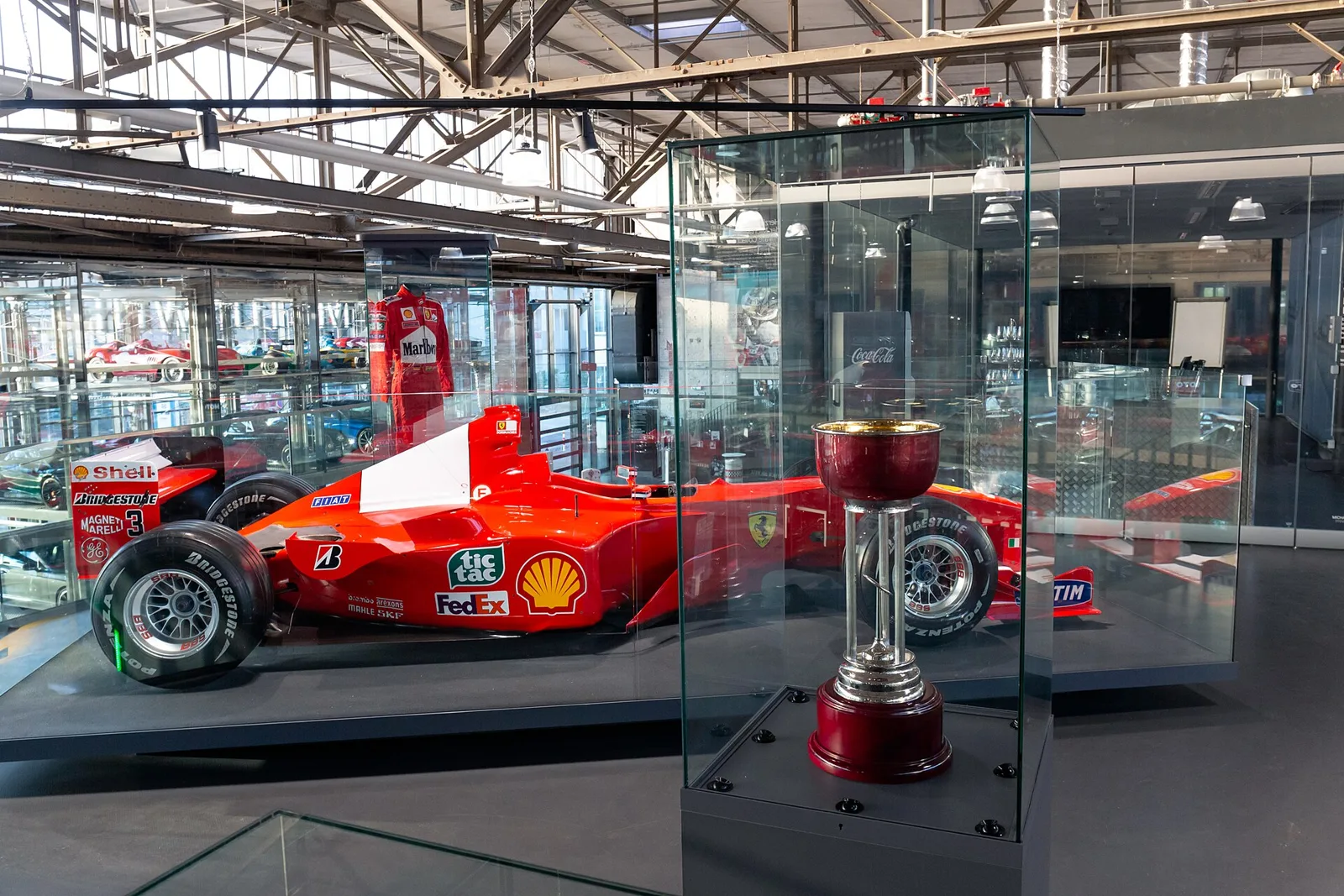
Michael Schumacher won from pole, a fast restart and well-timed stops decided the order, and Ferrari's first world champion since 1979 was crowned.
Michael Schumacher won the 2000 Japanese Grand Prix for Ferrari at Suzuka, starting from pole position. Mika Hakkinen finished second for McLaren, ahead of teammate David Coulthard. The win secured Schumacher's drivers' championship with one race of the season still to run.
Ferrari's title hopes were settled at Suzuka on 8 October 2000, when Michael Schumacher, starting from pole, crossed the line first after 53 laps. Mika Hakkinen and David Coulthard, both of McLaren, took the other podium places. It was the 16th round of the season and the penultimate race of the year.
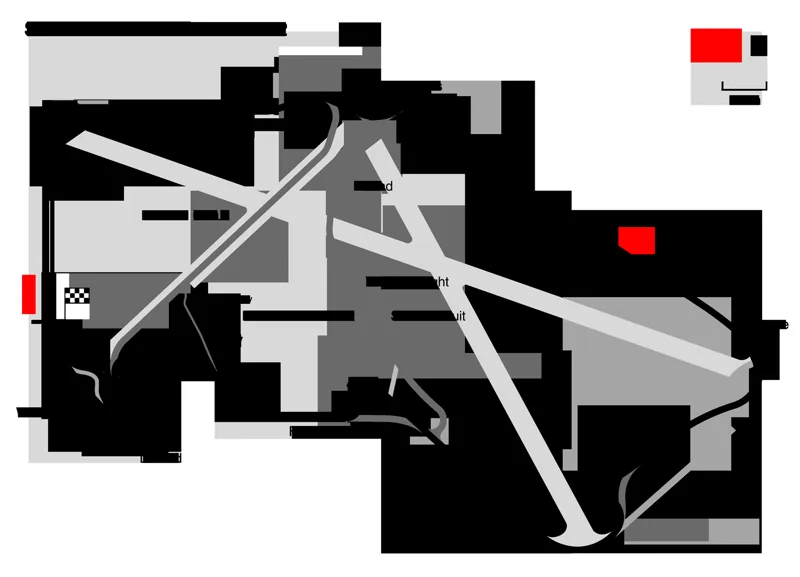
The circuit is a clockwise figure-of-eight measuring 5.860 km (3.641 mi). Its pit lane entrance had been moved for safety, from the end of the 130R left-hand corner to the exit of the Casio chicane. Bridgestone sent its medium dry tyre along with intermediate and full wet compounds, and eleven two-driver teams lined up with no changes to the entry list.
Schumacher led the drivers' table with 88 points before the race, ahead of Hakkinen on 80 and Coulthard on 63. Ferrari led the constructors with 143 points, while McLaren had 133 and Williams 34. Two races remained, each offering 20 points, so Hakkinen still had a route to the title, but a Schumacher win would have left him more than ten points adrift with one round to run.
Hakkinen arrived eight points behind after a difficult United States Grand Prix, where a pneumatic valve failure had ended his race. He said that what had happened to him could happen to anyone, and that he was approaching the last two races as a pair. Barrichello and Coulthard had both been ordered by their teams to support their team-mates, and Ferrari's team principal Jean Todt and former world champion Jody Scheckter urged the two drivers to race fairly.
Testing, rules and the blocking row
The week after the United States Grand Prix, teams tested at five circuits in Europe. Michael Schumacher spent time at Mugello refining the set-up of his F1-2000. Ferrari test driver Luca Badoer spent two days at Fiorano assessing mechanical parts and Bridgestone's wet tyres on an artificially wetted track. Williams spent two days at Estoril testing wet tyres and aerodynamic set-ups with rookie Jenson Button.
The most talked-about issue before the race was a new rule on blocking. At the Friday drivers' meeting, race director Charlie Whiting said any manoeuvre that interfered with the title battle would bring a waved black and white flag, and a black flag if the driver continued. A driver could also face a three-race ban. The idea followed an incident at the 1997 European Grand Prix, in which Sauber's Norberto Fontana impeded Jacques Villeneuve.
McLaren's team principal, Ron Dennis, was among the sharpest critics. He described the rules as arbitrary and said they took tactical choices away from his team. He was also unhappy with the appointment of Italian lawyer Roberto Causo as a steward, because Causo had represented Ferrari at the 1999 Malaysian Grand Prix and Dennis believed any ruling would favour Ferrari.
Few teams made major changes, since most were already working on 2001. Ferrari introduced a rectangular front wing in place of its arrow-shaped design, Honda brought a more powerful V10 for qualifying and the race, Sauber saved weight with lighter components, and Williams supplied a revised rear wing. BMW ran the same engine specification it had introduced in Belgium. Teams were barred from testing at Suzuka, so some drivers came to the circuit only for car checks.
Ferrari's first champion since 1979 was crowned at Suzuka, and a late McLaren challenge never had the points to catch him.
Practice and qualifying
Practice took place in dry, warm weather across two one-hour sessions on Friday and two 45-minute sessions on Saturday. Schumacher was fastest in the opening session at 1:38.474, ahead of Hakkinen and Coulthard, although Barrichello crashed into the perimeter fence at the hairpin between turns ten and eleven and the session was yellow flagged.
In the second session Schumacher improved to 1:37.728, six-tenths faster than Hakkinen. A magnitude 6.7 earthquake was felt while cars were on track, but no structural damage was reported. On Saturday morning Schumacher was quickest at 1:37.176, and Hakkinen then set the best time of the final session at 1:37.037, one-tenth of a second quicker than Schumacher.
Diniz's Sauber engine failed ten minutes into the Saturday morning session. Smoke and flame trailed from the car, and a large amount of oil was left on the circuit, which made several drivers slide. Diniz returned to the pit lane rather than stopping on the track.
Qualifying ran for one hour, with each driver limited to twelve laps and the 107% rule in force. Schumacher took pole with 1:35.825, set with three minutes remaining after Ross Brawn sent him into a gap in traffic. It was his eighth pole of the season and the 31st of his career. Hakkinen was nine thousandths of a second slower and joined him on the front row, although he lost time exiting the final turn. Coulthard was third and conceded he could not match the front two.
Both Williams drivers were on the third row, with Button fifth and Ralf Schumacher sixth. Irvine was seventh, Frentzen eighth, Villeneuve ninth and Herbert tenth. Wurz narrowly missed the top ten in 11th place, while Fisichella started 12th after his car lost performance following morning practice. Trulli took 15th, Alesi 17th and Zonta 18th. Gene started 21st, one place ahead of Mazzacane in 22nd.
What happened in the opening laps?
Hakkinen accelerated more quickly and led into the first corner, despite Schumacher's attempt to block him by moving right. Schumacher stayed close, and at the end of lap one Hakkinen led by eight-tenths of a second. Verstappen climbed from 14th to ninth, while Fisichella dropped eight positions when his anti-stall system kicked in.
Hakkinen set the race's fastest lap on lap two and began to draw clear of Schumacher. Coulthard was third, ahead of Ralf Schumacher, Irvine, Barrichello and Button, who was running with an overheating clutch. On lap seven Villeneuve passed Herbert for eighth, and Trulli moved past his Jordan team-mate Frentzen after starting 11th. Verstappen retired on lap ten with electronic gearbox problems.
At the front, Hakkinen extended his lead over Schumacher to two seconds, while Schumacher was ten seconds ahead of Coulthard. Trulli made his first stop on lap 17 after he had been fuelled light to gain track position, and he dropped from tenth to 18th. Diniz had made the first stop of the race on lap 13, starting the first round of pit stops. Alesi retired on lap 21 after an engine failure spilled oil, and he spun on his own oil.
How did the pit stops settle the race?
Schumacher's second stop, on lap 40, put him 4.1 seconds ahead of Hakkinen when he rejoined. His lighter fuel load and clean air let him gain five seconds on Hakkinen through the stops. Hakkinen's stop on lap 37 had left him 25.8 seconds behind Schumacher, and he could only close in during the closing laps.
The stops were tightly bunched. Hakkinen's team asked for an earlier stop on lap 22, Schumacher pitted for extra fuel on lap 23, and Coulthard stopped on lap 24, handing the lead back to Hakkinen. By the end of lap 25 every driver had stopped at least once, and Hakkinen led from Schumacher, Coulthard, Barrichello, Ralf Schumacher and Button. Hakkinen then set a new fastest lap of 1:39.189 on lap 26, stretching his lead over Schumacher to 2.9 seconds, although Schumacher stayed close despite carrying more fuel.
Light rain began on lap 30 and made the track slippery, but it was not heavy enough to justify switching to wet-weather tyres. De la Rosa's car slowed Hakkinen in the chicane that lap, and Schumacher closed to 0.7 seconds behind by lap 31. Frentzen retired on lap 30 when a hydraulic pump failure caused his gearbox to fail at the entry of the first corner.
Hakkinen made his second stop on lap 37 to avoid a battle with the Jaguars ahead, and he rejoined 25.8 seconds behind Schumacher. Schumacher radioed Ross Brawn that he was closing on slower cars and asked whether he should stop earlier than planned, but Brawn told him to stay out for the time being. Wurz spun out on lap 40, and Schumacher lost time avoiding his stationary car before making his own final stop on the same lap.
Ralf Schumacher retired on lap 42 after mounting a kerb at turn two while attempting to lap Gene, and his car spun into the gravel. The retirement promoted Villeneuve to sixth. Heidfeld retired on lap 43 with a left-front suspension failure, and Gene followed on the same lap with a failed engine at the hairpin.
Results at a glance
| Position | Driver | Team | Note |
|---|---|---|---|
| 1 | Michael Schumacher | Ferrari | Won in 1'29:53.435 at 207.316 km/h (128.820 mph) |
| 2 | Mika Hakkinen | McLaren | 1.8 seconds behind; could not get heat into his tyres |
| 3 | David Coulthard | McLaren | Described his race as quiet; struggled in the wet |
| 4 | Rubens Barrichello | Ferrari | Fourth, ahead of Button |
| 5 | Jenson Button | Benetton | Gaining on Barrichello by the finish |
| 6 | Jacques Villeneuve | BAR | The last points position |
The rest of the classification ran from Herbert and Irvine down to Mazzacane, who was the last driver classified. Schumacher's win was his eighth of the season and the 43rd of his career. It also made him Ferrari's first world champion since Jody Scheckter in 1979.
Reaction in Japan and Italy
Schumacher said he had been careful when the track became slippery during the second stint, and that his team's adjustments at the first stop had helped his pace. Hakkinen congratulated him on the title and admitted he was disappointed, while also accepting that Ferrari's tactics had given Schumacher an advantage after the second stop.
Italian and German newspapers celebrated the title. Die Welt wrote that a dream had been fulfilled, and La Gazzetta dello Sport said Ferrari had made peace with its history. Ferrari president Luca di Montezemolo called it the 'most beautiful day of my life' and thanked the team, its fans, majority owner Fiat and its sponsors.
Scheckter praised both Ferrari and Schumacher, though he regretted no longer being the last Ferrari world champion. Todt said the team would only be content once the constructors' title was theirs, as three more points were needed. Former Italian president Francesco Cossiga criticised Schumacher's conduct during the national anthem, when the driver had mimicked a conductor, and Schumacher apologised if it had been seen as disrespectful.
Off track, the blocking row continued. FIA president Max Mosley wrote to Ron Dennis in a letter dated 19 October, accusing him of damaging Formula One with his recent comments, and he backed Whiting's flag proposal for unsportsmanlike driving. Dennis apologised, saying he had never intended to bring the sport into disrepute or disrespect Italian lawyer Roberto Causo.
Patrick Head, Williams's technical director, praised Button's fifth place as a brilliant and mature drive in changing conditions.
What did the result mean for the championship?
Schumacher's win made him the 2000 world champion with a 12-point margin over Hakkinen, who finished runner-up. Coulthard was third in the standings on 67 points, nine ahead of Barrichello. Ferrari extended its constructors' lead over McLaren to 13 points, with the final round in Malaysia still to come.
Williams increased its gap over Benetton in fourth by 16 points, while BAR passed Jordan into fifth place with 18 points and one race of the season left. Hakkinen could not catch Schumacher's total, so the drivers' title was settled before the last race.