Michael Schumacher won at Sao Paulo from third on the grid, but an illegal front wing endplate later cost David Coulthard second place.
Michael Schumacher won the 2000 Brazilian Grand Prix at Sao Paulo on 26 March 2000, starting third. David Coulthard was later disqualified from second for an illegal front wing endplate, which promoted Giancarlo Fisichella to second behind the Ferrari driver.
Michael Schumacher won the 2000 Brazilian Grand Prix from third on the grid, his second straight win of the season and the 37th of his career. The result was later changed when David Coulthard was disqualified from second place, which promoted Benetton's Giancarlo Fisichella.
How did the early laps unfold at Sao Paulo?
Mika Hakkinen started from pole and led the first lap before Schumacher passed him on lap two. Schumacher then built a lead of 17.6 seconds before making the first of his two pit stops for fuel and tyres on lap 20.
Coulthard had wheelspin at the start and failed to challenge Hakkinen for the lead. Barrichello, who had made a slow start, was third behind Coulthard for the early laps.
Hakkinen retired with a shortage of engine oil pressure ten laps after Schumacher's stop. Schumacher then slowed to manage an oil pressure problem of his own, and Coulthard closed on him over the final 12 laps.
Coulthard was not close enough to make a pass, and Schumacher took his second consecutive victory of the season, which was his 37th career win.
Coulthard was disqualified from second place for an illegal front wing endplate, and the podium changed hands after the chequered flag.
What happened to the result after the race?
Following the race, Coulthard was disqualified from second place for an illegal front wing endplate, having finished second on the road. McLaren appealed to the FIA's International Court of Appeal, which rejected the appeal. The disqualification stood, and the podium changed hands.
The disqualification moved every driver behind Coulthard up one place. Fisichella was promoted to second, and in the championship Barrichello fell to third after not finishing the race.
The result pushed Schumacher's championship lead to 12 points. Ferrari's constructors' margin grew to 18 points over Benetton, which had climbed into second, and fifteen races were still to come.
What did the circuit demand from the drivers?
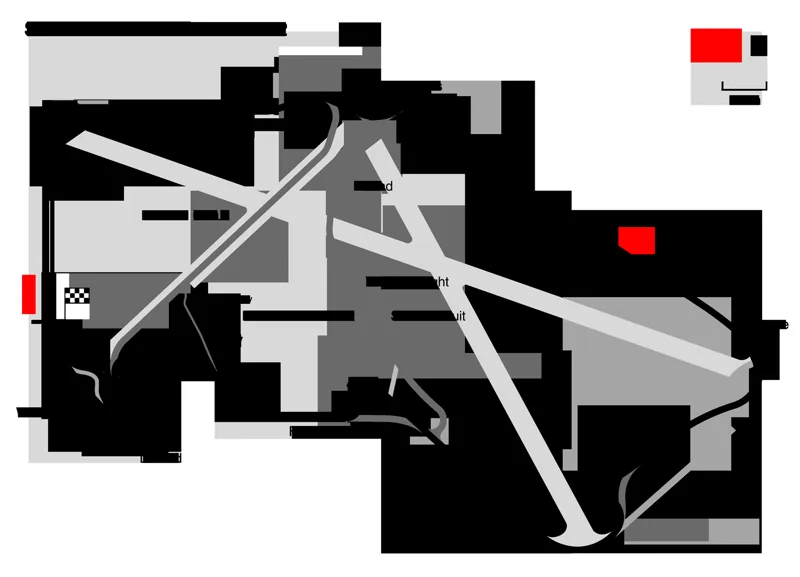
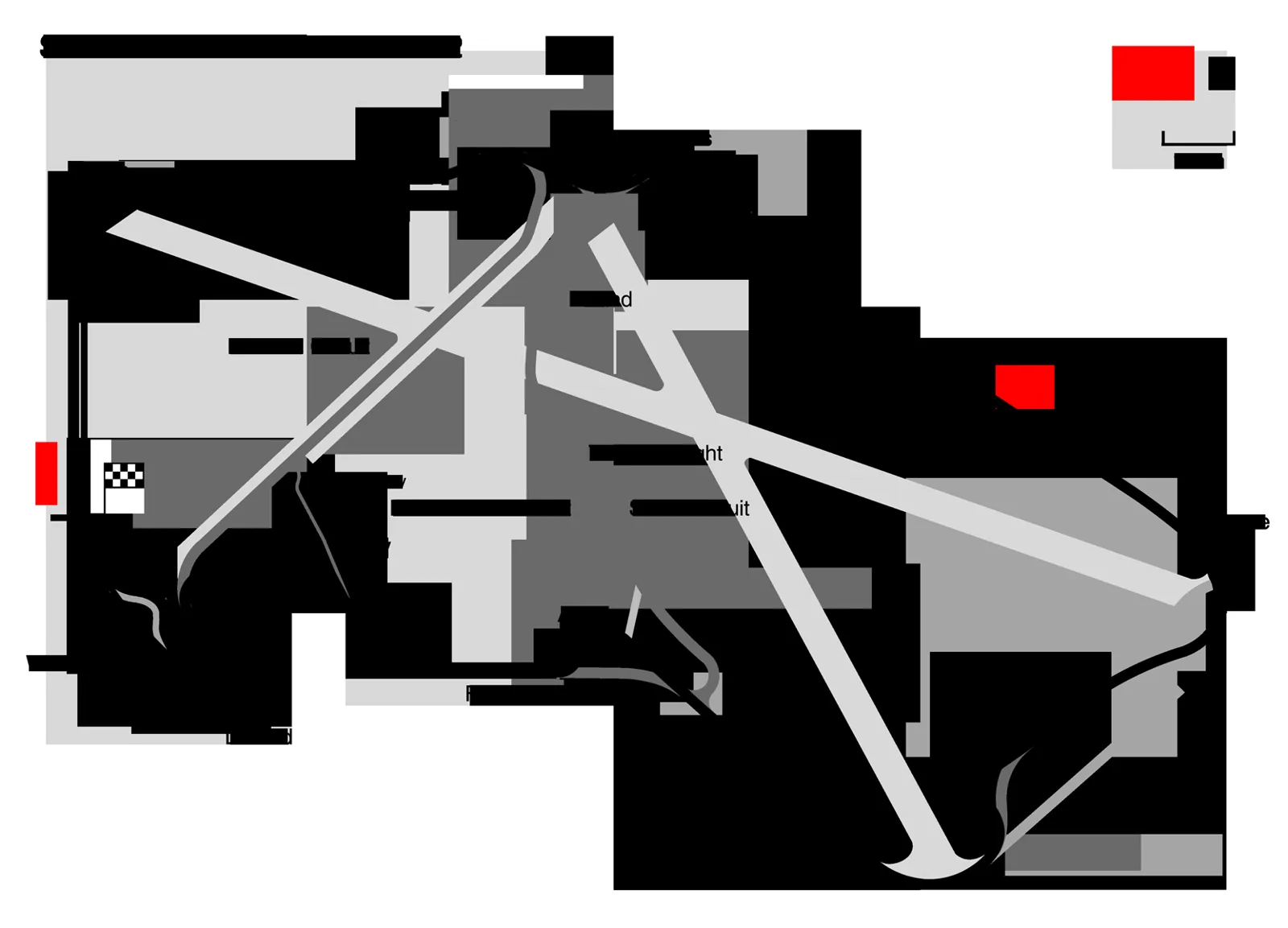
The Autodromo Jose Carlos Pace is a 15-turn, 4.309 km (2.677 mi) anti-clockwise circuit in the Brazilian city of Sao Paulo. It sits at high altitude and has significant elevation changes, which put a heavy load of g-force on the left side of the drivers' necks.
Teams ran medium to high downforce, and dampers, springs and suspension were tuned for the bumpy surface. Bridgestone, the control tyre supplier, provided soft and medium dry compounds.
The race was the second of seventeen in the 2000 season and the 29th Brazilian Grand Prix. It was also the second of six non-European Grands Prix that year.
What did the championship look like before Brazil?
Schumacher led the drivers' championship with ten points after his win in Australia, the only race so far, followed by his Ferrari team-mate Barrichello on six and Ralf Schumacher on four. Villeneuve was third on three points and Fisichella fifth on two.
Ferrari led the constructors' championship with a maximum of 16 points, while Williams and BAR were tied for third on four points each. Benetton were fourth on two points.
Schumacher was the bookmakers' favourite. McLaren team principal Ron Dennis had claimed Ferrari was not as competitive as McLaren, and Schumacher expressed optimism about a continuing challenge to McLaren over the rest of the season.
Coulthard expected McLaren to start on the front row and go on to win. Faulty seals on the pneumatic valve systems had forced Hakkinen and Coulthard out of the Australian race.
Which teams tested before the race?
McLaren, Jordan, Williams, Jaguar and Prost tested at Silverstone from 14 to 16 March, while Ferrari's Luca Badoer completed shakedown runs at Fiorano. Panis led the first two days of testing for McLaren, and Button was fastest on the third day for Williams.
Four teams, BAR, Arrows, Sauber and Minardi, stayed off the track before the race. Sauber's technical department focused on preparing updated aerodynamic components that were optimised at the factory, while Minardi worked on improving reliability.
How was the track changed before the race?
Work on the surface in February aimed to cut the bumps. The pit lane exit was moved from the Senna S chicane entry to the Reta Oposta straight. Several of the changes followed a crash that had injured Ricardo Zonta during the 1999 race.
After Ricardo Zonta's crash during the 1999 race, a larger run-off area was installed outside the Laranjinha turn, and its concrete barrier was padded with tyres. The FIA technical delegate, Charlie Whiting, ordered the pit lane barriers moved to improve driver access.
The drivers were divided on the work. Irvine criticised the track's condition, and Herbert described the bumps near the start-finish straight as horrendous, while Barrichello and Michael Schumacher said the track was better for them.
Several teams modified their cars to fix reliability issues from Australia. McLaren changed the design of an air filter that had caused the pneumatic valve failure, and Ford-Cosworth altered its engine lubrication system.
Arrows altered its steering linkage design. The FIA granted Arrows permission to compete after the team changed the headrest design on its A21 to protect the driver.
Practice: Barrichello, Hakkinen and the rear-wing failures
The weekend had four practice sessions, two of them an hour long on Friday and two of 45 minutes on Saturday. Barrichello led the first session at 1:17.631 after minor changes to his aerodynamic set-up, with Hakkinen, Coulthard, Michael Schumacher and Villeneuve next.
Hakkinen then improved his 1999 pole lap by six-tenths of a second in the afternoon session, setting 1:15.896 with three minutes remaining. Alesi spun three times in that session and removed his front wing after the third.
Schumacher's driveshaft joint leaked and ended his session after eight laps. Zonta was restricted to four timed laps after debris overheated his engine, and a free-ranging dog ran onto the circuit before marshals in a car knocked it over.
On Saturday Coulthard set the third session's fastest time at 1:15.035, followed by Hakkinen, Schumacher and Barrichello. Hakkinen set 1:14.159 on a new set of tyres in the fourth session, with Coulthard third.
Frentzen and Trulli ran into a gravel trap in that session and suffered minor bodywork damage. Button's engine failed and laid oil on the racing line, and Salo's rear wing gave way on the start-finish straight.
Who took pole, and what did qualifying look like?
Hakkinen took pole at 1:14.111 for the second consecutive race, his 23rd career pole, after lapping fastest before the rain began with 15 minutes left. Coulthard qualified second, while both Ferraris had their runs aborted when a hoarding fell onto the track.
Qualifying was a one-hour session, and each driver was limited to twelve laps. The 107 per cent rule applied, so every driver had to set a time within 107 per cent of the fastest lap to take part.
Because of the stoppage, Barrichello had to abandon a fast lap of his own, and the stoppage was repeated while the debris was cleared.
Heavy rain fell in the final 15 minutes and stopped drivers from lapping faster. A heavy wind had detached a 6 ft (1.8 m) gantry-mounted cardboard hoarding above the start-finish straight, and it fell 10 m (33 ft) onto the track, so qualifying was stopped three times to remove it.
Schumacher understeered onto the grass on his second timed lap and damaged his undertray against a raised kerb. He completed qualifying in the spare Ferrari.
Fisichella was fifth and praised his car's handling, while Irvine was sixth and happy with his Jaguar's grip and balance. Frentzen was seventh after Pedro Diniz slowed him, and Zonta eighth after working on his aerodynamic set-up.
Button had switched engines and worked with his race engineer on the set-up, but he fell from fourth to ninth. Villeneuve took tenth after traffic interrupted two of his timed laps and he strayed onto the grass.
Ralf Schumacher was the fastest driver outside the top ten, after trying different spring rates without improving his chassis set-up. Trulli ended up in the gravel at the Bico de Peto hairpin on his first timed lap, and he drove the spare Jordan, which had a gear-selection fault that left him 12th.
Wurz was 13th after traffic slowed all of his laps, and Verstappen 14th after clutch issues. Alesi was 15th, having had to dodge a falling hoarding at over 250 km/h (160 mph), which damaged his front wing.
The rain slowed De la Rosa in 16th, and car set-up problems left Herbert 17th. Gene was 18th after venturing onto the track early in qualifying, and Heidfeld 19th with the spare Prost after a clutch failure in his race car.
Diniz was 20th, and Mazzacane 21st after driving the spare Minardi following fuel pressure issues. Salo was 22nd after a rear wing failure, the same kind of failure that had hit Diniz.
How did Sauber's problems affect the weekend?
Sauber announced its withdrawal from the race during the second stoppage. The team said it had too little time in Brazil to analyse and repair the rear wings on both cars. Both of its cars had qualified for the race before the withdrawal.
The team did not have the facilities to investigate the wings at Interlagos. When Sauber returned to its Hinwil base, it found that the track's bumpy surface had caused higher-than-expected impact loads, with Salo's rear wing failing on the lower plane and Diniz's on the upper plane.
How did the race start go?
The warm-up was held on Sunday morning in hot, overcast weather, and Hakkinen set the fastest time at 1:16.343, ahead of Schumacher, Coulthard, Barrichello, Verstappen and Ralf Schumacher. Wurz's car stalled at the pit lane exit and the session was stopped. Drivers fine-tuned their race set-ups and drove their spare cars.
Alesi's engine failed, so he switched to the spare Prost, whose rear wing failed on the bumpy straight. That caused a second stoppage, and Prost examined the failed wing, blamed older bodywork parts, and confirmed its drivers would race.
The race began before 72,000 spectators, most of them supporting Ferrari, at 14:00 local time in hot, dry weather. The air was 22 C (72 F), the track 35 C (95 F), and humidity stood at 76%.
Computer simulations suggested that drivers who made a single pit stop would have the fastest overall race times. Wurz's engine stalled on the formation lap, so he started from the pit lane.
Hakkinen led the pack into the Senna S after a sharp getaway, and Schumacher passed Coulthard for second. Coulthard had wheelspin on the launch.
How did Schumacher take the lead?
As the top two approached the start-finish line, Schumacher moved off the racing line to take the lead on the approach to the Senna S. Barrichello slipstreamed past Coulthard for third on the straight, then ran wide and returned Coulthard to third.
Coulthard then lost the use of his first three gears to a gearbox fault, and he was slower in the slow-speed corners. A malfunctioning radio meant he could not alert McLaren, so he braked earlier and changed his line.
By the end of lap two Barrichello had retaken third, and Irvine had overtaken Fisichella for fifth. Verstappen advanced from 14th to 11th on the first lap, and Button fell from ninth to 14th over the same distance.
Schumacher increased his advantage over Hakkinen to four seconds by lap four and to 15 seconds by lap 15, which gave him room for an early pit stop for fuel. Trulli passed Ralf Schumacher and Villeneuve to take tenth on the inside line. Trulli got past Zonta for eighth, Button moved ahead of Alesi into 13th, and Heidfeld gave up 16th to De la Rosa.
Final result
| Position | Driver | Note |
|---|---|---|
| Winner | Michael Schumacher (Ferrari) | From third; second straight win of 2000 |
| Second | Giancarlo Fisichella (Benetton) | Promoted after Coulthard's disqualification |
| Third | Heinz-Harald Frentzen (Jordan) | Podium finish |
| Disqualified | David Coulthard (McLaren) | Illegal front wing endplate |
| Retired | Mika Hakkinen (McLaren) | Shortage of engine oil pressure |