A German junior title, three Grand Prix wins and a 1997 championship runner-up finish with Williams, followed by touring car and endurance racing.
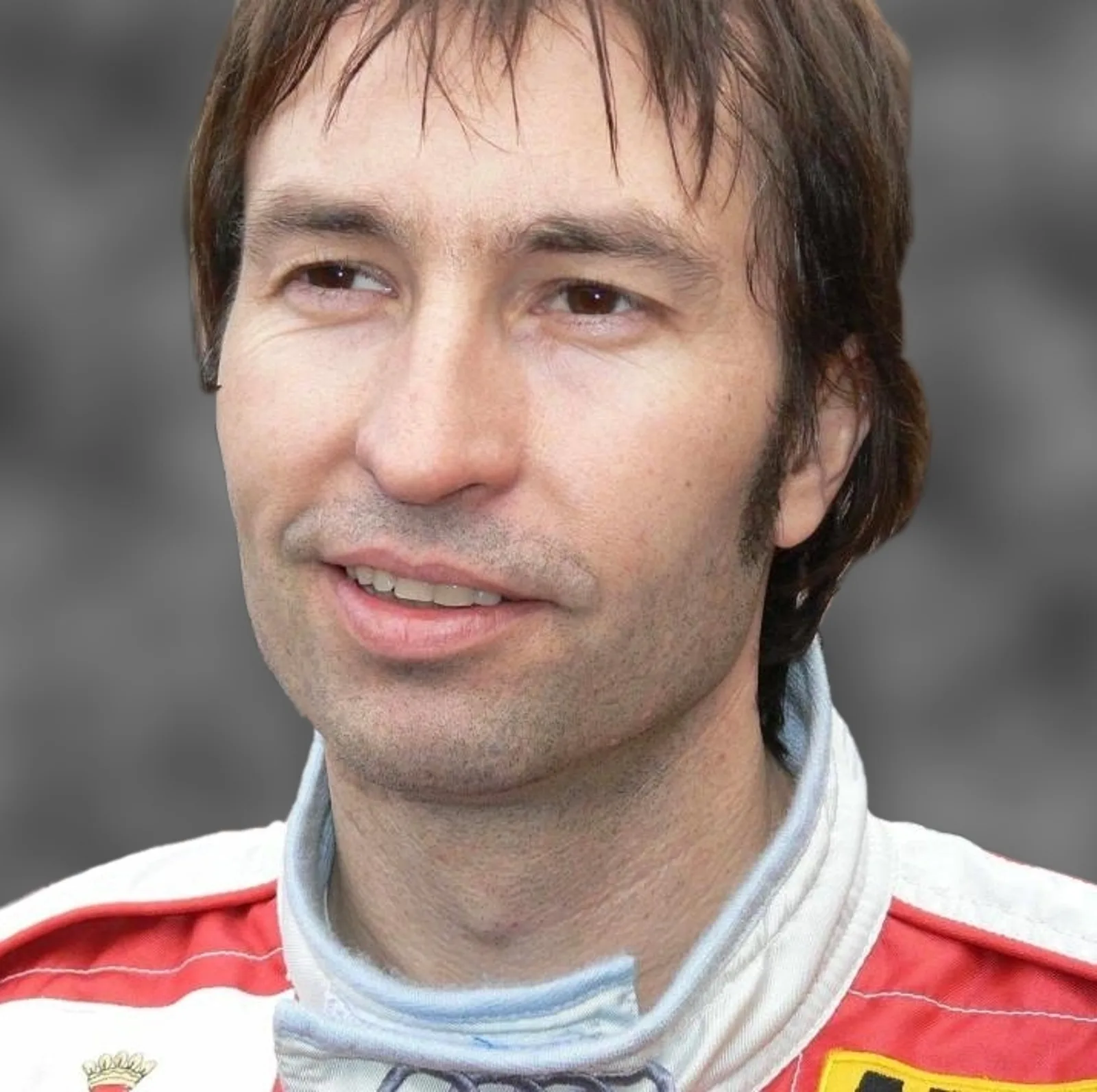
Frentzen was a German driver born in 1967 whose Formula One career ran from 1994 to 2003. His three Grand Prix wins included two in 1999, and his 1997 Williams season earned him the championship's second place. He later competed in touring cars, GT racing and endurance events.
Heinz-Harald Frentzen, from Germany, spent the years 1994 to 2003 in Formula One. He was runner-up in the 1997 championship with Williams and won three Grands Prix over ten seasons. He later raced full-time in the Deutsche Tourenwagen Masters, the Speedcar Series and endurance events.
Who is Heinz-Harald Frentzen?
Heinz-Harald Frentzen was born on 18 May 1967 in Monchengladbach, in North Rhine-Westphalia. His father, Heinrich-Harald Frentzen, was an entrepreneur and funeral director, and his Spanish mother was Angela Lladosa.
His family was connected to motorsport from the start. His father had raced between 1950 and 1957, and when Frentzen was young he funded and supported his son's racing as team boss and head mechanic. The parents divorced when he was eight.
Frentzen has been described as a loyal driver. He is married to Tanja Nigge, whom he wed in 1999, and the couple have three children. In the early 1990s he had been in a relationship with Corinna Betsch, who later married Michael Schumacher.
Three Grand Prix wins, a 1997 title challenge with Williams and a long career that moved on to touring cars and endurance racing.
How did Frentzen rise through karting and junior formulae?
Frentzen started karting at twelve, when his father purchased his first kart, and he quickly excelled. In 1981, aged fourteen, he won the German Junior Kart Championship. Two years later he entered the CIK Asia Pacific Championships in Australia in a Dino, but he did not finish.
He moved into car racing in 1985 with the German Formula Ford 2000 series. After two seasons he was runner-up in 1987, despite missing some races. In 1988 he moved into the German Formula Opel Lotus series in the junior team of former Formula One driver Jochen Mass, and he won the title in his first year.
The next step was the German Formula Three Championship in 1989, where he raced against Michael Schumacher and Karl Wendlinger. The German national motorsport committee backed both him and Schumacher, and it offered a Formula One test to the first of them to win an F3 race. Schumacher won the first F3 race that earned a Formula One test, and Frentzen later disputed how that race at Zeltweg was run. Wendlinger took the title, and Frentzen finished joint runner-up with Schumacher on identical points.
In 1990 he drove in International Formula 3000 for Eddie Jordan Racing, partnered by Eddie Irvine, and finished 16th with three points. He also took one podium in the World Sports Prototype Championship in a Mercedes-Benz C11. In 1991 he returned to the F3000 series with Vortex Motorsport and scored five points.
How did his Sauber years begin in Formula One?
In 1994 Peter Sauber gave Frentzen a Formula One drive in a Mercedes-powered car, as teammate to Karl Wendlinger, who had reached Formula One in 1991. He made his debut at the Brazilian Grand Prix, qualifying fifth, and scored his first points with fifth at the Pacific Grand Prix.
Wendlinger crashed in qualifying at Monaco, leaving him with severe head injuries that ended his season. Frentzen became the team's de facto leader and finished 13th in the championship. His best drive came at Jerez, where he qualified fifth and ran third before a one-stop strategy dropped him to sixth.
Sauber's partnership with Mercedes ended before 1995, and the team switched to Ford V8 engines. Those engines had powered Michael Schumacher to the 1994 title, but they were outpowered by the leading teams. Frentzen still produced consistent results and took Sauber's first podium at the Italian Grand Prix. The team now carried Red Bull sponsorship, and its C14 chassis improved as the season went on.
He beat his teammates on track, including Jean-Christophe Boullion, who was a Williams test driver, and the performance helped secure his move. He finished ninth in the 1995 championship with 15 points. In 1996 Johnny Herbert joined him as teammate, and Herbert was closer to him in pace than earlier teammates had been. Ford's new V10 was less reliable than the V8 had been, so Frentzen managed only three points finishes at Monaco, Spain and Japan.
Why did his Williams years matter?
For 1997 Frentzen replaced reigning champion Damon Hill at Williams-Renault. He won his first Grand Prix at San Marino, the fourth race of the year, and he took his first pole at Monaco the round after.
He led the season-opening Australian Grand Prix until his first pit stop, and later a brake disc exploded while he was running second. Frentzen had eight front-row starts and seven podiums across the year, but he out-qualified Jacques Villeneuve only four times.
In the championship Frentzen finished third with 42 points, while Villeneuve had 81. Michael Schumacher's disqualification from the standings later moved Frentzen up to second, which made him the runner-up in the championship.
Renault ended its factory support for Williams in 1998, and Adrian Newey left the team for McLaren during the off-season. Frentzen started the year with a podium at Albert Park, but he could not repeat it and was again outperformed by Villeneuve. He finished seventh in the championship with 17 points.
He left Williams after two difficult seasons, with disagreements with chief engineer Patrick Head among the reasons. The move to Jordan in 1999 was a straight swap with Ralf Schumacher.
How did his Jordan and Prost seasons unfold?
In 1999 Frentzen moved to Jordan, which used Mugen-Honda engines, and he won two races, the French and Italian Grands Prix. He scored points in most rounds that year.
At the European Grand Prix he led from pole, but his car stopped on the thirty-second lap and ended his chance to build a points lead. Before the Malaysian Grand Prix he was 12 points behind Mika Hakkinen, but a sixth place there, while Hakkinen and Irvine scored, ended his title hopes. He finished third in the championship, 22 points behind Hakkinen.
Many observers considered Frentzen the driver of the year in 1999, and he was seen as a favourite for the title in 2000. The season turned out differently. Honda was also supplying the BAR team, and Jordan finished behind BAR despite two podiums for Frentzen.
Injury, technical disagreements and a run of retirements in 2001 weakened the relationship with the team. Frentzen reportedly offered to pay for the changes needed to fix the car. Jordan dropped him after the British Grand Prix and brought in Jean Alesi, and Frentzen joined Prost for the rest of the season.
He qualified fourth at Spa for Prost before the team collapsed financially at the end of 2001. Eddie Jordan later revealed that the termination had been a move to appease Honda, which wanted Takuma Sato in the car.
What did his final Formula One years bring?
Frentzen was signed by Arrows on 30 December 2001 for the 2002 season. Arrows gave him points on two occasions, and he beat both Jaguars, which ran the same engine. The team went bankrupt in August and released him from his contract.
Before rejoining Sauber for 2003, he stepped in for Felipe Massa at the 2002 United States Grand Prix as a one-off. He matched his teammate Nick Heidfeld closely, and his last podium came in the penultimate race of the year in the United States.
He retired at the end of 2003 with three wins, two poles, six fastest laps and 18 podiums in Formula One.
How did he fare in touring cars and endurance racing?
For 2004 Frentzen moved into the Deutsche Tourenwagen Masters with Opel, encouraged by Jean Alesi's success in the series. The Opel Vectra was not competitive, and he finished 14th in the standings. He stayed with Opel for 2005 and was eighth as the best-placed Opel driver, including a third place from pole at Brno.
Opel withdrew after 2005, and Frentzen moved to Audi for 2006. He took third place at Hockenheim and again at Barcelona, and he finished seventh overall. He left the team, saying he had no support from it.
He also raced in the Speedcar Series, and later joined the series for a full season there. That year he drove one of two factory Aston Martin DBR9s at the 24 Hours of Le Mans with Karl Wendlinger and Andrea Piccini. The team finished fourth in the GT1 class and 16th overall.
Later in 2008 Frentzen built the HHF Hybrid Concept Car and entered it in the 24 Hours Nurburgring with his own team. It finished, but was not classified because of two gearbox failures. In 2011 he won a one-off ROC Legends race, and in 2012 and 2014 he competed in the ADAC GT Masters with a Corvette Z06 and a Mercedes SLS AMG GT3.
How was Frentzen regarded as a driver?
Frentzen was seen as a loyal driver who needed the right set-up to perform. F1 Racing noted that finding the right settings for his car was the key issue, and he did that largely by himself. Eddie Jordan wrote that he had done a great job with the Jordan 199.
BBC Sport judged that he never quite made the most of his natural talent after leaving Sauber. Peter Sauber said in 2005 that Frentzen had been the most important driver for his team, while adding that he needed a particular working atmosphere. That point was linked to his difficult time at Williams.
In 2020 he appeared on a Top Gear episode, in a Germany versus Britain challenge against the presenters. It was part of the 29th series of the show, where he appeared as a rival for the presenters.
How do his results compare across his career?
| Series | Years | Team | Main result |
|---|---|---|---|
| German Formula Opel Lotus | 1988 | Jochen Mass junior team | Champion in his first year |
| German Formula Three | 1989 | Joint runner-up with Michael Schumacher | Champion Karl Wendlinger was first |
| Formula One | 1994-2003 | Sauber, Williams, Jordan, Prost, Arrows | Runner-up in 1997; three wins |
| Deutsche Tourenwagen Masters | 2004-2006 | Opel, Audi | Eighth in 2005; seventh in 2006 |
| 24 Hours of Le Mans | 2008 | Aston Martin | Fourth in class, 16th overall |
| ADAC GT Masters | 2012 and 2014 | Callaway Competition, HTP Motorsport | Competed in both seasons |