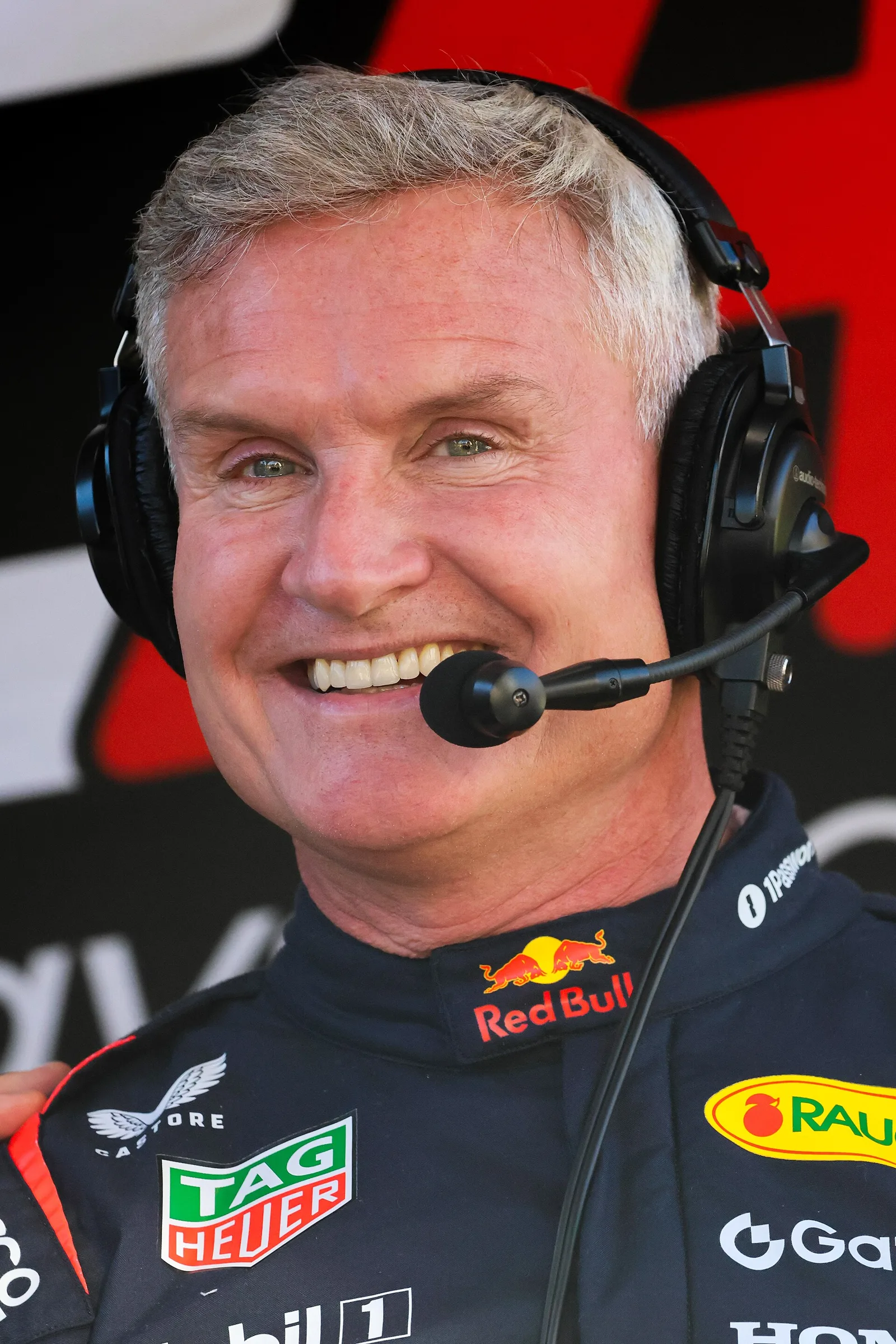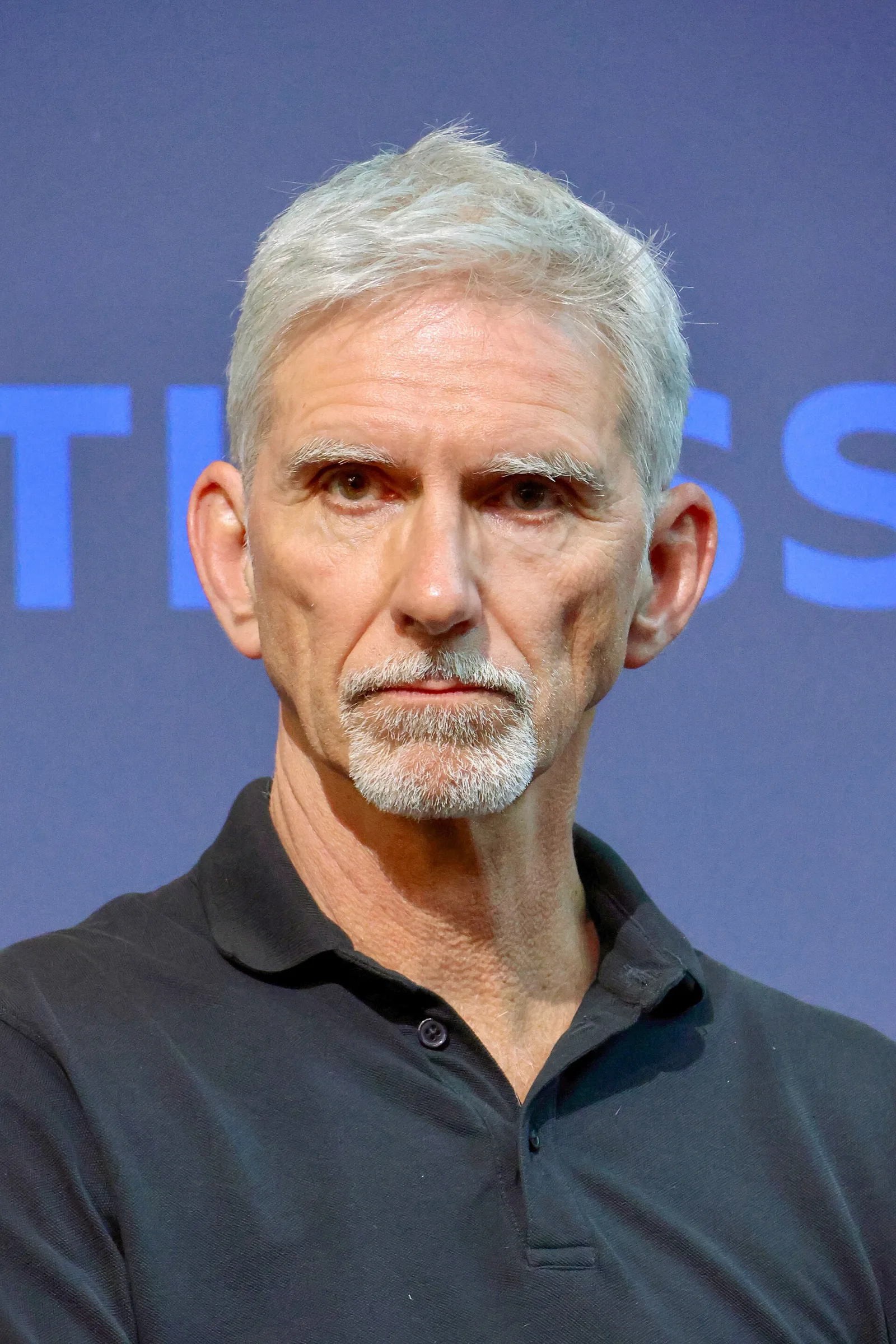
Son of a two-time world champion, Hill won the 1996 title with Williams after a fierce 1994 and 1995 rivalry with Michael Schumacher, then rebuilt at Arrows and Jordan.
Damon Hill was a British driver who competed in Formula One from 1992 to 1999. He won the 1996 World Drivers' Championship with Williams and 22 Grands Prix, and he later became president of the British Racing Drivers' Club.
Damon Graham Devereux Hill, born in 1960, is a British former racing driver and broadcaster. He competed in Formula One from 1992 to 1999, winning 22 Grands Prix and the 1996 World Drivers' Championship with Williams. He was the son of two-time world champion Graham Hill, and one of only two sons of a Formula One champion to win the title themselves.
Who was Damon Hill?
Hill was born in Hampstead, London, and began racing motorcycles in 1981 before moving to single-seaters. He became a Williams test driver in the early 1990s and was promoted to the race team in 1993, when Riccardo Patrese left for Benetton. He took the first of his 22 victories at the 1993 Hungarian Grand Prix.
In the mid-1990s he was Michael Schumacher's main rival for the championship, and their meetings on and off the track were among the most closely watched of the era. He won the title in 1996 with eight victories, but Williams dropped him for the following season.
The son of a champion, he won his own title in 1996 and went on to a second career in the commentary box.
How did Hill come into motor racing?
Hill started his motorsport career in motorcycle racing in 1981, using a helmet design much like his father's. It showed eight white oar blades on a dark blue background, a nod to the London Rowing Club, which Graham Hill had rowed for in the early 1950s. He won a 350 cc clubman's championship at Brands Hatch, and to fund it he worked as a building labourer and as a dispatch rider.
His mother was concerned about the dangers of motorcycle racing, and she talked him into a 1983 course at the Winfield Racing School in France. He had only sporadic single-seater races until the end of 1984. In 1985, his first full season in cars, he drove a Van Diemen for Manadient Racing in British Formula Ford, winning six races.
He finished third and fifth in the two UK national championships that year and took third in the final of the 1985 Formula Ford Festival, helping the UK win the team prize.
What happened in Hill's junior career?
For 1986 Hill planned a move into British Formula Three with West Surrey Racing, a title-winning team. Losing Ricoh's backing, followed by the testing death of his intended teammate Bertrand Fabi, scuppered that plan. Hill went on regardless, using a sponsorship deal with Cellnet to fund his racing.
He had a steady first season for Murray Taylor Racing in 1986 and then picked up a pair of wins each year in the following seasons with Intersport. He finished third in the 1988 British Formula Three championship. In the same year he made his International Formula 3000 debut with GA Motorsport, in the final two rounds of the season.
For 1989 he lacked the sponsorship for a full F3000 drive. He raced for Cobra International in the British F3000 series, taking third at Oulton Park, and later joined the uncompetitive Mooncraft team, where his best result was 14th. In 1990 he drove a Lola for Middlebridge Racing, taking three pole positions and leading five races, but he never won an F3000 race.
Hill also raced sportscars in this period. In 1989 he co-drove a Ford Sierra RS500 in a one-hour British Touring Car endurance race at Donington Park, and the pair finished fourth. At Le Mans he shared a Porsche 962 entered by Richard Lloyd Racing, but its engine gave out after 228 laps.
How did Hill break into Formula One with Brabham?
Hill had already tested for the championship-winning Williams team while still racing in F3000. Midway through 1992 he made his Grand Prix debut with the struggling Brabham team, replacing Giovanna Amati after three races. Amati had been unable to get the car through qualifying, and Hill matched his teammate Eric van de Poele by qualifying for the British and Hungarian Grands Prix.
Hill continued testing for Williams that year. Brabham folded after the Hungarian round and never finished the year.
How did Hill win his first race at Williams?
When Riccardo Patrese left Williams for Benetton in 1993, Hill was promoted unexpectedly into the race team alongside triple world champion Alain Prost, ahead of more experienced candidates. As junior partner he carried the number 0, the second man in Formula One history to do so after Jody Scheckter in 1973.
The season started badly, with a collision with Alessandro Zanardi on lap 17 of the South African Grand Prix. At Brazil he ran second behind Prost, took the lead when Prost crashed, and was relegated to second by Ayrton Senna. That gave him his first podium.
In San Marino he led at the start but was passed and retired with a brake failure. Strong podiums at Monaco and Canada followed, and then he took his first career pole at the French Grand Prix. Engine and puncture problems cost him the British and German races, where he had been leading.
At the Hungarian Grand Prix he took his first career victory, controlling the race from the front. In doing so he became the first son of a Grand Prix winner to win a race himself. Two more wins followed, at Spa and at the Italian Grand Prix, and his third consecutive win clinched the Constructors' Championship for Williams. He finished the season third in Japan and fourth in Australia, but he lost second place in the championship to Senna, who won the last two races.
What was the 1994 season, and why was it so dark?
Senna joined Hill at Williams for 1994, and the pre-season betting was that he would coast to the title. Benetton and Schumacher were more competitive early, winning the first three races. On 1 May, at the San Marino Grand Prix, Senna lost his life when his car hit a concrete barrier during a race he was leading.
With the team facing investigation by the Italian authorities, Hill became team leader with only one season of experience at the top. The first explanation reported at the time was a steering column failure, but Hill later said he believed Senna had simply taken the corner too fast for the conditions, after the car had restarted with cold tyres.
At Monaco Hill was the only Williams in the race, and a first-lap collision brought his day to an early end. At the Spanish Grand Prix, Williams promoted test driver David Coulthard to the race team, and Hill won, four weeks after Senna's death.
By mid-season Schumacher led 66 points to 29. Frank Williams brought back Nigel Mansell for four races, and Hill came back into contention with a win at the British Grand Prix, a race his father had never managed to win. Schumacher was disqualified from that race and banned for two more for overtaking Hill during the formation lap and ignoring the black flag.
Hill won four more races, three of them in races where Schumacher was excluded or disqualified. At the Japanese Grand Prix, in a rain-soaked event, he beat Schumacher to put himself one point behind going into the last race.
The title was decided by a collision at the 1994 Australian Grand Prix. Schumacher ran off the track and hit the wall with his Benetton while leading. Hill moved to pass him at the sixth corner, the two collided, and both retired, with Schumacher taking the title by a single point. Williams co-owner Patrick Head later said the team had been certain Schumacher was at fault, but it did not protest because the team was still grieving Senna. In 2007 Hill publicly accused Schumacher of causing the collision deliberately.
That season also brought him the 1994 BBC Sports Personality of the Year award.
| Season | Team | Result |
|---|---|---|
| 1993 | Williams | Third in the championship, with three wins |
| 1994 | Williams | Second, one point behind Schumacher |
| 1996 | Williams | World Drivers' Champion, with eight wins |
| 1998 | Jordan | Won the Belgian Grand Prix, Jordan's first win |
| 1999 | Jordan | Team finished third in the constructors' standings |
How did the 1995 season go?
Hill started 1995 as one of the title favourites, as Williams were the reigning Constructors' Champions and David Coulthard was embarking on his first full season as his teammate. He took pole in Brazil and then won two races to lead the table, but Schumacher went on to win seven of the next twelve races and claimed his second title with two rounds left.
The two drivers had several on-track incidents. Both drivers received one-race suspended bans: Schumacher for forcing Hill off the road at Spa, and Hill for colliding with Schumacher under braking at Monza. Hill's season ended on a high when he won the Australian Grand Prix, two laps ahead of Olivier Panis in a Ligier.
How did Hill win the 1996 world title?
In 1996 the Williams was clearly the quickest car in Formula One. Hill won the title ahead of his teammate Jacques Villeneuve, the reigning IndyCar champion, and became the first son of a champion to take the crown himself. He took eight wins and never qualified off the front row, the most successful season of his career.
At Monaco, a circuit where his father had won five times in the 1960s, he was in front until his engine failed, handing Olivier Panis his only Formula One victory. Late in the season Villeneuve mounted a title challenge and took pole for the Japanese Grand Prix. Hill led from the start, won the race and the championship while Villeneuve retired.
Hill matched the record for starting all 16 races of the season from the front row, a feat shared with Ayrton Senna in 1989 and Alain Prost in 1993.
Before the season ended, he learned that Williams would drop him for Heinz-Harald Frentzen the following year. He left as the team's second most successful driver by race victories, with 21, second only to Mansell. His 1996 title earned him a second BBC Sports Personality of the Year award, which made him one of only five people to win the award twice. He also received the Segrave Trophy from the Royal Automobile Club.
Why did Hill join Arrows in 1997?
Hill became the fourth driver in nine years to win the title with Williams and then not race for the team the following season. Offers came from McLaren, Benetton and Ferrari, but he judged that they were not financially in line with his status, and he signed for Arrows instead.
In two decades Arrows had never won a race, and the previous season had brought them just one point. The 1997 title defence started poorly. Hill narrowly qualified for the Australian Grand Prix and retired on the parade lap. Running Bridgestone tyres and Yamaha engines, the car was generally uncompetitive, and Hill did not score for the team until Silverstone in July.
His best result came at the Hungarian Grand Prix. On a day when the Bridgestone tyres had an edge over Goodyear, Hill qualified third in a car that had not previously started higher than ninth. He got past Michael Schumacher on track and was leading late on, 35 seconds clear of Villeneuve, until a hydraulic fault dragged the car down the order. Villeneuve passed him, and Hill finished second.
What was his time at Jordan like?
After a year at Arrows, Hill came close to a deal with Alain Prost's team before signing with Jordan for 1998. His teammate was Ralf Schumacher, the younger brother of Michael. The Jordan 198 was off the pace early in the season, but it improved from the Canadian Grand Prix.
At that race Hill moved across the track three times to hold off Michael Schumacher, who was taking a stop-and-go penalty, and Schumacher went past him over the kerbs at the last chicane. Hill retired soon after with an electrical failure, and Schumacher accused him of dangerous driving.
At the Belgian Grand Prix, in very wet conditions, Hill took Jordan's maiden win. He had been leading late in the race, with Ralf Schumacher closing fast, and team principal Eddie Jordan told Ralf to hold position rather than risk losing a one-two finish. That win was Hill's first since leaving Williams.
The 1999 season went badly. The team struggled with the newly introduced four-groove tyres, and his teammate Heinz-Harald Frentzen, who had replaced him at Williams two years earlier, outpaced him. After a crash at the Canadian Grand Prix Hill announced plans to retire at the end of the year. He changed his mind after a strong fifth place at his home British Grand Prix and saw the season out.
Jordan finished third in the 1999 Constructors' Championship, its best result, with Frentzen third in the drivers' standings. Hill's last Grand Prix was the Japanese round, where he spun off the track.
What did Hill do after Formula One?
In April 2006 Hill succeeded Jackie Stewart as president of the British Racing Drivers' Club. He presided over a 17-year contract for Silverstone to host Formula One races, which allowed the circuit to undergo extensive renovation. He stepped down in 2011, and Derek Warwick succeeded him.
Hill later joined Sky Sports F1 as an analyst from the 2012 season, providing expert analysis during free practice. He left the role after the 2024 Sao Paulo Grand Prix, after 13 seasons as an analyst. In March 2025 it was announced that he would become a pundit for BBC radio's coverage of the 2025 season.
He also appeared in the commentary box for ITV F1, covering for Martin Brundle at the Hungarian Grand Prix in 2007 and 2008. He has contributed many articles to F1 Racing magazine.
In February 2026 he rejoined Williams as an official ambassador, returning to the team that gave him his title.
How did Hill's other racing and roles develop?
Hill has raced cars and motorcycles at the Goodwood Festival of Speed. In 2005 he tested the new GP2 Series car, and in 2006 he drove the 600 bhp (450 kW) Grand Prix Masters single seater around Silverstone. In June 2006 he tested Bernd Schneider's Mercedes DTM car at Brands Hatch.
At the 2010 Monaco Grand Prix he sat as the drivers' representative on the stewards' panel, which penalised Michael Schumacher for passing under yellow flags. In 2012 he drove his father's BRM to mark the 50th anniversary of Graham Hill's 1962 title. In June 2018 he became president of the Brooklands Trust Members, the support group for the Brooklands Museum.
How is Hill remembered?
Hill's place in the sport rests on the 1996 title, the rivalry with Schumacher that ran through 1994 and 1995, and the broadcasting career that followed his retirement from driving.