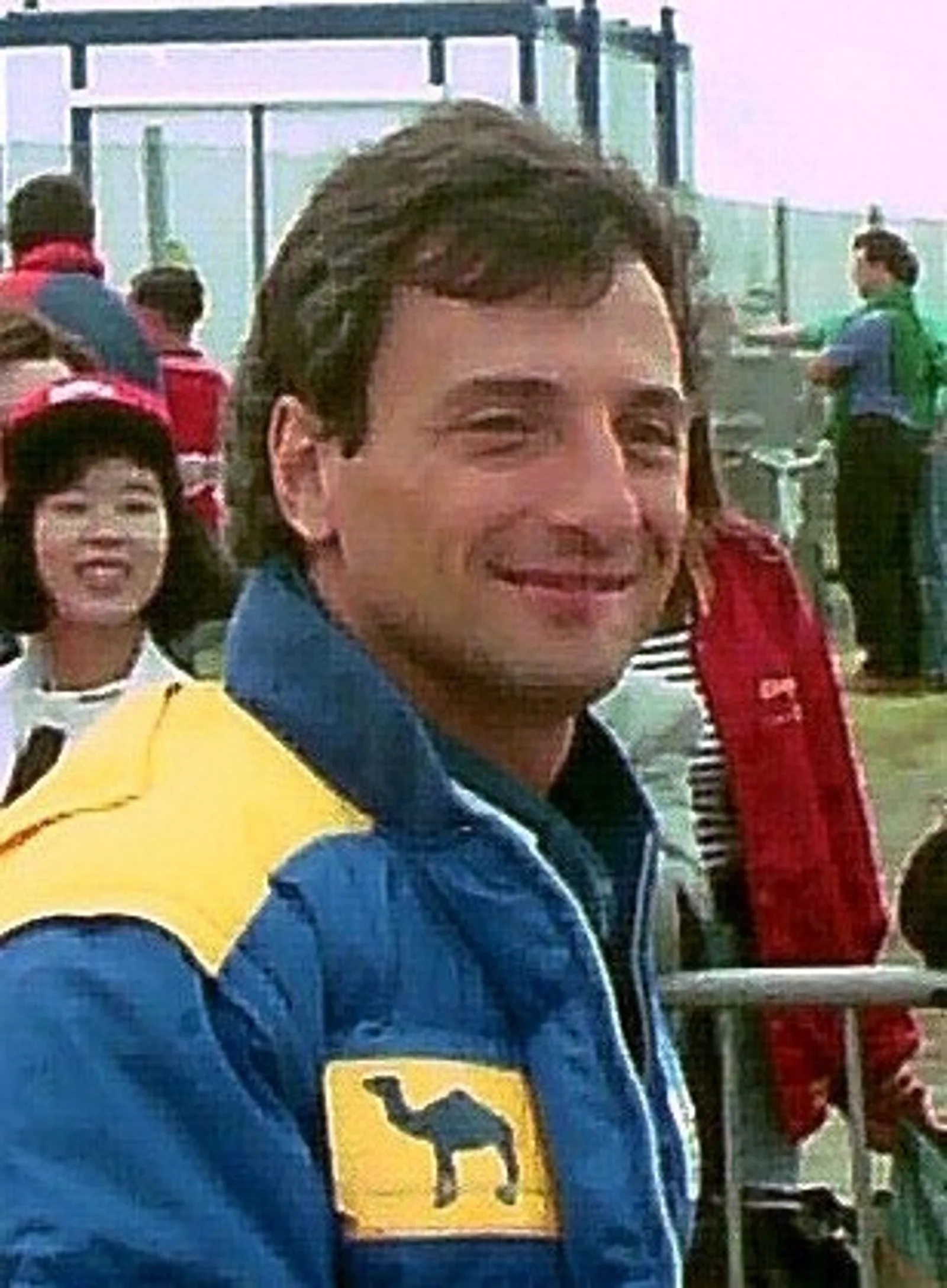
A Padua-born driver who raced for Shadow, Arrows, Brabham, Alfa Romeo, Williams and Benetton, and held the Formula One starts record for almost two decades.
Italian driver Riccardo Patrese raced in Formula One from 1977 to 1993 and won six Grands Prix. He finished runner-up to Nigel Mansell in 1992 with Williams and held the most-entries record for 19 years.
Riccardo Patrese, born in Padua in 1954, spent 17 seasons in Formula One with Shadow, Arrows, Brabham, Alfa Romeo, Williams and Benetton. He is remembered for six Grand Prix wins, a 1992 title challenge with Williams and a career record for starts that stood for almost two decades.
Who is Riccardo Patrese?
Riccardo Gabriele Patrese is an Italian who spent 1977 to 1993 racing in Formula One. He was runner-up in the drivers' championship in 1992 with Williams, and he won six Grands Prix across his career.
He also raced sports cars for the Lancia factory team, finishing runner-up in the World Sportscar Championship in 1982 and collecting eight wins along the way. His career combined a long run of Formula One starts with a steady presence in endurance racing and touring events.
Six wins, a 1992 title challenge with Williams and a starts record that outlasted two world champions' careers, all from the Padua-born driver.
How did Patrese start out in motorsport?
Patrese began kart racing at the age of nine. He grew up near the Italian Alps, where he was chosen for the national ski squad as a teenager. He was also a competitive swimmer, but motor racing became his focus.
In 1974 he took the karting world title at Estoril, with Eddie Cheever second. The following year he finished second in Formula Italia behind Bruno Giacomelli, and in 1976 he moved up to Formula 3 and won both the Italian and European championships.
How did Patrese's Formula One career begin at Shadow and Arrows?
His first start came at Monaco in 1977, in a Shadow that replaced the car of Renzo Zorzi. He scored his first championship point at Japan later that year.
Team leader Jackie Oliver and sponsor Franco Ambrosio then left Shadow to form Arrows, and Patrese joined the new team for 1978 alongside Rolf Stommelen. Shadow took Arrows to court over the design of the DN9, and the court agreed, which forced Arrows to build a completely new car, the A1.
What happened to Patrese at the 1978 Italian Grand Prix?
In 1978 Patrese came close to winning at South Africa, Arrows' second race, until an engine failure ended his run 15 laps from the finish. He then took second in Sweden, behind Lauda in the Brabham BT46B fan car.
At Monza later that season, Patrese was involved in a ten-car pile-up before the first corner, which stopped the race. A premature start by the race director was among the suggested causes, but some established drivers, including Hunt, felt his driving style was too aggressive. Ronnie Peterson died from an embolism the day after the race.
Before the next race, five leading drivers said they would withdraw unless Patrese was banned from the United States Grand Prix. Patrese argued that a local judge had ruled the ban breached his right to work, but Arrows withdrew his entry under pressure from the organisers and the FIA. He returned at the Canadian Grand Prix and finished fourth.
Why was Patrese's Monza accident so controversial?
For years afterwards, James Hunt blamed Patrese for starting the accident, and Hunt's BBC commentaries from 1980 to 1993 often criticised the Italian. Patrese said he was already well ahead when the cars touched.
Patrese and race director Gianni Restilli stood trial in an Italian criminal court on manslaughter charges connected with Peterson's death. Both were cleared of wrongdoing on 28 October 1981.
Patrese also had strong performances during his Arrows years. He finished second at the United States Grand Prix West at Long Beach in 1980 and took pole there in 1981, leading that race before a blocked fuel filter forced him out.
How did Patrese win at Monaco in 1982?
In 1982 Patrese moved to Brabham and took his maiden Grand Prix win at Monaco in unusual circumstances. He led when Alain Prost crashed out, but then spun on the next lap in damp conditions, leaving him third behind Didier Pironi and Andrea de Cesaris.
Pironi and de Cesaris both dropped out on the final lap, Pironi with an electrical problem and de Cesaris having run out of fuel, which left Patrese in first place. The result was his first Grand Prix victory.
Later that season he led the Austrian Grand Prix but retired with an engine failure. He finished the year tenth, just ahead of his teammate Nelson Piquet.
What went wrong for Patrese at Brabham in 1983?
1983 was a harder season. Patrese was leading at San Marino late on when he crashed out, handing the win to Ferrari's Patrick Tambay, and he later took pole at his home Italian Grand Prix before his engine blew up early in the race.
He suspected his engine had been left in qualifying trim, since he had not been offered a new contract and did not want to sacrifice his own chances for Piquet, who was fighting for the title. He still won again at the South African Grand Prix, but he finished ninth while Piquet took the championship. It would be seven years before he stood on the top step again.
What were Patrese's years at Alfa Romeo like?
He moved to Alfa Romeo in 1984, and the two seasons produced eight world championship points and a single podium at the Italian Grand Prix. His third place at Monza that year was, to date, Alfa Romeo's final podium in Formula One.
The Alfa Romeo 890T V8 turbo was too thirsty for the 220 litres of fuel the cars were allowed to carry. Patrese and his teammate Eddie Cheever often drove strong races, only to run dry in the closing laps. Cheever lost a podium when his fuel ran out six laps from home.
The 1985 car, the 185T, was even less competitive, and halfway through the season the team switched to an updated 184T. Patrese later described the 185T as the worst car he had ever driven. That year at Monaco, he and Piquet touched and both were out of the race.
How did Patrese's Williams years unfold?
Patrese returned to Brabham in 1986 alongside Elio de Angelis, but the team was a spent force with a BMW engine that never produced another win. He earned respect in the sport for his professionalism during those winless seasons.
In 1987 he replaced the injured Nigel Mansell at Williams for the Australian season finale, after he had tested the FW11B at Imola and set a time half a second quicker than Ayrton Senna's San Marino pole. Williams had already signed him to replace Piquet for 1988, but that season the team's Judd V8 engines and reactive suspension held them back until the British Grand Prix.
Patrese received a US$10,000 fine at the 1988 Spanish Grand Prix for brake-testing the Tyrrell of rookie Julian Bailey in qualifying.
The arrival of Renault V10 engines in 1989 changed the picture. Patrese led the opening race in Brazil, setting a lap record at the track before an engine failure, and he finished third in the championship with six podiums. He led the Hungarian Grand Prix under pressure from Ayrton Senna until a holed radiator ended his race on lap 54.
In 1990 his third Grand Prix win came at San Marino, but the Renault-powered cars slipped behind McLaren, Ferrari and Benetton as the season went on, and he finished seventh in the championship.
In 1991 Nigel Mansell returned to Williams, and together they became contenders for both titles. Victories in Mexico and Portugal made it his strongest season in the car, and he finished third behind Mansell and Senna.
In 1992 Patrese acted as the second driver to Mansell, moving aside at the French Grand Prix while leading. He took one win at Japan and eight other podiums, including six second places, and he finished runner-up to Mansell in the championship at the age of 38. Mansell had the edge, in Patrese's view, because of his upper body strength in a car with heavy steering and no power assistance.
Why did Patrese leave Williams for Benetton?
Patrese signed for Benetton before the end of 1992. Nigel Mansell had announced his departure, and Williams offered Patrese a chance to stay, but he felt bound by his commitment to Benetton. Damon Hill took the number two seat at Williams instead.
The 1993 season at Benetton was disappointing. Patrese found it hard to work with team manager Flavio Briatore, and he scored 20 points to finish fifth, with a best finish of second in Hungary. Briatore told him he was free to seek another drive, and Ligier's offer for 1994 seemed a step down, so he chose to retire.
Did Patrese race after leaving Formula One?
Patrese retired from Formula One at the end of 1993 with what was then the longest career in the sport's history. He was invited to rejoin Williams to replace Ayrton Senna after the fatal accident at Imola in 1994, but he declined, and a DTM test with Mercedes-Benz that July did not lead to a drive.
In 1996 Williams invited him to test the FW18 at Silverstone, where he reportedly set a time that would have put him on the second row for the British Grand Prix. A year later he took part in the 24 Hours of Le Mans in a Nissan R390 GT1, which was third fastest in qualifying before a gearbox failure ended its race.
Patrese later moved into show jumping, following his daughters, and took an Italian national amateur title in the discipline before leaving equestrian sport in 2014. He is also a collector of model railways, especially those made by Marklin.
How did Patrese's starts record stand?
Patrese became the first Formula One driver to reach 200 Grand Prix starts at the 1990 British Grand Prix, and the first to reach 250 at the 1993 German Grand Prix. He held the record for the most Grand Prix starts for 19 years, with 256 races from 257 entries.
That record stood for 15 years, surviving the Schumacher era until Michael Schumacher retired on 250 entries. Rubens Barrichello finally passed it with his 258th entry at the 2008 Turkish Grand Prix, and Schumacher later came back and became the second driver to pass Patrese's former total.
In 2005 Patrese returned to competition in the inaugural Grand Prix Masters series for retired drivers, finishing third at Kyalami behind Nigel Mansell and Emerson Fittipaldi. In July 2018 he came out of retirement once more to race in the pro-am class at the Spa 24 Hours in a Honda NSX GT3.