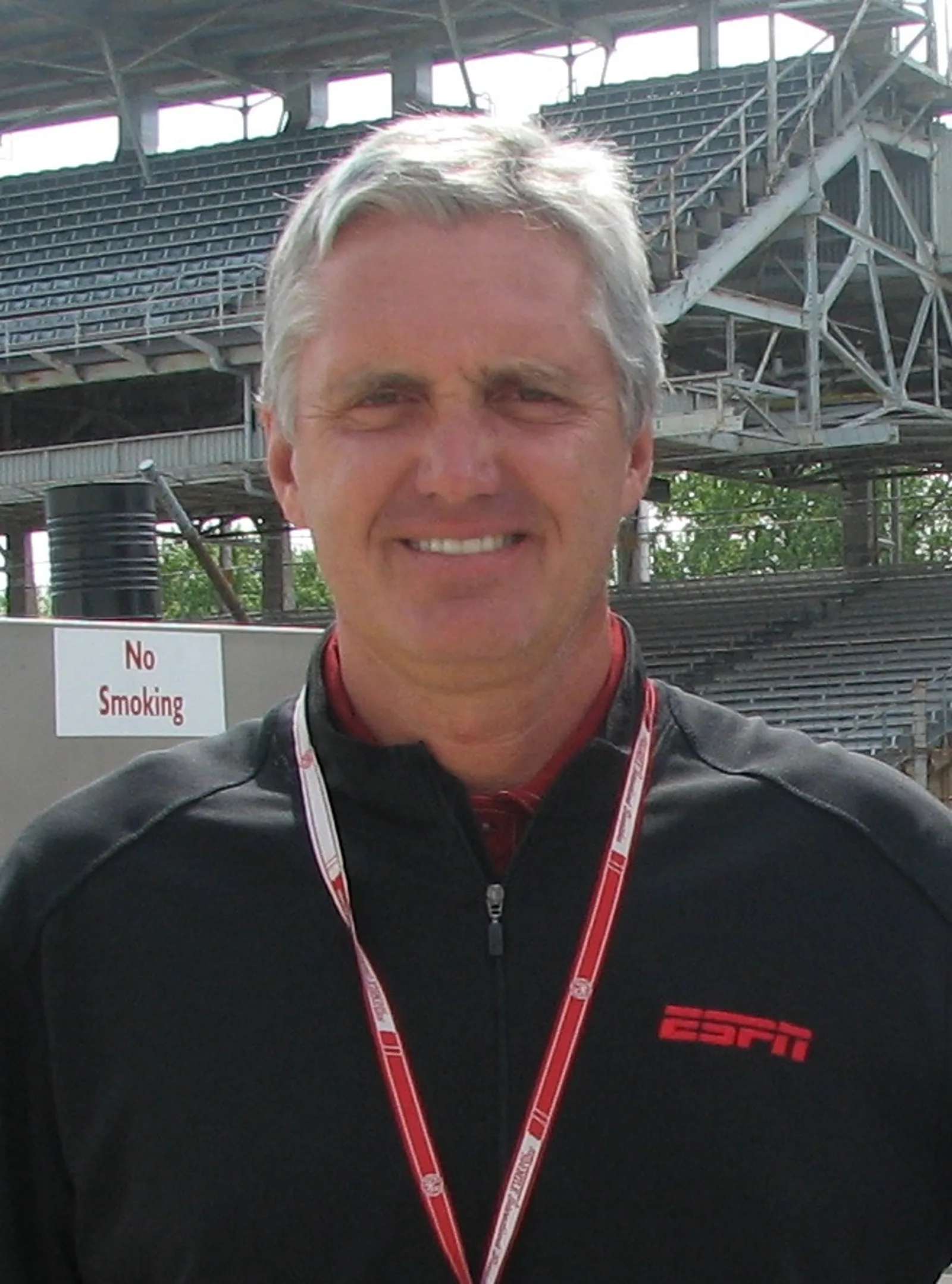
An American driver who started 132 Formula One races, moved to CART and the Indy Racing League, and won the 1998 Indianapolis 500 as owner and driver.
Eddie Cheever was an American racing driver and team owner who competed in 143 Formula One World Championship races between 1978 and 1989. He later raced in CART and the IndyCar Series, and he won the 1998 Indianapolis 500 as both owner and driver.
Eddie Cheever was born in Phoenix, Arizona, in January 1958 and spent much of his childhood in Rome. He moved from karting into European single-seaters, made his Formula One debut in 1978, and went on to race in sports cars, American open-wheel racing and television commentary. His record is that of a driver who kept competing for almost thirty years.
Across that span he raced in Formula One, sports cars, CART and the Indy Racing League. He also formed his own team, and that team later won the Indianapolis 500 with its owner at the wheel. His younger brother Ross and nephew Richard Antinucci also raced, and his son Eddie Cheever III became a driver too.
How did Cheever start in motorsport?
Cheever was first taken to a sports car race at Monza at the age of eight, and he soon began racing go-karts. He won the Italian and European karting championships at fifteen, then worked his way through European Formula Three and Formula Two. He finished runner-up to Rene Arnoux in the 1977 Formula Two championship.
In 1975 he teamed with fellow American Danny Sullivan in Formula Three. At the end of that year he scored a notable win against Gunnar Nilsson and Rupert Keegan, which marked him as a driver to watch.
Ron Dennis's Project Four team gave him Formula Two seats from 1976 to 1978. He won races at the Nurburgring and at Rouen in 1977, and by the end of that year he was regarded as one of the most promising drivers outside Formula One. For 1979 he joined the Italian Osella team, taking three wins and fourth overall in the BMW-powered FA2.
An owner-driver win at Indianapolis, after nearly two decades of trying to find a competitive car.
What was his first spell in Formula One like?
Cheever made his Formula One debut in 1978, shortly after his twentieth birthday. He failed to qualify for the first two races in a Theodore, and then reached the grid in South Africa in a Hesketh, where he retired early. He then spent the rest of 1978 and 1979 concentrating on Formula Two.
In 1980 Osella moved up to Formula One with a Cosworth-powered FA1. The machine was unreliable, leaving him a single finish all season: twelfth at the home race in Italy. He kept trying to climb the grid by switching teams, and his results improved only slowly.
In 1981 he had five points-scoring finishes for Tyrrell. In 1982 he drove three podiums for Ligier, including second place at the Detroit Grand Prix. Those results set up the strongest period of his Formula One career.
Why was 1983 his high point in Formula One?
In 1983 Cheever joined the factory Renault team alongside Alain Prost. He scored 22 championship points and finished seventh in the championship, which was the best season of his Formula One career. His best finish was second at the Canadian Grand Prix in Montreal, and his highest grid position came when he qualified second to Prost at the French Grand Prix.
Unconfirmed reports said Renault wanted an American driver to help its sales in North America. Three Formula One races were held there that year, at Long Beach, Detroit and Canada. He drove the RE30C for the first two races, then took over the much better RE40 for the rest of the season.
Renault lost both the drivers and constructors titles late in the year, and the team replaced both Cheever and Prost. His next seasons were far less rewarding, and the Renault years remained the high point of his Formula One career.
What went wrong with Alfa Romeo?
Cheever spent two seasons at Alfa Romeo alongside Riccardo Patrese, and neither year was successful. The turbocharged V8 used in the 890T was thirsty and underpowered, so results were few and far between. Cheever was generally believed to have outperformed his teammate, even though he failed to qualify for the 1984 Monaco Grand Prix.
The 1984 Italian Grand Prix produced a painful moment. Cheever was third with six laps remaining, but his Alfa ran out of fuel. The team had set his engine for speed and Patrese's for economy, hoping for a good finish, and the place passed to Patrese.
The 1985 car, the 185T, proved to be extremely uncompetitive. The team upgraded its 1984 car for the second half of the year, but the old car did not improve results. Late in 1985 Alfa announced it was leaving Formula One at the end of the year, and Cheever was left without a drive.
How did he return to Formula One in 1986 and 1987?
Cheever raced in only one Grand Prix in 1986, while driving Jaguar sports cars. He stood in for the injured Patrick Tambay at the Detroit Grand Prix with the American-owned Haas Lola team, and he qualified tenth. Both Lolas retired with steering damage, Jones on lap 33 and Cheever four laps later.
Team owner Carl Haas first asked Mario Andretti to drive, but Mario declined and suggested his son Michael instead. Michael could not obtain a superlicence in time, so the team turned to Cheever, who agreed to the comeback at once.
In 1987 Arrows signed him to partner Derek Warwick, who had been his teammate at TWR the year before. The two were evenly matched, and they had many on-track battles across 1987 and 1988. Arrows was backed by the USF&G financial group, which became the team's major sponsor at the same time.
At Monza in 1988 Cheever finished third. The fuel tank of his Arrows A10B was first found to hold more than 150 litres, but a re-measurement showed a 149 litre tank, and the podium stood. The result also marked the final podium for the turbocharged BMW M12 engine, which Brabham had first used in 1982.
What were his last seasons in Formula One like?
Cheever's final podium came at the 1989 United States Grand Prix in Phoenix, his birthplace. He fought Riccardo Patrese for second place for most of the race, but his brakes began to fade in the later stages and he had to give way. He claimed that one of his front brakes had stopped working.
His last Formula One race was the 1989 Australian Grand Prix at Adelaide, held in very wet conditions. In final qualifying he went off the track coming out of the Foster's hairpin and hit the wall hard, destroying the rear of his Arrows A11. In the race he was the last car to retire, spinning off on lap 42 with another car's front wing lodged in his sidepod.
His 1989 season showed the gap between his finishing and his qualifying. When he finished, his average place was seventh, but his average qualifying position was 23rd, compared with Warwick's fourteenth. He did not qualify for the British or Italian Grands Prix that year, even though he had finished third at Monza the year before.
In all, he took part in 143 Grands Prix, scored nine podiums and earned seventy championship points. He started 132 of those races, more than any other American driver, and he drove for nine teams across the period from 1978 to 1989.
How did CART and the sports cars fit between Formula One seasons?
Between 1986 and 1988 Cheever also won ten sports car races for Jaguar while racing in Formula One. He crossed to the United States in 1990 to drive for Chip Ganassi Racing in CART. On his first Indianapolis 500 attempt he finished eighth and was named both the race's Rookie of the Year and CART's.
In 1992 he qualified second for the Indianapolis 500 and finished fourth. Over his CART career he scored four podium finishes, though he never won a race. His best championship result in CART was ninth, and his best race finish was second at Phoenix in 1992.
Driving for A. J. Foyt, he came closest to victory at Nazareth in 1995. He was out front on the final lap when his fuel ran out, and the win went elsewhere. In the Indianapolis 500 he was caught up in a first-lap crash with Stan Fox, Carlos Guerrero and Lyn St. James.
What did the 1998 Indianapolis 500 win mean?
In 1998 Cheever took the Indianapolis 500 from 17th on the grid, leading 76 laps while also owning the car. Before him, the last owner-driver to win the race was A. J. Foyt in 1977, and his Team Cheever had been formed in 1996.
The Indy Racing League began in 1996, and Cheever moved to it from CART. Team Menard gave him a three-race run, and in the 1996 Indianapolis 500 he posted the quickest lap of the race so far. Later that year he set up his own team and made his first start as driver and owner at New Hampshire, in August.
The 1998 race began with a slide in the first turn on the first lap, which helped bring out the race's first caution period. Cheever recovered from the moment and went on to take the win, the biggest of his career.
Team Cheever remained in business until July 2006. It ran cars for Alex Barron and Patrick Carpentier in 2005. Cheever had hung up his helmet in 2002, but he returned in 2006 to run his own car in the first four IRL races, including the Indianapolis 500. He shut the team down after the eighth race of that season due to lack of sponsorship.
What did he do after racing?
From 2008 to 2018 Cheever provided television commentary for ABC on IndyCar races and the Indianapolis 500. He worked alongside Allen Bestwick, and Scott Goodyear, who had finished runner-up three times at Indianapolis, was also part of the broadcasts. Goodyear had driven for Team Cheever in 2001.
In 2005 he raced in the GP Masters series, a championship restricted to former Formula One drivers who were older than 45. He finished eighth in the first event at Kyalami, and he finished fourth in the second race at Losail in April 2006. In August 2006 he won the third race at Silverstone under wet conditions.
His personal life was shared with his ex-wife Rita and their children. He married his wife Dianna in 2013, and their daughter was born later that same year. He also has a son from an earlier relationship.
What is Eddie Cheever's legacy?
Cheever's legacy rests on his 1998 Indianapolis 500 win as owner and driver, his 143 Formula One starts and his 1983 season at Renault. He is also remembered for how long he stayed in the sport, across several categories of racing.
His Formula One record shows a driver who often struggled with uncompetitive machinery. Several of his teams were unreliable or underpowered, and he rarely had a car that could consistently challenge for podiums. That context matters when reading the results.
Career summary by series
| Series | Years | Teams | Standout result |
|---|---|---|---|
| Formula One | 1978 to 1989 | Theodore, Hesketh, Osella, Tyrrell, Ligier, Renault, Alfa Romeo, Haas Lola, Arrows | 143 races, nine podiums, seventy points |
| Formula Two | 1976 to 1979 | Project Four, Osella | Runner-up to Rene Arnoux in 1977 |
| CART | 1990 to 1995 | Chip Ganassi Racing, A. J. Foyt | Four podiums, best second at Phoenix in 1992 |
| Indy Racing League | 1996 to 2006 | Team Menard, Team Cheever | Indianapolis 500 win in 1998 |