From a Milton Keynes start-up in 1978 to a liquidation in 2002, with one pole position, a fifth place in the turbo era and 382 races without a win.
Arrows Grand Prix International was a British Formula One team that competed from 1978 to 2002. It was founded in Milton Keynes by former Shadow figures, enjoyed its best results in the late 1980s, and went 382 races without a win.
Arrows Grand Prix International, usually just called Arrows, was a Formula One team that raced under its own name from 1978 to 2002 and as Footwork from 1991 to 1996. Its founders left the Shadow team to set up the operation in Milton Keynes, and it built a long career in the midfield before money trouble ended it. It never won a race.
How did Arrows begin?
The team was founded in Milton Keynes, England, in November 1977 by a group that included Franco Ambrosio, Alan Rees, Jackie Oliver, Dave Wass and Tony Southgate. Its name came from the initials of those founders' surnames, and the team reached the grid for its first race at the 1978 Brazilian Grand Prix, all within three months.
The first drivers were Gunnar Nilsson and Riccardo Patrese. Nilsson was diagnosed with cancer soon afterwards, and Rolf Stommelen took his place. The early car was a copy of the Shadow DN9, called the FA1, and the sponsor who gave the car its name was in trouble of his own.
Franco Ambrosio was jailed in Italy in early 1978 over financial irregularities, and Warsteiner became the main sponsor. Shadow then sued for copyright infringement, and the London High Court ruled that the FA1 was a direct copy of the Shadow DN9. Arrows knew it would lose, so it designed a brand new car, the Arrows A1, in 52 days.
A team born from a court-ruled copy and a 52-day redesign, which spent its final years chasing money rather than wins.
What happened in the first races?
Patrese scored points at the US West Grand Prix at Long Beach, the third race of the team's life. He was on course to win in South Africa until an engine failure in the closing stages took the victory away from him.
The 1978 Italian Grand Prix at Monza was darker. Patrese was involved in an accident that eventually claimed the life of Ronnie Peterson. He was accused of causing it and banned from the next event, the United States Grand Prix, but was later exonerated of all charges.
The 1979 Monaco Grand Prix showed the car's pace. Jochen Mass Jochen Mass moved into third place and looked to be closing on the leaders, but brake problems dropped him to sixth by the chequered flag.
How good was Arrows in the early 1980s?
Arrows was at its most competitive in the early 1980s, when the A3 was a serious car. Patrese took the team's only Formula One pole position at Long Beach in 1981, leading until mechanical problems ended his race on lap 33 of 80. The team finished joint eighth in the Constructors' Championship that year.
In 1983 Alan Jones, the 1980 World Champion, was tempted out of retirement for a one-off at Long Beach. He started 12th but retired late with pain. Weeks before the race, a fall from a horse had left him with a broken hip, and he later finished third at the 1983 Race of Champions.
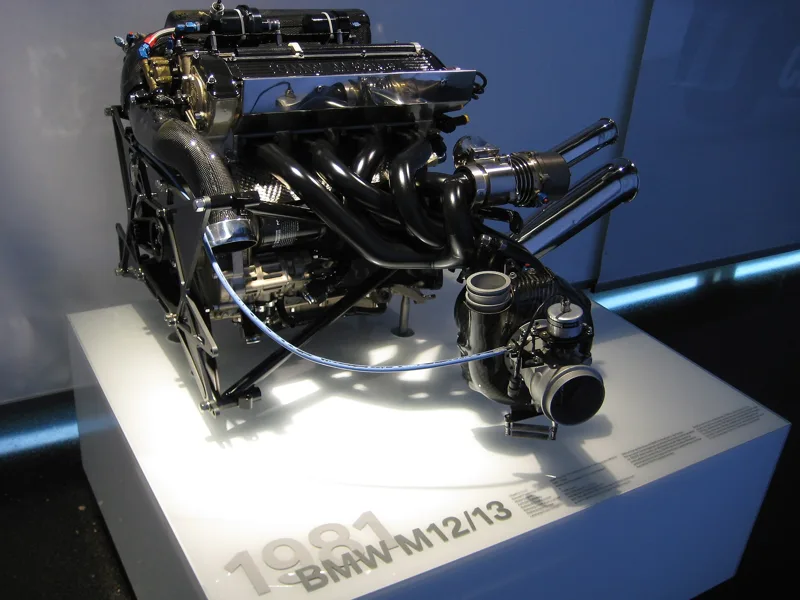
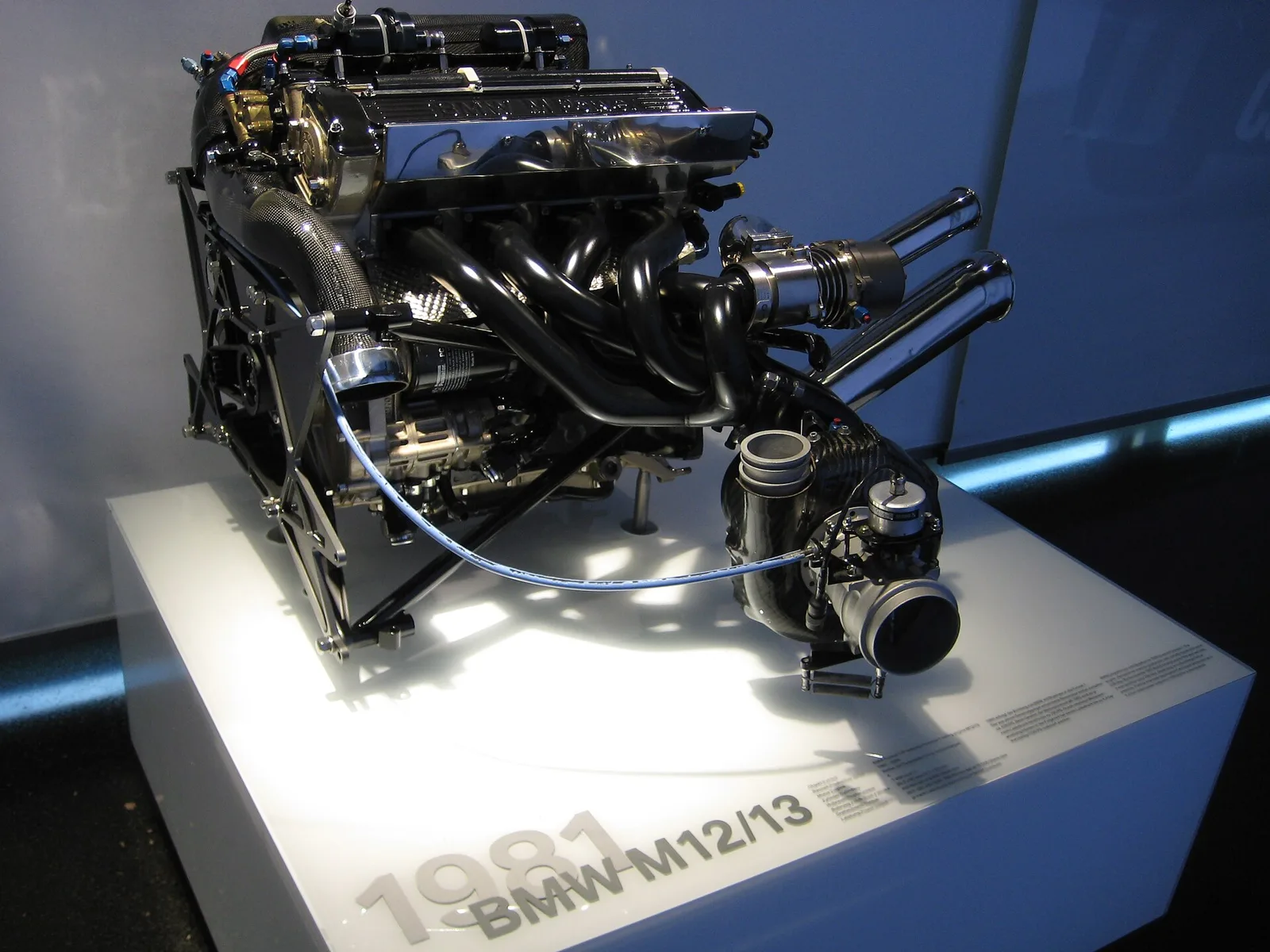
Things improved again in 1984 with BMW M12 turbo engines and sponsorship from the Barclay brand. The team was ninth in the Constructors' Championship that year and eighth in 1985. Thierry Boutsen took third at the 1985 San Marino Grand Prix, behind Prost and de Angelis. Prost was then disqualified for being 2 kg underweight, which lifted Boutsen to second.
Why did the Megatron years matter?
The Megatron years were Arrows' best period in Formula One. BMW left the sport, so the engines were badged Megatron through a deal with the major sponsor USF&G. The team finished seventh in 1987 and fifth in 1988, the final year of turbocharged engines, thanks to frequent points finishes from Eddie Cheever and Derek Warwick.
The turbo years were also frustrating. From 1987 the FIA required a pop-off valve to limit boost, cutting it at 4.0 bar in 1987 and 2.5 bar in 1988. The Arrows valve often opened below its set limit, so the engines did not deliver their full power. Engine designer Heini Mader found the fix just before Monza in 1988, moving the valve closer to the engine, a step that Honda and Ferrari engineers had taken long before.
Cheever and Warwick finished third and fourth at Monza that year, but the timing was too late. The turbo era ended after the 1988 season, and the team's best days in the sport were behind it.
What went wrong in 1989?
Brawn designed the Arrows A11 for 1989, and the car used a Ford DFR V8. The team's best finish that year came at the United States Grand Prix in Phoenix, where Cheever took third, his last Formula One podium. Cheever struggled with the car and failed to qualify for the British and Italian Grands Prix.
Warwick's luck was poor. A long stop in the pits at the first race in Brazil cost him a win that many expected to be his first. At the Canadian Grand Prix he briefly led, and was second when his Ford V8 blew. Seventh in the Constructors' Championship was the result, a clear drop from the year before.
How did the Footwork era play out?
Japanese businessman Wataru Ohashi invested in Arrows in 1990, and the cars began to carry the Footwork logo prominently. Jackie Oliver sold his shares to Ohashi but stayed on as team principal. The team was officially renamed Footwork in 1991 and signed to race with Porsche V12 engines, but the car was uncompetitive. The engine was overweight and underpowered, and Porsche quickly walked away. Footwork switched to a Ford V8.
The 1994 season was the most competitive of the Footwork years, with several points finishes and a double points finish in Germany. Fittipaldi shared the cars with Gianni Morbidelli after strong test running. Morbidelli earned the team's most notable result, a podium in Australia in 1995 that closed the Footwork chapter.
Money was always tight. Ohashi withdrew his support, and Oliver kept the team alive by funding it from his own pocket. Pay drivers were taken on because sponsorship was scarce.
How did Tom Walkinshaw take control?
After a failed attempt to buy Ligier, Tom Walkinshaw bought 51% of the team. He bought Alan Rees' share in March 1996, and the Footwork name was dropped, although the team still appeared under Footwork in the constructor standings that year.
Walkinshaw wanted a world championship winning team. In September 1996 he signed World Champion Damon Hill and hired the wealthy Brazilian Pedro Diniz, whose funding helped pay Hill's salary. John Barnard came in as designer and technical chief, and Bridgestone supplied the tyres under an exclusive deal.
The team came closest to a first win at the 1997 Hungarian Grand Prix. Hill passed Michael Schumacher to take the lead, and then a hydraulic seal failed two laps from the end. Hill clung on for second place, the closest the team came to a win.
What did 1998 and 1999 bring?
For 1998 Arrows bought out Brian Hart's preparation company and built its own V10 engine. Mika Salo replaced Hill and partnered Diniz. The season was difficult, although both cars finished fourth and sixth at the 1998 Monaco Grand Prix, and Arrows ended the year seventh in the Constructors' Championship with six points.
The season brought more upheaval. Barnard left after a dispute with Walkinshaw, and Mike Coughlan became technical director. Zakspeed tried to buy Walkinshaw's shares for around $40 million, but the terms could not be agreed and the deal collapsed.
At the start of 1999 Malik Ado-Ibrahim bought 25% of the team, and his T-Minus brand was displayed on the cars for much of the season. Under the scheme, firms paid for the right to promote their products with the brand, but very little money arrived. Money stayed tight, the car was a mild update of the 1998 model, and only one point was scored all season.
Jackie Oliver sold his remaining shares in 1999, leaving Walkinshaw in complete control. A deal with the equity company Morgan Grenfell kept the team afloat, and that arrangement would have long-term consequences for TWR.
Why did Arrows run out of money in 2002?
In 2000 Jos Verstappen returned to partner Pedro de la Rosa in an A21 chassis, which ran the Supertec engine rebadged from Renault. The pairing ran in a close midfield pack for much of the season.
Supertec was then bought out by Renault, so the team switched to Asiatech V10 engines, rebadged Peugeot units, for 2001. Walkinshaw replaced de la Rosa with Enrique Bernoldi, and Verstappen scored the team's only point of 2001 in Austria.
For 2002 Arrows used customer Jaguar-spec Cosworth V10 engines. Walkinshaw brought in Heinz-Harald Frentzen when Prost Grand Prix closed down, and dropped Verstappen, who successfully sued for breach of contract. Debts mounted, including money owed to Cosworth. Arrows ran out of money mid-season and did not appear at the end of the year, with its drivers deliberately failing to qualify for the French Grand Prix.
Negotiations with potential investors went on through the season. Craig Pollock, who had just left BAR, made an offer for the team, and so did Dietrich Mateschitz, but neither deal closed. The team went into liquidation at the end of the season, and the FIA rejected Arrows' entry application for 2003.
What did Arrows achieve season by season?
Arrows scored a handful of memorable results across its long history, but its record was dominated by midfield running. Nine podium finishes, five of them second places, came over the whole history, and one of those podiums was won under the Footwork name in 1995.
| Year | Name | Result |
|---|---|---|
| 1978 | Arrows | Debut at the Brazilian Grand Prix; Patrese scores points at Long Beach |
| 1981 | Arrows | Patrese takes the only pole, at Long Beach; joint eighth overall |
| 1985 | Arrows | Boutsen third at San Marino, promoted to second after Prost's disqualification |
| 1987 | Arrows | Seventh overall with Megatron engines |
| 1988 | Arrows | Fifth overall; Cheever and Warwick third and fourth at Monza |
| 1989 | Arrows | Seventh overall; Cheever third at Phoenix |
| 1995 | Footwork | Morbidelli podium in Australia, the final race of the era |
| 1997 | TWR Arrows | Hill second at the Hungarian Grand Prix |
| 1998 | TWR Arrows | Seventh overall with six points |
| 1999 | TWR Arrows | One point all season |
| 2001 | Arrows | Verstappen scores the only point, in Austria |
| 2002 | Arrows | Runs out of money; liquidation at season end |
What became of the Arrows name and assets?
Minardi bought the Arrows A23 chassis and the Arrows intellectual property. The former Arrows base at Leafield then passed to Super Aguri, the team that ran the 2002 Arrows A23 chassis in 2006 as the SA05.
Super Aguri folded in late 2008. Formtech Composites then acquired the rights Super Aguri had held and took over the Leafield site. Today the firm builds composite parts for car makers, racing teams, the military and aerospace.
What is Arrows' legacy?
Arrows is remembered as a team that never won a Grand Prix, despite going 382 races without a win in a long and varied history. It still shaped the sport through its engineers and its chassis, which lived on through Minardi and Super Aguri.
Its story is also a case study in the financial pressure that squeezed small teams. Owners changed, engines moved between suppliers, and the sponsors came and went. The team's best years came with the strongest engine backing, and when that backing faded, so did the team.