How an engine based on a 1961 road block won the 1983 title, powered five teams and led BMW into the Williams and Sauber years.
BMW entered Formula One in occasional Formula Two-based entries in the 1950s and 1960s, then supplied the M12/13 turbo engine from 1982 to 1988, winning the 1983 title with Brabham. It partnered Williams from 2000 to 2005 and owned the BMW Sauber team from 2006 to 2009.
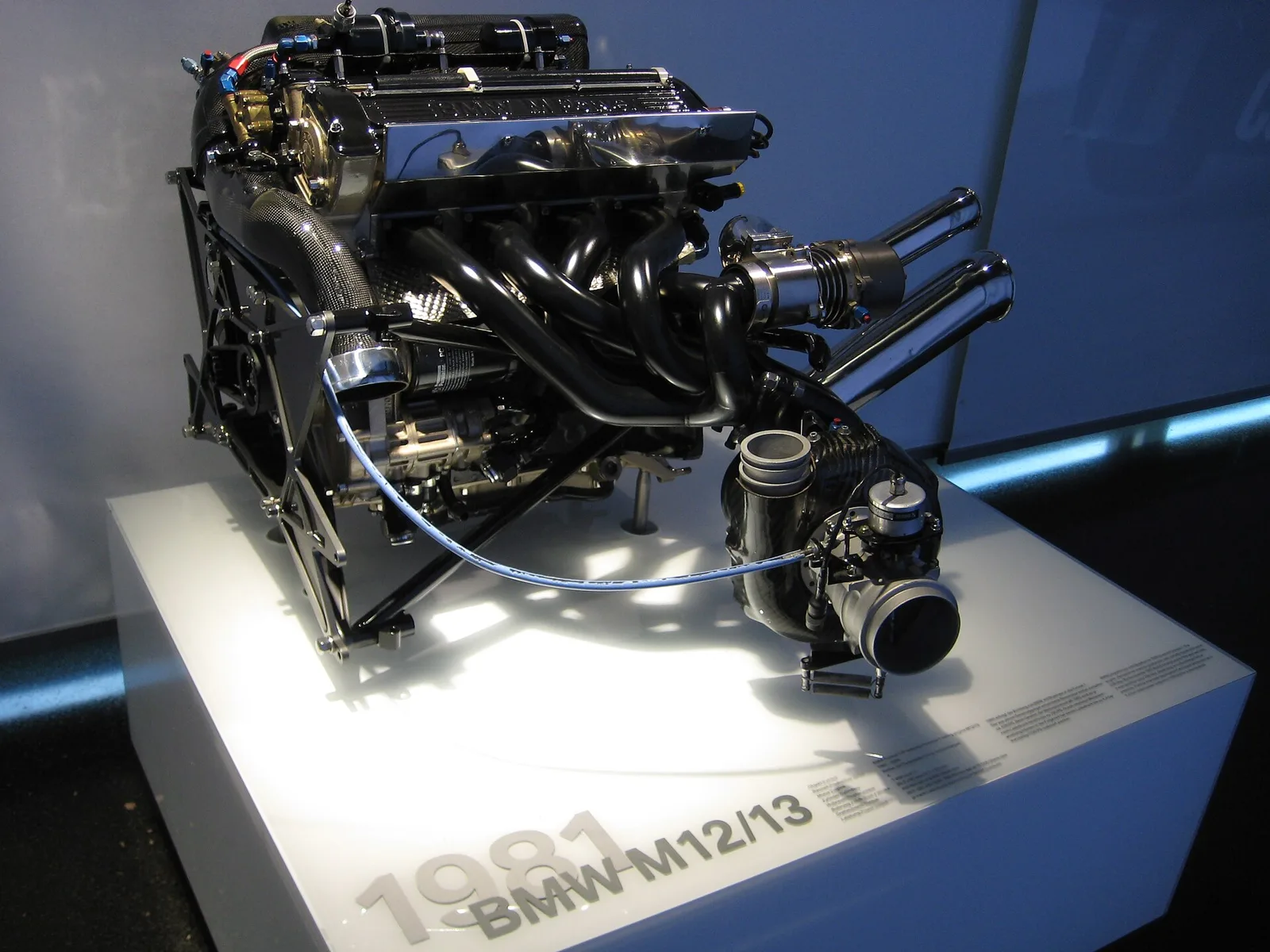
The engine that made Nelson Piquet the first world champion in a turbocharged car was an inline-four based on a block BMW introduced in 1961, and nobody knew quite how much power it made. BMW's engineers estimated around 1,400 hp at maximum boost, but the company's own dynamometer could not measure beyond 1,280 bhp.
That M12/13 turbo is the centrepiece of BMW's Formula One history, but the company has been involved in the sport in several guises since 1950: as occasional entrant, as engine builder, as partner to Williams and finally as owner of its own team. Each phase had a different logic and a different ending.
How has BMW taken part in Formula One?
BMW has been in Formula One since the world championship began in 1950, first with occasional entries, then as an engine supplier in the 1980s, as Williams' partner from 2000, and as owner of the Sauber team from 2006 to 2009. Its one drivers' title came in 1983, and BMW Sauber's one victory in 2008.
| Era | Role | Headline result |
|---|---|---|
| 1950s and 1960s | Occasional entries, usually Formula Two-based | Tenth place for Hubert Hahne in 1968 |
| 1982 to 1988 | M12/13 turbo engine for Brabham, ATS, Arrows, Benetton and Ligier | 1983 drivers' title, nine wins |
| 2000 to 2005 | Exclusive V10 supplier to Williams | Challenging for victories from 2001, no title |
| 2006 to 2009 | Owner of BMW Sauber | Third in the 2007 constructors' standings, later second; one win in 2008 |
BMW's engineers estimated 1,400 hp, but their own dynamometer stopped at 1,280.
Why were BMW cars in Formula One in the 1950s and 1960s?
In the early years of the championship, the rules were effectively Formula Two, which let private BMW-based cars take part. Cars built on the pre-war BMW 328 chassis ran in the German Grands Prix of 1952 and 1953, and BMW-derived machines from AFM and Veritas appeared in occasional races from 1951 to 1953.
One modified 328 carried its engine at the rear, a layout the Germans called "Heck" that every Formula One car adopted in the early 1960s after Cooper proved it. In the 1960s the German Grand Prix was often run on the same track as a Formula Two event, which let BMW's F2 cars join in.
For 1967 BMW put Hubert Hahne in a Lola F2 car whose engine had been enlarged to meet Formula One rules, while Lola ran David Hobbs with the standard smaller engine. Hahne returned in 1968 and finished tenth, then BMW's best Formula One result. In 1969 BMW built three 269 chassis of its own, for Hahne, Gerhard Mitter and Dieter Quester; Mitter suffered fatal injuries in a practice crash, and his teammates pulled out.
Why did BMW build a turbocharged Formula One engine?
Renault began its turbocharged Formula One programme in 1977 and grew more successful, so BMW announced its own turbo engine in April 1980. It was based on the M10, a 1.5-litre naturally aspirated four-cylinder designed in the late 1950s and introduced in 1961. Its racing derivative, the M12, had won in Formula Two and other categories for years.
BMW had also built ties with the grand prix paddock by supplying identical M1 cars for the BMW M1 Procar Championship in 1979 and 1980, run at Grand Prix weekends. Meanwhile Jochen Neerpasch oversaw Paul Rosche's prototype 1.4-litre turbo, which soon made 600 bhp at 2.8 bar of boost with one KKK turbocharger and Bosch electronics that included fuel injection. That engine became the M12/13, finally supplied to five teams from 1982 to 1988.
Politics nearly sent it elsewhere. BMW first discussed a 1980 campaign with McLaren and its two-time champion Niki Lauda, but the board refused. Neerpasch then left for the French marque Talbot, which planned to enter Formula One with Ligier, having arranged the engine sale. Rosche and Neerpasch's successor Dieter Stappert protested that a programme built on a road-car engine deserved a full works commitment, given its marketing value, and BMW instead negotiated an exclusive supply to Brabham.
How did the BMW-Brabham partnership begin in 1981 and 1982?
Testing started in late 1980 with a Brabham BT49 modified to take the engine. Designer Gordon Murray drew the BT50 around it, with a longer wheelbase and larger fuel cell than the BT49 and onboard telemetry to monitor the fuel injection. The BT50 was chronically unreliable until Bosch introduced a digital engine management system at the end of 1981.
It made one appearance in 1981, at the British Grand Prix, where Piquet qualified 0.7 seconds slower than in the Cosworth-powered BT49 but was timed at 192 mph (309 km/h) in the speed trap, 15 mph (24 km/h) faster. Piquet won that year's championship in the BT49.
The 1982 season began badly. Piquet and Brabham teammate Riccardo Patrese qualified second and fourth in South Africa and retired early. Under pressure from title sponsor Parmalat, Bernie Ecclestone raced Cosworth cars at several rounds; Piquet won in Brazil with one, only to be disqualified over water-cooled brakes, and Patrese won in Monaco in the Cosworth car. At Detroit, reliability problems stopped Piquet qualifying at all, which was the low point.
Then came Canada. The cool conditions suited the turbo, and Piquet led home Patrese, who was still in the Cosworth, for BMW's first Formula One win. Murray's strategy of a planned mid-race refuelling stop put the cars at the front often. Piquet retired from the lead at the British, French and German races and Patrese from the lead in Austria; Patrese set BMW's first fastest lap in France and Piquet took its maiden pole position in Austria.
How did Piquet win the 1983 championship with BMW?
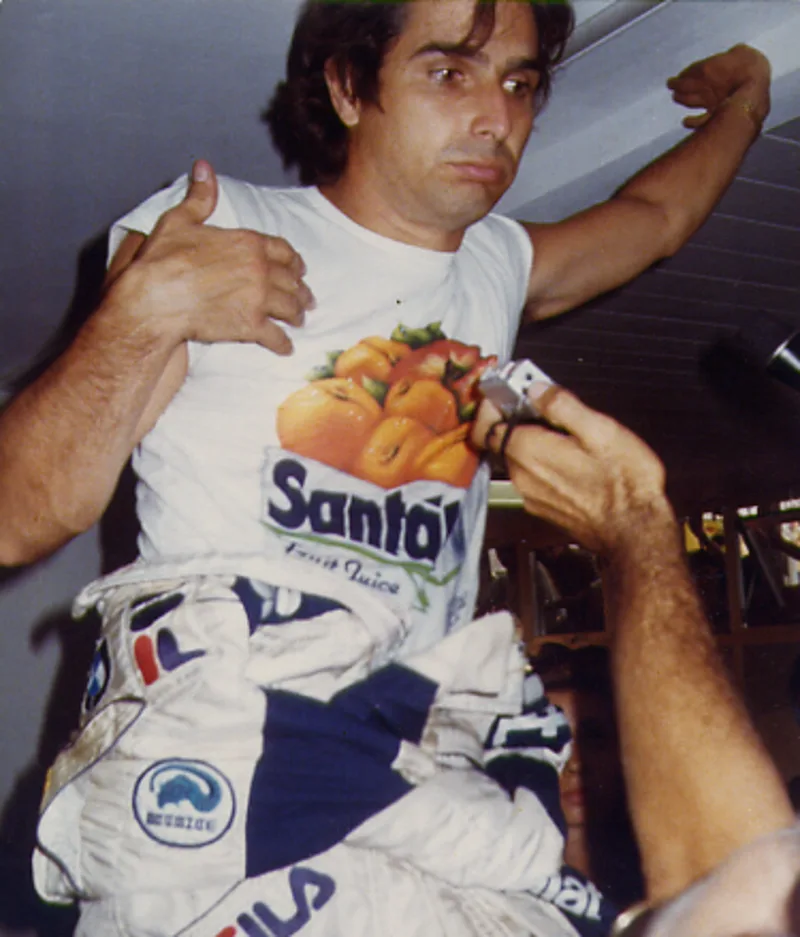
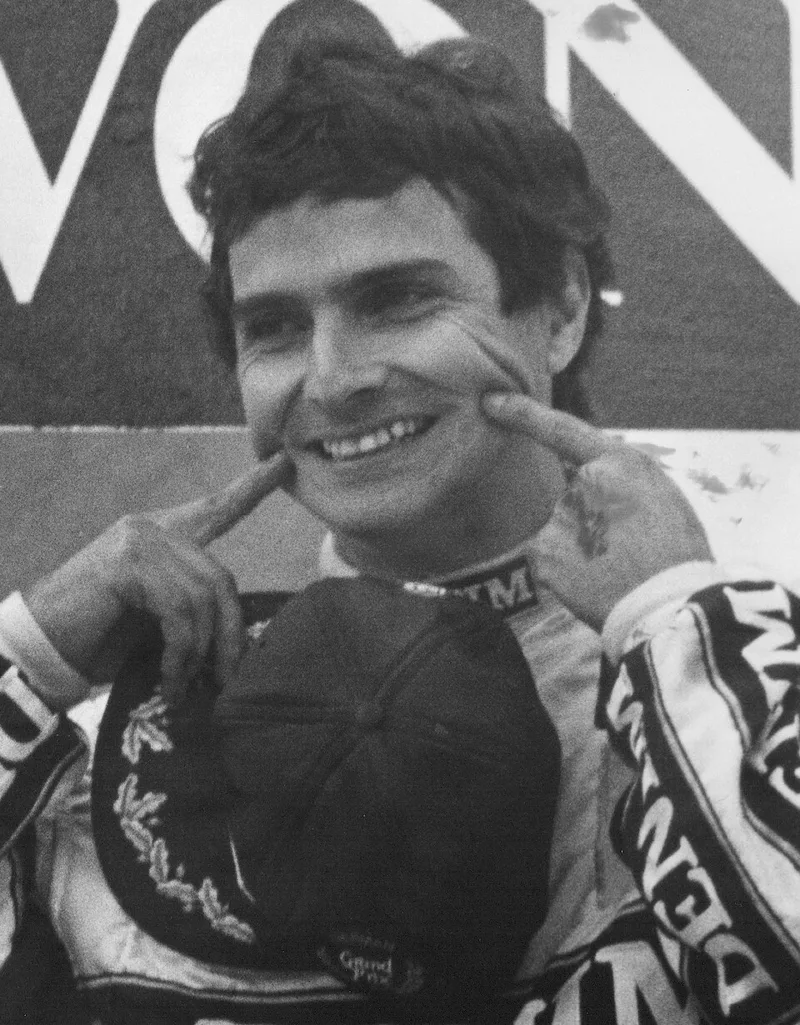
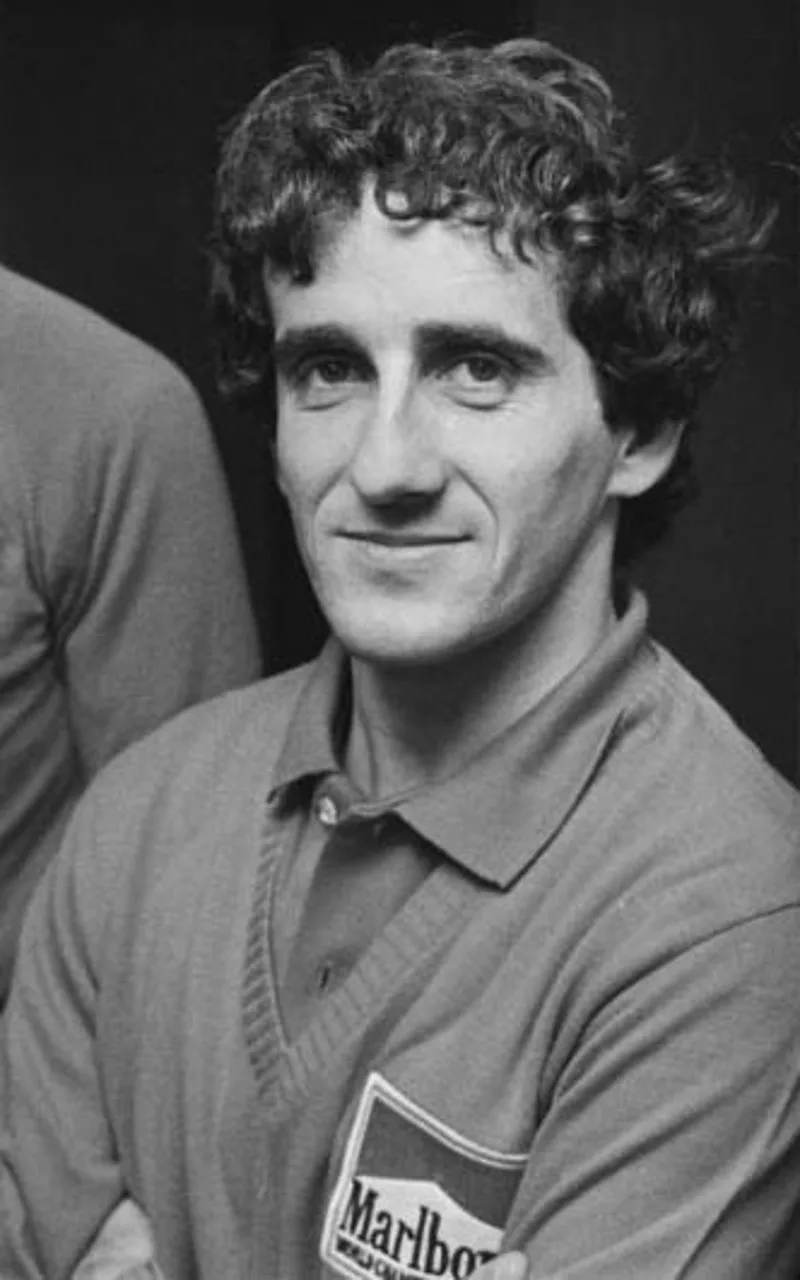
With the BT52 and far better reliability, Piquet won the 1983 drivers' title by just two points, overhauling Renault's Alain Prost. He took the Brazilian, Italian and European Grands Prix, and Patrese won the season finale. Brabham finished third among constructors. BMW also began supplying the German ATS team, though driver Manfred Winkelhock scored no points.
Output was roughly 850 bhp (630 kW) for qualifying and 640 bhp (480 kW) over a race distance, and Piquet thus became the first champion to drive a turbocharged car. Renault had pioneered the turbo in 1977 but never won the title in the original turbo era, which ran from 1977 to 1988.
The four-cylinder layout gave BMW a quiet advantage over the V6 engines from Ferrari and Renault. With one fewer turbocharger, two fewer cylinders and eight fewer valves, it lost less energy to friction and produced less waste heat. Murray could therefore fit smaller radiators, giving the BT52 short, skinny sidepods and better straight-line speed.
The weakness was throttle response. A single turbo meant about two seconds of lag, so drivers had to start accelerating through the apex, and the power arrived like a light switch, as Piquet and Berger both described it, often inducing sudden oversteer. The BMW therefore shone where horsepower mattered most, at Kyalami, Imola, Paul Ricard, Silverstone, Hockenheim, the Osterreichring and Monza, and lagged on tight street tracks like Monaco and Detroit.
Why did BMW's results fade after 1983?
In 1984 Arrows became a customer. The A7 chassis was not ready at the start, so Surer and Boutsen used the Cosworth-engined A6 for ten of the team's 32 entries. ATS failed to score again and withdrew at the end of the year. At the front Piquet took nine pole positions but retired from nine races, and the McLarens of Lauda and Prost were quicker in race conditions. His two victories, in Canada and Detroit, were followed by one more in France in 1985, and those were Brabham's last in Formula One.
The engine was regarded as the most powerful in the sport, making about 1,100 hp (820 kW) in qualifying trim by 1985, but blow-ups and turbo failures became common. A fuel limit of 220 litres per race made the thirsty four-cylinder run dry. Brabham also moved to Pirelli tyres for 1985, a misjudgement that dropped it from fourth to fifth among constructors, while Arrows scored 17 points with Gerhard Berger and Boutsen.
For 1986 Murray designed the radical, low-line BT55 to cut drag and lower the centre of gravity, and BMW tilted the M12/13/1 engine on its side, by 72 degrees, to fit. The idea failed, with poor traction and oil scavenge problems, and Elio de Angelis died in a testing accident after four races. Derek Warwick and Patrese scored just two points between them.
Benetton was BMW's most successful partner that year, with 19 points, two poles and a first win for Berger and the team in Mexico, and BMW would not win again until the 2001 San Marino Grand Prix. At Monza Berger's BMW-powered Benetton was timed at 352.22 km/h (219 mph), the quickest straight-line speed any turbocharged Formula One car had recorded, and the top five through the speed trap all used the M12. The M12/13/1 was claimed to make 1,400 hp (1,044 kW) at 11,000 rpm, though no dynamometer could verify figures that high; engineers rated 0.1 bar of boost at roughly 20 hp.
BMW announced its withdrawal at the 1986 French Grand Prix but honoured the Brabham supply for 1987, when the conservative BT56 scored ten points. Ecclestone then decided not to race in 1988, which ended BMW's tenure as supplier of works turbo engines.
What was the Megatron engine?
It was the BMW M12 under a new name. Arrows boss Jackie Oliver, backed by sponsor USF&G, bought the remaining upright engines and ran them under the badge of Megatron, a company founded by John J. Schmidt, with Heini Mader servicing them from Switzerland. Arrows used them in 1987 and 1988, and Ligier in 1987.
By 1988 Arrows was one of only six teams still running turbos, and the Megatron was the oldest in use. Mader solved the problem of the FIA's boost limit valve, which capped pressure at 4.0 bar in 1987 and 2.5 bar in 1988, by moving it closer to the engine. At Monza in 1988 the Arrows A10B ranked among the quickest cars down the straights, ahead even of the McLaren MP4/4, and Eddie Cheever took third place, the last podium for the engine.
Turbos were banned from 1989, and Arrows went back to a naturally aspirated 3,499 cc Ford DFR V8. In total the M12 won one drivers' title, nine races (seven for Piquet and one each for Patrese and Berger), 15 poles and 14 fastest laps.
What happened with Williams and Sauber?
BMW returned in the late 1990s with an exclusive contract with Williams, which needed a long-term supplier after Renault left in 1997. The new V10 made its debut in the Williams FW22 in 2000. A year later the partnership was challenging for race victories, but the championship stayed out of reach because Michael Schumacher and Ferrari dominated the first half of the decade. By 2005 relations had deteriorated, and BMW chose to buy the Sauber team instead.
BMW Sauber lasted from 2006 to 2009 and made the former Swiss privateer far more competitive. The first season brought two podiums, and 2007 ended with third in the constructors' standings, upgraded to second once McLaren was disqualified. Robert Kubica took the team's lone victory at the 2008 Canadian Grand Prix and at one stage led the drivers' championship; the team then put its energy into the 2009 car and drifted down the order.
The F1.09 proved uncompetitive. With the global financial recession biting and BMW frustrated that the technical regulations limited its ability to develop road-relevant technology, the company withdrew and returned the team to its founder, Peter Sauber.