A car name that moved from STD Motors and Rootes through Simca and Chrysler to Peugeot, with rally and Le Mans success along the way.
Talbot is a dormant car marque introduced in 1902 by the British-French company Clement-Talbot. It passed through STD Motors, Rootes, Simca and Chrysler before PSA Peugeot Citroen bought it in 1978. Passenger cars ended in 1987, the Express van in 1994, and Stellantis now owns the rights.
Talbot is a car marque that started with the Anglo-French firm Clement-Talbot in 1902 and lasted, in various hands, until the 1990s. Its history runs through the STD Motors combine, the Rootes brothers, the Simca business and Chrysler, before Peugeot took it over in 1978. Along the way the name carried rally manufacturers' titles, a Formula One effort and a Le Mans winning sports car team.
Where did the Talbot name begin?
Talbot began in 1902 when the British-French company Clement-Talbot introduced it, and Clement-Talbot itself was founded in 1903. The founders were Charles Chetwynd-Talbot, the 20th Earl of Shrewsbury, and Adolphe Clement-Bayard. Both reduced their financial interests in the business during the First World War.
The first Clement-Talbot cars were mechanical components assembled in London from French Clement-Bayard designs. British parts soon replaced the French ones, and the brand name shrank to Talbot after the first year.
Clement-Talbot earned a reputation for the design and quality of its products. It also stayed profitable during the Great Depression.
A marque that passed through STD Motors, Rootes, Simca and Chrysler, then won rallies and Le Mans under Peugeot.
How did STD Motors take over the Talbot business?
In December 1919 Darracq of London bought the entire capital of Clement-Talbot. Darracq then bought Sunbeam and renamed itself STD Motors, with initials that stood for Sunbeam, Talbot and Darracq. The group became unable to pay its debts during the depression and ceased to exist in 1936.
Paris-built products were branded Talbot-Darracq from 1920, at the Suresnes factory. The Darracq word was dropped in 1922, and French-made Talbots sent to England were rebadged as Darracq or Talbot-Darracq.
The Paris side of the group struggled alongside its parent. The 1924 borrowing used to fund the Sunbeam racing programme had weakened STD Motors, and Automobiles Talbot France suffered a financial collapse in late 1934.
How did Rootes keep the London Talbots alive?
After the collapse of its parent, Clement-Talbot stayed financially sound because its products sold readily. Rootes Securities bought the company and carried on building the same catalogue of cars. The Rootes brothers had bought the London Talbot factory in the mid-1930s.
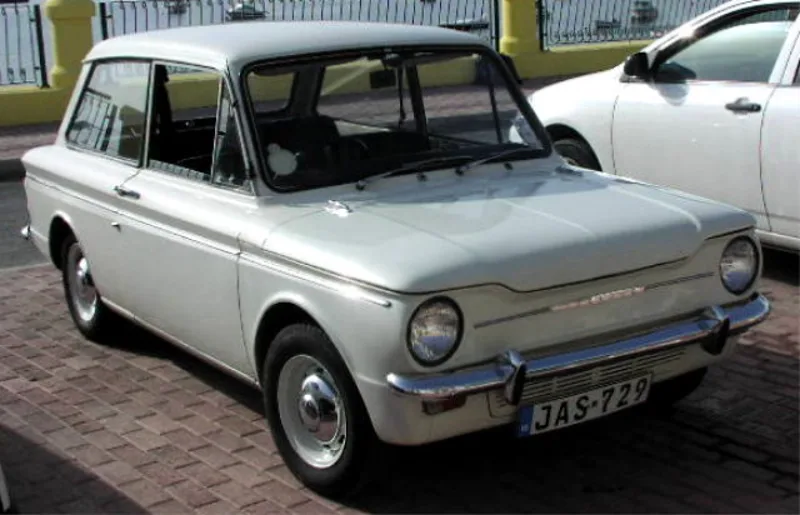
Genuine Talbot parts ran short, so Rootes quietly introduced components from Hillman and Humber. A modified Hillman Aero Minx eventually joined the production line and took the Talbot name.
Rootes renamed Clement-Talbot Sunbeam-Talbot in 1938, and the Talbot brand name disappeared from its cars in the mid-1950s.
What became of Talbot in Paris under Antonio Lago?
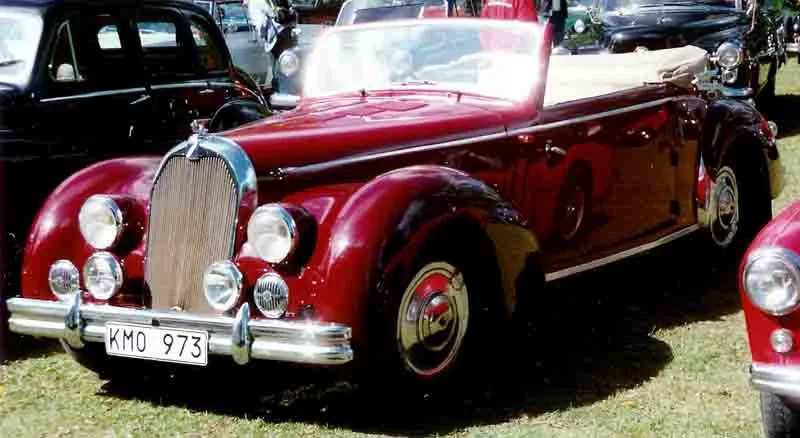
Antonio Lago, the manager at Suresnes, arranged a management buyout of the French operation after the collapse of STD Motors and Automobiles Talbot. Lago produced Talbot and Talbot-Lago cars until the Paris factory closed in 1958.
Lago involved Talbot in sports car and Grand Prix racing as well as high quality luxury cars. After the war, French taxes on cars with engines larger than 2.6-litres severely restricted Talbot sales.
The Talbot-Lago T26 used a 4.5-litre six-cylinder engine and was eligible for Formula One after the war. Many examples, both factory and private, appeared in the first two seasons of the championship, in 1950 and 1951.
How did Simca and Chrysler come to own Talbot?
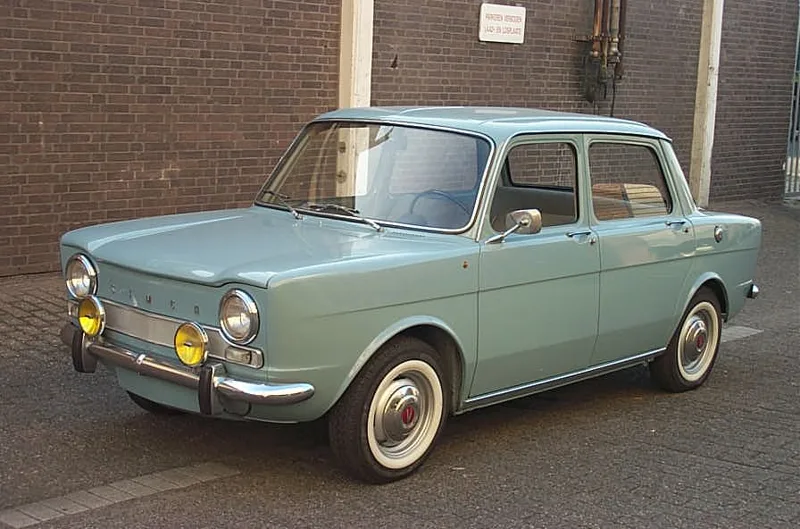
The dormant Talbot marque was sold to Simca. Chrysler gradually acquired Simca between 1963 and 1970, which joined the two Talbot brands, because Chrysler Europe already held the Rootes operations. PSA Peugeot Citroen took the dormant marque with it when it bought Chrysler's European arm in 1978.
Chrysler Europe struggled to reach profitability for much of its existence. Chrysler's chief executive Lee Iacocca decided to offload the ailing European operations, and the French government persuaded both Renault and PSA Peugeot Citroen to bid.
PSA agreed in August 1978 to acquire Chrysler Europe for a nominal $1. It took on the company's considerable debts and liabilities, but the deal removed a strong domestic rival in Simca and gave PSA a stronger foothold in the United Kingdom.
PSA formally took control on 1 January 1979. George Turnbull, a former British Leyland executive who had just completed a secondment at Hyundai, was appointed managing director of the UK arm.
Which cars carried the Talbot badge after 1979?
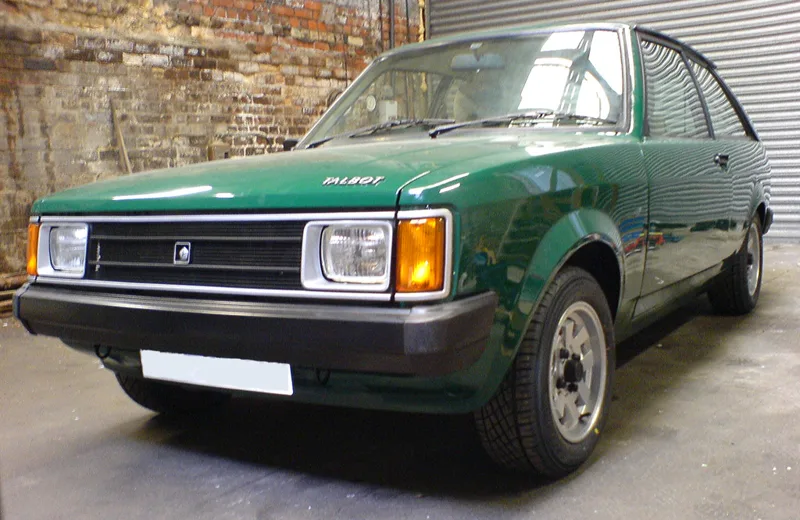
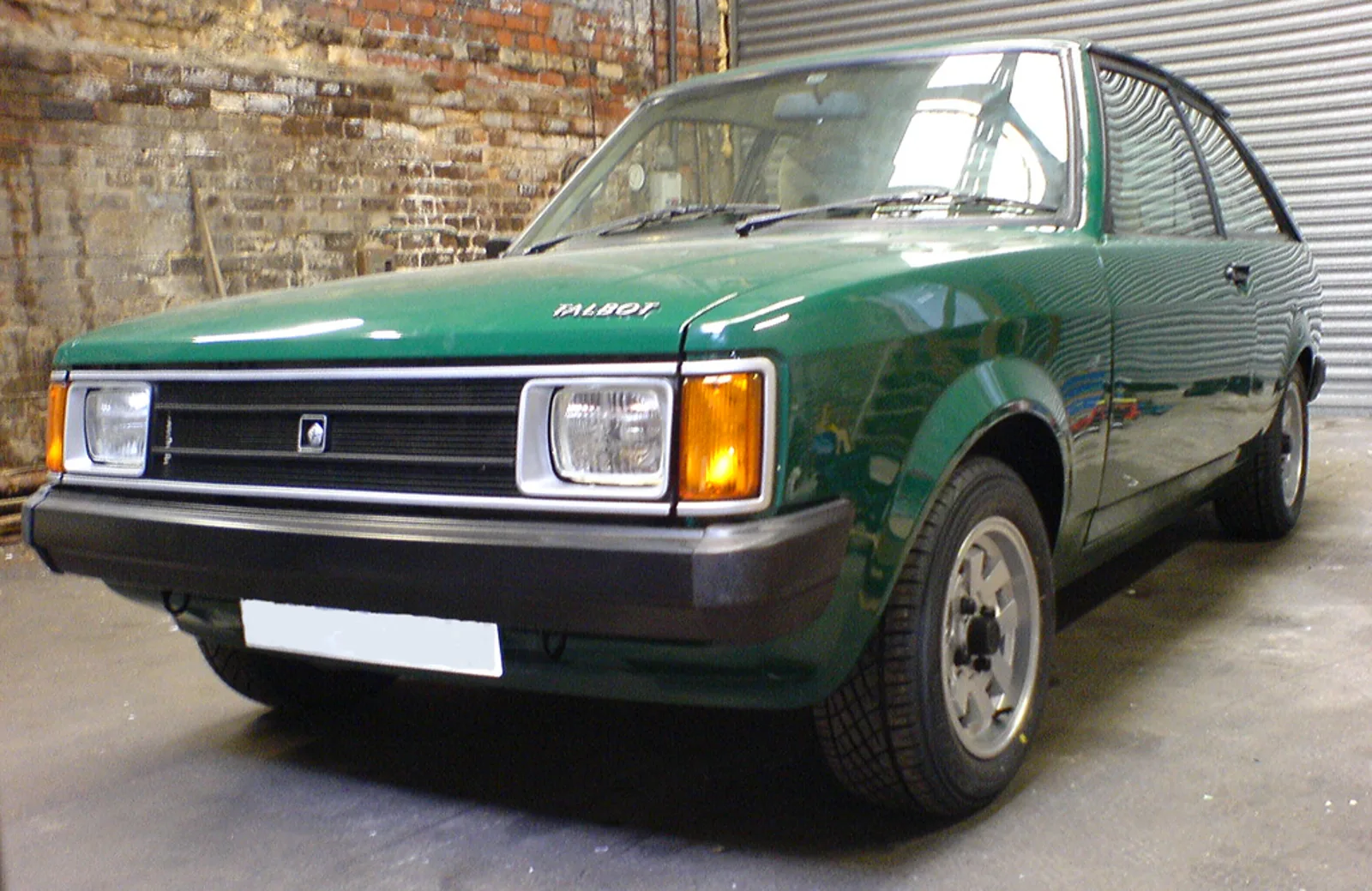
Former Chrysler models registered in Britain after 1 August 1979 all wore the Talbot badge. The range mixed Rootes designs such as the Avenger and Sunbeam with Simca and Chrysler models, and PSA added the Samba and Tagora from its own stable.
The Peugeot takeover ended production of the Chrysler Hunter. The Chrysler Avenger and Sunbeam, both Rootes designs, carried on as Talbots, as did the Simca 1307, known as the Chrysler Alpine in the UK, and the Horizon.
The Avenger remained in production as a Talbot until the end of 1981, and the Avenger-derived Talbot Sunbeam also ended in 1981. From December 1981 the Samba became the entry-level Talbot, a three-door hatchback drawn from the Peugeot 104.
In 1981 Peugeot began building the Talbot Tagora, a boxy four-door saloon aimed at the Ford Granada and the Vauxhall Carlton. Sales were insufficient in Britain and France, and production ceased in 1983 after 19,389 units.
At the end of 1984 the Alpine hatchback and Solara saloon were rebadged as Minx and Rapier, depending on specification. Those names came from Rootes, which had sold the Hillman Minx and Sunbeam Rapier, and the versions were built until 1986.
Former Rootes names still came back now and then. In 1982 a Solara Sceptre model appeared, a name inherited from the Humber Sceptre, which was produced between 1963 and 1976.
Why did the Talbot brand decline?
In 1979 the Chrysler and Talbot marques together reached nearly 120,000 UK sales, but volumes then fell as the early 1980s recession bit and few new models arrived. By 1985 PSA had begun to question its three-brand strategy, and the Tagora had failed in the market.
The Samba was essentially a decade-old design because of its Peugeot 104 parentage, while the ageing Alpine and Solara overlapped with the Citroen BX and the forthcoming Peugeot 405.
At the eleventh hour, the Horizon replacement was released as the Peugeot 309 instead of the Talbot Arizona. The British arm believed UK buyers were loyal to Talbot, but the Peugeot brand prevailed. The 309, 405, 306 and 206 later became top-ten sellers in Britain.
PSA had also considered a Samba replacement based on the Citroen AX around 1984, but the Peugeot 205 was so successful in the supermini sector that a third supermini was unnecessary. In 1986 PSA sold the Whitley research and development centre to Jaguar.
Horizon production continued in Spain and Finland until 1987, which ended Talbot passenger cars. The Samba had been discontinued in May 1986, and the Talbot Express panel van stayed in production until 1994, after which the whole marque was axed.
What became of the surviving Talbots?
Few Talbots remain on British roads. By June 2016, fewer than 40 Alpine or Solara models, 20 Horizons, 10 Sambas and only one Tagora were still registered with the DVLA, the British vehicle licensing body.
The Talbot Express van became a popular base for motorhomes and campervan conversions. Well over 5,000 Express vans were still registered in June 2016, and the vast majority of them were motorhomes.
Could the Talbot name return?
PSA considered reintroducing Talbot in 2008, aimed at low-budget buyers in the way Renault had used Dacia for the Logan. The idea had not returned by 2012, when PSA introduced the second-generation Citroen C-Elysee and the Peugeot 301 instead.
Talbot versions of China-built models such as the Citroen Elysee and the Peugeot 206 were floated as options.
The 2021 merger of Groupe PSA and Fiat Chrysler Automobiles created Stellantis, putting the Talbot brand under the same corporate umbrella as Chrysler again, more than 40 years after Chrysler Europe was dissolved. Stellantis now owns the rights to the marque.
How far did Talbot go in Formula One?
Talbot had two brief spells in Formula One. The post-war Talbot-Lago T26 raced in the first two seasons of the world championship, and in 1981 and 1982 Talbot Ligier competed with a Matra engine. The move to two-litre Formula Two rules for 1952 ended the first spell.
Talbots finished fourth and fifth in the inaugural championship race, the 1950 British Grand Prix. Yves Giraud-Cabantous and Louis Rosier drove those cars.
The second spell began when Talbot linked up with the Ligier team and used its Matra connection to secure an engine. The official constructor name became Talbot Ligier in both seasons, and Jacques Laffite finished fourth in the 1981 championship with two wins.
How did Talbot compete in the World Rally Championship?
The Talbot factory World Rally Championship team was founded in 1979, after Peugeot had taken over Chrysler Europe and revived the Talbot name. In its first season, Tony Pond drove the Talbot Sunbeam Lotus to fourth place at the 1979 Rallye Sanremo.
In 1980, Guy Frequelin gave Talbot its first podium with third place at the Rally Portugal. Henri Toivonen then won the RAC Rally, which made him the youngest winner in the championship's history, and Talbot also took third and fourth there with Frequelin and Russell Brookes.
That RAC Rally was the last time a two-wheel-drive car won the event, and Talbot finished sixth in the 1980 manufacturers' championship.
In 1981 Talbot kept Frequelin and Toivonen. Its only win that year came at the Rally Argentina with Frequelin, but consistent podiums and points finishes gave Talbot the manufacturers' title. Frequelin narrowly lost the drivers' title to Ford's Ari Vatanen.
The 1982 season was dominated by the four-wheel-drive Audi Quattro, and with Group B regulations coming, Talbot withdrew from the championship. Its name lived on in Peugeot Talbot Sport, which Jean Todt had founded in 1981 and which debuted in 1984.
What did Peugeot Talbot Sport win?
Peugeot Talbot Sport, founded by Jean Todt, debuted in 1984 and won the drivers' and manufacturers' rally titles in 1985 and 1986. Its sportscar team was the last time the Talbot marque appeared in motorsport.
The sportscar team raced in the World Sportscar Championship from 1990 to 1992, and it also entered the 1993 24 Hours of Le Mans. It won both the drivers' and teams' titles in the 1992 World Sportscar season, and it took the Le Mans victories in 1992 and 1993.
Did Talbot sponsor a football club?
Yes. Talbot was the main sponsor of Coventry City from 1981 to 1983. Chairman Jimmy Hill had planned to rename the club Coventry Talbot, but the Football League vetoed the idea, and Talbot ended its association with the club by the summer of 1983.
The sponsorship tied the brand to the city of Coventry, where Talbot's UK branch had built cars at the Ryton plant.
What are the key Talbot figures?
| Specification | Detail |
|---|---|
| Introduced | 1902, by Clement-Talbot |
| Clement-Talbot founded | 1903, London assembly |
| STD Motors ceased | 1936 |
| Paris factory closed | 1958, under Antonio Lago |
| Simca acquired by Chrysler | 1963 to 1970 |
| PSA purchase of Chrysler Europe | August 1978, for a nominal $1 |
| PSA control | 1 January 1979 |
| UK Chrysler and Talbot sales | Nearly 120,000 in 1979 |
| Tagora production | 19,389 units, ending in 1983 |
| Last passenger cars | Samba discontinued May 1986; Horizon until 1987 |
| Last model | Talbot Express panel van until 1994 |
| Stellantis | Formed 2021 from PSA and Fiat Chrysler |
| Formula One | Fourth and fifth, 1950 British Grand Prix |
| World Rally Championship team | Founded 1979; manufacturers title 1981 |
| Le Mans wins | 1992 and 1993, Peugeot Talbot Sport |
| Coventry City sponsorship | 1981 to 1983 |