From the 1968 merger that gathered Austin, Morris, Triumph and Rover under one roof to the break-up that left the Mini with BMW.
British Leyland was a British car and truck group formed in 1968 by merging Leyland Motors with British Motor Holdings. It owned Austin, Morris, Triumph, Rover, Jaguar and the Mini. Financial collapse led to government control in 1975, and the business was later broken up and sold, ending mass car production by British-owned makers in 2005.
British Leyland began as a merger between a successful truck and bus maker and the biggest British car group, bringing Austin, Morris, Triumph, Rover and Jaguar under one roof. Known as BLMC at first, it later became simply BL. Its story is one of ambition, poor management, industrial strife and eventual break-up, ending with the collapse of mass car production by British-owned makers.
How did British Leyland begin?
British Leyland Motor Corporation was formed on 17 January 1968 from the merger of Leyland Motors and British Motor Holdings, known as BMH. The idea was championed by Tony Benn, who chaired the Industrial Reorganisation Committee. Sir Donald Stokes, formerly chairman of Leyland Motors, became its chairman, and the group was split into seven divisions.
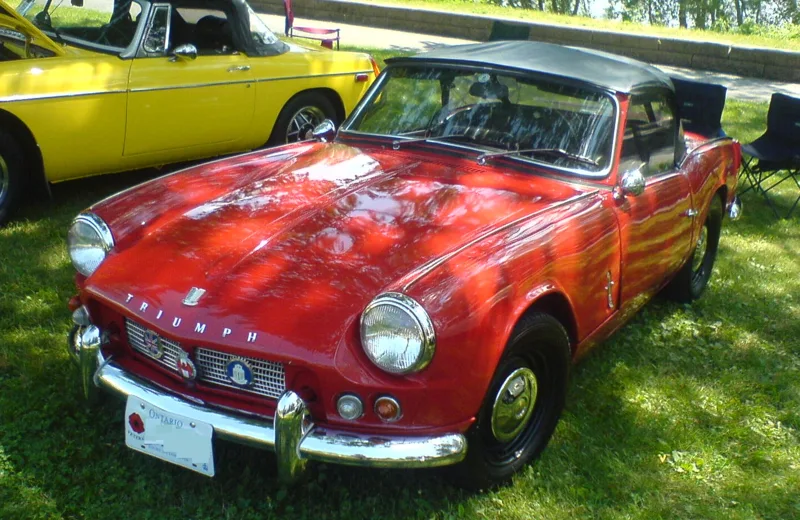
The company combined most of the remaining independent British car makers with a large truck and bus business. Its volume car division held the former British Motor Corporation marques, which were Austin, Morris, MG, Riley and Wolseley. Specialist marques such as Rover, Triumph, Jaguar and Alvis formed a separate division, and Leyland Truck and Bus covered the commercial side.
Its size looked impressive on paper. At its founding, BLMC was the world's fifth largest vehicle manufacturer, and British-owned industry held 40% of the UK car market in 1968. Yet nearly one hundred companies were drawn into the merger, from construction equipment and refrigerators to metal casting, and much of that spread added cost rather than strength.
A merger meant to create a British General Motors ended with its brands sold off one by one.
Why did the company struggle from the start?
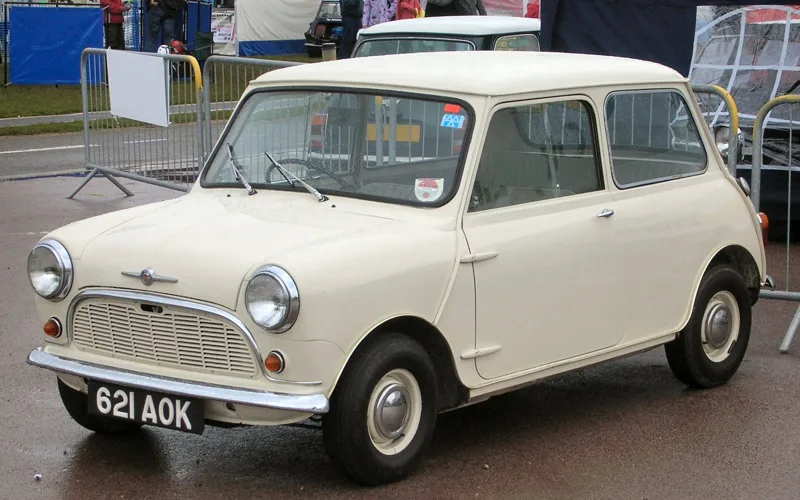
The early problem was the product range. BMH had pioneered front-wheel drive with the Mini and the 1100 and 1300, but both were underpriced and warranty costs eroded their profits. Pre-merger design work had gone into niche cars such as the Austin Maxi, which used doors from the larger Austin 1800, and the Austin 3-litre, which had no discernible place in the market.
Sir Donald Stokes was horrified to find that the elderly designs had no replacements in the pipeline, and BMH had nothing to rival Ford's Escort and Cortina. A crash programme produced the Morris Marina in early 1971. It was one of the strongest sellers in Britain during the 1970s and the second most popular new car in 1973, yet it gained a dismal reputation by the end of production in 1980.
The Austin Allegro followed in 1973 as the replacement for the 1100 and 1300 ranges. It had a ten-year production life and a similar reputation for doubtful build quality.
Why did strikes and quality problems hit BL so hard?
Strikes and quality problems hit BL harder than most rivals. Union action frequently crippled manufacturing, and because production was spread across many plants, a stoppage in one could halt many others. Ford and General Motors had merged their British and German operations so that output could come from either side of the Channel, but BL had no such safety net.
Rivals took advantage. Ford and Vauxhall ultimately overtook BL to become Britain's two best-selling marques, while Nissan (Datsun) and Toyota exploited its declining reputation for quality. Continental makers such as Fiat, Renault and Volkswagen also sold strongly in Britain. By the end of the 1970s the government had imposed import quotas on Japanese makers to protect BL and Chrysler Europe.
Management made things worse. At its peak BLMC owned almost forty manufacturing plants, and the Austin and Morris dealer networks were never fully integrated, so badge-engineered twins were sold against each other. Model ranges overlapped as well. The Rover P5 competed with the Jaguar XJ, and the Princess sat beside upscale Marinas and Maxis, so the economies of scale never arrived.
Why did the government take control in 1975?
The government stepped in because the company was close to bankruptcy. By the end of 1974 BLMC was on the brink, and its City banks, nervous about the future, persuaded Lord Stokes to seek help from Tony Benn. The 1973 oil crisis, the three-day week and high inflation had left a behemoth that was financially crippled.
Sir Don Ryder was asked to examine the company, and his report reached government in April 1975. Following its recommendations, the government created British Leyland Limited as a holding company and became its major shareholder, which in effect nationalised the business. Shares were vested in the National Enterprise Board, and the seven divisions were reorganised into four.
Leyland Cars employed some 128,000 people at 36 locations, with a production capacity of one million vehicles a year. Leyland Truck and Bus employed 31,000 people at 12 locations and produced 38,000 trucks, 8,000 buses and 19,000 tractors a year. Leyland International, which handled exports and plants in Africa, India and Australia, employed 18,000 people.
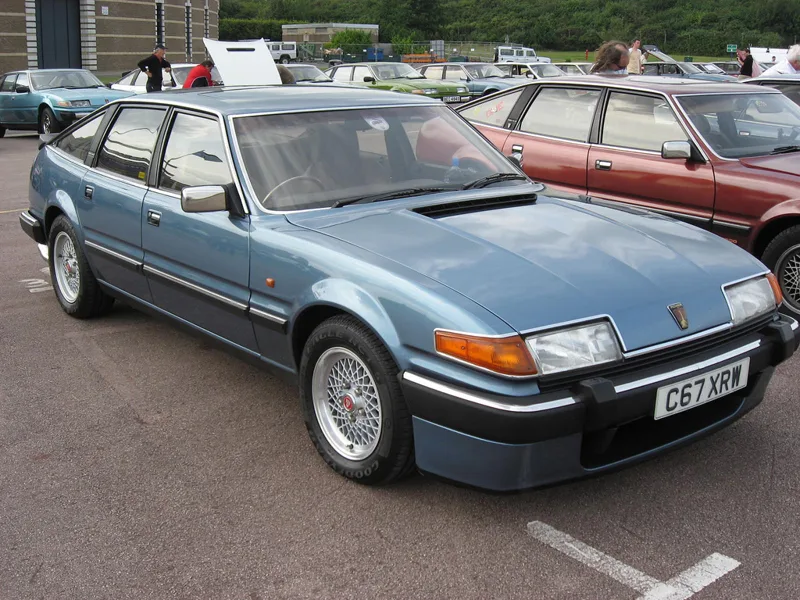
There was good news in 1976, when the Rover SD1 was voted European Car of the Year. It also began the rationalisation of passenger cars, replacing two overlapping models. A public investment of 140,000,000 pounds was approved to refit Longbridge for the ADO88 Mini replacement, but poor customer clinics and the launch of the Ford Fiesta in 1976 forced a redesign. The result, the LC8, went on sale as the Austin Mini Metro in 1980.
How did Michael Edwardes change the company?
Michael Edwardes was appointed chief executive in 1977 and embarked on a massive restructuring. He sold non-core businesses such as Prestcold and Coventry Climax, and he took on the militant unions, culminating in the dismissal of shop steward Derek Robinson in 1979. These steps were meant to pull the group back from collapse.
Edwardes reversed the Ryder policy of promoting the Leyland name and gave each brand more autonomy. BL Cars Ltd was split into Austin-Morris and Jaguar-Rover-Triumph, while Land Rover became a completely autonomous entity. The public use of the British Leyland name ceased, and the company was abbreviated to BL, with a new chevron logo for the Austin-Morris division.
The legal risk of poor engineering was also made plain. In Walton v British Leyland, decided in 1978, the court held the company liable for negligence over a design defect in the wheel bearings of the Allegro. The company knew about the fault but had decided against a recall.
What did the Honda alliance and Austin Rover achieve?
The alliance with Honda began in 1979 and produced the Triumph Acclaim in 1981, the first of many jointly developed models. In 1982 the car division was renamed Austin Rover Group, and Harold Musgrove replaced Ray Horrocks as chairman and chief executive. The new group now had a clearer structure to work with.
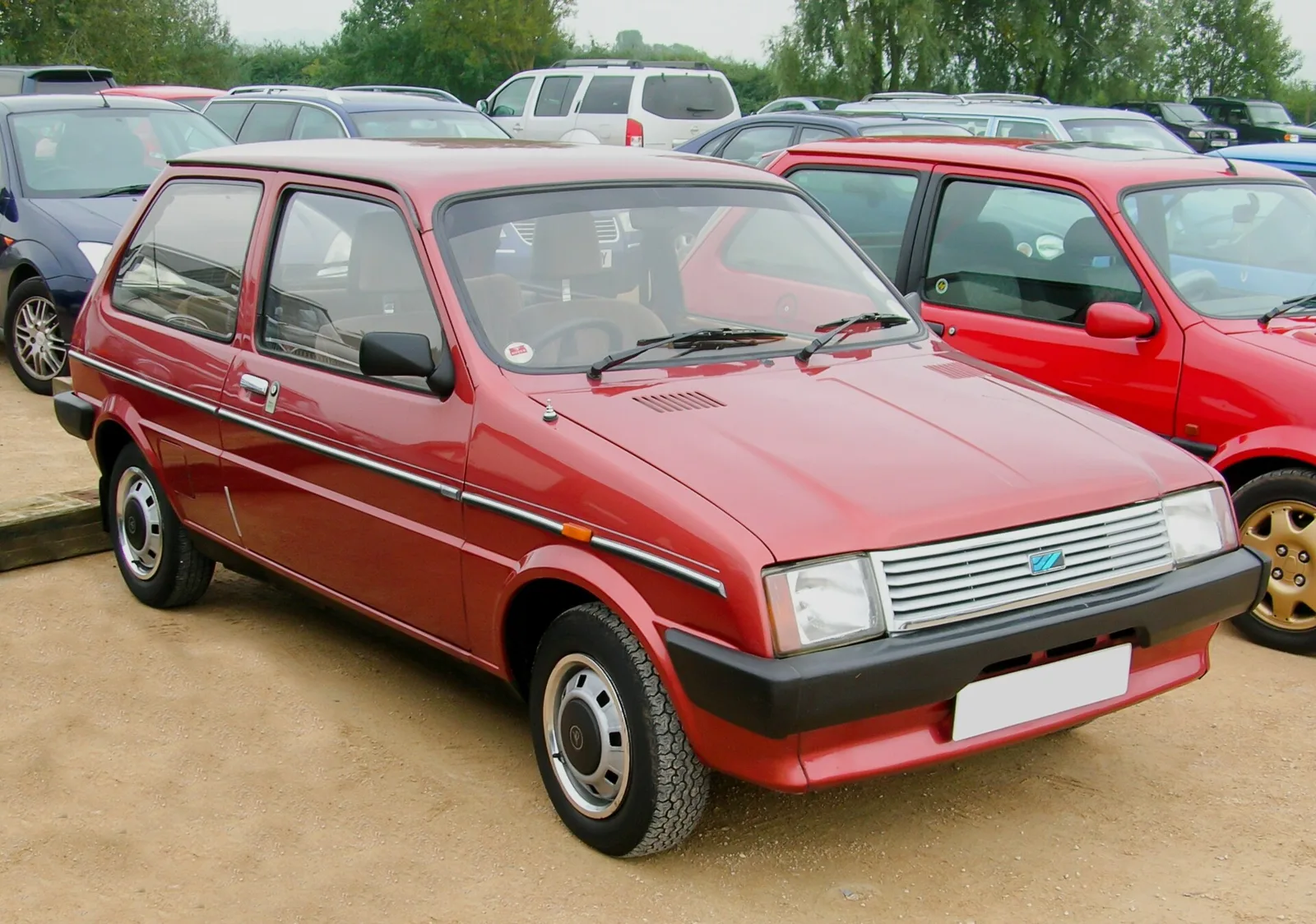
The Austin Metro was launched in October 1980 as a three-door hatchback, initially named the Mini Metro. It gave buyers a more modern and practical alternative to the ageing Mini, and it became one of the most popular cars in Britain. Its success was the strongest bright spot of the period, although it was not enough to change the group's broader problems.
The Acclaim was replaced in 1984 by the Honda-based Rover 200-series, and the final Acclaim ended the Triumph marque in the same year. Morris Ital production also ended in 1984, closing the Morris marque. In April 1984 the last large family cars were discontinued to make way for the single all-new Austin Montego.
How did British Leyland become the Rover Group?
BL plc was renamed Rover Group in 1986, when Graham Day became chairman and chief executive and the Rover 800 series launched as a joint Rover-Honda vehicle. The Austin name was dropped from the Metro, Maestro and Montego by 1988. In the same year British Aerospace bought the business and shortened its name to Rover Group.
BMW bought the Rover Group in 1994, and after years of investment that ended in heavy losses, it decided in 2000 to break up the empire. Ford bought Land Rover in 2000, while the remains of the volume car business at Longbridge became the independent MG Rover. That company went into administration in 2005, and Nanjing Automobile took over its assets.
SAIC then relaunched production at Longbridge in 2007. Ford, which had brought Jaguar and Land Rover together in its Premier Automotive Group, later sold most of those brands, and Tata Motors of India bought Jaguar and Land Rover by the end of 2008.
What happened to the plants and marques?
Longbridge was at one time the largest manufacturing plant in the world. It was the largest British car plant in the 1970s, with a workforce in the tens of thousands, and it was famous as the home of the Mini. The Mini Metro was built in a new part of the West Works. Its car production closed after the collapse of MG Rover in 2005.
Several plants closed during the Ryder and Edwardes years. The MG factory at Abingdon and the Triumph factory at Canley both closed in 1980, and the Solihull works became a Land Rover-only plant in 1981. Castle Bromwich, which employed about 9,000 workers in the 1970s, became Jaguar's main assembly plant.
Cowley, the main Morris plant, was one of the largest British car production sites throughout the BLMC era. In 1993 its North and South Works were sold to developers and demolished, and car production moved onto the former Pressed Steel site. BMW later used that site to assemble the modern Mini, which is one of the few lasting links to the group.
The Austin marque itself faded away. The Metro, Maestro and Montego continued without a marque name, and the Maestro and Montego ceased in 1994. The Metro and the 100-series production ended in 1997, which marked the last of the former Austin models.
Key British Leyland milestones
| Year | Milestone |
|---|---|
| 1968 | BLMC formed on 17 January from Leyland Motors and BMH |
| 1975 | Ryder Report in April, British Leyland Limited formed |
| 1977 | Michael Edwardes appointed chief executive |
| 1980 | Austin Metro launched in October, Abingdon and Canley close |
| 1982 | Austin Rover Group formed |
| 1984 | Montego launched in April, Morris Ital production ends |
| 1986 | BL plc renamed Rover Group |
| 1988 | British Aerospace buys the business |
| 1994 | Rover Group sold to BMW |
| 2005 | MG Rover goes into administration |
| 2007 | SAIC relaunches production at Longbridge |
| 2008 | Tata Motors buys Jaguar and Land Rover |
What survives of British Leyland today?
Mini, Jaguar Land Rover and Leyland Trucks are the most prominent former parts of British Leyland that still exist. SAIC still operates its UK base from the former Longbridge site, and Ashok Leyland uses the Leyland name in India independently of any former BL subsidiary.
What was the legacy of the Leyland years?
The British government invested more than 3 billion pounds in trying to rescue the company, a figure that is not adjusted for inflation. Many of its brands survive on the books of several companies today, though the group itself did not. The Mini remains the clearest example of a design that outlived the business that built it.
Its history is a lesson in what happens when product planning, labour relations and brand strategy fail together. Each failed attempt at rationalisation made the next one harder, and the final break-up left the British car industry with far fewer British owners than in 1968.