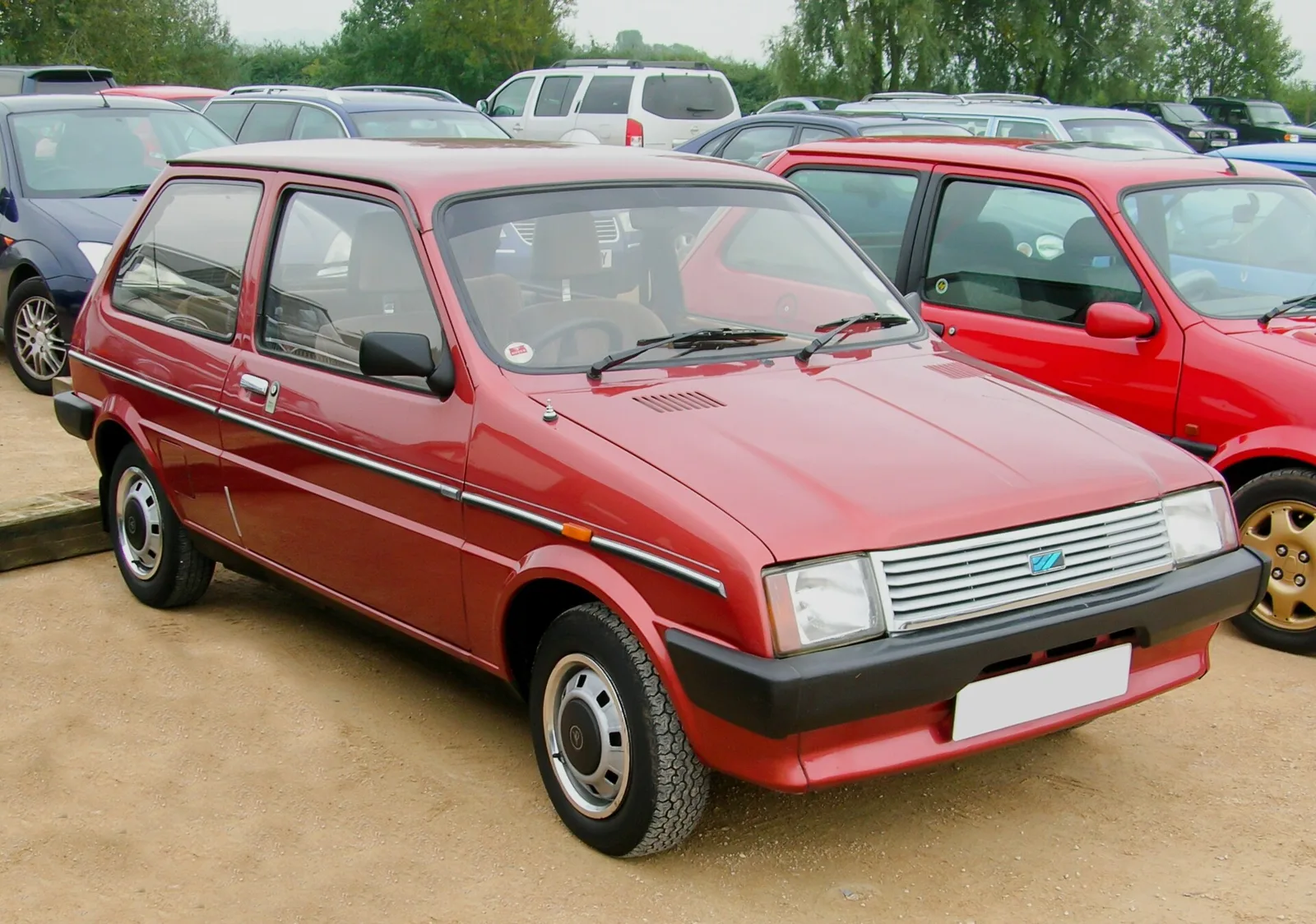
British Leyland's mass-market car arm from 1982 to 1989, with the Metro, Maestro, Montego and the Honda-linked Rover models.
Formed in 1982 from BL Cars, Austin Rover Group built the Metro, Maestro and Montego, plus the Honda-linked Rover 200 and 800. Michael Edwardes' restructuring steadied the business, and in 1988 the group was passed to British Aerospace. Its name gave way to Rover Group in 1989.
Austin Rover Group was British Leyland's car business from 1982 until it was renamed Rover Group in 1989. It built the Metro, Maestro and Montego, and its Honda-linked Rover models carried the company through its revival before the government sold the group to British Aerospace in 1988.
How was Austin Rover Group formed?
Austin Rover Group was created in 1982 as the mass-market car subsidiary of British Leyland. It replaced BL Cars Ltd, which had been known as Leyland Cars and which encompassed the Austin-Morris and Jaguar-Rover-Triumph divisions. Jaguar then regained its independence, and the Triumph and Morris marques were retired.
The new leaner business focused on the Austin and Rover marques. The Morris and Triumph names lingered within the group until 1984, when both were dropped. The Austin Rover name was meant to give British Leyland a fresh image, after industrial unrest and poor cars had damaged its reputation during the 1970s. BL remained the holding company's name.
The name changed several more times. In 1981 BL Cars Ltd had already become Austin Rover Group Ltd, and in 1989 the business adopted the name of its parent company, Rover Group. Although the two entities were considered one and the same, they remained legally separate until the end.
The mass-market arm of British Leyland that built the Metro and Maestro and was renamed Rover Group in 1989.
How did Michael Edwardes change the company?
Sir Michael Edwardes, a South African-born corporate troubleshooter, was appointed to turn British Leyland around. He dismissed the Longbridge union leader Derek Robinson, known as Red Robbo, in 1979, after BL gathered evidence that it said showed his actions were aimed at damaging the company.
Edwardes then began a ruthless programme of closures and sell-offs. The MG assembly plant at Abingdon and the Triumph plants at Speke and Canley were among the biggest casualties. BL pulled out of whole markets too, and the Leyland tractor range was sold to Marshall, while Jaguar was privatised in 1984.
The most important decision was a collaboration with Honda. The first product of that alliance was the Triumph Acclaim, which paved the way for a range of cars that spearheaded the company's revival during the 1980s and 1990s.
Edwardes stepped down as chairman in 1982, and Harold Musgrove replaced him. Musgrove took over as the restructuring continued into the 1980s.
What were the Metro, Maestro and Montego?
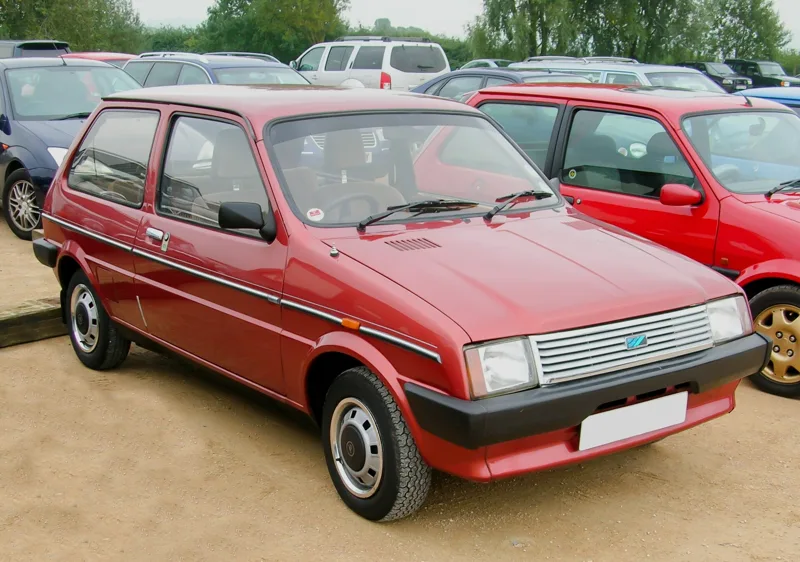
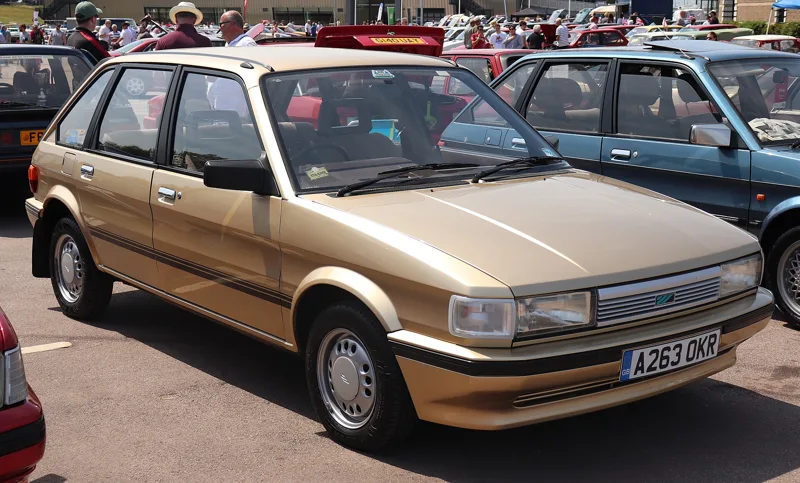
The Austin Metro, launched in 1980, gave the firm a competitive supermini and was among Britain's top five selling cars through the 1980s. The Maestro arrived in March 1983 and the Montego in April 1984, both aimed at the large volume of family car buyers.
The Metro was the best selling supermini in Britain for two years early in the decade. At its height in 1983 it ranked third among British cars, with over 130,000 units sold.
The Maestro was initially very popular and peaked in 1984 at more than 80,000 sales, when it was Britain's sixth best selling car. Sales dipped towards the end of the decade, and by 1989 it had fallen to 19th place with fewer than 40,000 sales.
The Montego sold well, becoming Britain's seventh best selling car in 1985 and 1986. Even so, it could not match the sales of the established favourites, the Ford Sierra and Vauxhall Cavalier. It had been developed when the company's competitors were the Morris Marina and Princess, and it replaced the Morris Ital and Austin Ambassador.
How did the Honda-linked Rover models change things?
The Rover 200 of 1984 was the second product of the Honda alliance. It succeeded the Triumph Acclaim and became one of the few strong sellers in the small family saloon class of its time. It showed the collaboration was working, and it helped the company regain its share of the sector.
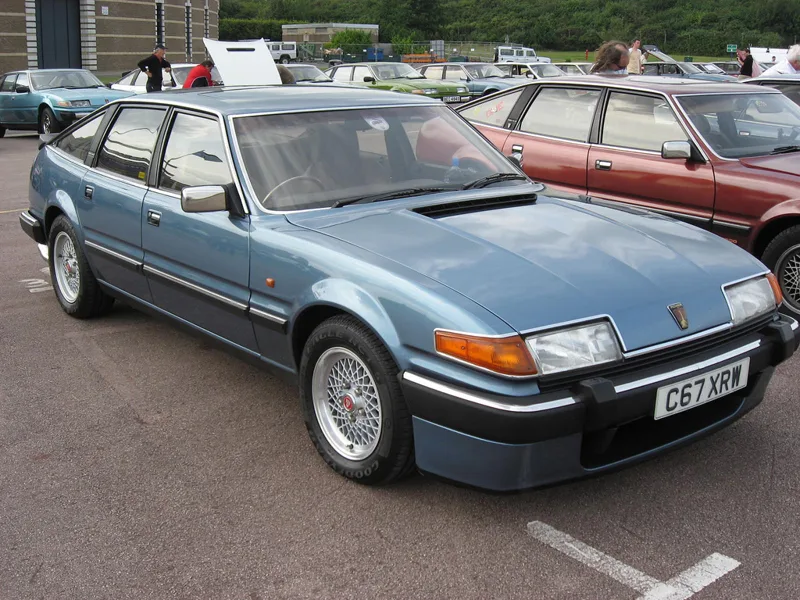
The Rover 800, launched in July 1986 as the third Honda product, shared its development with the Honda Legend. It competed with the Ford Granada and the Vauxhall Carlton. In America it was sold as the Sterling, but quality problems kept sales low and the venture ended quickly.
Together the Maestro, Montego and Rover 200 meant the company was selling around 100,000 cars of that size each year in Britain during the mid to late 1980s. That volume went a long way toward regaining its share of the family car sector after the Allegro was scaled down from 1980.
Why did the MG hot hatches matter?
Austin Rover chose hot hatches over sports cars. The MGB and the Triumph TR7 were not replaced, because the company judged that sports cars had fallen out of favour and that buyers were moving toward hatchbacks after the Volkswagen Golf GTI.
By 1985 Austin Rover had launched performance variants of the Metro and Maestro hatchbacks and the Montego saloon, all badged as MG models. They proved popular, especially the MG Metro. Roughly one car in ten of the Metro, Maestro and Montego output carried MG badges during 1982 to 1991.
The final launch of the business was the MG Maestro Turbo in 1989. It used a 2.0 turbocharged engine and reached a top speed of nearly 130 mph (210 km/h), which made it among the quickest hatches built. The Rover Group kept building the MG Metro until 1990, when the Rover Metro GTi took its place.
How did the Austin name disappear?
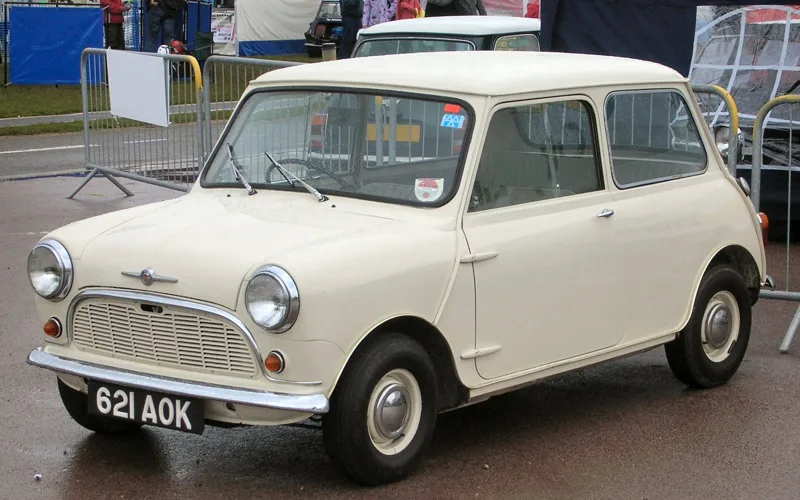
The Austin brand was shelved in 1987, and the Metro, Maestro and Montego went on sale under just their model names. The Rover badge was not used on those cars in the UK market, and the Austin badging was removed from the Mini, Metro, Maestro and Montego after 1987.
The blue chevron logo, which combined a blue section for Austin and Morris with green slashes for Rover, Triumph and Jaguar, was introduced in 1978 and expanded in 1983 to represent most of BL's marques. It was officially in use until 1988, when it gave way to Rover's longship badge.
The rebrand came at a busy moment. The Land Rover Discovery and the second-generation Rover 200 were entering production around the time of the change, and the new Metro was only months from launch. By 1991 every dealer sign had switched to the new Rover branding.
How did the Acclaim and the Honda Ballade fit in?
The Triumph Acclaim, launched in 1981, was a rebadged Japanese Honda Ballade and the successor to the Dolomite. Honda Ballade production at Cowley began in 1985, a car that looked identical to the Rover 200 but used some of its own engines and offered a higher level of specification.
The Acclaim took over the production lines of the Austin Maxi, which had been discontinued in 1981 after 12 years. The Rover 200 Mk1 of 1984 then succeeded the Acclaim and spelled the end of the Triumph marque.
The Acclaim and the Ballade were the first visible results of a partnership that the company needed. Without them the group would have had little in the way of new small family cars during the early 1980s.
What happened to the Princess, Ambassador and Allegro?
The Princess range ended in 1981 after nearly seven years in production. The Ambassador appeared in 1982 as a facelifted Princess, and its production ended in November 1983. The Austin Allegro was discontinued in 1982 after nine years.
The Maestro launched in 1983 to replace the Allegro and Maxi ranges. The Montego went on sale in April 1984 as the successor to the Morris Ital, and that ended the Morris marque after 72 years. The Montego and Maestro were the core of the company's family car line-up from then on.
The Maestro and Montego were fundamentally better vehicles for their time than the Allegro and Marina they followed, but they did not sell as well as their predecessors. Buyers had grown used to the earlier cars, and Austin Rover had to fight harder for the same volume.
How did Land Rover fit into Austin Rover?
Land Rover stayed within the British Leyland group and grew strongly in the late 1980s. The Range Rover was sold officially in America from 1987, and the Discovery entered production in 1989 alongside the new Rover 200 series.
Land Rover was sold alongside the rest of the group in 1988, and it was later passed to Ford. The Discovery used the same chassis and many body panels as the Range Rover, which allowed the group to share parts across models and close satellite factories.
Why did the 1980s models fall short of earlier sales?
Sales were reasonably strong but never reached the level of some earlier British Leyland cars. The Maestro and Montego trailed the Allegro and Marina they replaced, even though they were the better engineered cars.
The Metro was the exception and the group's real success story. It was regularly among the top five sellers in Britain through the 1980s, and it was the car that kept the brand relevant while the bigger models struggled to match their predecessors.
What happened to the group after the Rover years?
In 1986 the parent BL plc took the Rover Group name, and its truck and bus arms were sold to DAF and Volvo. The spare parts arm Unipart was spun out in 1987 through a management buyout. In 1988 the government sold the whole Rover Group to British Aerospace.
BMW bought the group in 1994 and kept it for six years before selling it to the Phoenix Consortium in 2000. The MG and Rover marques then became MG Rover, which lasted five years before going bankrupt. Land Rover went to Ford, which had bought Jaguar in 1989.
MG production was revived in 2007 by Nanjing Automobile. Ford bought the rights to the Rover name in 2006, and in 2008 the name passed to Tata Motors, which combined Jaguar and Land Rover into one group. The marque has not been revived.
What were the key Austin Rover dates?
| Year | Milestone | Detail |
|---|---|---|
| 1981 | BL Cars renamed | Becomes Austin Rover Group Ltd, Triumph Acclaim launched |
| 1982 | Edwardes steps down | Harold Musgrove replaces him as chairman |
| 1983 | Maestro launched | March 1983, with the MG Maestro 1600 sports model |
| 1984 | Rover 200 Mk1 | Honda alliance car, the end of the Triumph marque |
| 1986 | Rover 800 | July 1986, developed alongside the Honda Legend |
| 1987 | Austin shelved | Metro, Maestro and Montego sold under model names |
| 1988 | Sold to British Aerospace | The government sells Rover Group |
| 1989 | Rover Group | Final launch is the MG Maestro Turbo |