How William Morris built Britain's biggest car maker from bought-in parts at Cowley, through the Morris Minor and BMC, to the end of the name.
Morris Motors was a British car maker formed in 1919 to take over William Morris's WRM Motors. Built at Cowley, Oxford, it became the UK's largest car manufacturer in 1924, produced the Minor and merged into BMC in 1952, and the Morris name was abandoned in 1987.
Morris began when William Morris, who had been selling and repairing cars, started making them from parts bought in from other firms. By 1924 the company was the largest car maker in Britain, and the Morris name carried on through the Minor and the 1952 merger into BMC before it was finally abandoned in 1987.
Where did Morris Motors come from?
Morris Motors grew out of WRM Motors Ltd, which began in 1912 under William Morris. He had been selling and repairing cars and then moved into building them, planning a light car made from bought-in components. Morris Motors Limited was formed in 1919 to take over WRM's assets and carry on making the same vehicles.
The bought-in approach was the heart of the plan. Using components from other suppliers let Morris keep ownership within his own capital, so the business could grow on the money he already had. The works that assembled the cars opened in 1913 inside a former military college at Cowley, on the edge of Oxford.
Built from bought-in parts at Cowley, Morris became Britain's largest car maker by 1924.
What was the first Morris car?
The first car was the two-seat Morris Oxford Bullnose, built at the Cowley works. Its chassis was too short for a four-seat version, and its 1018 cc engine was too small to make one practical. Morris then turned to Continental of Detroit for a 1548 cc engine, which gave the design a larger unit to work with.
Supply was the real constraint. White and Poppe could not supply the engines Morris needed, so he looked further afield for a larger unit. The same pattern of buying parts from outside firms ran through the whole early business, and the works was organised around putting those parts together.
Engine work also changed over time. Morris Commercial moved engine production from batch to flow, a shift that made volume output possible and gave the company the scale it needed to compete.
How did Morris become Britain's largest car maker?
Morris became the UK's biggest car manufacturer in 1924, when it held 51% of the home market. By 1926 it produced 42 per cent of British car manufacture. The rise came from a combination of cut prices, bought-in parts and a factory that kept growing to meet demand.
Output rose from under 300 units a week to 1,200, and by 1924 the factory was making 2,000 units a week. The figures show how quickly the production system expanded once flow methods were in place, with far more cars leaving the works each week than in the early years.
Buying in companies was part of the strategy as well. In 1923 Morris bought Hotchkiss's Coventry business, which later became the Morris Engines branch. Each acquisition added control over another link in the supply chain, although it also tied the group's fortunes closely to one man's decisions.
How did the MG name start?
The MG name began with Cecil Kimber, who ran Morris Garage, a sales, hire and repair business in Oxford. In 1924 he started building sporting Morris cars and labelled them MG. The cars sold well enough that a separate MG factory was later set up at Abingdon-on-Thames, Berkshire.
The MG Car Company joined Morris Motors in 1935, the same year the group acquired the Wolseley car business. Together those two additions gave Morris a sporting marque and a second car brand, and the group promoted its sporting and everyday cars side by side.
The sporting badge gave the group a second identity, separate from the everyday cars that carried the Morris name. It also showed how far the business had travelled from its origins as a repair shop in Oxford.
What was the Morris Minor?
The Morris Minor was a small car launched in 1928 and designed by Leonard Lord. It used an 847 cc engine from Wolseley Motors, which Morris had recently acquired, and it gave the MG Midget its base. The car also helped Morris through the economic depression.
Lord had been sent to modernise Wolseley's works and products, and the Minor was an early outcome of that work. The Morris Eight was unveiled at the 1934 London Motor Show as the Minor's successor, a car pitched directly against the Ford Model Y.
What did Leonard Lord change at Cowley?
Leonard Lord became Morris's managing director in 1932 and set about updating how the Cowley works operated. He introduced a moving assembly line and created what was then Europe's largest integrated car plant there. Lord left in 1936 after 15 years, following a falling-out with Morris.
The partnership between the two men had been productive but strained. Morris and Lord fell out before the break came in 1936, and Lord's departure closed a period in which Cowley moved from assembling bought-in parts toward a modern production plant.
The changes show how far the works had moved from small batches toward volume output. Lord's reforms were the physical foundation for the factory's later role in the war and in the post-war range.
Did Morris make medical equipment?
Yes. On a London visit during a 1938 polio outbreak, Lord Nuffield came across a Both iron lung and commissioned an improved design. About 1,700 machines were built at the Cowley works and donated to hospitals across Britain and the Empire.
The machines were built with the methods of car assembly, which made large numbers practical. It is an unusual example of a car works turning to medical production, and it shows how the same skills could serve very different needs.
What role did Morris play in the Second World War?
Morris agreed in 1938 to build, equip and manage a large new factory at Castle Bromwich for Supermarine Spitfires, at government expense. No Spitfires had been delivered by May 1940, although 60 a day had been expected. The Ministry of Aircraft Production then took over the plant, and Cowley moved to aircraft repair and Tiger Moth production.
Morris Bodies switched to making jerry cans after a major air raid damaged its factory. Millions of the cans were produced during and after the war, a large but unglamorous contribution to the war effort.
Morris also built military vehicles in large numbers. Some 10,200 C8 Quad prime movers were made, along with about 2,200 Light Reconnaissance Cars, 100 CS9 armoured cars and some 21,319 CS8 15cwt light trucks.
What did Morris build after the war?
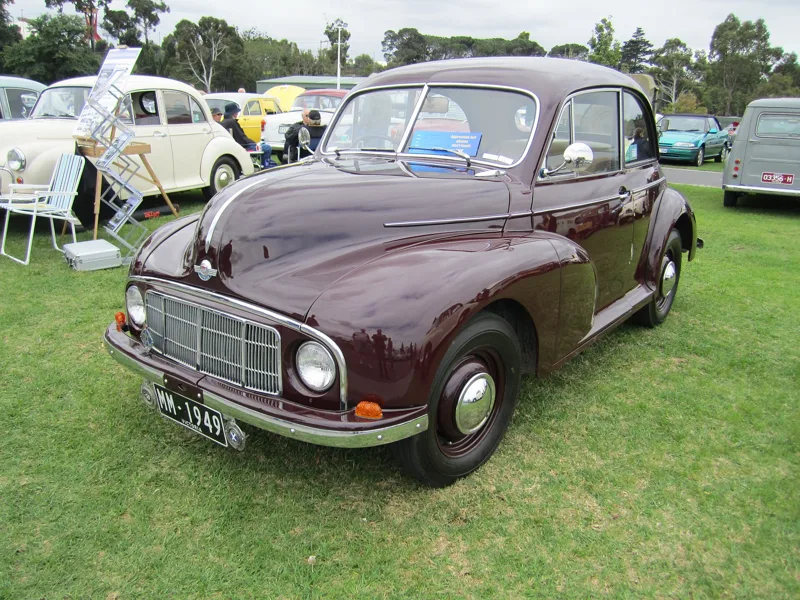
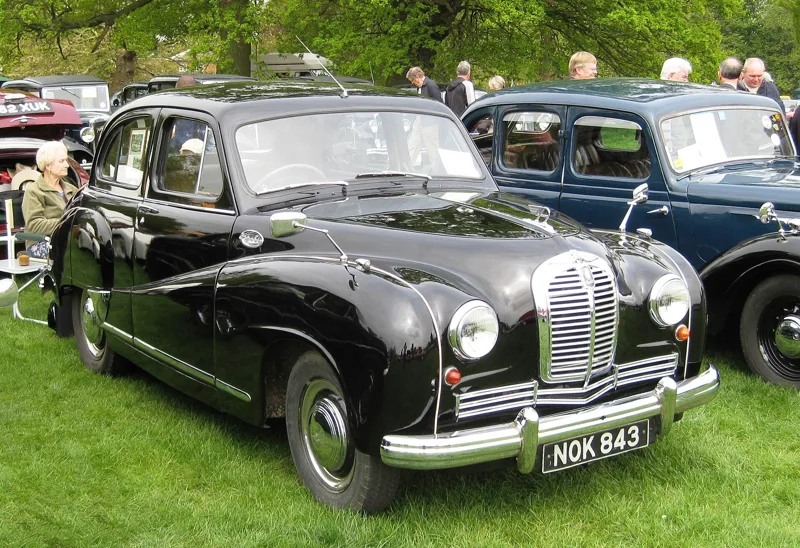
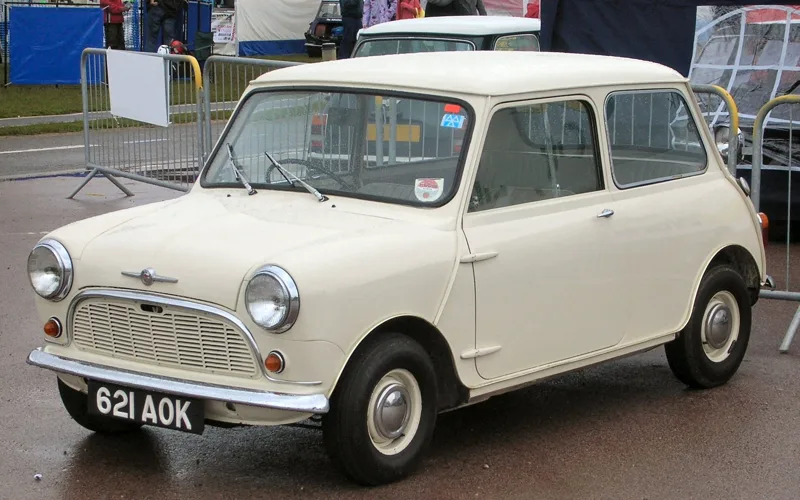
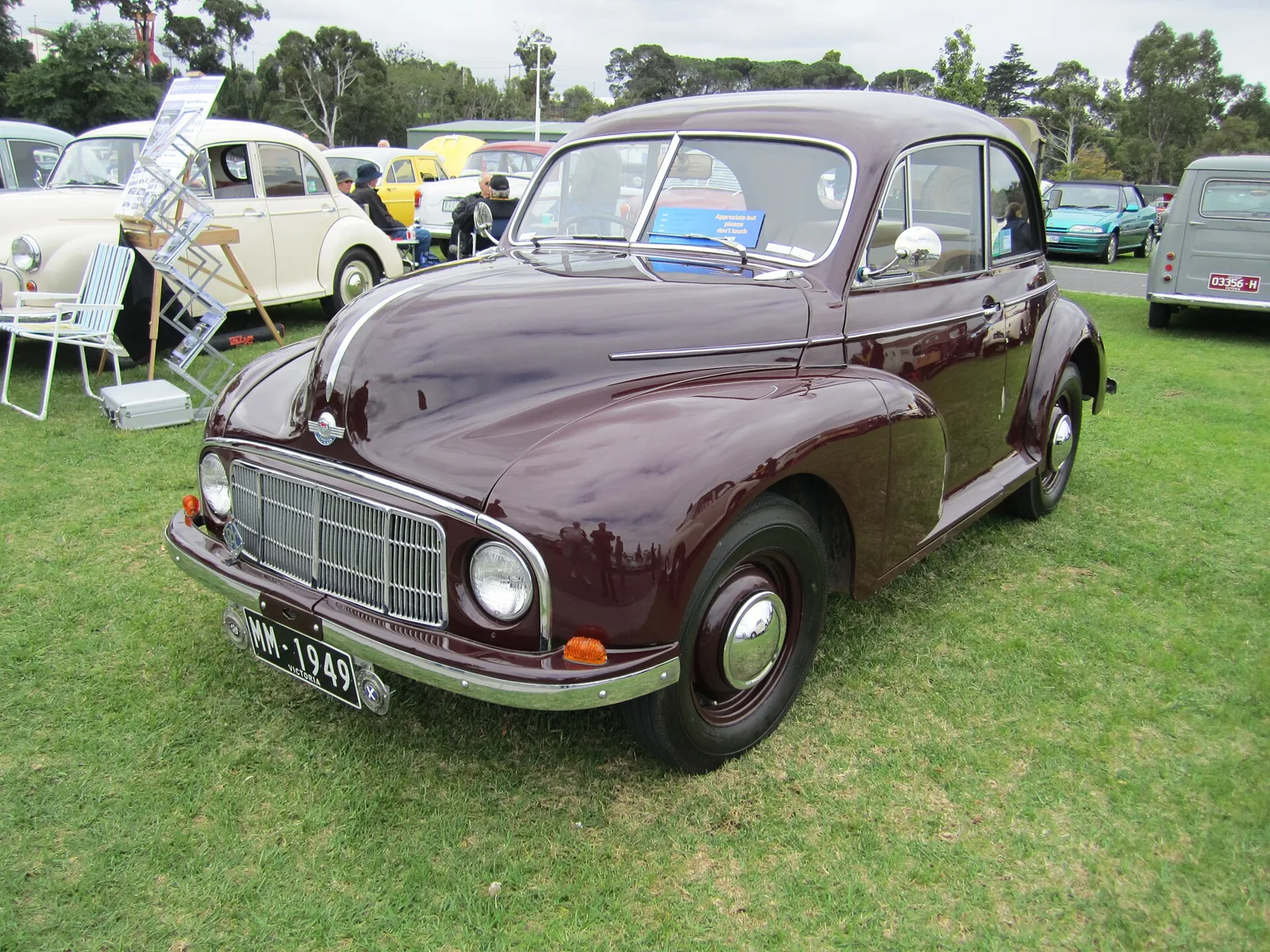
Production resumed using the Eight and Ten designs from before the war. In 1948 the Eight was superseded by a Minor drawn by Alec Issigonis, later the Mini's designer. The Ten's replacement was the 1948 Oxford MO, which was styled like a larger Minor.
The Oxford MO was rated at 14 hp from 1948, while the Minor MM carried an 8 hp rating from 1948 to 1952. Both models kept the tax-based naming that Morris had used for decades, so the numbers in the names did not describe real output.
The 1956 Oxford III became the basis for India's Hindustan Ambassador. Hindustan Motors kept building Morris Oxford vehicles in India until 2014, long after the brand had left Britain.
What was the British Motor Corporation?
The British Motor Corporation, known as BMC, was formed in 1952 when Nuffield merged with Austin. Morris became one of several marques inside the group, and BMC used badge engineering across them. The group's structure shaped the Morris name for the rest of its life.
Badge engineering meant that closely related cars could carry different names. A Morris could share its underpinnings with a car sold under another marque, so buyers were offered a range of badges on similar vehicles.
That approach gave the group a wide range but blurred the identities of its individual brands. For Morris, the effect was a slow loss of separate products over the years that followed.
When did the Morris name finally end?
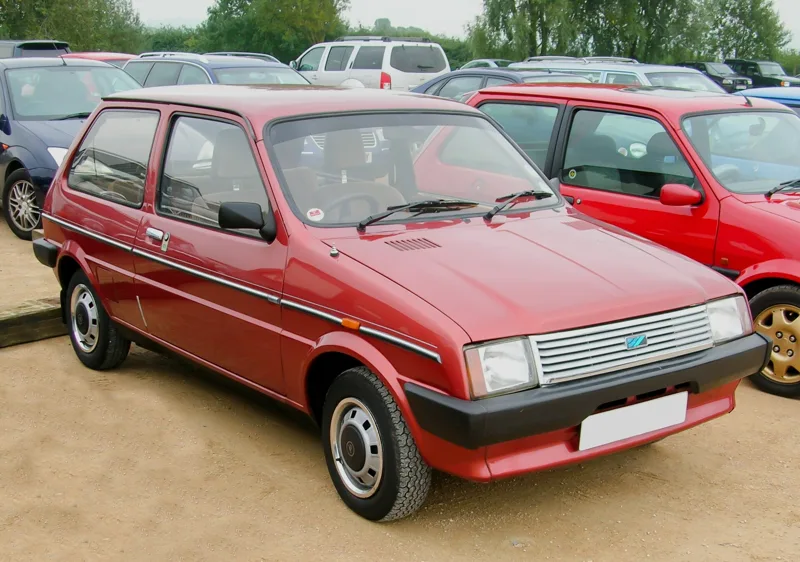
The Morris Ital, a restyled Marina, was the last Morris-badged passenger car, and production ended in the summer of 1984. The Austin Montego replaced the Marina and Princess in April 1984. The brand was then abandoned in 1987, after the last Morris, a van variant of the Austin Metro, had been built.
The Ital was essentially a facelifted Marina, so the Morris name ended on a car the company had already designed and built. Its production run was short, and it closed the chapter that had started with the Bullnose.
What happened to the Cowley works?
Little of the original Morris works survives. British Aerospace sold the Cowley site in 1992, and it became the Oxford Business Park. The neighbouring Pressed Steel site is now where BMW builds the Mini at Plant Oxford, which has produced the car since its launch in 2001.
Pressed Steel had its own link to Morris. The Pressed Steel Company was founded in 1926 with Budd. Morris stepped away in mid-1930, and Budd later handed its stake to British owners in early 1936.
Today the district is better known for business parks and car manufacturing than for the works that once dominated it.
Who owns the Morris name today?
The Morris trademark belongs to China-based SAIC, which bought the name from Nanjing Automotive, a subsidiary that had gone bankrupt. The name has not appeared on a passenger car since 1984, so it now survives mainly as a trademark rather than an active model range. That ownership structure is one reason the name has been hard to bring back.
The trademark's history is tangled, and few British readers would now recognise the name as a living car brand.
Did Morris attempt a revival?
There were attempts, though none put a Morris car back into production. A 2005 bid included a Morris Minor revival, but it was led by Martin Leach and lost out to Nanjing Automobile Corporation, and no new Minor ever reached production. A later effort came in 2019 with the Morris Commercial JE electric van.
The Morris Commercial JE electric van was unveiled in November 2019, with a planned launch in 2021. It was a commercial vehicle rather than a passenger car, so the Morris car range stayed in the past.
What does the Morris badge show?
The badge carries an ox wading through the River Isis, the traditional emblem of Oxford, where the company's original Morris Garage operated and where the Cowley works stood. The badge tied the brand to its home city for the whole of its run.
William Morris's business grew out of Oxford, and the badge kept that link alive for the cars that carried it. Those cars were built at Cowley, the works that had begun in 1913 and became the centre of the group.
Which Morris models defined the range?
Many Morris names reflect tax horsepower rather than actual output, so the figure in a model name is a tax rating. The table below lists the main cars with their build years and ratings, from the Bullnose to the Ital.
| Model | Built | Detail |
|---|---|---|
| Morris Oxford Bullnose | From 1913 | 12 or 14 hp, the first car |
| Morris Minor | 1928 to 1932 | 8 hp, designed by Leonard Lord |
| Morris Eight | 1935 to 1948 | 8 hp, direct response to the Ford Model Y |
| Morris Ten | 1932 to 1948 | 10 hp |
| Morris Oxford MO | From 1948 | 14 hp, styled like a larger Minor |
| Morris Minor MM | 1948 to 1952 | 8 hp, designed by Alec Issigonis |
| Morris 1100 | 1962 to 1971 | Later BMC-era car |
| Morris 1800 | 1966 to 1975 | Later BMC-era car |
| Morris Ital | 1980 to 1984 | Restyled Marina, last Morris-badged passenger car |