How the 1952 Austin and Morris merger created Britain's largest car group, the Farina designs, the Mini's thin margins and the road to British Leyland.
The British Motor Corporation was a British carmaker formed in early 1952 by merging Austin and Morris. It held 39% of British output that year and sold cars under Austin, Morris, MG, Riley and Wolseley badges. Losses and falling market share led to the 1966 Jaguar merger and the 1968 creation of British Leyland.
The British Motor Corporation, usually called BMC, was the largest British car company of its day. It came together in 1952 when Morris and Austin combined, and it sold cars under a wide range of badges, from Austin and Morris to MG, Riley and Wolseley. Its later years show how familiar names can still lose money on popular models.
How was BMC formed in 1952?
BMC was formed in early 1952 to give effect to an agreed merger between Morris and Austin. Exchanging Morris or Austin shares for shares in the new holding company became effective in mid-April 1952. Morris Motors had been the holding company of the Nuffield Organization's productive businesses, and it owned MG, Riley and Wolseley.
The first chairman was Lord Nuffield, who was William Morris. Austin's Leonard Lord took over at the end of 1952 and remained until his 65th birthday in 1961. Lord handed managing director duties to his deputy, George Harriman, in 1956, although in theory at least he kept a firm hand on the group.
Austin was the dominant partner, largely because of the chairman. The group's headquarters were at Austin's Longbridge plant near Birmingham. Longbridge had been thoroughly modernised in 1951, and it compared very favourably with Nuffield's 16 different and often old-fashioned factories scattered across the Midlands.
Engineering was tidied up as well. Morris engine designs were dropped within three years, and every new car design received an ADO number, a coding system whose letters are expanded in more than one way.
A 1952 merger built the largest British car company of its day, and the badges it inherited kept competing with one another.
Why did BMC's profits decline?
BMC's volumes held up well through the 1950s and 1960s, yet its market share and profitability fell as the market moved from shortage to competition. Austin's management systems, especially for cost control and marketing, were weaker than Nuffield's. Those problems led to the 1966 Jaguar merger and the British Leyland deal of 1968.
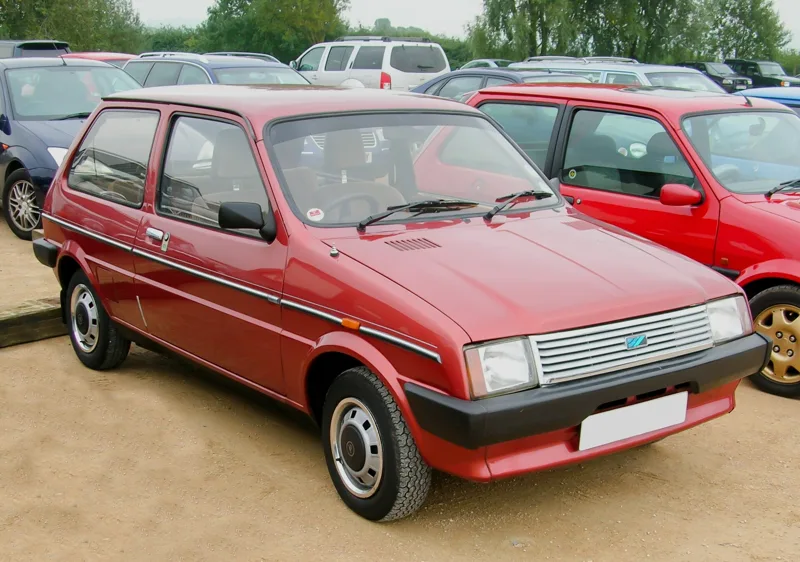
The clearest example was the Mini. Ford analysed it and concluded that BMC must have been losing 30 pounds on every one sold. The Mini was the biggest-selling car in the range, so its thin margins mattered far more than a weak model would have.
Loyalty was once a strength. At the time of the mergers, each marque had an established dealer network, and buyers tended to stay loyal to a particular badge. The same marques also competed against one another, though some had larger ranges than others. Riley and Wolseley were selling in very small numbers, and styling was getting distinctly old-fashioned. Lord broke with habit by hiring an external stylist to update the line.
What was the Farina range?
Battista Farina was hired in 1958 to redesign BMC's entire car line. The result was three Farina saloon families, each badge-engineered to suit several BMC marques. The compact Austin A40 Farina of 1958 is considered by many to be the first mass-produced hatchback.
Its small estate version had a horizontally split tailgate, and its size and layout would today be seen as those of a small hatchback. A Mark II A40 Farina followed in 1961 and was built through 1967. The compact cars used the A-Series engine.
The mid-sized Farinas arrived in 1958 with the Wolseley 15/60. Their stablemates included the Riley 4/68, the Austin A55 Cambridge Mk. II, the MG Magnette Mk. III and the Morris Oxford V, and they used the B-Series straight-four engine. The design was also licensed in Argentina as the Siam Di Tella 1500, with a Traveller estate and an Argenta pick-up. Most of the British versions lasted until 1961, while the Argentine cars remained until 1966.
A new Farina body followed, and most models were renamed. The A60 Cambridge, the MG Magnette Mk. IV, the Morris Oxford VI, the Riley 4/72 and the Wolseley 16/60 were built until 1968, with no rear-wheel drive successor.
The third and largest Farina was the Austin A99 Westminster, launched in 1959 with the C-Series straight-six engine. It was updated in 1961 as the A110 Westminster, and the large Farinas remained in production until 1968.
Which models did BMC sell?
| Model | Years | Notes |
|---|---|---|
| Morris Minor | 1948 to 1971 | Also built until 1972 in New Zealand |
| Austin A30 | 1951 to 1956 | Small family car |
| Austin A40 Farina | 1958 to 1967 | Debuted in 1958, Mark II produced from 1961 |
| Morris Mini Minor (ADO15) | 1959 onwards | Later the Austin Seven, then the Austin Mini |
| Austin A99 Westminster | 1959 to 1968 | Large Farina with C-Series straight-six engine |
| Austin A110 Westminster | 1961 to 1968 | Updated large Farina |
| Mini van | 1960 onwards | Car-based light van |
| Morris FG | 1960 to 1968 | Light lorry |
| Austin FX4 Taxi | 1958 onwards | London taxi and hire cars |
| MG TF | 1953 to 1955 | Sports car |
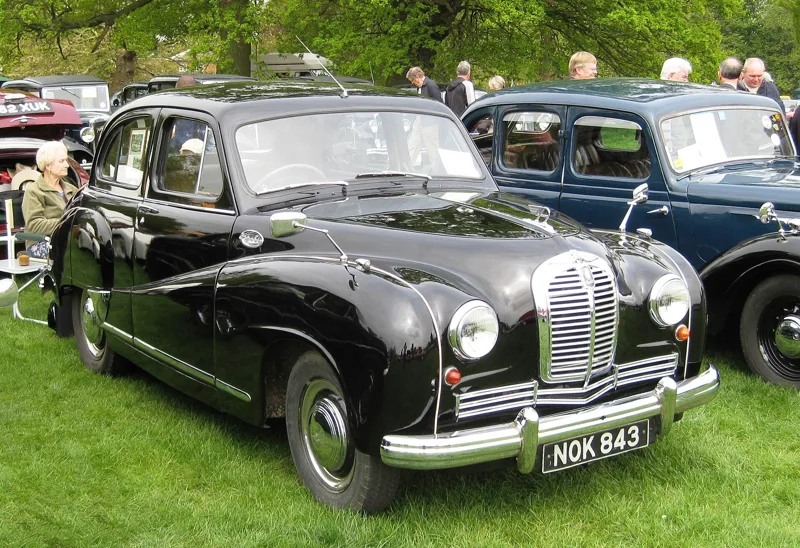
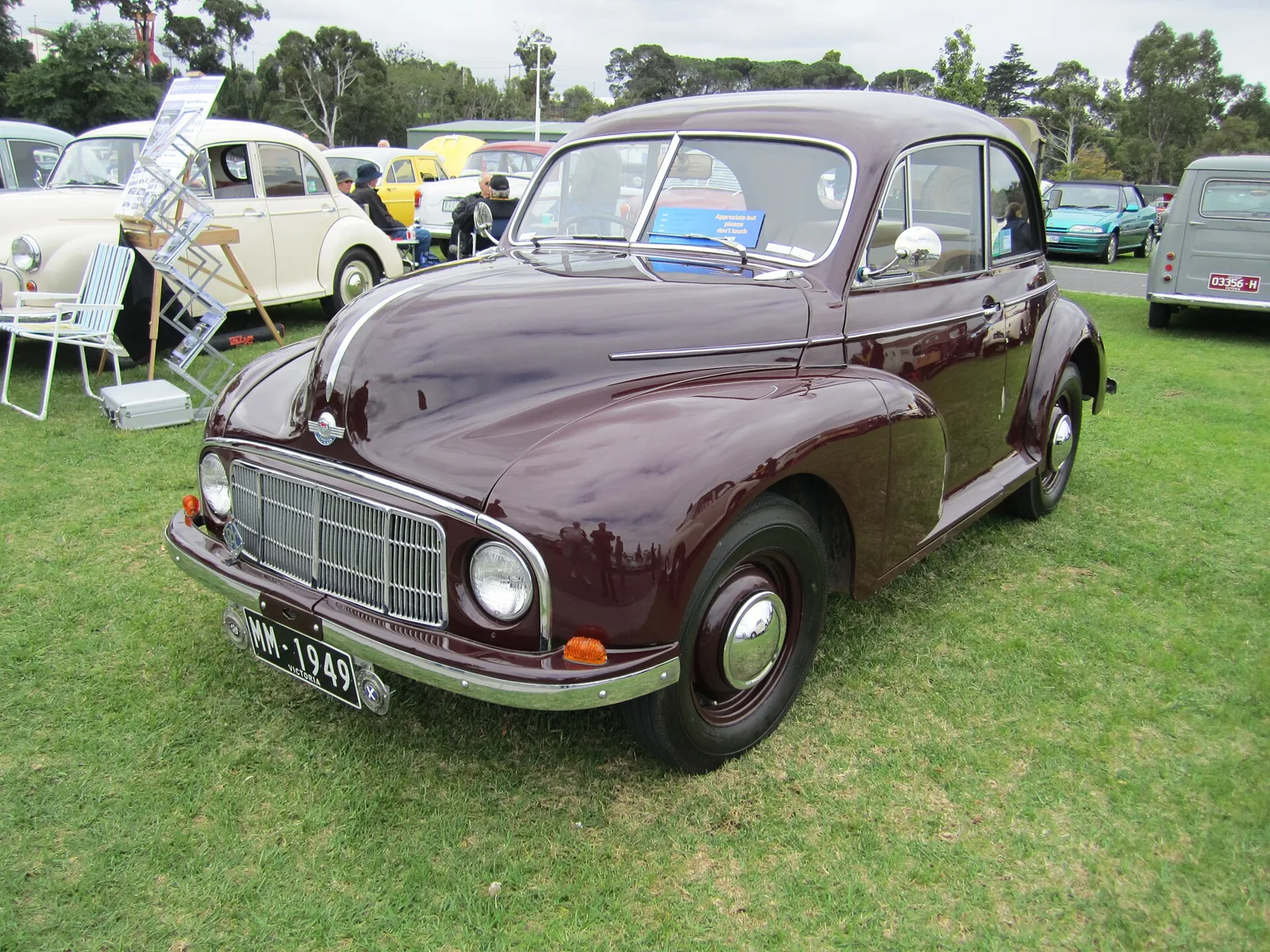
Several inherited names carried over into the early years of the group. The Austin A125 Sheerline ran from 1947 to 1954, the Austin A30 from 1951 to 1956, and the Wolseley 6/80 from 1948 to 1954. The MG TD ran from 1949 to 1953, and the MG TF from 1953 to 1955. The Morris Minor, built from 1948 to 1971, outlasted most of the rest.
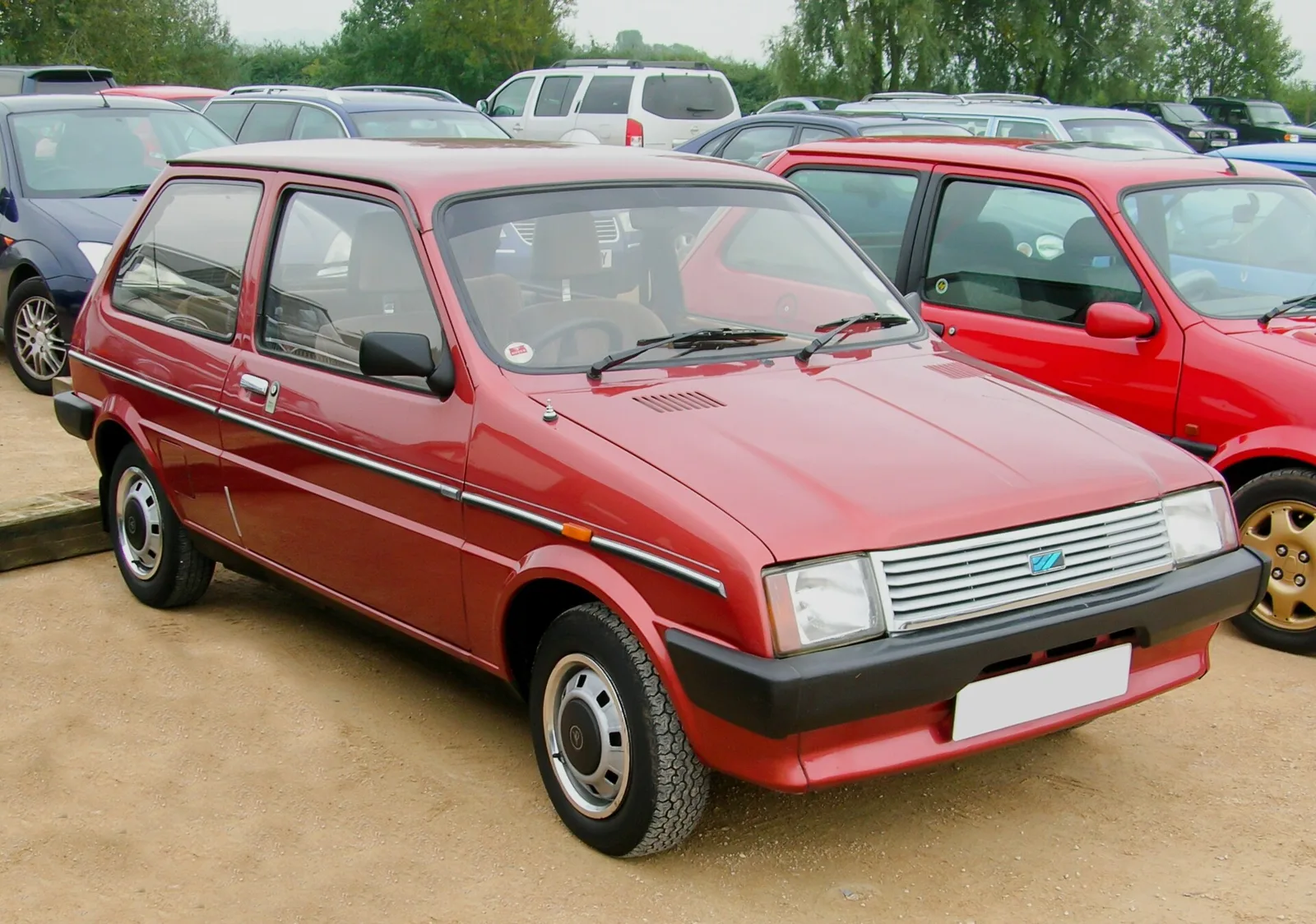
The Mini had its own naming story. The ADO15 entered production in 1959 as the Morris Mini Minor, and the Austin version was first called the Austin Seven before the name was changed to Austin Mini, because the Morris name had caught the public imagination.
What commercial vehicles did BMC make?
Most BMC-era commercial vehicles were sold as Morris, although Austin equivalents existed. Car-based vans, light lorries and taxis all carried the range, and a Mini van was built from 1960. The Nuffield Universal tractor range was also folded into the group when the Nuffield and Austin interests came together.
The taxi trade was a steady earner. The Austin FX4 Taxi was built from 1958, alongside the FL2 hire car. The light lorries included the Morris FG, built from 1960 to 1968, and the Morris WE, built from 1955 to 1964.
The BMC VA lorry first appeared in 1958 and stayed in production for many years.
How far did BMC reach overseas?
BMC set up 21 plants overseas in the 1950s and 1960s, some as subsidiaries and others as joint ventures. The Australian business, established in 1953 at Victoria Park in Sydney, moved from importing fully built Morris cars to local fabrication of vehicles, engines and mechanicals.
Denmark was an especially strong market for BMC in Europe. The Danish government regulated trade closely to maintain the balance of trade, and it heavily taxed high-value imports such as cars.
In Spain, Authi built BMC cars under licence from 1963 to 1975 at Pamplona. When Austin and Mini production stopped, the state-owned SEAT bought the factory. After SEAT was taken over by Volkswagen, the Pamplona site was resold to Volkswagen, which began producing the Polo there.
In Turkey, BMC Turkey was set up in 1964. The Turkish partners kept 74% of the capital, while the UK-based British Motor Corporation held 26%.
Why did the government push BMC into a merger?
The Wilson Labour government of 1964 to 1970 believed that the remedy for British manufacturing decline was more mergers, particularly in motors. Its minister, Tony Benn, became Minister of Technology in July 1966 and brought pressure to bear on the industry. At the time BMC's share of the home market was dropping sharply.
Leyland Motors had become a major automotive force. It had acquired Standard Triumph in 1961 and would buy Rover in 1967, The government's aim was a larger, more competitive British industry.
From BMC to British Motor Holdings
A bid for Pressed Steel, the body supplier, was made in mid-1965, and the takeover completed that September with 27,000 staff joining the group. A year on, the Jaguar Cars merger brought in 7,000 more. Shareholders then backed a switch of name to British Motor Holdings, or BMH, effective from 14 December 1966.
BMH merged with Leyland Motors to form British Leyland in 1968. The mass-market BMC marques went into the Austin-Morris division, while Rover and Triumph joined Jaguar in the Specialist Division. That basic structure lasted until the Austin Rover Group arrived in the early 1980s.
What did the post-merger review find?
Author Graham Turner reviewed the company records after the Leyland merger and found that several models were unprofitable. At the time of the merger 16 versions of the Mini were in production, yielding an average profit of just 16 pounds per car.
Every Morris Minor sold lost the group 9 pounds, and every Austin Westminster sold lost 17 pounds. Those losses help explain why the Westminster and the Minor were among the early casualties of the merger. The Mini Clubman was cheaper to build, yet it sold for more than a standard Mini thanks to simplified front panels.
Even the best-selling car in Britain, the Austin/Morris 1100, needed an emergency cost-reduction programme that took about 10 pounds off each car. Lead sealing was left out of body joints to save 2.40 pounds per car, the provision for optional reversing lamps was removed to save 0.10 pounds, and changes to body finish saved 0.75 pounds.
Rebuilding the Cowley plant with automated body building facilities saved 2.00 pounds per car in transport, because bodies no longer had to be moved from the Swindon plant. Concentrating assembly of the model at a single site cut further transport costs as well.
The precise figures may be open to challenge, because fixed costs and a rapidly changing currency made the 1960s hard to measure. Even so, the new management's view that BMC's profits were too thin to fund new models and support so many brands was hard to refute.
Europe was another problem. Throughout the 1960s the UK had not joined the European Economic Community, so high import tariffs shut BMC out of lucrative markets. Ford and General Motors, by contrast, had German subsidiaries producing and selling inside the bloc.
What happened to the BMC name?
BMC ceased to be used as a corporate name when it was renamed British Motor Holdings in December 1966. British Motor Holdings merged with Leyland Motors in 1968 to form British Leyland. The name returned to British roads in 2002 through BMC Turkey, which began exporting to Britain after more than 40 years.
What did the BMC years leave behind?
The BMC years left a mixed inheritance. The group made some of the most recognisable cars in British history, including the Mini and the Farina saloons, and it built 21 overseas plants. Its factories were modernised, but its management systems lagged, and its marques competed with one another rather than pulling together.
Leonard Lord ran the group while volumes held up, but the product gap and the cost structure remained. George Harriman inherited the managing director role at a difficult moment, when the market turned. By the time the Jaguar deal arrived, the group had little room to manoeuvre, and it passed into the government-sponsored British Leyland with its problems largely intact.