From a Coventry bicycle business to Percy Riley's engines, the racing Brooklands and Le Mans successes, and a trademark that BMW still holds.
Riley was a British car and bicycle maker founded in Coventry in 1890. It was known for Percy Riley's Riley 9 engine and its racing successes, joined the Nuffield Organization in 1938, and was merged into British Leyland in 1968. Production ended in 1969 and BMW owns the trademark.
Riley started in Coventry as a bicycle business and became a notable British car maker through the engineering of the founder's sons, above all Percy Riley. Its engines and racing record gave the name a lasting reputation, and the company passed into the Nuffield Organization in 1938 before the Riley badge was dropped in 1969. The trademark is still held today, by BMW.
Where did the Riley business begin?
The firm started life as the Bonnick Cycle Company in Coventry, England. William Riley Jr. bought it in 1890 and later incorporated the Riley Cycle Company Limited in 1896. Sturmey Archer, a maker of cycle gear, was added to the portfolio,
The middle son, Percy, was the member of the family who turned the business toward the motor car. He had built a first car by the age of 16, in 1898, and kept the project quiet because his father did not approve. The car had a mechanically operated inlet valve.
By 1899 Percy had built a four-wheeled quadricycle prototype. In 1900 the company sold a single three-wheeled automobile.
From a Coventry bicycle business to the Riley 9 engine and the Brooklands racers, the marque left a lasting mark.
How did the Riley Engine Company come about?
Three Riley brothers pooled their resources in 1902 to set up a separate business, the Riley Engine Company, which was established in Coventry in 1903. At first it supplied engines to Riley motorcycles and to other manufacturers, but the focus soon moved toward four-wheeled automobiles.
The Vee-Twin Tourer of 1905 is usually regarded as the first proper Riley car. It is generally seen as the start of the Riley car line.
The father's opposition gradually softened as the motor trade grew. Riley stopped making motorcycles in 1907 in favour of cars, and in 1912 the Riley Cycle Company became Riley (Coventry) Limited, a company that now made cars rather than bicycles.
What was the Riley 9 engine?
The Riley 9 was a small capacity engine designed by Percy Riley and first seen in a fabric-bodied saloon in 1926. It used hemispherical combustion chambers and inclined overhead valves, and its twin camshafts sat high in the block. It is often called the most significant engine of its decade.
Its valves were operated by short pushrods, giving strong output and efficiency without the upkeep burden of an overhead camshaft layout. The engine was a high-revving unit, and it soon drew the attention of tuners and builders of specials who saw how much it could be developed.
Those qualities meant the Nine became a platform for much more than road cars. It supplied the basis for competition machinery, and its design helped establish the Riley name in motor sport.
Who created the Riley Brooklands?
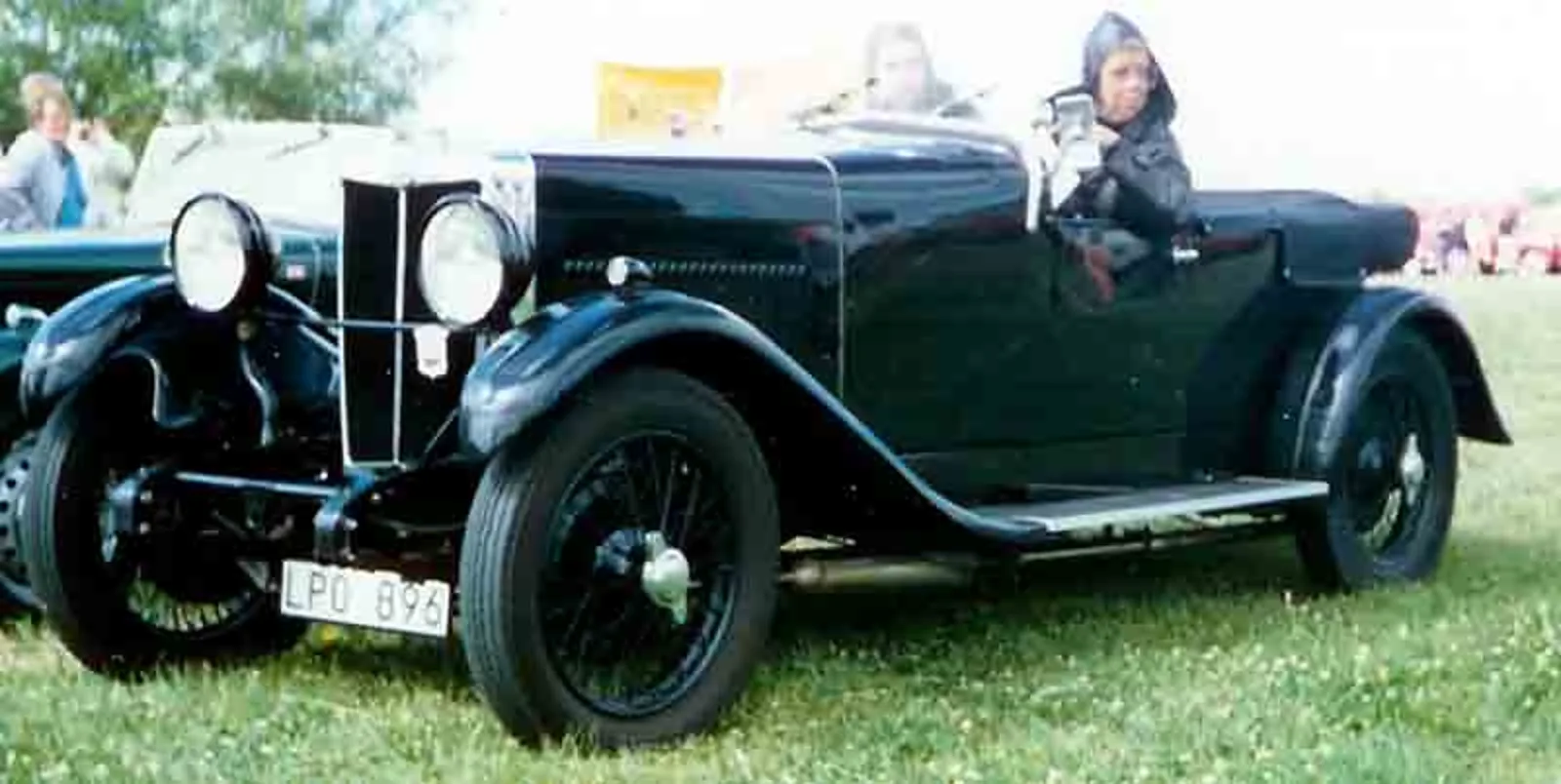
The Riley Brooklands was conceived by the engineer and driver J.G. Parry-Thomas in his own workshops beside the Brooklands track. It began as a special built around the Riley 9, and the car was built from 1927 to 1931 with the Nine's engine at its heart.
Parry-Thomas was killed during a 1927 land speed record attempt. Reid Railton, who had worked closely with him, took over to complete the work, and the Brooklands went on to become a leading racer of the late 1920s. Riley backed the car officially, which helped it reach a wider audience.
Engineer and driver Freddie Dixon later improved the engine and chassis tuning, and he created further specials that exploited the basic Riley design. His work added to the competitive record of the Riley machinery and helped keep it in front of the crowds at race meetings.
How did Riley perform at Le Mans in 1934?
In 1934 Rileys took 2nd, 3rd, 5th, 6th and 12th at Le Mans. The team won the Rudge-Whitworth Cup, the Team Prize and two class awards, which was a striking result for a small British manufacturer competing against much larger rivals.
The Ulster TT and Brooklands itself also saw Riley success. Smaller events, including hill climbs, gave the marque a steady stream of results that kept its reputation strong across the sport.
Women drivers were part of the story too. Kay Petre, Dorothy Champney and Joan Richmond raced Rileys, which gave the marque a place in the early history of women in motor racing as well as in the results sheets.
Riley engines also powered ERA cars based on the supercharged White Riley. The engine's longevity showed in the early post-war success of Mike Hawthorn, who had early racing success in his father's pre-war Sprite. Many original racing Rileys still compete at VSCC events today.
What were the best-known prewar Rileys?
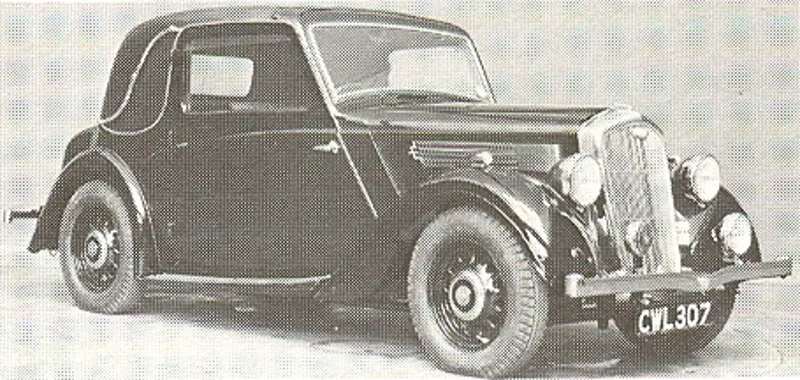
The best-known prewar Rileys were the Brooklands, the Imp and the Sprite. The Brooklands was built on the Nine from 1927 to 1931, the Imp from 1934 to 1935 and the Sprite from 1936 to 1938. Each was a sporting variant.
Several bodies were built on these chassis, and Midland Motor Bodies, the coachbuilder linked to the company, produced more than a dozen different designs. The result was a range of cars that looked distinct, even when the engines beneath them were closely related.
Why did the Riley range become so crowded?
By about 1936 Riley had too many models and few shared parts. The engine line had widened into 4-, 6- and 8-cylinder units, and the bodies multiplied in step with the engines. The range grew faster than the company could support it.
Disagreements between the brothers also grew. Victor Riley wanted a luxury direction and set up Autovia to build a V8 saloon that could rival Rolls-Royce. Percy preferred to avoid the luxury market and focused on engines and components instead.
Autovia was dropped quickly, with only 35 cars built before it was discontinued. Percy's engine business had already been renamed PR Motors, and it was set up to supply engines and components in volume rather than to sell complete cars.
What happened when Percy Riley died?
Percy Riley died in 1941, and the planned small car from PR Motors was never built. After his death the business began producing transmission components, which gave the company a new line of work for the war and the years after it.
The engine business that Percy had shaped kept its independence. PR Motors remained outside the group that Nuffield later assembled, and it became a supplier of transmission products rather than a car maker.
How did Nuffield take over Riley?
Riley joined the Nuffield Organization in 1938, when Lord Nuffield bought the assets and goodwill of the business from the receiver. He paid 143,000 pounds for the Riley business, and the company was then transferred to Morris Motors for 100 pounds.
The purchase followed a difficult period. The Riley brothers had talks with other manufacturers that failed, and the business entered receivership. Victor Riley announced that the company would be wound up, although the company continued under his management for some time.
Riley (Coventry) Limited was wound up, then lingered for tax reasons, and Riley Motors Limited was formed as the new company in 1938. The new owners quickly moved to firm up the business and cut back the unwieldy range.
What did Nuffield change in the Riley range?
Nuffield's first steps were to drop Autovia and refocus the Riley range on four-cylinder engines. The line used a 1.5-litre 12 hp engine and a larger 2.5-litre 16 hp unit known as the Big Four, which was developed from the earlier cars.
Few bodies had been built before the Second World War started, and some components were shared with Morris to save money. The new models had a number of mechanical improvements, but they were essentially interim cars with less of the Riley character.
What did the post-war RM range offer?
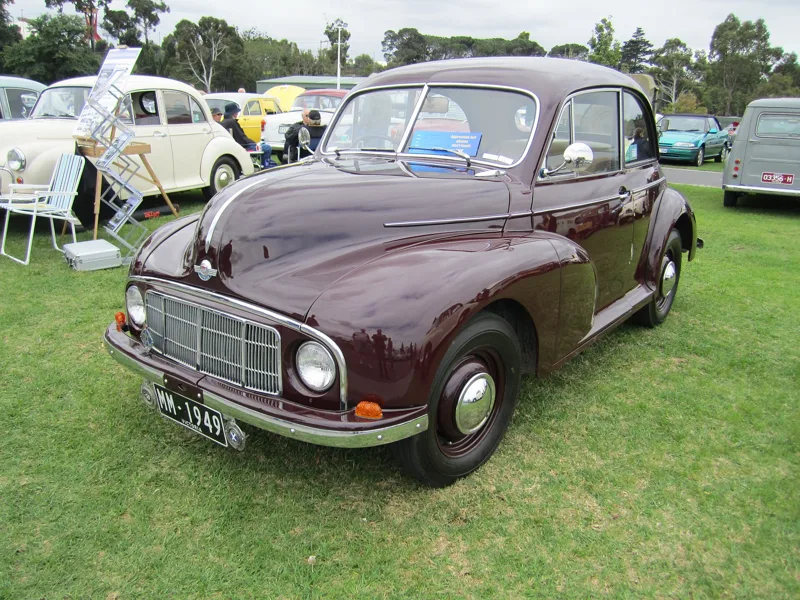
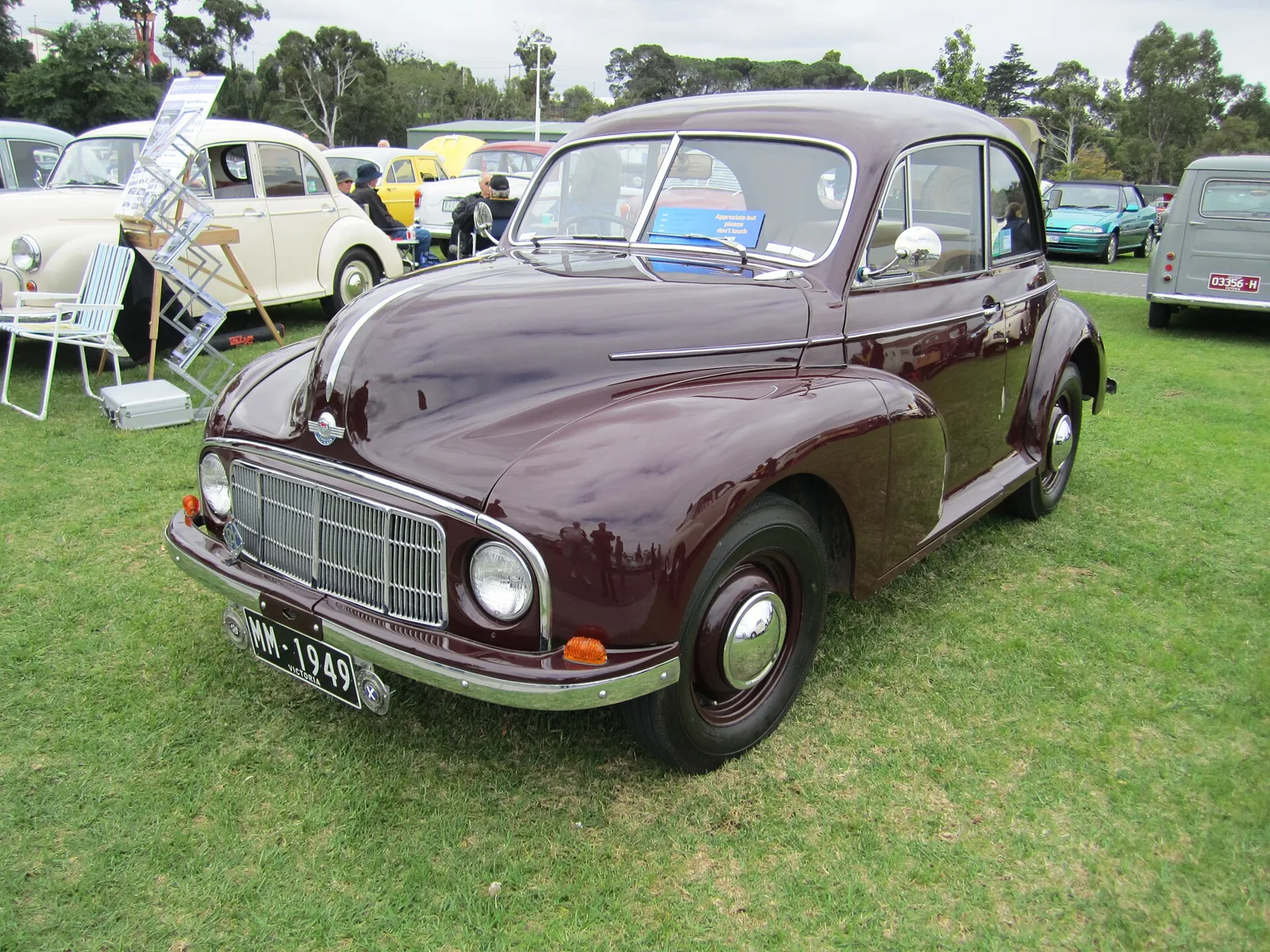
After the war Riley installed the older engines in new models based on the pre-war Continental, a fashionable notchback design. The RM series was sold under the Magnificent Motoring slogan, which reaffirmed the marque's values in road behaviour and appearance.
The RM cars used Torsionic front independent suspension, inspired by the Citroen Traction Avant, which gave precise handling. Their flowing lines combined pre-war coachbuilt elegance with modern features including headlamps blended into the front wings.
The RMA was built from 1945 to 1952. The RMC, a three-seat roadster, failed to break the US market, and the RMD was an elegant drophead of which few were made.
How did Riley fare under BMC?
The British Motor Corporation was formed in 1952, and most Riley models became badge-engineered versions of Austin and Morris designs. The arrangement left Riley positioned between MG and Wolseley, with the marque's identity increasingly blurred inside the group under BMC's central control.
The first all-new Riley under BMC was the Pathfinder, which had the 2.5-litre four, tuned to deliver 110 bhp. Its distinctive engine and suspension led many enthusiasts to call it the last real Riley. The Pathfinder body was later reworked and sold as the Wolseley 6/90.
The Two-Point-Six was the only postwar six-cylinder Riley. It was a badge-engineered version of a Wolseley, and the model was dropped.
In 1957 the One-Point-Five shared its exterior with the Wolseley 1500, but it used a twin SU carburettor set-up and a close-ratio gearbox. Its rack and pinion steering set it apart from the 4/Sixty-Eight, which used Austin-derived cam and peg steering, perhaps the worst feature of that car.
The Riley Elf of 1961 was based on the original Mini, with a Wolseley Hornet sibling. The Kestrel 1100/1300 was built from 1965 to 1969 on the Austin and Morris 1100 and 1300 saloon, and it was the final Riley of the BMC era.
Was Riley absorbed into British Leyland?
Riley was merged into British Leyland Motor Corporation in 1968. Its new management then began a programme of rationalisation across the group, and the Riley marque was among the early casualties. The badge began to disappear from many export markets almost immediately.
On 9 July 1969 British Leyland ended Riley production. The company said the marque was not viable, because Riley held under 1 per cent of the home market, and it argued that no other marque in the group was likely to suffer the same fate.
The final Riley-badged car rolled out in 1969, after which the name lay unused. Some cars from the old inventory were registered only after production had ended.
Why does the Riley name still matter?
The name still resonates with enthusiasts. Surviving Rileys from the period are now popular, and the Riley face and badge give them a distinctive character that owners value. Pre-war racing specials are still built up from worn-out or derelict saloons.
Three owners' clubs cater for the marque. The Riley Motor Club was founded in 1925 and covers every Riley, while the Riley Register is exclusively for cars built until 1940. The RM Club covers RM series cars from 1946 to 1957 and gives those owners a dedicated home.
Who owns the Riley name today?
BMW owns the Riley trademark today, so the badge has been in German hands for decades. The German company bought the Rover Group in 1994, and when it later sold on the MG Rover business in 2000 it kept the Triumph and Riley marques and Mini.
At a centenary dinner for the Association of Riley Clubs, BMW chairman Bernd Pischetsrieder announced that the Riley name would return. He was an enthusiast for many historic British marques, and he said development of a new model would begin immediately.
BMW developed a three-door Riley Coupe concept based on the Rover 75. The project was cancelled after Pischetsrieder's removal in 1999, and the Riley name then remained dormant under BMW's ownership.
Has Riley ever come back?
Not as a car maker. Several revival attempts have been reported, but none put a new Riley into production. A 2010 report in Autocar said BMW was considering a Riley variant of the redesigned MINI, which would be a luxury version.
The report imagined a booted notchback body with interior trim in wood and leather, echoing older Rileys. No sources were named, and the story was treated as highly speculative.
In 2007 William Riley, who claimed to be a descendant of the family, formed MG Sports and Racing Europe Ltd. The company acquired assets for the MG XPower SV sports car and planned an MG XPower WR, but production never began.
Which Riley models should readers know?
| Model | Built | Notes |
|---|---|---|
| Riley 9 | From 1926 | Small capacity, high-revving engine |
| Riley Brooklands | 1927 to 1931 | Built on the Riley 9; Parry-Thomas and Railton |
| Riley Imp | 1934 to 1935 | Sporting variant |
| Riley Sprite | 1936 to 1938 | Sporting variant; Mike Hawthorn raced one |
| Riley RMA | 1945 to 1952 | 1.5-litre 12 hp engine; Torsionic front suspension |
| Riley RMD | Postwar | Drophead of which few were made |
| Riley Pathfinder | Postwar | 2.5-litre four developed to 110 bhp |
| One-Point-Five | 1957 to 1965 | Shared exterior with the Wolseley 1500 |
| Riley Elf | 1961 to 1969 | Based on the original Mini |
| Riley Kestrel | 1965 to 1969 | Based on the 1100 and 1300 saloon |