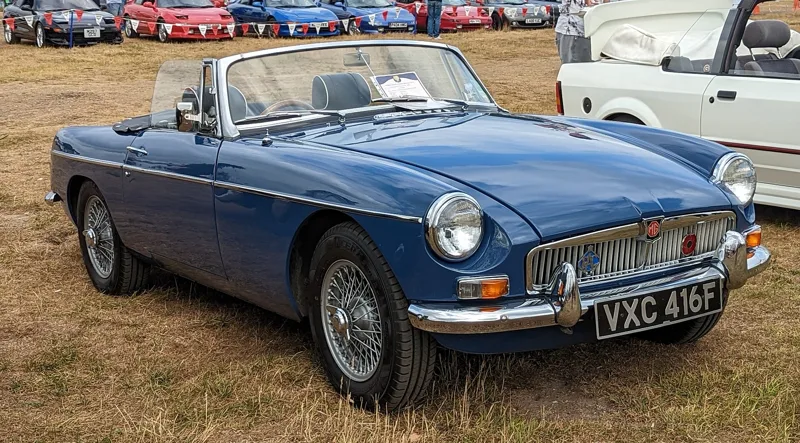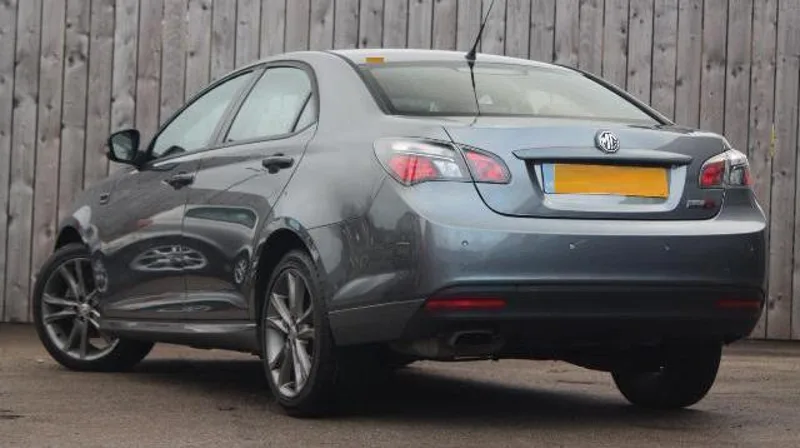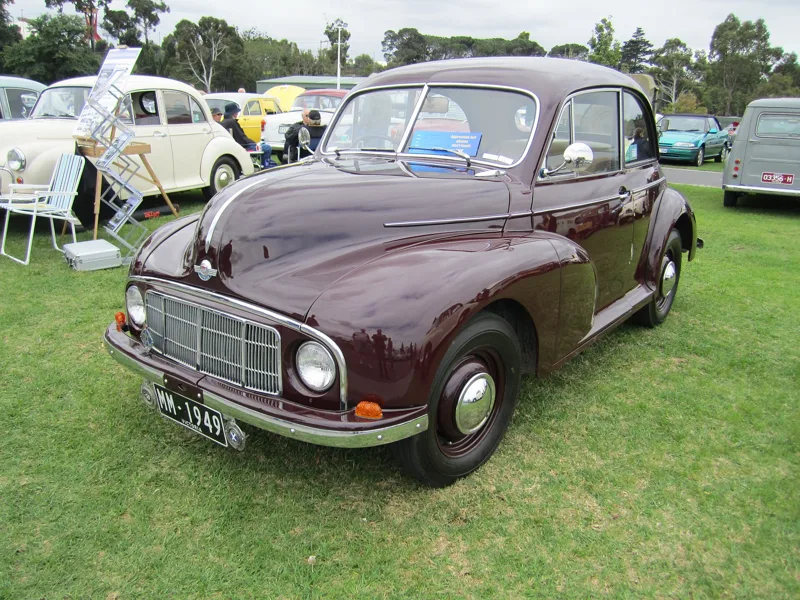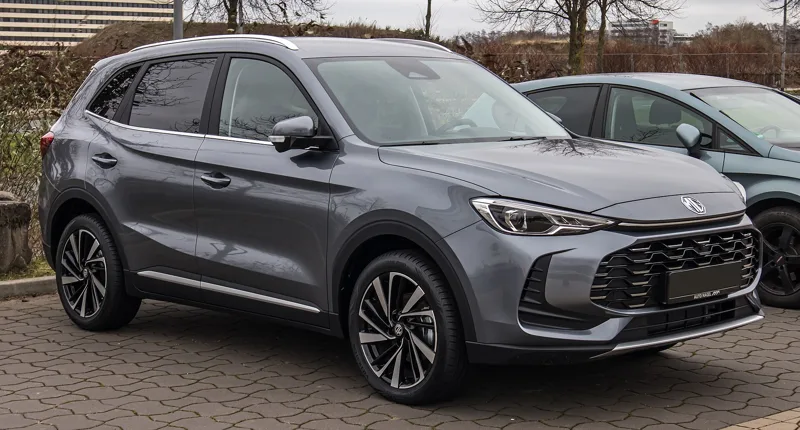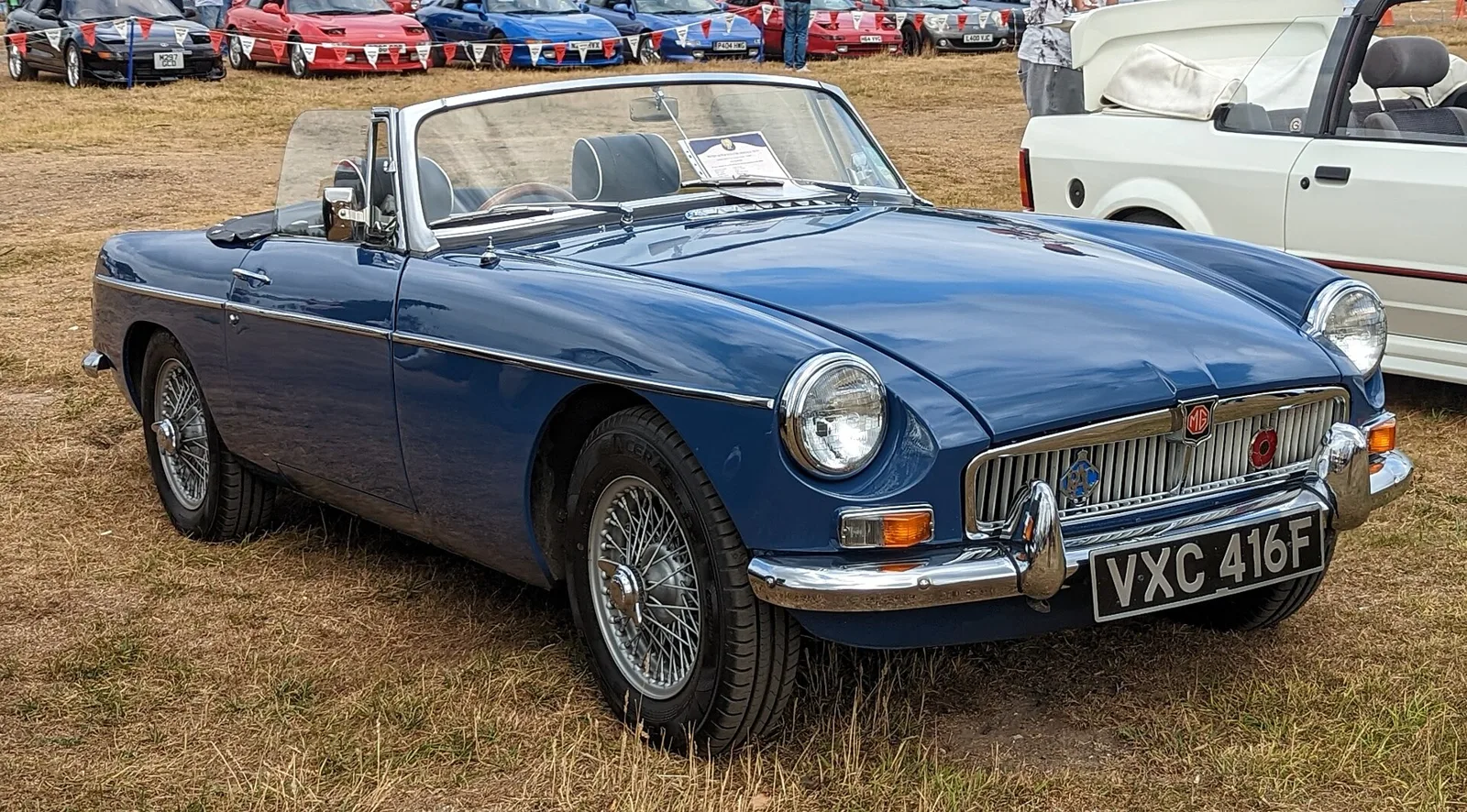
Cecil Kimber's Oxford marque, the Longbridge years, the 2005 collapse of MG Rover and the SAIC-owned brand selling in dozens of markets today.
MG is a British marque founded by Cecil Kimber in Oxford in 1924. It is now owned by SAIC Motor, and its ZS and MG4 models sell across many markets, with most cars built in China.
MG is a British marque founded in Oxford in 1924 by Cecil Kimber, and today it is a brand of SAIC Motor, the Shanghai-based state-owned carmaker. The name has survived several owners, the 2005 collapse of MG Rover and the end of UK production, and it now sells cars in many markets, mostly built in China. Its story is one of a British sports name that became a Chinese export brand.
Who founded MG and when?
Cecil Kimber set up MG in Oxford, England, in 1924. The marque later changed hands several times: it was merged with Austin to create the British Motor Corporation (BMC), and afterwards it became part of British Leyland. Financial trouble followed in the later decades of the 20th century.
The early history of the brand therefore runs through several large British groups, each of which left its mark on it until the Rover years.
From Cecil Kimber's Oxford marque to a SAIC export brand selling its ZS and MG4 across dozens of markets.
How did BMW come to own MG?
BMW took control of the Rover Group in 1994, and the MG marque came with it. Two years later BMW gave up the brand because of continuing losses. A consortium owned by four British businessmen, Phoenix Venture Holdings, then bought MG and Rover and merged them into the MG Rover Group.
Under its new owners MG Rover kept losing money, and the group was eventually forced into administration.
What happened when MG Rover collapsed in 2005?
MG Rover entered administration in 2005 carrying more than 1.4 billion pounds of debt. That July, Nanjing Automobile Corporation (NAC) took over the MG name, the Longbridge works and the tooling, paying 53 million pounds (US$97 million) for the package.
NAC beat the larger SAIC Motor to the purchase, although SAIC had also wanted the brand. SAIC did obtain the intellectual property for the Rover 75 and Rover 25, but the Rover trademark went to Ford, which bought it from BMW in 2006. In response SAIC launched Roewe in China to sell the former Rover models.
The sale kept the MG name and the Longbridge plant together, and it set up the series of ownership changes that followed.
How did production restart after the collapse?
In April 2006 NAC created NAC MG UK Limited, a holding company for the Longbridge site and the MG brand. A year later, on 27 March 2007, MG cars including the TF, MG3 and MG7 began coming off a NAC line in Nanjing, using tooling that had been shipped from Longbridge.
Longbridge itself was not idle. Later in 2008 a run of TF special editions, among them the LE500 and the 85th Anniversary car, was built there again.
How did SAIC take full control of MG?
SAIC gained complete control on 26 December 2007, when NAC merged into the larger company and became one of its subsidiaries. The deal also eased a production bottleneck for Roewe, because NAC held the rights to Rover engine manufacture and other essential technology.
Early in 2009 the British arm was renamed MG Motor UK Limited, and it became the sales company for the UK market under SAIC's ownership.
How much did SAIC put into MG?
By March 2012 SAIC had committed a total of 450 million pounds to MG Motor, which set the scale of the rebuild.
In 2011 SAIC and General Motors, partners in a Chinese joint venture, agreed to co-develop a petrol engine family known as the SGE. It spans 1.0, 1.2, 1.4 and 1.5 litre capacities, and every version is turbocharged. A large part of the MG range later relied on these engines.
What was the MG6 and why did it matter?
The MG6 was unveiled on 26 June 2011 at the Longbridge works, during a visit by the Chinese premier Wen Jiabao. It was the marque's first wholly new model in 16 years, and Longbridge began building it on 13 April 2011.
The MG3 supermini reached British showrooms in September 2013, having previewed in 2010 as the MG Zero concept. Those two cars gave the brand a current range after many years without new products.
When did production leave Longbridge?
On 23 September 2016 MG Motor confirmed that every vehicle build at Longbridge had stopped. Twenty-five assembly jobs went, while sales, marketing and after-sales staff based on the Longbridge campus kept their roles.
Matthew Cheyne, the head of sales and marketing at MG Motor UK, described the decision as a practical move abroad. He also admitted that little real manufacturing had taken place there, with staff mainly fitting parts to three models supplied as knock-down kits.
Where does MG build its cars today?
SAIC designs and develops the MG range, and most cars leave factories in China. The group also assembles MG models in Thailand, India, Indonesia and Taiwan for buyers in those regions, and a Brazilian site is preparing to build MG cars from October 2026.
The first overseas factory opened at Chonburi in Thailand in December 2017. A joint venture between SAIC and the Thai conglomerate Charoen Pokphand, it can produce 100,000 units a year and took over from an older site at Rayong that had run at 50,000 units a year since 2014.
What is the Ningde factory?
SAIC opened its fourth Chinese plant in 2019 at Ningde, in Fujian province, and it is mainly devoted to making and exporting MG cars. Costing 5 billion yuan ($702 million), it can turn out 240,000 vehicles a year, lifting the group's Chinese capacity from 740,000 to 980,000 units.
Is a Brazilian plant building MG cars?
Yes, a site at Horizonte in Ceara is being readied for MG. The existing plant there has run out of room, and an adjoining area of 400,000 square metres has already been cleared for growth. MG models are due to start in October 2026.
The first two planned cars are both fully electric: the MG4 Urban, an entry-level hatchback, and the MG S5. The arrival of MG is expected to create more than 600 jobs, and the local industrial area is courting suppliers to strengthen the state's production chain.
Where is MG designed and engineered?
Most MG design, development and research now happens in China, under the SAIC Motor R&D Innovation Headquarters. British design work continues at SAIC Design Advanced London, a studio on Marylebone Road led by Carl Gotham and Robert Lemmens with 20 staff.
The Longbridge site remains the home of SAIC Motor Technical Centre UK. At its height that centre employed roughly 500 people, but in 2019 it was cut back to 20 staff and its operations shifted to London.
Certain MG models sold in India were engineered by SAIC-GM-Wuling, a venture in which SAIC holds the majority. The MG Hector and MG Comet EV are sold only in India.
Which models drove MG's growth?
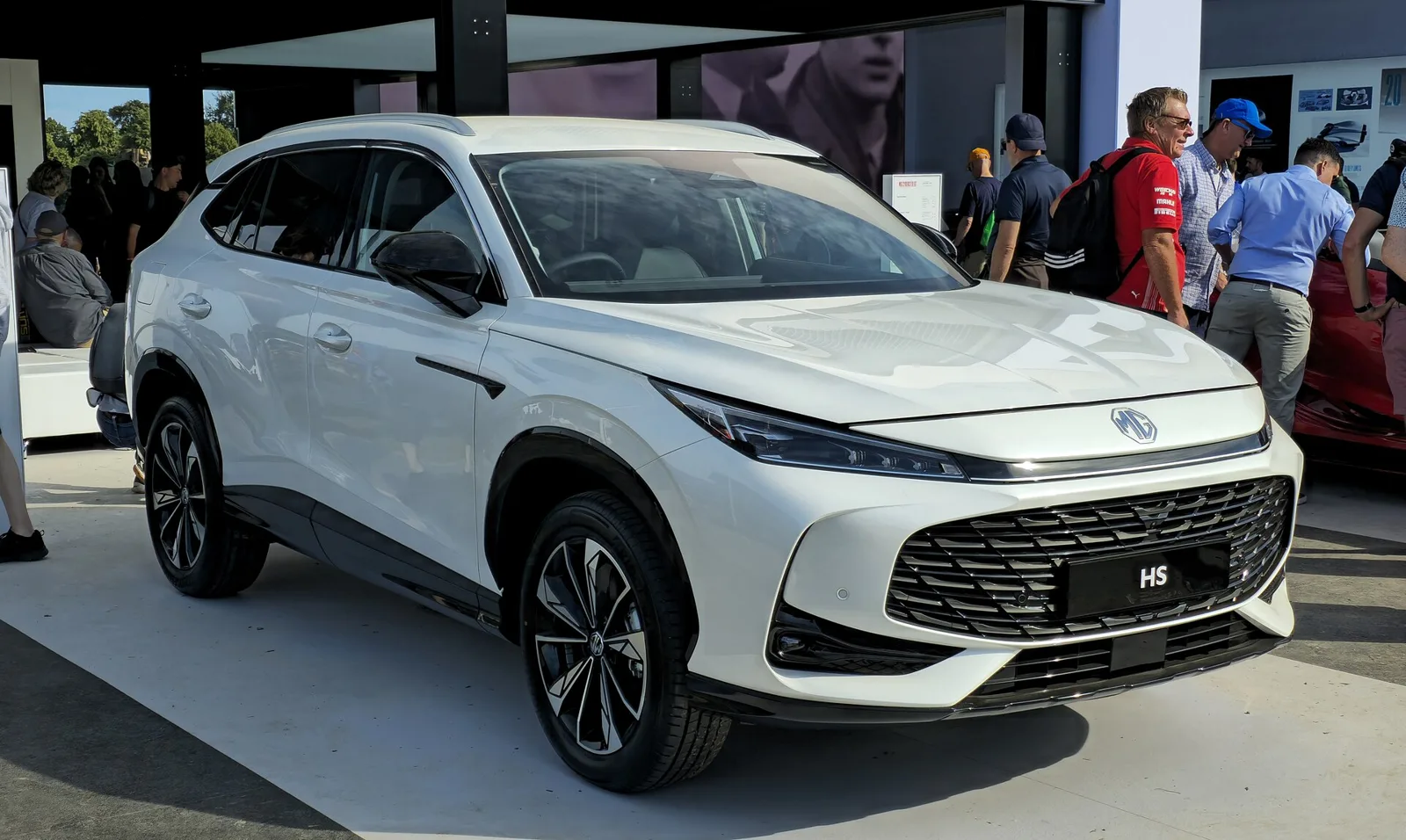
The ZS grew into the brand's most popular model worldwide, and the GS, later replaced by the HS, opened up the SUV era for MG. Electric models such as the ZS EV and the MG4 then pushed growth in Europe.
A GS concept was displayed at the Shanghai Auto Show in April 2013, and production GS cars reached China in March 2015 before arriving in Britain in June 2016. The HS took over from the GS in 2018, and in January 2023 it was the top-selling car of the month in the United Kingdom.
British registrations of MG models were up 108 percent in January 2023 against January 2022, and the HS and ZS carried much of that gain.
How did MG's electric cars develop?
MG's first series-production electric car was the eZS, sold as the ZS EV outside China. It was revealed at the Guangzhou show in November 2018, and it reached Britain and the rest of Europe in 2019. Later the MG5 SW EV, a rebadged Roewe Ei5, went on sale in the UK in September 2020, and in Thailand as the MG EP that November.
The MG4 EV appeared in July 2022 and was the first electric MG built on a dedicated platform from the ground up. It is a C-segment hatchback on the Modular Scalable Platform, and it did much to lift sales across Europe. An XPower performance version followed in 2023, along with the Cyberster, the brand's first roadster, which reached showrooms in 2024.
A new generation of the MG3, HS and ZS arrived in 2024 to refresh the combustion range. The new HS is a rebadged Roewe RX5 from the Chinese market.
How popular is the MG ZS?
The ZS is MG's most exported product. In 2023 China shipped 201,874 ZS units to overseas markets, plus 49,418 ZS EVs. Lifetime ZS sales had reached 999,612 by December 2023, and by May 2025 it was the sixth best-selling vehicle in the UK that year.
The ZS has regularly ranked among Britain's ten best-selling cars. In 2025 its hybrid version won the Best Hybrid Car award from the motoring magazine Carbuyer.
How big is MG today?
MG sold roughly 840,000 vehicles around the world in 2023, and 88 percent of those sales took place outside China. The brand has been the largest single-brand car exporter from China since 2019.
What tariffs did MG face in Europe?
In June 2024 the European Commission placed an extra 38.1 percent import duty on Chinese-built SAIC electric vehicles, MG models included, on top of the 15 percent already payable. On 26 June the EU trimmed the proposed figure to 37.6 percent after receiving further information from SAIC.
SAIC called the duty unfair and contrary to free-trade principles, and in July 2024 it said it would ask the Commission for a hearing into the anti-subsidy inquiry. Reports from that period put MG at roughly seven of every ten Chinese cars sent to Europe in 2024 through September.
How strong is MG in Europe?
MG was among the fastest-growing brands in Britain and Europe between 2020 and 2023, and it kept expanding through the COVID-19 pandemic. Dealer growth and new electric models drove the surge, and the separate UK and European operations were combined into one business in November 2022.
JATO Dynamics recorded 104,300 MG registrations across Europe in the first half of 2023, a rise of 128 percent on the same period of 2022. MG delivered 231,818 vehicles to European customers during 2023, and the MG4 EV was credited with much of that growth.
Electric cars have been MG's strongest suit in Europe. SAIC faced no limit on traction battery supply or output volume, which let it sell electric cars in volume when rivals were constrained.
Where else does MG sell its cars?
MG has built up a substantial footprint across the world. It began selling in Australia in 2013 through a factory-backed operation rather than a distributor, and it arrived in Mexico in late 2020. The Middle East is served by regional importers, and Russia saw its debut in April 2024.
How did MG grow in Australia?
MG sold only 600 cars in Australia in 2017 but 58,346 in 2023, becoming the seventh best-selling brand in the country. Its pricing was widely credited for the surge, and sales quadrupled between 2020 and 2023.
How is MG organised in India?
MG Motor India was set up in 2017 and started trading in 2019. It took over a former General Motors plant in Halol, Gujarat, and it is the one market where MG sources models from SAIC-GM-Wuling, including the Hector, Comet EV and Windsor EV.
In November 2023 the business agreed a strategic joint venture with JSW Group, which acquired 35 percent because of Indian rules that restrict funding from China. The company then became JSW MG Motor India.
How does MG operate in Southeast Asia?
In Thailand, MG cars are assembled at Chonburi by SAIC Motor-CP, a joint venture owned 51 percent by SAIC and 49 percent by Charoen Pokphand. The brand made its Thai debut at the Bangkok Motor Show in March 2014.
Indonesia was entered in March 2020 through PT SAIC Motor Indonesia, and electric models have been assembled there since February 2024. The Philippines saw MG first under Morris Garages Philippines from 2015 to 2018, then under The Covenant Car Company, and since 1 August 2023 under SAIC Motor Philippines, which runs 44 dealerships. Singapore has been served by Eurokars since October 2019.
What did MG do in the Middle East, Morocco and Pakistan?
Gulf Cooperation Council markets are supplied by local importers in Qatar, the UAE, Bahrain, Saudi Arabia, Oman and Kuwait. Morocco has been handled since early 2023 by Abdul Latif Jameel, the brand's first African market in its current form.
In Pakistan, MG cars are assembled and sold by MG JW Automobile Pakistan, part of JW Auto Park. The HS, ZS and ZS EV were launched there in 2020, and an assembly plant at Raiwind, near Lahore, builds the electric models alongside the petrol cars.
Did MG race in the British Touring Car Championship?
Yes. MG entered the 2012 British Touring Car Championship through the MG KX Momentum Racing team. In 2014 its MG6 GT won the Manufacturer's Championship, ending Honda's four-year run, and the title was clinched by 95 points at Brands Hatch.
The 2012 team fielded two MG6s, driven by Jason Plato and Andy Neate, and Plato finished third. Sam Tordoff came in for 2013 through the KX Academy scheme, and Plato again took third with Tordoff sixth.
The 2014 season was the peak. Plato and Tordoff together scored seven wins and 20 podiums across the 30-race calendar. Plato was runner-up in the drivers' title behind Colin Turkington, and Tordoff was seventh. A third MG6 GT, driven by Marc Hynes, ended its first season 18th.
For 2015 MG set out to win the manufacturers' title back with Andrew Jordan, the 2013 champion, and Jack Goff. MG came second in the battle, with Jordan fifth and Goff ninth in the drivers' standings.
In 2016 MG signed a three-year extension with Triple Eight Racing, running Josh Cook and Ashley Sutton. They finished 12th and 13th, and Sutton took the Jack Sears Trophy for the best rookie.
The 2017 campaign went badly. Aron Taylor-Smith and Daniel Lloyd drove the MG6s without a win or a podium, Lloyd left after four meetings, and Cook was the best-placed MG driver in 18th. The team finished last among the manufacturers.
Triple Eight joined forces with BMR Racing for 2018, and MG left the championship as a manufacturer. The MG6 kept racing for two more seasons, with AmD Tuning in 2018 and Excelr8 Motorsport in 2019, with modest results.
How has MG sponsored football?
MG began sponsoring Liverpool F.C. in 2016 as a regional partner for China, and from July 2019 the deal covered global markets. It ended in mid-2022.
In January 2024 MG Motor UK signed a multi-year sponsorship with Arsenal F.C. The brand has also sponsored Copa Sudamericana, the South American club competition, and the French club Olympique Lyonnais.
What is the MG legacy today?
MG is now a SAIC brand with roots in Oxford in 1924. It has passed through British Leyland, BMW, Phoenix, NAC and SAIC, and it stands among the largest single-brand exporters from China. Its strength lies in electric vehicles, supported by a dealer network that grew sharply in the UK and Europe.
Key dates in the MG story
| Year | Event |
|---|---|
| 1924 | Cecil Kimber establishes MG in Oxford, England |
| 1994 | BMW acquires the Rover Group, including MG |
| 2000 | BMW gives up the MG marque |
| 2005 | MG Rover enters administration; NAC buys the MG marque and Longbridge |
| 2007 | NAC merges into SAIC on 26 December |
| 2011 | MG6 unveiled on 26 June, the first wholly new model in 16 years |
| 2014 | MG6 GT wins the Manufacturer's Championship |
| 2016 | All vehicle production ends at Longbridge on 23 September |
| 2017 | Chonburi plant opens in Thailand in December |
| 2019 | Ningde factory in Fujian opens |
| 2022 | MG4 EV introduced in July |
| 2023 | About 840,000 vehicles sold globally |
| 2024 | EU duty of 38.1 percent imposed in June; Russia debut in April |