A unitary-bodied roadster and GT that reached 523,836 cars across the MGB, MGC and GT V8, and the long road the MG name took after 1980.
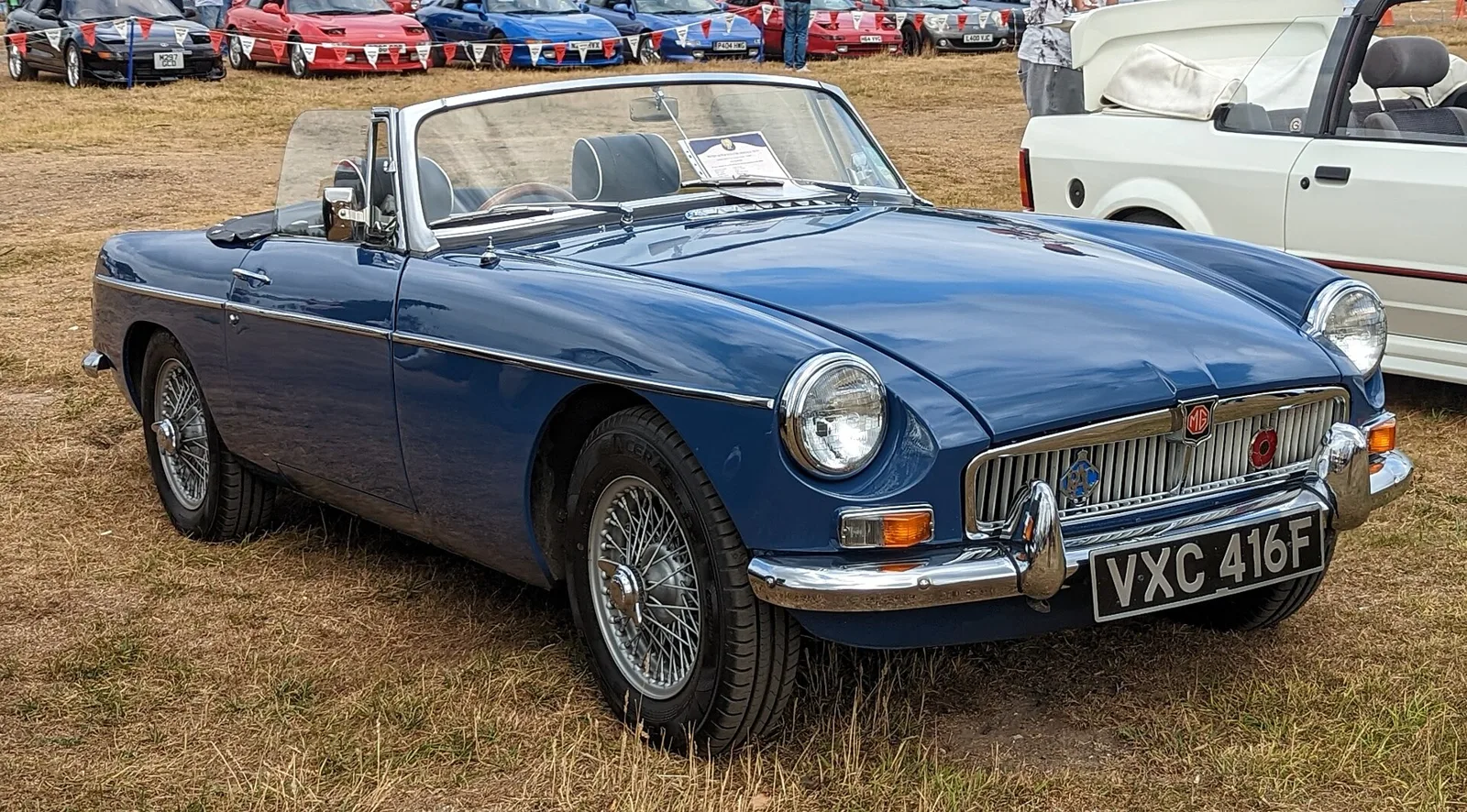
The MGB was a unitary-bodied British sports car built from 1962 to 1980, as a roadster and from 1965 as the GT. Together with the MGC and GT V8 it totalled 523,836 cars. Abingdon closed in October 1980 and the MG name later passed to SAIC of China.
The last car to leave the Abingdon factory was an MGB. Production stopped there on 24 October 1980, and by then the MGB family of roadsters and coupes had reached 523,836 cars. British Leyland decided there would be no immediate successor, and the name that had defined the British sports car went on a long detour through badge engineering, receivership and Chinese ownership.
MGB history: a modern shell on old parts
BMC announced the MGB on 19 September 1962 as the replacement for the MGA. Development had begun at least as early as 1958, under the Abingdon codename EX205. What set the car apart was its structure. Where the MGA, the T-type MGs and the rival Triumph TR series used a separate frame, the MGB had a unitary body, which was progressive for 1962. The lightweight design cut manufacturing costs and added strength.
Underneath, though, much was familiar. The brakes and suspension grew from the 1955 MGA, and the B-Series engine traced its roots to 1947. The cabin offered wind-up windows as standard, plenty of legroom and a parcel shelf behind the seats. The 1,798 cc engine made 71 kW (95 hp) at 5,400 rpm and took the car to 97 km/h (60 mph) in just over 11 seconds. A five-bearing crankshaft replaced the original three-bearing one in October 1964.
It was also an early adopter of controlled crumple zones, designed to protect two occupants in a 48 km/h (30 mph) impact with an immovable barrier. The British AA motoring association nevertheless describes it, like many classics, as much less safe than a modern car, a point that drew public attention after a 2013 collision in which the driver of a hired 1963 MGB died in a crash with a taxi.
The last car built at Abingdon was an MGB, and the badge then wandered through Metros, Rovers and receivership.
MGB roadster and MGB GT: how do they differ?
The roadster came first. It was a pure two-seater, with a small rear seat offered as a rare option at one point. Compared with the MGA it used space better for passengers and luggage even though it was 7.6 cm (3 in) shorter in wheelbase and overall length and 5.1 cm (2 in) lower. It grew wider by the same amount, which gave a lower, squatter stance. The suspension was softer for a smoother ride, wheels shrank from 15 to 14 inches, and a bigger engine nudged the top speed up.
The fixed-head MGB GT followed in 1965, a three-door 2+2 coupe that stayed in production until 1980. Mechanically it matched the roadster, apart from slightly larger rear brake cylinders. GTs were the first MGBs to get a tube-type rear axle, in 1967; every MGB had one from 1968. From 1972 the factory fitted 155/80x14 radials to roadsters and 165/80x14 to GTs, and when the rubber-bumper cars arrived in 1974 all cars moved to the larger size. The fixed-roof GT stopped being exported to the United States in 1974.
MGC and GT V8: the MGB with more cylinders
Two variants gave the shell more power. The MGC, sold from 1967 to 1969, kept the MGB body but carried a larger, heavier six-cylinder engine and handled somewhat worse. Its three-litre unit made 150 net bhp, and the strong gearbox designed for it went into the MGB from 1968, where it was over-engineered for the four-cylinder car. The MGB GT V8 followed from 1973 to 1976 with the 3.5-litre ex-Buick Rover V8. In the 1970s it was the only new MG model to appear at all.
What happened to MGB power and parts
| Period | Output | What changed |
|---|---|---|
| 1962 onward | 71 kW (95 bhp) at 5,400 rpm | Same rating on three-bearing and five-bearing engines |
| 1971, UK | 71 kW (95 bhp) at 5,500 rpm | Revised needles on the SU carburettors to meet ECE15 |
| 1973 | 70 kW (94 bhp) | Output slipping year on year |
| 1974 | 87 bhp | 103 lb ft (140 Nm) of torque |
| 1975 | 85 bhp | Single Stromberg carburettor on US cars |
| Late 1970s, California | 52 kW (70 hp) | US compression had fallen from 9:1 to 8:1 in 1972 |
Engines and gearboxes, 1962 to 1980
All MGBs apart from the V8 and six-cylinder cars used BMC's B-Series engine, an enlarged version of the MGA unit, stretched from 1,622 cc to 1,798 cc. Early cars used the 18G three-bearing engine. Positive crankcase breathing arrived in February 1964, and a five-bearing crankshaft followed in October that year. Torque peaked at 150 Nm (110 lb ft), the redline was 6,000 rpm and fuel economy was around 11 L/100 km (about 25 mpg imperial).
American cars lost power from 1968, when emission standards brought air or smog pumps. British cars kept 71 kW in 1971, but the numbers fell in the years that followed. From 1963 to 1974 every MGB used twin 38 mm (1.5 inch) SU carburettors. US cars from 1975 switched to a single 44 mm (1.75 inch) Stromberg bolted to a combined intake and exhaust manifold, which cut power and caused a longevity problem because the nearby catalytic converter tended to crack the manifold.
Until 1967 the gearbox was a four-speed with a non-synchromesh first gear, an MGA design with minor upgrades. In 1968 a full synchromesh unit from the MGC replaced it. A three-speed automatic was a factory option but proved unpopular. Electrically operated overdrive was available on every MGB, though under 20% of cars had it. It worked in third and fourth until 1977, then in fourth only, and the dash toggle moved to the gear knob that year.
The brakes were 280 mm (11 inch) solid front discs and rear drums, with Lockheed two-piston calipers. Dual-circuit hydraulics became standard in 1968 to satisfy US rules, but power assistance did not arrive until 1975, and testers have often remarked on the heavy pedal. The original electrical system was basic: dash toggle switches, only the indicators on a column stalk, and a pair of 6-volt batteries in series supplying 12 volts, with the positive terminal earthed. They sat under a scuttle panel behind the seats. That made them hard to reach, though it helped weight distribution and handling.
MGB Mark II, the safety dash and rubber bumpers
In late 1967 MG declared the 1968 model year a Mark II. New gearboxes, with fresh ratios and synchromesh across all four speeds, needed altered floor sheet metal and a new flat-topped tunnel. An optional Borg-Warner 35 automatic was offered everywhere except the United States, an oddity. The car also got a new rear axle, an alternator in place of the dynamo, and a switch to negative earth. For the US market it received a padded safety dashboard nicknamed the Abingdon pillow, along with dual-circuit brakes.
Details kept changing. Rubery Owen RoStyle wheels and reclining seats arrived in 1969, with three wipers on US cars only, plus high seat backs with head restraints and side marker lamps. A recessed black aluminium grille appeared in 1970 and a polished grille came back in 1973, now filled with black honeycomb. North America saw split rear bumpers in 1970 and a return to one-piece chrome from 1971 to 1974.
The most disputed change came with US impact rules. In 1974 American cars swapped their chrome over-riders for oversized rubber ones nicknamed Sabrinas, and in the second half of that year chrome bumpers vanished for steel-reinforced black rubber front and rear units that reshaped the nose. Headlamp-height rules then left the lamps too low. British Leyland chose to raise the suspension by 25 mm rather than redesign the front end, and the heavier bumpers made handling noticeably worse. In 1975 only, the front anti-roll bar was dropped to save money, and a rear bar became standard on every car in 1977. Many enthusiasts mourned the loss: 1974 was the last year of chrome bumpers.
Special editions: Jubilee, LE and the last MGBs
The 1975 Jubilee marked the company's 50th anniversary with pre-war British racing green paint, tinted glass, gold body stripes and trim, and the V8's alloy wheels, reportedly because the V8 was not selling and a large stock remained. Of the 751 built, one was destroyed in an advertising stunt gone wrong, and about half were thought to survive in 2021. The final 1,000 LE cars were the last to leave the factory with alloy wheels.
In March 1979 British Leyland began black-painted limited-edition roadsters for the US, intended for 500 cars. Demand pushed production to 6,682. Britain's own limited editions were bronze roadsters and a silver GT, split between 421 roadsters and 579 GTs.
What should MGB owners and buyers know?
The MGB remains a popular classic because parts are cheap and easy to find and the mechanics are simple. A few specifics are worth knowing. US-spec 1975 and later cars used the single Stromberg arrangement that could crack its manifold. Non-servo brakes before 1975 need a firm push. Rubber-bumper cars handle worse than chrome-bumper ones until later suspension revisions. Overdrive gearboxes differ by period, with three types recognisable by details such as the access cover shape and the speedometer gears. The Rover-built RV8 looks like a roadster but shares less than 5% of its parts with the original.
MG history: from Morris Garages to the octagon
MG began as a sideline of Morris Garages, William Morris's retail and service centre in Oxford. Cecil Kimber joined as sales manager in 1921 and became general manager in 1922. He promoted sales by building special versions of Morris cars, the Kimber Specials, with coachwork from Carbodies of Coventry. The octagon appears in an Oxford newspaper in November 1923 and was registered as a trademark on 1 May 1924. The name came from the initials of Morris Garages.
Demand forced moves from Alfred Lane to Bainton Road in September 1925 and in 1927 to a separate factory in Cowley with the first production line. The company took the name The M.G. Car Company in March 1928 and leased part of an old leather factory in Abingdon in 1929. A limited company was incorporated on 21 July 1930, and Morris sold it to Morris Motors on 1 July 1935. Kimber was dismissed in 1941 over wartime work and was killed in the King's Cross rail crash in February 1945.
The first genuinely new MG was the 18/80 of 1928, which brought the vertical grille, and in 1929 the Midget line began with the M-Type. After the war the T-Series Midgets sold worldwide with more success than expected, and the MGA came in 1955. MG was absorbed into BMC in 1952, and long-time service manager John Thornley ran it as general manager until 1969. BMC merged with Jaguar in September 1966, then with Leyland in 1968 to form British Leyland. From about 1972 the M.G. Car Company Limited name was no longer used.
What became of the MG name after the MGB?
Within British Leyland, MG sat in the Austin-Morris division with the mass-market family cars, while Triumph went to the Specialist Division. Triumph got the TR7 and the Dolomite in the 1970s, but no new MG appeared apart from the MGB V8. MG's operation was profitable, though its profits were wiped out by losses elsewhere in the division. Funding went to mass-market models, and its range grew dated. Abingdon closed on 24 October 1980, and the MG marque was shelved.
From 1982 to 1991 the badge appeared on sportier Austin Rover Metros, Maestros and Montegos. The marque returned in its own right with the MG RV8, an MGB roadster reworked around a Rover V8. It was shown in preview at Birmingham in 1992, and small-scale production began in 1993. The marque's ownership had passed from the Rover Group to British Aerospace in 1988 and to BMW in 1994, and in 1995 the mid-engined MG F went on sale as the first genuine MG sports car built in volume since the MGB, and a bigger success than the RV8.
BMW sold the business in 2000 to the MG Rover Group, which added the MG ZR, ZS and ZT in summer 2001 and later the V8 XPower SV, revealed in 2002 and on sale in 2004. Receivership came in 2005, and on 7 April of that year car production stopped. On 22 July 2005 Nanjing Automobile Group bought the rights, and SAIC took over Nanjing in 2007. The Abingdon site, by 2003, held a McDonald's and a police base, with only the old office block standing.
MG today and where this goes next
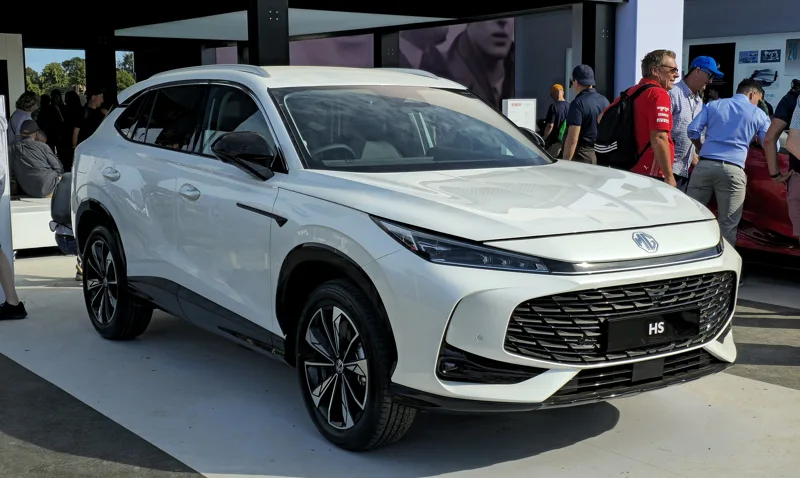
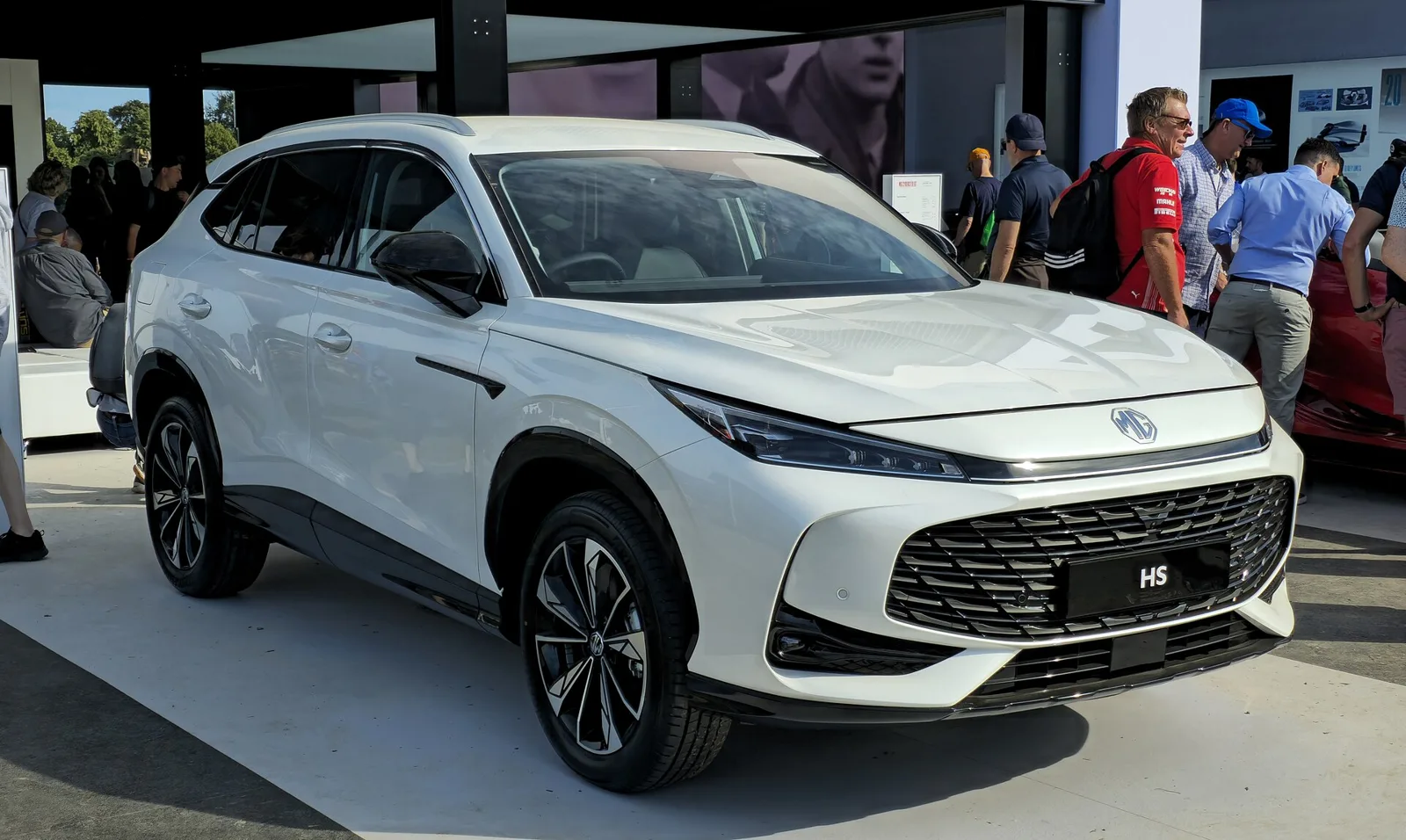
Production restarted in China in 2007. The MG6, launched on 26 June 2011, was the first all-new MG for British buyers in 16 years, but MG Motor ended car production at Longbridge in September 2016, citing production scale efficiencies, and has imported cars from China since. By 2022 MG Motor was the fastest-growing car brand in Britain. SAIC treats MG as its main international brand, with 88 percent of its 2023 sales outside China. The MG ZS subcompact SUV reached 999,612 sales by December 2023. In 2023 MG introduced its first new roadster in years, the electric Cyberster, on sale from 2024.