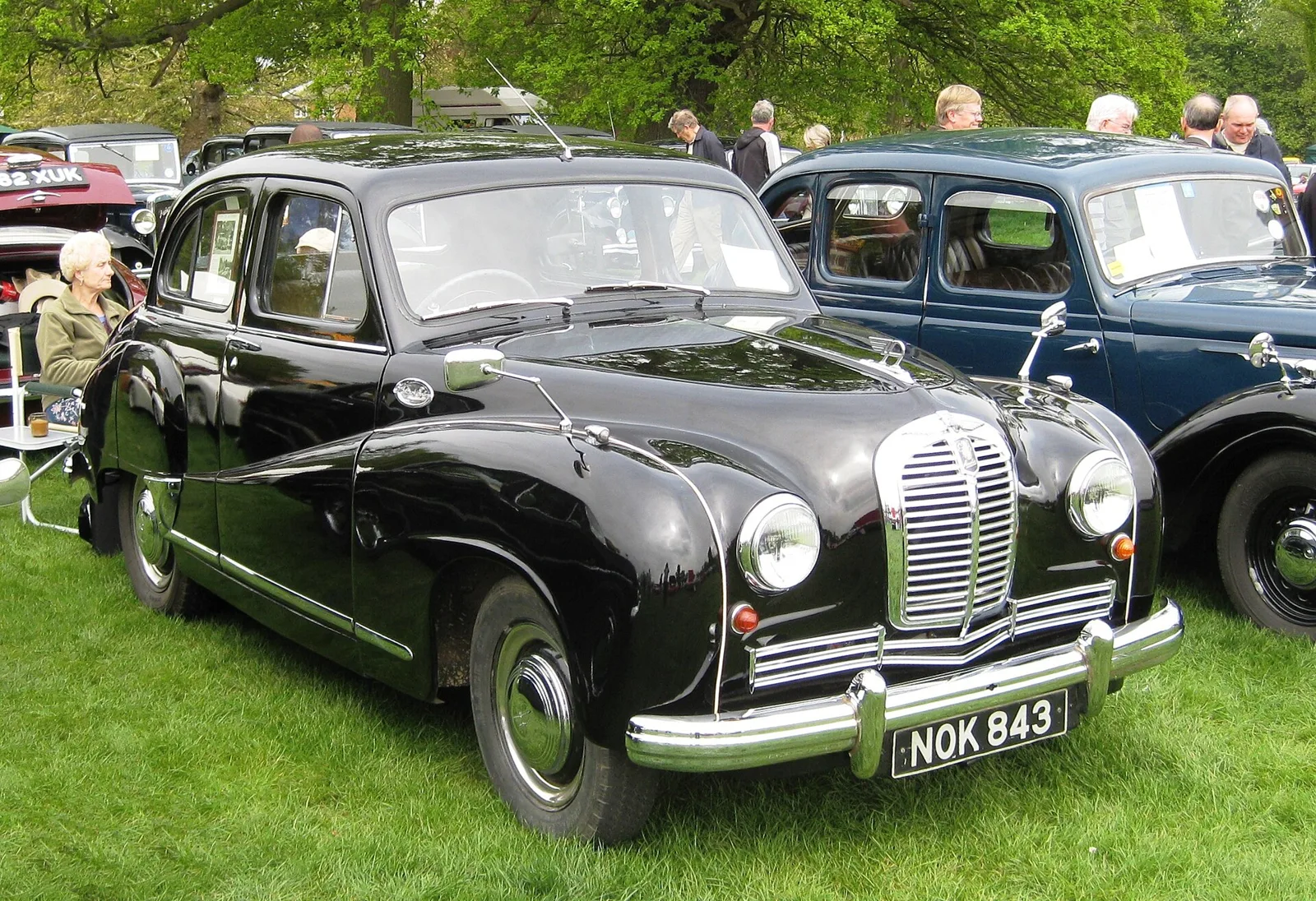
Herbert Austin's Longbridge firm, the Austin Seven, the BMC merger, the Mini and the Austin Rover years, and a brand that has changed hands many times since 1988.
The Austin Motor Company was a British car maker that Herbert Austin founded at Longbridge in 1905. It built the Austin Seven, merged with Morris in 1952 to form BMC, and launched the Mini in 1959. The Austin badge was phased out in 1988, and the name has since changed hands several times.
The Austin Motor Company was a British carmaker that Herbert Austin set up at Longbridge, near Birmingham, in 1905. Its early luxury cars gave way to the Austin Seven, one of the first cars aimed at a mass market, and later to models such as the Mini and the Metro. The Austin badge was phased out in 1988, but the name has returned under several new owners since then.
Who founded the Austin Motor Company?
Herbert Austin founded the company in 1905 after leaving the Wolseley business he had helped to build. He raised money from steel magnate Frank Kayser and from Harvey du Cros junior, but he kept most of the ownership himself. The first production car appeared in 1906.
Austin had built three cars in his spare time from 1895, the third of them a four-wheeler completed in 1899. His break with Wolseley came over engine design in 1905, and he took his new venture to a disused printing works at Longbridge that he bought in November 1905. The company was incorporated as a limited company the following month.
From a Longbridge works in 1905 to the Mini and Metro, Austin shaped British motoring for most of a century.
What did the first Austin cars cost?
The first production car, shown in 1906, was a four-cylinder model with a vertical engine and chain drive. It was offered as a 15/20 hp at 500 pounds complete or 425 pounds as a chassis, while the 25/30 hp cost 650 pounds complete and 550 pounds as a chassis.
Early customers included Russian grand dukes and British nobility. Austin's cars, like Wolseley's, were sold as luxury vehicles rather than cheap transport, which set the tone for the firm's reputation in its first decade.
How big did Austin become before 1918?
By 1914 Austin had become a public company, with share capital raised to 650,000 pounds, and it probably ranked fifth among British makers by vehicles built. The First World War then pushed it much further. Its factories made aircraft, shells and heavy guns, and it built 1,600 three-ton trucks, most of them sent to Russia.
The workforce grew from about 2,500 people to around 22,000 during the war years. For comparison, Wolseley, the business Austin had left, sold 3,000 cars in 1912, so the scale of Austin's wartime growth is easier to judge.
How did Austin recover between the wars?
Austin went into receivership in 1921, but it later recovered after financial restructuring. A new finance director, Ernest Payton, arrived in 1922 with backing from Midland Bank, and Carl Engelbach took charge of car production. Herbert Austin stayed as chairman but stopped being managing director, so decisions were taken by a committee.
The company then adopted a one-model policy built on a 3,620 cc engine, which appeared as cars, commercials and even a tractor. Sales were never high enough to fill the huge wartime factory, so the early years were hard going.
Smaller cars were the way forward. The 1,661 cc Twelve arrived in 1922, and the Seven followed later the same year. The Seven helped Austin weather the Great Depression in profit, and later models gained all-steel bodies, Girling brakes and synchromesh gearboxes.
Why was the Austin Seven so important?
The Austin Seven was one of the earliest cars aimed at a mass market. Its small engine suited a British tax system that charged by engine size, which made it cheap to own for ordinary buyers. Other makers were licensed to build it, so it also appeared abroad under different badges.
Licensing began early. BMW built the car as the Dixi in Germany, and Datsun began building Sevens under licence from 1934, which became the most successful of Austin's overseas Seven deals. Bantam in the United States and Rosengart in France also made their own versions.
The American Austin Car Company ran as a subsidiary from 1929 to 1934. After bankruptcy it was revived as American Bantam in 1937. Its reconnaissance car prototype used Austin nose and wing parts, but the design was handed to Willys and Ford, who produced the Jeep.
Austin in Japan with Nissan
In 1952 Austin agreed to assemble 2,000 imported Austins in Japan from kits, and Nissan had to make the parts locally within three years. Nissan met that goal and went on to build 20,855 Austins between 1953 and 1959. The A50 was fully assembled by Nissan and used a 1,489 cc engine.
How did BMC change Austin?
In 1952 Austin merged with Morris Motors to form the British Motor Corporation, known as BMC, under Leonard Lord. Austin kept its own identity inside the group, but Lord made sure it was the dominant partner. Many models became badge-engineered versions of one another, so the Morris and Austin ranges often looked alike under the bonnet.
The same year, a deal with Donald Healey created the Austin-Healey sports cars. Leonard Lord had joined the Austin board in 1938 and become its chairman in 1946, so he knew the company well when the merger came.
Was the Mini an Austin?
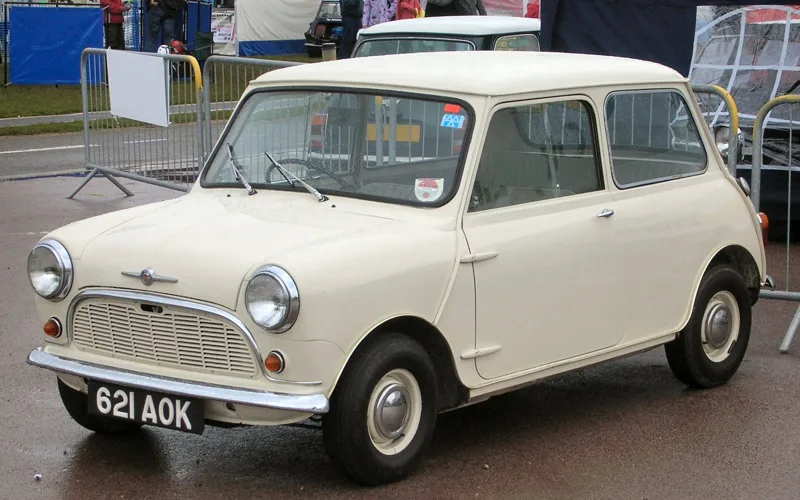
The Mini was designed by Alec Issigonis, who had worked at Morris from 1936 to 1952, after the 1956 Suez Crisis made fuel supplies look uncertain. It launched in 1959 as the Austin Seven, but the Morris Mini Minor outsold its Austin twin, so the Austin car took the Mini name too.
The transverse engine layout was then extended to larger cars, starting with the 1100 in 1963, followed by the 1800 in 1964 and the Maxi in 1969. The Austin 3-litre of 1968 was a rear-drive large car that sold poorly, and fewer than 10,000 were built.
BMC bought its major supplier, Pressed Steel, in September 1965 and took over Jaguar in 1966. The group was then renamed British Motor Holdings, or BMH. In early 1968 BMH merged with Leyland Motors, and Austin became part of the British Leyland Motor Corporation, known as BLMC.
What happened to Austin under British Leyland?
The 1973 Allegro succeeded the 1100 and 1300 ranges, but it was criticised for its bulbous styling and build quality. It earned the nickname Flying pig, and although it sold strongly in Britain, it did not match the success of its predecessor.
The wedge-shaped 18/22 series launched in 1975 as an Austin, a Morris and a Wolseley, but within six months it was renamed Princess and became a marque in its own right. British Leyland had been virtually nationalised in 1975, so the model sat under the Austin Morris division of a state-controlled company.
By the end of that decade, the future of Austin and the rest of British Leyland looked bleak.
The Austin Rover years
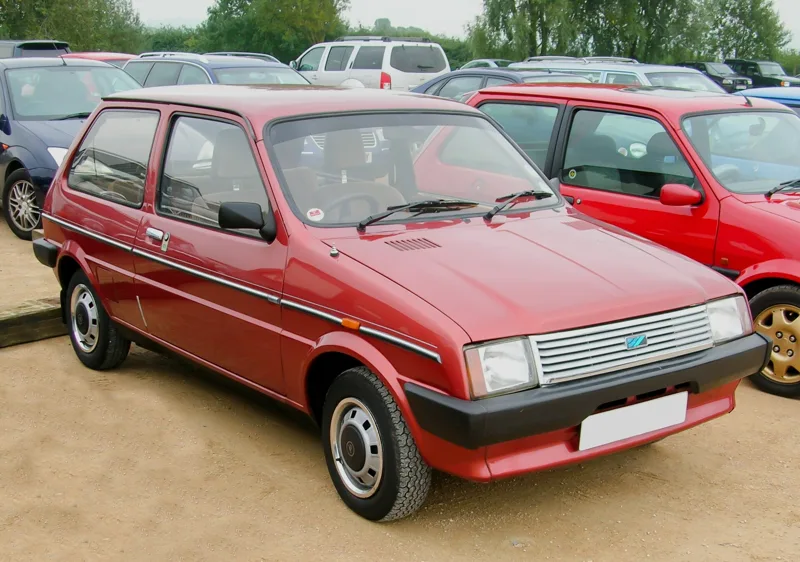
The Austin Metro, launched in October 1980, was meant to replace the Mini, and it arrived twenty-one years after the original. It gave British Leyland a modern supermini and was one of the most popular British cars of its decade, although the Mini went on to outlast it.
In 1982 most of British Leyland's car division became the Austin Rover Group. Austin was the budget and mainstream marque, while Rover offered the more luxurious models. The MG badge returned for sporty versions, starting with the MG Metro 1300, and the Morris and Triumph names were dropped in 1984.
The Maestro, a five-door hatchback, arrived in March 1983 and replaced the elderly Allegro and Maxi. The Montego followed in April 1984 as the successor to the Morris Ital, and it was praised for its interior space and comfort, although early build-quality problems took time to overcome.
The AR6, a radical successor to the Metro, was abandoned in early 1987. In 1986 BL plc became Rover Group plc, and it was sold to British Aerospace in 1988. The Austin badge was phased out in 1988, and from the following year the company was known as the Rover Group.
Austin-badged cars did not disappear overnight. The Maestro and Montego stayed in production until 1994 and never carried a Rover badge on their bonnets in Britain. A revamped Metro, with the K-series engine, arrived in May 1990 and was renamed the Rover Metro.
What became of the Longbridge plant?
Longbridge was where Austin began, in an abandoned print works. It became British Leyland's main factory in the early 1970s. After MG Rover collapsed the plant was unused from 2005, and MG production ran there from 2008 to 2016. SAIC now leases it as a research and development base for MG Motor.
Is the Austin name still used today?
Yes, although the name has passed through several owners. Nanjing Automobile Group later held the Austin name and the Longbridge plant after MG Rover was sold. The trademark is now owned by SAIC Motor, after it was transferred from Nanjing Automotive.
In 2012 former Longbridge worker Steve Morgan registered a new Austin Motor Company, but he had no rights to the brand and the company was dissolved in 2014. In 2015 John Stubbs, who ran a specialist suspension firm, registered the name alongside the classic Flying A logo.
An Austin Arrow prototype was revealed in 2021. A production line was set up by MJP Motors in Rajkot, India, by May 2023, and the Austin Arrow entered production in October 2023. In July 2025 Nigel Gordon-Stewart, a veteran of McLaren Automotive, Automobili Lamborghini and Group Lotus, became chairman and CEO of the Austin Motor Company Limited.
Military, taxis and aircraft
Austin's output went well beyond cars. During the Second World War it built trucks and aircraft, including Short Stirling and Avro Lancaster bombers. The post-war range was announced in 1944 and production began in 1945, and the 16 hp model introduced Austin's first overhead valve engine.
During the First World War Austin built the S.E.5a under licence, and it also produced its own aircraft designs. The FX4 London taxi was built from 1958 to 1997, a run that kept the Austin name on the streets of London for decades.
Key Austin models at a glance
| Year | Model | What it changed |
|---|---|---|
| 1906 | 15/20 hp | First production car, four-cylinder, 500 pounds complete |
| 1922 | Austin Seven | Simple, inexpensive car aimed at a mass market |
| 1922 | Twelve | Fitted with a 1,661 cc engine |
| 1959 | Mini | Designed by Alec Issigonis after the 1956 Suez Crisis |
| 1968 | 3-litre | Rear-drive large car, under 10,000 built |
| 1973 | Allegro | Successor to the 1100 and 1300 |
| 1975 | Princess | Renamed from the 18/22 series within six months |
| 1980 | Metro | Launched twenty-one years after the Mini |
| 1983 | Maestro | Five-door hatchback launched in March |
| 1984 | Montego | Successor to the Morris Ital |
What is the legacy of the Austin marque?
Austin's legacy rests on a handful of cars that changed how Britain travelled. The Seven put a basic motor car within reach of ordinary owners, and the Mini showed that a small car could be roomy and clever. The Metro gave the marque a late success before the badge disappeared.
The brand was never simple to manage. It moved from an independent firm to a part of a large group, then through several state-linked and private owners. Each change left a mark on the name, and the Longbridge site became a symbol of that long and turbulent story.