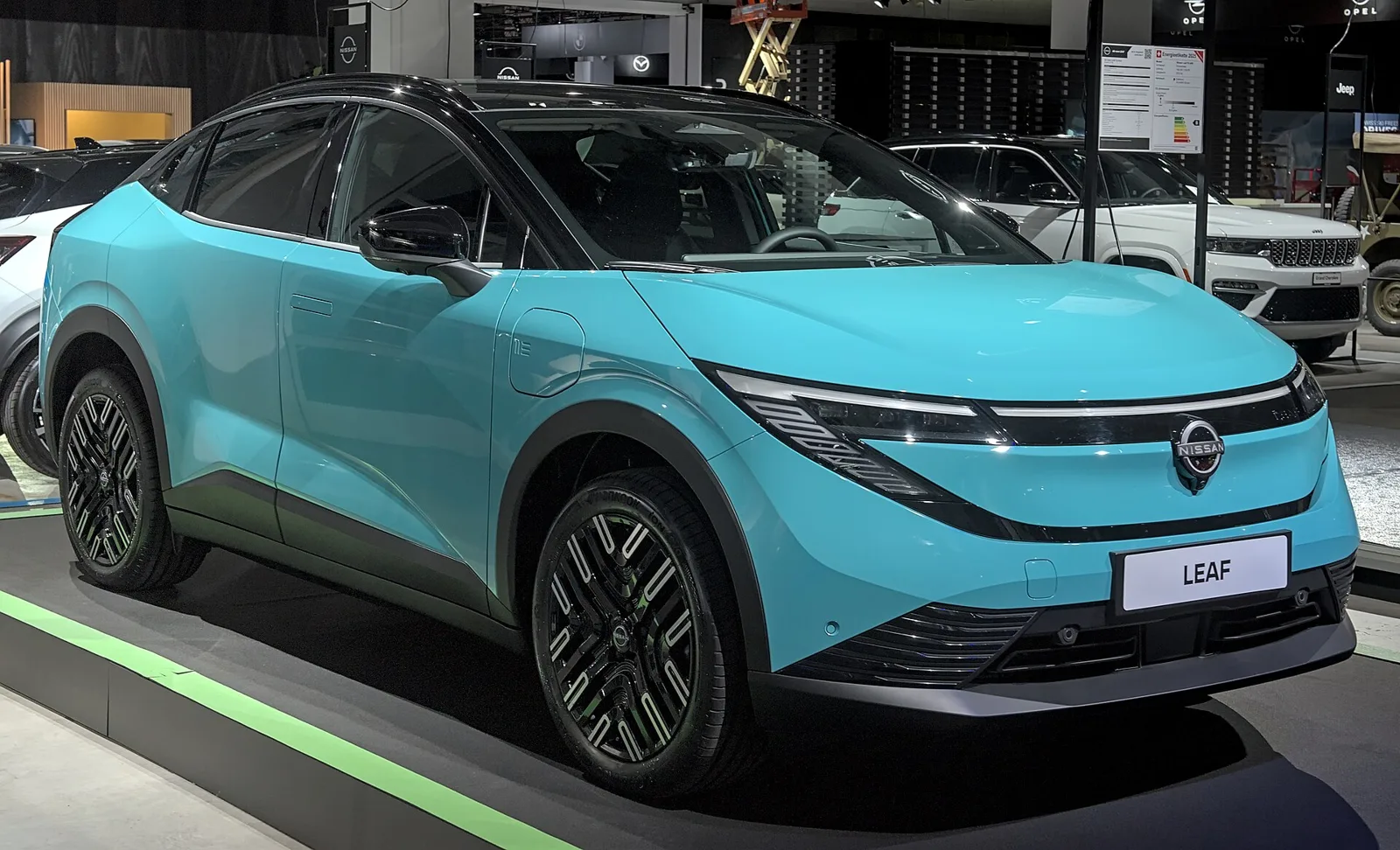
From a 1911 Tokyo workshop and the Datsun name to the Leaf, the Renault alliance and a 2026 plan to shrink the factory map.
Nissan is a Japanese car maker headquartered in Yokohama, tracing its roots to a 1911 Tokyo workshop. Its brands include Nissan and Infiniti, the Datsun name is part of its history, and the company has been allied with Renault since 1999.
Nissan is a Japanese multinational car maker headquartered in Yokohama. It sells under the Nissan and Infiniti brands and once sold under the Datsun name, and its roots go back to a Tokyo workshop founded in 1911. Since 1999 it has been part of the Renault-Nissan alliance, which has shaped much of its modern history.
When did Nissan begin making cars?
Masujiro Hashimoto founded the Kwaishinsha Motor Car Works on 1 July 1911 in Tokyo. The company produced its first car, the DAT, in 1914. That early model was the starting point for a line that would later carry the Datsun name into export markets around the world.
Yoshisuke Aikawa founded the holding company Nihon Sangyo in 1928, and the Nissan name came from the stock exchange shorthand for that group. Nissan Motor Co. was incorporated as a subsidiary in 1934, which made the automotive business a company in its own right.
A company that began as a small Tokyo workshop built the Datsun name, then bet its future on the electric Leaf.
From DAT to Datsun
In 1931 the company introduced the Datsun Type 11, the first Datson, a name meaning son of DAT. In 1933 the last syllable was changed to sun, because son also means loss in Japanese. The new spelling gave the brand a name it would carry for decades.
Datson had to become Datsun for a practical reason as well as a linguistic one. The change was a small adjustment, but it avoided an unhelpful meaning in the company's home language and set the tone for a brand built on small, sensible cars.
The Yokohama plant was completed in 1935, and the first integrated assembly line produced cars there. In November 1937 the company moved its headquarters to Xinjing, the capital of Manchukuo, a period that remains a difficult part of the company's history.
From 1934 the company also began building Austin 7s under licence, which gave it a foothold in the market and some technical grounding. Those early cars laid the groundwork for the engines and designs that would follow.
How did Nissan grow overseas?
Nissan formed its US subsidiary, Nissan Motor Corporation U.S.A., in Gardena, California, in 1960. The move put the company into the largest car market in the world and set a pattern of building its own American operations.
Nissan Mexicana began manufacturing in 1966 at the Cuernavaca facility. Later the company built a plant at Smyrna, Tennessee, which broke ground in 1980 and grew into a site for car and SUV production as well as trucks.
Asia became just as important. Nissan formed a 50:50 joint venture with Dongfeng Motor in 2003, and the company sold nearly 520,000 new vehicles in China in 2009. The Dongfeng-Nissan Guangzhou plant later became Nissan's largest factory by production capacity.
Which sports cars built the brand's reputation?
The 510 gained the company respect in the worldwide sedan market. It used the L series four-cylinder overhead cam engine, which was introduced in 1967 and was a totally new engine designed by Nissan rather than a copy of a German design.
The Datsun 240Z arrived in 1969 with a six-cylinder version of the L series engine. The car made an instant impact and pushed the company toward world-class status in the car market. The Z-car, introduced in 1969 as an affordable sports car, carried the same spirit forward.
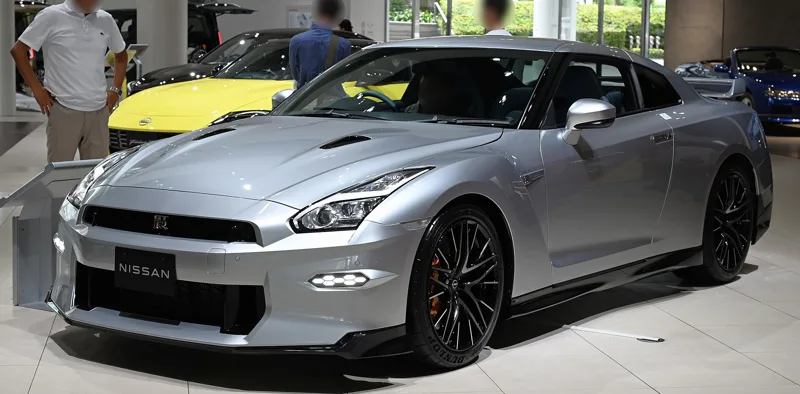
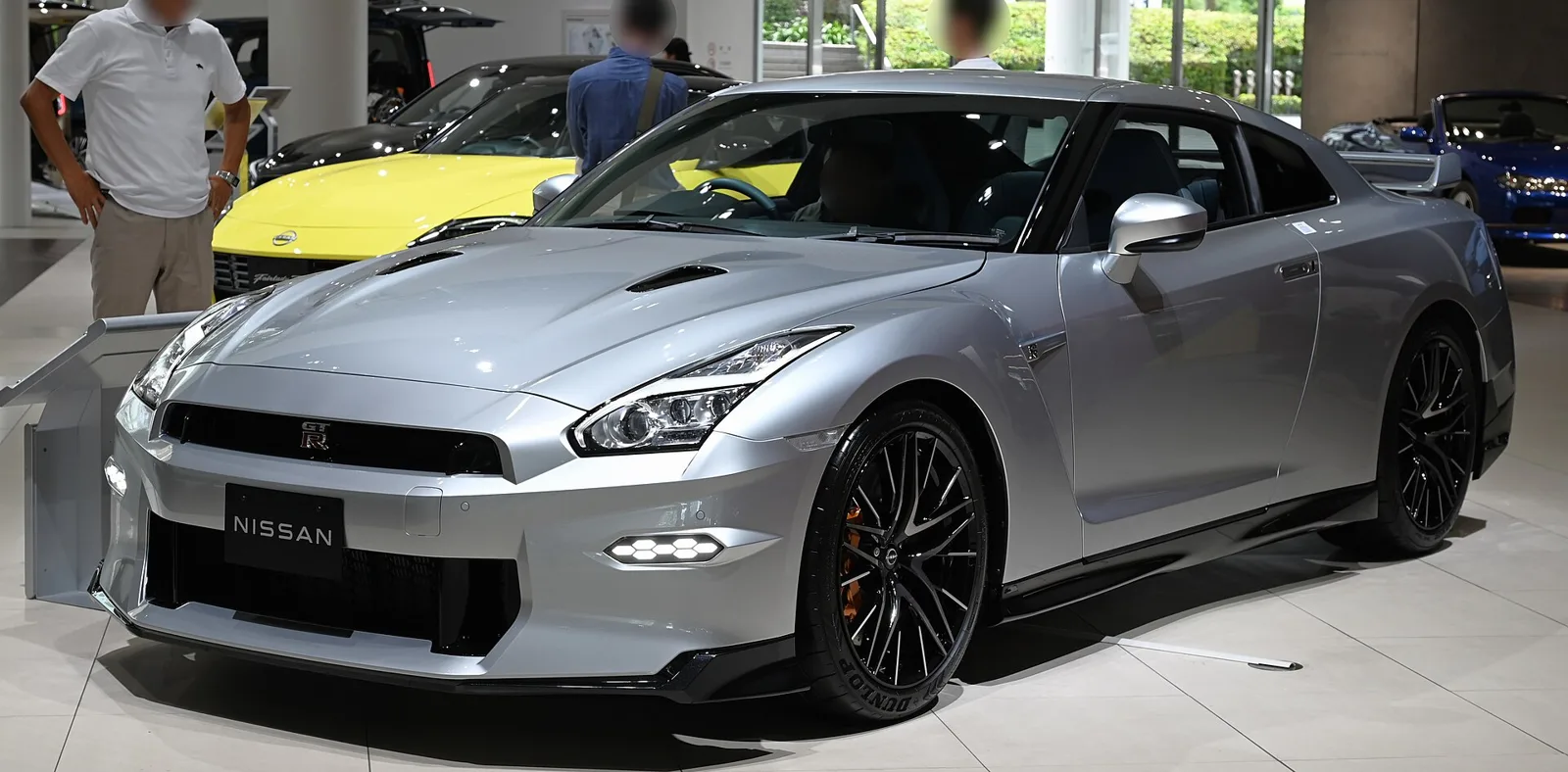
The GT-R later became the most powerful expression of the range, a sports coupe with all-wheel drive. Nismo, founded in 1984, took responsibility for competition and performance development of the cars.
Why did Nissan ally with Renault?
Nissan entered an alliance with Renault of France in 1999, when it faced severe financial difficulties. The Renault-Nissan Alliance was signed on 27 March 1999 and was the first of its kind between a Japanese and a French manufacturer. Renault initially acquired a 36.8 percent stake in Nissan for $3.5 billion.
Carlos Ghosn was named chief executive of Nissan in June 2001, and his Nissan Revival Plan is widely credited with a dramatic turnaround. Nissan acquired a 15 percent share of Renault in the same year, which tied the two companies more closely together.
As of November 2023, Renault holds a 15% voting stake in Nissan. The share transfer that set this balance was completed that month, and the two companies have since taken more independent paths.
How did the Ghosn era end?
Ghosn stepped down as chief executive on 1 April 2017 and was fired as chairman on 19 November 2018. Makoto Uchida became chief executive on 1 December 2019, after a period of legal and governance turmoil that shook confidence in the company.
The Japanese government had already recognised his work, awarding him the Japan Medal with Blue Ribbon in 2004. The honour reflected how far the turnaround had been noticed beyond the car industry.
The fallout carried into the years that followed. The alliance and the company's own leadership remained under pressure, and the next phase of the story became a fight to restore profitability rather than to expand.
How did Nissan's finances fall in 2019 and 2020?
Nissan laid off 12,500 employees over three years starting in July 2019, citing a 95% year-on-year fall in net income. In May 2020 it cut production capacity by 20%. In November 2020 it reported a $421 million loss in the last quarter.
Those cuts came at the same time as the pandemic, which hit production and sales across the industry. The company closed plants and exited some markets, and it began to cut its model line-up as it tried to rebuild.
What did the November 2024 emergency plan involve?
In November 2024 Nissan created an emergency turnaround plan that cut its operating profit forecast by 70%, to 150 billion yen. The plan also set out to cut 9,000 jobs and reduce global production capacity by 20%.
A Nissan executive told the Financial Times that, without a major turnaround, the company could cease to exist in 12 to 14 months. That warning made the scale of the crisis clear to customers, dealers and investors alike.
Why did the Honda merger talks fail?
Nissan and Honda discussed a merger in late 2024, which would have combined two Japanese carmakers into a much larger group. Talks ended in February 2025, after growing differences emerged, including a Honda proposal that Nissan become a subsidiary.
In March 2025 Chief Planning Officer Ivan Espinosa was named to take over as chief executive from 1 April 2025, when Uchida stepped down amid mounting pressure from the company's financial crisis and the failed merger.
With the merger off the table, the company has had to fix its own problems. Its plans since then have focused on cost, fewer models and faster development rather than on partnership.
What is in the 2026 turnaround plan?
Espinosa announced that Nissan will close seven factories globally by 2027, with the loss of 20,000 jobs. The number of car models will be reduced from 56 to 45, so that investment can go to more profitable models.
The turnaround follows a 671 billion yen loss in the 2024/2025 financial year. The plan is meant to change the company's cost base and focus its engineering effort on fewer, stronger cars.
In June 2026 Nissan said development time for new vehicles would fall to 26 months, down from 55 for previous generations. The company said artificial intelligence and digital engineering tools would drive the change across its design, testing and manufacturing processes.
Taken together, the measures show a shift in priorities from volume toward margin. The company that once chased volume at any cost is now trying to build fewer, more profitable cars.
How did Nissan lead in electric vehicles?
Nissan introduced the Leaf in 2010 as the first series-produced, all-electric car launched globally. Leaf sales passed 200,000 by December 2015, and cumulative global deliveries reached 500,000 by December 2020, a decade after its introduction.
The Altra, shown in 1997, was Nissan's first battery electric vehicle. Electric cars from the company have been produced intermittently since 1946, and the Leaf later became the best-selling plug-in electric car for nearly a decade.
Nissan's EV sales passed 275,000 units in December 2016. The company was once the largest electric vehicle maker before Tesla overtook it, with more than 320,000 all-electric vehicles sold by April 2018.
The e-NV200 van began series production on 7 May 2014 in Barcelona, and the company announced plans to develop solid-state batteries in 2022. The e-POWER hybrid system debuted with the Gripz concept in 2015.
How did Nissan's factories and engineering develop?
Nissan's first final assembly robots were installed at the Murayama plant in 1982, and the Zama plant began to be robotised from 1984. Automation continued across the factory network from that point.
The Nissan Technical Center in Atsugi had 9,500 staff in 2012, working across product development, design and production engineering. That scale reflects how much of the company's engineering base sits in Japan.
How has Nissan used motorsport and sponsorship?
Nismo, founded in 1984, is the motorsport division of Nissan. Its cars have raced in Super GT and the FIA World Endurance Championship, and the division has been a steady presence in performance and tuning work.
Nissan sponsored the Los Angeles Open golf tournament from 1987 to 2007. It has also held naming rights to Nissan Stadium in Nashville from 2015, and to Nissan Arena in Brisbane since 2019.
What brands does Nissan sell today?
Nissan sells its volume models under its own name. Its luxury Infiniti brand dates from 1989, and Infiniti moved its headquarters to Hong Kong in 2012. Nismo is the in-house tuning shop, and it has been repositioned as the performance brand.
Infiniti is incorporated as Infiniti Global Limited, and its move to Hong Kong reflected how international the brand had become. Its luxury focus sits apart from the volume range.
Datsun was phased out between 1984 and 1985 in most export markets. Nissan relaunched it in July 2013 for emerging markets, but sluggish sales led to the end of Datsun-badged cars in 2022.
Where did Nissan's technology and robotics begin?
The company's robotics work began in the early 1980s, and the wider automation push reshaped how its plants ran. The hybrid e-POWER system, which debuted in 2015, shows how the company has kept looking for new ways to power its cars.
Frequently asked questions
Why did Nissan change Datson to Datsun?
The Datsun Type 11 of 1931 was the first Datson. The 1933 change of the final syllable produced the name that the brand carried for decades.
What does the 2026 plan change?
The plan closes seven factories by 2027, with the loss of 20,000 jobs, and reduces the model line-up from 56 to 45.
Who leads Nissan now?
Ivan Espinosa has been chief executive since 1 April 2025, replacing Makoto Uchida, who had led the company since 1 December 2019.
Is Nissan still tied to Renault?
Yes, though the relationship has been rebalanced. Nissan holds 24% of Mitsubishi Motors after November 2024, and the two groups' shareholdings were reset in 2023.
How many Leafs have been sold?
Cumulative global deliveries reached 500,000 Leaf cars by December 2020, a decade after the model's introduction.
_Auto_Zuerich_2025_DSC_3011.jpg)