A microcar name from Tokyo that became Nissan's export brand, lost its badge in 1986 and returned as a budget marque until 2022.
Datsun was a Japanese car brand owned by Nissan, with origins in a small 1931 car from Tokyo. It was known for the Bluebird and the 240Z sports car, was dropped in 1986, revived in 2013 as a low-cost brand, and discontinued in April 2022.
Datsun began as a 1930s microcar name in Tokyo and grew into one of Nissan's best-known export brands. Nissan dropped the name in 1986, revived it in 2013 as a low-cost marque for emerging markets, and discontinued it in April 2022.
The brand is remembered for the Bluebird, the Fairlady roadsters, the 510 and the 240Z, which showed that an affordable sports car could also be profitable. Its final years were defined by budget models built for India, Indonesia, Russia and other emerging markets.
Where did the Datsun name come from?
The name began with DAT, a 1914 car built by the Kaishinsha Motorcar Works in Tokyo. The letters came from the initials of its three partners. In 1931 a small car made for the new 500 cc class, which needed no licence, became the Datson, meaning son of DAT, and the spelling was later changed to Datsun.
Datto, a Japanese word meaning to bolt like a startled rabbit, suited a little car. The company became Kaishinsha Motorcar Co. in 1918 and DAT Motorcar Co. in 1925. It built mainly trucks, as buyers for private cars were scarce then.
The change to Datsun was made partly because the "son" element also means loss in Japanese, and partly to honour the sun on the national flag.
A 1930s microcar name that became Nissan's export brand, was dropped in 1986 and returned as a low-cost marque before ending in 2022.
How did Datsun start building cars in the 1930s?
The first prototype was completed in the summer of 1931, and the production Datsun Type 10 was built in very small numbers, with approximately ten sold that year. Around 150 Type 11 cars sold in 1932, and larger-engined cars followed after 1933 rules allowed 750 cc engines.
By 1935 the company had set up a real production line on the Ford model, and its car closely resembled the Austin 7. Exports began early, with six early Datsuns reaching New Zealand in 1936.
The best pre-war year came in 1937, when 8593 cars were built, and some went to Australia in knock-down form. That peak was short-lived, because the war soon reshaped the business.
What happened to Datsun during the war?
Japan's war with China in 1937 restricted car production, and by 1938 the Yokohama plant turned to trucks for the Imperial Japanese Army. After the Pacific War ended, Datsun made trucks for the Occupation forces until car production resumed in 1947.
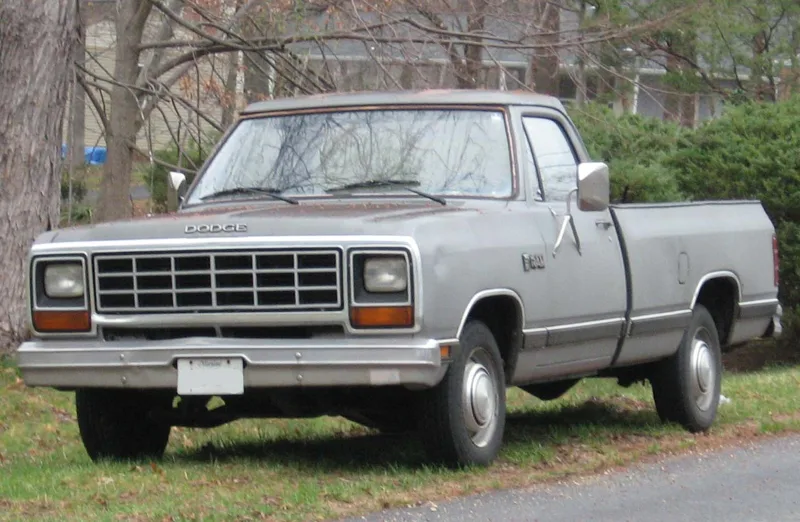
Postwar cars kept the Austin influence, with the Devon and Somerset picked as models. Smaller machines relied on designs descended from the pre-war Austin Seven. The company also built vehicles based on the Willys Jeep and the Dodge M37, and a fully indigenous design only arrived in January 1955.
In 1955 Datsun launched a 110 saloon and a pickup, the 120, built on the same platform, as the Occupation handed the plants back to Japanese control.
Why did Nissan use the Datsun name in America?
For years the cars Nissan made were badged Datsun, and the name stayed on exports. That made the name the natural choice for the 1958 American launch, which began with sales in California. Nissan's US arm was chartered in California in 1960, yet the small cars it exported were still branded Datsun.
The choice also distanced the brand from the parent company's wartime past. Nissan had shifted its Yokohama car output towards military needs soon after the first passenger cars came off the line in 1935, and by 1939 its operations had moved to Manchuria. Americans linked the company with Japanese military production, and the Datsun name helped avoid that association.
Yutaka Katayama, who later ran Nissan's American operations, pushed the Datsun name in the US. After a 1939 trip to Nissan's Manchuria truck plant left him appalled, Katayama quit, and he refused a 1945 order to return. His goal was to sell cars to ordinary buyers, and he saw the Datsun name as having come through the war unstained.
Did the Nissan badge ever appear in America?
Rarely, and mainly in the 1960s. Datsun put a few models under the Nissan name, including the Patrol and a small batch of about 100 Cedric luxury sedans. The Patrol was sold in the US from 1962 to 1969, and the Z car sold at home as the Fairlady Z also carried Nissan badging.
That Patrol was the sole Nissan-badged product on sale in America before the name returned decades later. Until then the American range was branded Datsun from top to bottom, and the brand's sales base grew on that footing.
What was the first Datsun sold worldwide?
The first Datsun exported around the world was the 113, which used a proprietary four-cylinder engine of 850 cc, rated at 25 hp (19 kW; 25 PS). That engine size sat at the heart of the company's early export push, which took the brand well beyond Japan.
The export drive then accelerated. A new plant opened at Oppama, south of Yokohama, in 1962, giving the company the capacity it needed as overseas demand climbed.
How did the Bluebird and 240Z sell?
By 1959 Datsun had dealers across the US and was selling the 310, known at home as the Bluebird. Sales kept climbing: the year after the Oppama plant opened, Bluebird sales passed 200,000 and exports reached 100,000, and by 1964 the car was built at a rate of 10,000 a month.
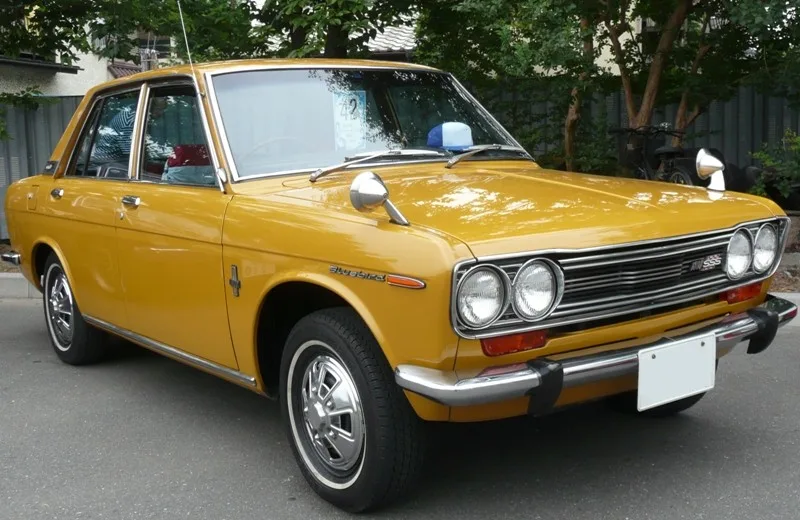
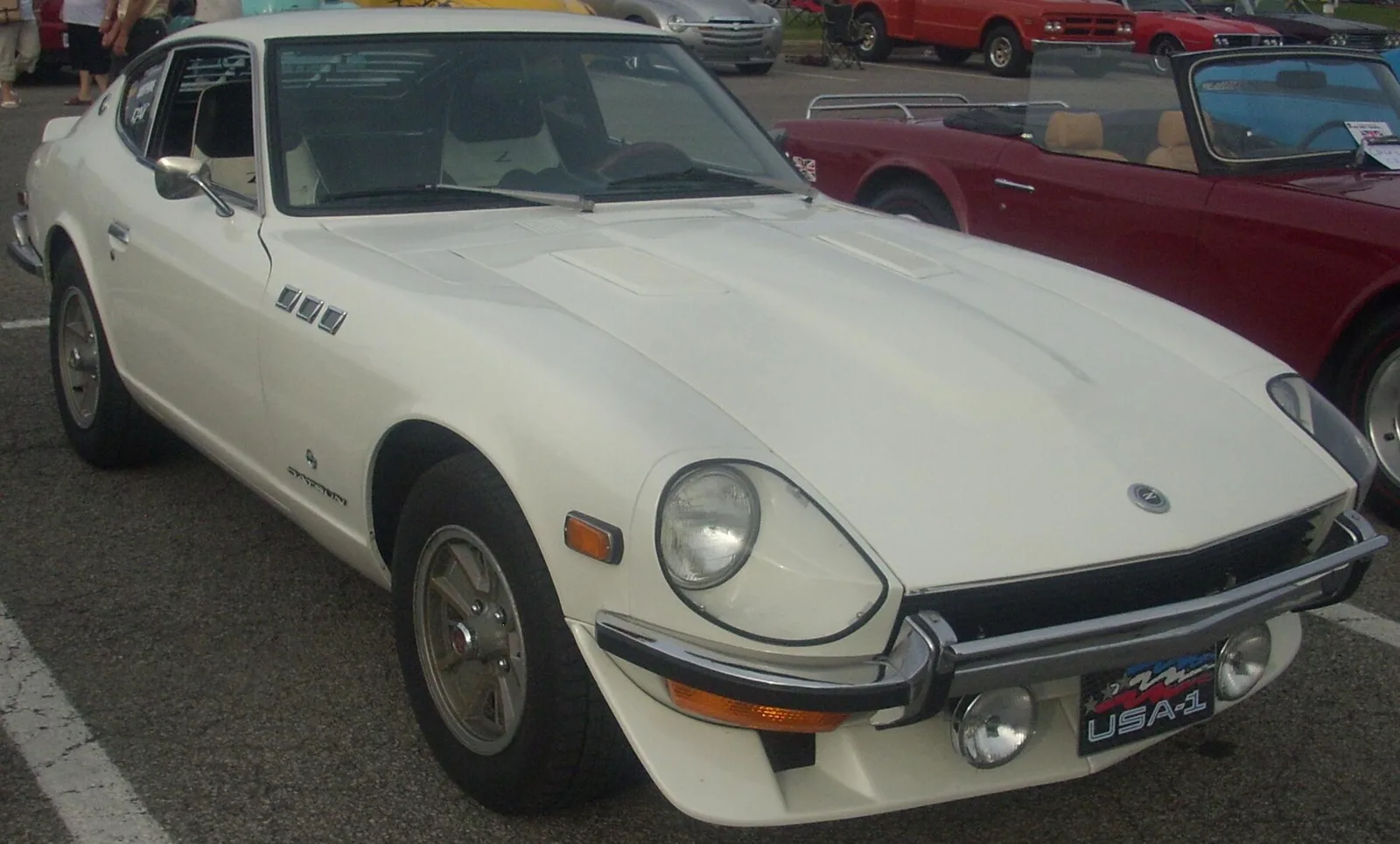
In 1966 the Sunny/1000 gave kei car owners a step up in size. The Bluebird 510 followed in 1967, and in 1968 the 240Z showed that an affordable sports car could make money. It soon became the world's number one-selling sports car, with an engine based on the Bluebird's and suspension components taken from the same family.
In 1966 Datsun also merged with Prince Motors, gaining the Skyline model range and a test track at Murayama.
Did Datsun win in motorsport?
Yes, and the record is strongest in rallying. Katayama, who led the winning Datsun teams, rose to national prominence on the back of the 1958 Australian Mobilgas victories. Datsun won the East African Safari Rally in 1966, and the 240Z later took two outright East African Rally wins.
Those results gave the brand a sporting image that the road cars reinforced. The reputation rests on the 510, the Fairlady roadsters and the Z and ZX coupes, which are the models most often linked with the name abroad.
How did Datsun reach Britain and Europe?
The first Datsun-badged car in Britain arrived in 1935, shipped by Sir Herbert Austin, but it was never meant for the road. Nissan began exporting Datsun cars to the United Kingdom in 1968, and Finland was its first European market from 1962.
Sir Herbert's Type 14 was never intended for sale, and its arrival fed a patent dispute over resemblances to his Austin 7 Ruby. Within a few years Nissan was shipping cars into most of Western Europe.
Britain became the big success. Datsun sold just over 6,000 cars there in 1971, then more than 30,000 the following year, helped by the Cherry 100A and the Sunny 120Y. At a time when British carmakers faced strikes and quality complaints, Nissan often held the largest share of the British market among foreign makers in the 1970s and early 1980s.
The Nissan badge gradually replaced Datsun in the early 1980s. The final new Datsun-badged car in Britain was the Micra supermini, launched in June 1983, and the name had disappeared there by the end of 1984.
Why did Nissan drop the Datsun name?
Nissan dropped the Datsun name because it wanted one name worldwide to strengthen the Nissan brand. The decision to change Datsun to Nissan in the US was announced in autumn 1981, with the aim of supporting a global strategy and shared advertising.
Katsuji Kawamata, who had led the company since 1957, later said Nissan should have put its own name on cars from the start, as Toyota had done. Industry observers suspected a more practical motive, namely helping Nissan sell stocks and bonds in the US. The campaign ran from 1982 to 1984, with Datsun badges gradually fitted with Nissan lettering from the late 1970s onward, and some export markets kept both badges until 1986.
The cost was large. The company put the bill at around US$500 million, including US$30 million to change signs at 1,100 Datsun dealerships and US$200 million on advertising between 1982 and 1986. Even so, Datsun remained better known than Nissan five years after the switch.
Did the Datsun name ever come back?
Yes, in limited form. Nissan used the Datsun name in 2001 for a D22 pick-up sold in Japan, produced from May 2001 to October 2002. On 20 March 2012 Nissan announced a revival as a low-cost brand, and the name was formally resurrected on 15 July 2013.
Nissan argued that the brand's name for value and dependability would help it win share in developing markets. Its early markets were Indonesia, Nepal, South Africa, India and Russia; the Datsun Go reached New Delhi as the first revived model.
| Year | Milestone |
|---|---|
| 1914 | DAT car built by Kaishinsha Motorcar Works in Tokyo |
| 1931 | Production run of the Datson begins |
| 1933 | Name settles as Datsun |
| 1958 | Datsun enters the American market |
| 1968 | 240Z launched |
| 1986 | Datsun name phased out by Nissan |
| 2013 | Revival as a low-cost brand |
| 2022 | Brand discontinued |
Which models did the 2013 revival offer?
The revived range was built around budget cars. The Go, which shared its underpinnings with the Micra, was assembled at the Renault-Nissan facility in Chennai, and the Go+ 5+2 seater arrived in September 2013. The redi-Go crossover followed in India in mid-2015.
Russia received the on-Do, based on the Lada Granta, which launched in April 2014. The on-Do sold from 2014 to 2020, the mi-Do from 2015 to 2020, the Cross from 2018 to 2020, and the redi-Go from 2016 to 2022. The Go was also produced in Indonesia.
How did the revived Datsun brand end?
The revived brand lasted only a few years. Nissan weighed a second withdrawal in 2019 and 2020. By November 2019 it had confirmed that output in Indonesia and Russia would end in 2020, and in April 2022 it shut down car production in India and discontinued the brand.
The final Datsun models were the Go and the redi-Go, which had sold until 2022. As of 2025 the Z remained in production in North America.
Who led Datsun and its parent company?
Yoshisuke Ayukawa led Nissan during the war years and was later imprisoned as a war criminal for 21 months. Katsuji Kawamata headed the company in Japan from 1957 to 1973, while Yutaka Katayama led the North American operations from 1965 to 1975 after serving as vice president from 1960.
Ayukawa also aligned himself closely with Manchukuo, the Japanese colonial state. After his release he was barred from corporate or public office until 1951, and he never returned to Nissan. The company went back to passenger car production in 1947 and took its original name back in 1949.
Katayama preferred steady improvement to chasing rivals. He argued that a company should build its own cars well and not worry overly about what competitors were doing, and as long as he shaped decisions in North America, the cars kept the Datsun name.