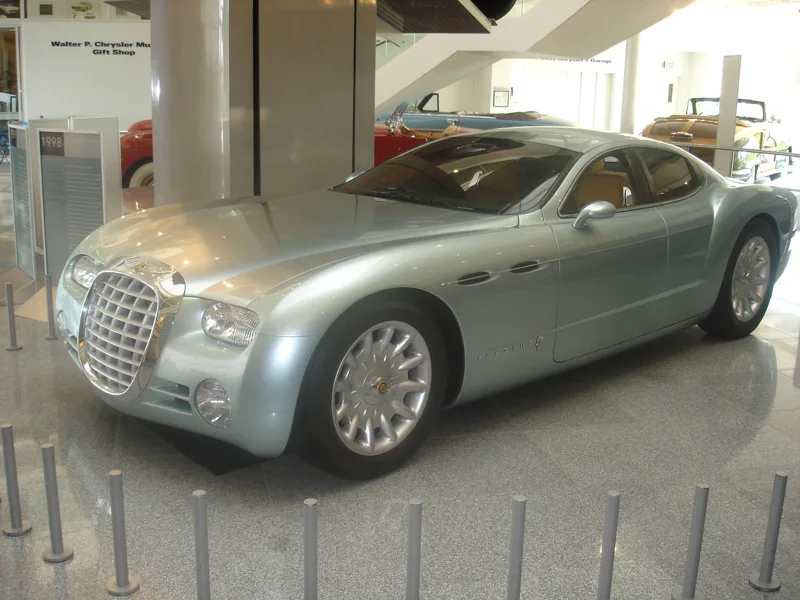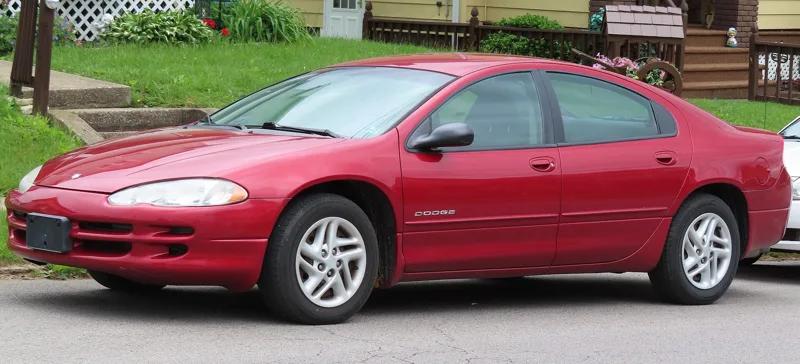
A 1900 machine shop, a 1928 Chrysler purchase, Dart and Charger muscle, the 1984 Caravan and a performance-led Stellantis brand today.
Founded as a Detroit machine shop in 1900, the brand passed to Chrysler in 1928. Today it sits inside Stellantis, known for the Charger and Challenger muscle cars, the Ram trucks and the Hellcat.
Dodge is an American automobile brand and a division of Stellantis, based in Auburn Hills, Michigan. It began as a machine shop founded by two brothers in Detroit in 1900, and for much of its existence it was Chrysler's mid-priced brand above Plymouth. Its performance heritage runs from the Charger and Challenger to the Hellcat.
Where did Dodge come from?
The Dodge Brothers company was founded as a machine shop in 1900 by Horace Elgin Dodge and John Francis Dodge. The brothers first supplied chassis components to Ford's original Model A, which needed only a body and wheels to become a finished car.
The brothers began building complete cars under the Dodge Brothers brand in 1914. Both brothers died in 1920, and the family company was then sold to Dillon, Read & Co. in 1925 for US$146 million before passing to Chrysler in 1928.
Chrysler's purchase came in a stock transfer worth $170 million. With that deal Chrysler gained the Dodge factory and its dealership network, which it used to compete in the low-priced car field against Ford and Chevrolet.
From a 1900 Detroit machine shop to the Hellcat, Dodge has built its name on tough trucks and fast cars.
How did Dodge make its first car?
The first car the brothers designed under their own name was the four-cylinder Dodge Model 30-35 touring car of 1914. It was marketed as a slightly more upscale competitor to the Ford Model T and pioneered features such as all-steel bodies.
The Model 30-35 used 12-volt electrical systems and produced 35 horsepower against the Model T's 20 horsepower. Its sliding-gear transmission also set it apart, and by 1916 Dodge Brothers cars ranked second in US sales.
Why did the Ford dispute matter to Dodge?
In 1916 Henry Ford stopped paying stock dividends to finance his River Rouge complex. The Dodge brothers sued to protect their dividends, and that lawsuit secured them some US$25 million.
The payout meant the brothers were financially secure, which made their later plans for their own car company possible. The Ford dispute is therefore part of the reason the Dodge name became a major automaker rather than a parts supplier.
How did Dodge serve the military?
Dodge vehicles proved themselves in the field during the Mexico campaign, when General Pershing procured a fleet of 150 to 250 Dodge Brothers vehicles. In May 1916 Lt. George S. Patton led a raid in three Dodge Model 30 touring cars, which became an early motorized military operation.
Some 12,800 Dodge cars and light trucks were used in the First World War. Dodge then remained the US military's primary supplier of light-wheeled vehicles until the United States joined the Second World War.
During that second war Dodge built over 400,000 trucks, and Chrysler Canada built another 180,000 Dodge trucks for the British and Commonwealth militaries. Its tough light trucks became a famous part of the company's reputation.
What happened to Dodge between the wars?
Dodge was sold to the Dillon, Read investment group in 1925 and passed to Chrysler in 1928, when it became part of a much larger corporation. Through that period the company also built trucks in large numbers, with 60,000 trucks produced in 1927.
The company's Los Angeles factory, opened in 1932, built Chrysler, DeSoto, Dodge and Plymouth vehicles until it closed in 1971. That plant showed how Dodge was tied into a wider network of Chrysler production.
What did Dodge sell after the war?
Dodge introduced its first V8, the Red Ram Hemi, in 1953, which was a smaller version of the original design of the Chrysler Hemi. Automatic transmissions followed, with PowerFlite arriving in 1954 and TorqueFlite in 1957.
Chrysler borrowed $250 million from Prudential in 1954 to finance its expansion and the updating of its outdated car styling. That investment helped Dodge face the post-war market, where Chrysler had failed to benefit from the boom as General Motors and Ford had.
Which Dodge muscle and pony cars defined the 1960s and 1970s?
The Dart compact ran from 1963 to 1976, and the B-Body Coronet and Charger from 1965 to 1978. The Charger became a NASCAR winner and dominated the racetracks for four years, which changed the face of the sport's aerodynamics.
The Challenger pony car entered the market for the 1970 model year. In 1975 the Charger SE sold 30,812 units, and the Dart's last year in North America was 1976, after which the Aspen replaced it.
How did Chrysler's crisis reshape Dodge in the 1980s?
Chrysler was on the brink of bankruptcy in 1979, when Lee Iacocca requested federal loan guarantees from Congress. The company then worked through a difficult period of smaller models and reorganisation to repay the government loan.
Dodge built the Mirada from 1980 to 1983, with just under 53,000 units produced. The first fruit of Chrysler's crash development programme was the K-Car, whose Dodge version was the Aries, introduced for the 1981 model year.
How did the Caravan change the market?
The Dodge Caravan and Plymouth Voyager arrived in November 1983 for the 1984 model year. Lee Iacocca and Hal Sperlich had developed the idea of a minivan while at Ford, and the Caravan helped establish the minivan as a new segment that took over much of the station wagon's role.
The Caravan also helped save Chrysler as a serious high-volume American automaker. Dodge kept building it for decades, and the Grand Caravan later became the company's last minivan.
What was the Dodge Daytona?
The Dodge Daytona sports car debuted for the 1984 model year, and 49,347 were built. Turbocharged versions sat alongside the standard car, and a performance Shelby version followed in 1987. Buyers could choose between several trim lines, which widened the appeal of the car.
The 1987 Shelby Z used a Turbo II version of the 2.2 L engine producing 174 hp. The Shelby Z also had a heavy-duty transaxle with Getrag gears and upgraded suspension, which made it a sharp performance model.
How did the Dodge Viper change the brand?
In 1992 Dodge pushed its performance image hard with the Viper, an aluminum V10 car with a composite sports roadster body. It became the first step in what Dodge marketed as The New Dodge.
The Viper was built from 1991 to 2010 and again from 2012 to 2017, and it kept Dodge in the frame as the sporty-car division of the brand. Its successors took the same performance route into the modern era.
How big did the Dodge Ram become?
The second-generation Ram arrived in 1994 with bold big-rig styling. Ram sales rose from 95,542 units in 1993 to 232,092 in 1994, and the truck was named Truck of the Year by Motor Trend in 1994.
The Ram was also featured in the 1996 film Twister and in the television series Walker, Texas Ranger. Those appearances helped confirm the truck's place in American popular culture.
How did Dodge handle the bailout and Fiat years?
In 2009 Chrysler received a bridge loan of more than $6 billion at 21%, and the company went on to repay it fully on 24 May 2011, five years early. Fiat's involvement then led to Chrysler's merger with Fiat into FCA, and later into Stellantis in 2021.
Dodge was dropped from the UK in 2010 and from the rest of Europe in June 2011. The brand's European return proved short-lived, which showed how much the company's footprint had shrunk during the recession.
How did Dodge build its performance image?
The Hellcat, introduced in 2015, used a 707 HP supercharged 6.2 L Hemi V8. The Challenger SRT Demon followed in 2017 with an 840 HP supercharged 6.2 L Hemi, which produced 840 HP on race fuel and 808 HP on regular pump gas.
In July 2020 the company said Dodge would become a performance marque with three core models, the Charger, Challenger and Durango, from the 2021 model year. That focus marked a clear split from the mainstream range.
What logos has Dodge used?
Dodge used the Fratzog logo from September 1962 through 1981, a fractured deltoid made of three arrowhead shapes. It was replaced by the Pentastar from 1982 to 1995, and the Fratzog returned in 2025 for the next-generation Charger.
The logo history also included a ram's head hood ornament that the company brought back on the Ram trucks. The earlier crest had given way to other designs, and each change reflected the brand's shifting identity.
What slogans did Dodge use?
Dodge used Dependability, The Dependables from the 1920s to 1967. The New Dodge ran from 1992 to 1999, and Dodge Different followed from 1999 to 2001, marking a clear move towards a bolder voice in advertising.
The New Dodge campaign was narrated by Edward Herrmann, who served as the brand's spokesperson through the 1990s. His voice helped tie the marque's new cars to its reputation for performance and value.
How did Dodge sell abroad?
Dodge cars were built in Brazil from 1969 to 1981, and the Polara series was produced in Argentina from 1968 to 1980. The Caliber arrived in Australia in 2006, and the brand had built trucks in the UK at Kew from 1933.
The brand's overseas history shows how it was made to work in many markets. In most of those markets the Dodge name was eventually withdrawn, and the company's product focus shifted to the United States.
What are the key Dodge models and figures?
| Model | Year | Defining figure | Role |
|---|---|---|---|
| Model 30-35 | 1914 | 35 horsepower | First car under the Dodge Brothers name |
| Red Ram Hemi | 1953 | First Dodge V8 | Post-war engine milestone |
| Dart | 1963 to 1976 | Compact line that became a top seller | Compact family car |
| Charger | 1965 to 1978 | NASCAR winner | B-Body fastback |
| Challenger | 1970 | Pony car with a race-ready Hemi option | Muscle car |
| Caravan | 1984 | Minivan on the K platform family | Helped save Chrysler |
| Daytona | 1984 | 49,347 built | Sports car |
| Viper | 1992 | Aluminum V10 engine | Performance flagship |
| Ram | 1994 | 232,092 sold in 1994 | Truck of the Year |
| Challenger SRT Demon | 2017 | 840 HP on race fuel | Drag racing special |