Push-button shifting, aluminium cases, drag-strip durability and a design that stayed in Chrysler cars until 2007.
TorqueFlite is Chrysler's trademarked automatic transmission family, which began as a three-speed unit in 1956 and used Simpson gearsets with a torque converter. It later spread to Chrysler's rear-drive cars, light trucks and front-drive transaxles.
TorqueFlite is the trademarked name for Chrysler's automatic transmissions, which began as a three-speed unit late in the 1956 model year. Its torque converter and Simpson gearsets gave Chrysler a durable automatic that spread across rear-wheel-drive cars, light trucks and vans, and some front-drive transaxles. The name was later dropped in favour of alphanumeric codes, although it returned on Chrysler's eight-speed automatic.
What is the TorqueFlite transmission?
TorqueFlite is a family of hydraulically controlled automatic gearboxes that Chrysler built from 1956 onwards. Each unit uses a torque converter to transmit power, along with planetary gearsets that give the driver several forward ratios and reverse. The design is built around the Simpson gearset, a pair of identical planetary sets that share a sun gear.
The family earned a reputation for controllability and durability, which later made it a favourite of drag racers and off-road enthusiasts. Its basic architecture stayed in production for more than five decades, changing mainly through added overdrives, lockup converters and new control systems rather than a complete redesign.
Push buttons, aluminium cases and a lockup converter: one family carried Chrysler from 1956 to 2007.
How did the TorqueFlite begin?
The first TorqueFlites offered three forward speeds plus reverse and replaced Chrysler's two-speed PowerFlite. Chrysler licensed the Simpson gear set from Howard Simpson in 1955, and early units gave 2.45:1 for first, 1.45 for second, 1.00 for third and 2.20 for reverse.
Chrysler's units started in first gear when drive or second was selected, which matched General Motors' Hydramatic practice and differed from Ford and Borg-Warner units, which began in second if the driver chose second.
How did the push-button controls work?
Early TorqueFlites were selected with push buttons on the dashboard, usually at the extreme driver's side of the instrument panel. The sequence was reverse, neutral, drive, second and first, and the arrangement varied by model and year. Vertically aligned buttons ran top to bottom, horizontal ones ran left to right, and clustered buttons ran clockwise from the upper left.
The neutral button had to be engaged before the engine could be started, and on some applications it also activated the starter. Aluminium-case units arrived in 1960 with the standard-duty A-904 and in 1962 with the heavy-duty A-727, and both added a parking lever beside the buttons. Moving that lever to park placed the car in neutral and engaged a lock pawl on the output shaft.
Buttons gave way to conventional steering-column or floor-mounted shift levers across Chrysler's automatic-equipped cars for the 1965 model year, although some 1964 models already had floor levers. Shift levers followed the P-R-N-D-2-1 order, a pattern drivers still recognise.
When did the TorqueFlite design change?
Changes came steadily across the decade. In 1962 a canister-style fluid filter sat in the cooler line. For 1964 the canister was removed, a Dacron filter replaced the internal intake screen, and fluid life grew to 50,000 mi (80,000 km) from the earlier 12,000 mi (19,000 km), and the oil pan lost its drain plug.
For 1966 the old twin-cable control was replaced by a rigid arrangement of rods and levers. The rear pump was removed to cut cost and weight, and that single change made push-starting impossible. Chrysler judged that better electrical and fuel systems had reduced the need for push-starting, and that safety concerns outweighed its benefits. Owners who relied on push-starting had to find another way to turn the engine over after that year. The gated shift quadrant also allowed the reverse safety blocker valve to be dropped.
Part-throttle downshifts were added to the A-904 with six-cylinder engines in 1968. They let the transmission drop from third to second in response to moderate pedal pressure rather than only at full throttle. The change was needed because taller final-drive ratios, such as 2.76:1 rear gears, were replacing 2.93:1 or 3.23:1 sets. The feature reached V8 A-904s in 1969 and most A-727s in 1970 and 1971.
Most units gained a lockup torque converter clutch in 1978, which mechanically joined the impeller and turbine to remove slip and improve highway economy. That meant the converter no longer had a drain plug. In 1980 a wide-ratio gearset arrived for the A904, A998 and A999, with a 2.74:1 first gear, 1.54 second and 1.00 third.
Which vehicles used the TorqueFlite?
From 1962 a version of the TorqueFlite was offered on rear-wheel-drive Chrysler products, including Plymouth, Dodge, DeSoto, Chrysler and Imperial models, either as an option or as standard equipment. In light-duty Dodge trucks and vans the same unit was sold as the LoadFlite,.
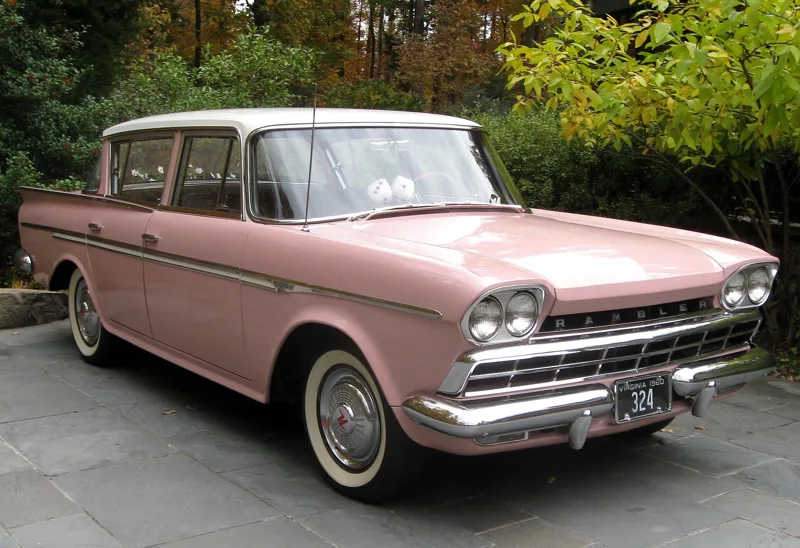
Outside Chrysler the gearbox had a varied career. American Motors replaced its Borg-Warner automatics with the TorqueFlite from the 1972 model year and marketed it as Torque-Command. Other users included International Harvester, the Maserati Quattroporte, Monteverdi and Bristol, plus a range of light and medium trucks and panel vans.
| Designation | Introduced | Main role |
|---|---|---|
| A466 | Original | Cast-iron case, separate converter housing, no parking pawl |
| A727 (36RH/37RH) | 1962 | Heavier duty, one-piece aluminium case, drag racing favourite |
| A904 (30RH) | 1960 | Standard duty for smaller and lighter vehicles |
| A998 (31RH) | Medium duty | Narrow or wide ratios with four direct friction plates |
| A999 (32RH) | Heavy duty | Wide ratios with five direct friction plates |
| A500 | 1988 | First light-duty Chrysler four-speed automatic |
| A518 (46RH/46RE) | Trucks and vans from 1990 | A727 derivative with overdrive, fourth gear 0.69:1 |
| A618 (47RE/48RE) | Mid-1990s; 48RE from 2004 | Heavier duty, input torque rating 450 lb ft (610 N m) |
How do the TorqueFlite names work?
Codes used until 1991 combined the letter A with three digits. Later units use four characters instead. In those codes the characters show, in turn, the number of forward speeds, the torque capacity, the drive type or transaxle orientation and the control system.
The name was retired in the 1990s, but the original concept underpinned many Chrysler-built gearboxes until 2007. The front-drive transaxles in the family ran until 2000. The latest eight-speed automatic revived the TorqueFlite name, which shows how the badge outlived the codes that replaced it.
What were the front-wheel-drive TorqueFlites?
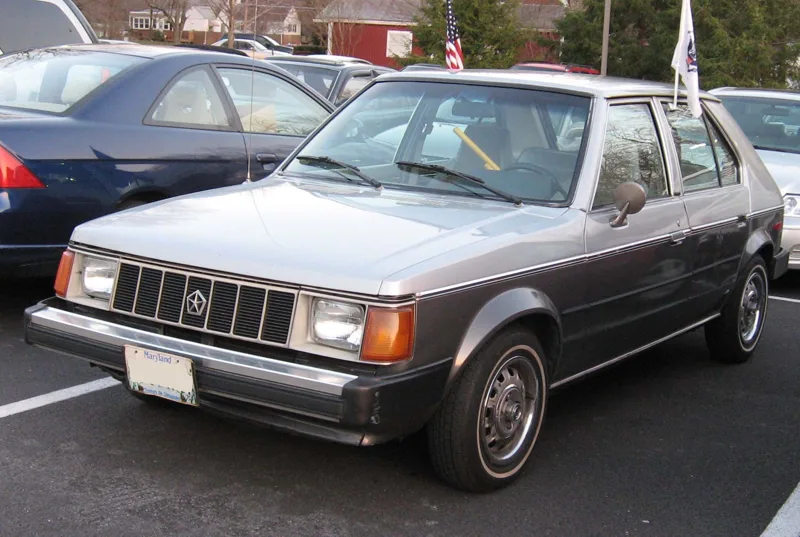
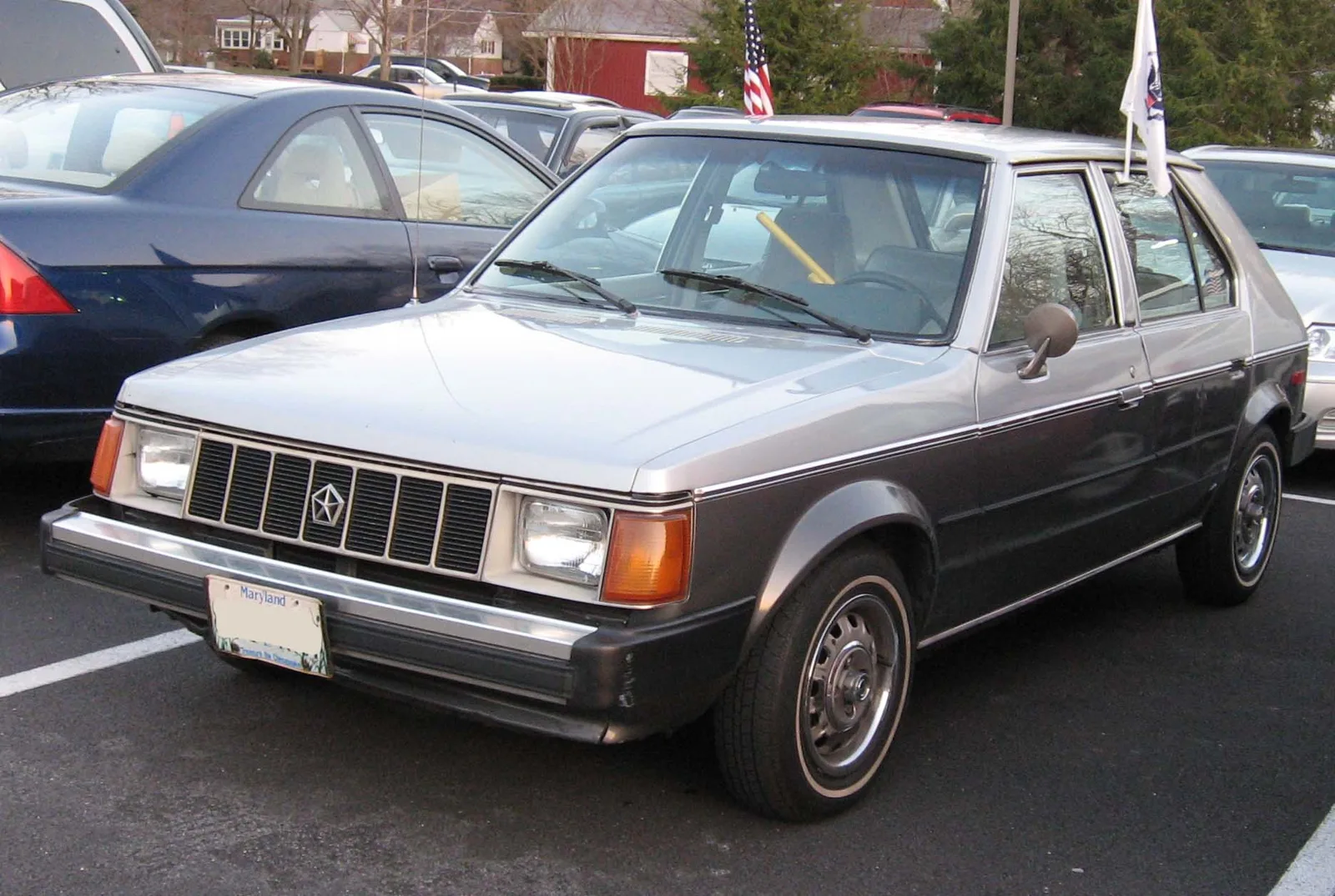
The A404, A413, A470 and A670 were front-wheel-drive transaxles derived from the A904. Chrysler designed the A404 in the late 1970s for the Dodge Omni and Plymouth Horizon subcompacts. It was strengthened to become the A413 in 1981 for the K-car engines of 2.2 and 2.5 L, and later units followed for minivans and other models.
The A470 was a stronger version, paired with Mitsubishi's 2.6 L Astron engine in K-cars from 1981 until 1985, and in minivans from 1984 through 1987. The A670 was the highest-specification three-speed transaxle, fitted to the 3.0 L Mitsubishi V6 in Chrysler cars and minivans from 1987 to 2000. Chrysler's four-speed Ultradrive, which debuted in 1989, eventually replaced the three-speed units.
What are the strengths and drawbacks of the TorqueFlite?
The family's reputation rests on controllability, reliability and brute strength. Heavier-duty A727 units became popular for drag racing, off-roading and monster trucks because they were easy to control and cheap to repair. The aluminium case also saved about 60 lb (27 kg) over the cast-iron A466 it replaced.
The drawbacks were mostly practical. The push-button layout varied from model to model, so drivers had to learn each car's sequence, and the removal of the rear pump in 1966 ended push-starting for good. The lockup change in 1978 also removed the converter drain plug. Each of these choices traded cost and simplicity against convenience in its own era.
How did the overdrive versions change the TorqueFlite?
The overdrive units were a bolt-on two-speed output section fitted behind the three-speed gearbox. They offered only two ratios, direct at 1:1 and overdrive at 0.69:1, so the fourth gear eased engine speed on the highway. The A518, later renamed 46RH and 46RE, was the first of these designs and reached trucks and vans from 1990.
Lubricating the overdrive unit proved a challenge early on, but factory changes and aftermarket valve body kits solved most of the trouble. The six-pinion overdrive planetary used in the heavier units was often fitted by aftermarket builders in place of the four-pinion version found in lighter-duty transmissions.
What did the 48RE add to the heavy-duty line?
The 48RE was introduced in 2004 for third-generation Ram pickups with the 5.9 L Cummins turbo-diesel or the V10. It succeeded the 47-series as a stronger, ECU-controlled four-speed, and it carried the highest-volume pump in the family, a 10-lobe design with tighter clearances that moved more fluid through a larger cooling circuit.
Internal changes followed the extra torque. The direct drum took five clutch frictions and five steels, the forward drum was deepened to hold a fifth direct friction plate, and six-pinion planets were introduced with more robust thrust washers. The valve body also allowed second-gear lockup in manual second and part-throttle third-gear lockup, which improved everyday driving.
From 2004.5 to 2007 the 48RE was fitted with a transmission throttle valve actuator, an electric motor that removed the need for a mechanical throttle valve cable.
Why does the A904 matter for smaller vehicles?
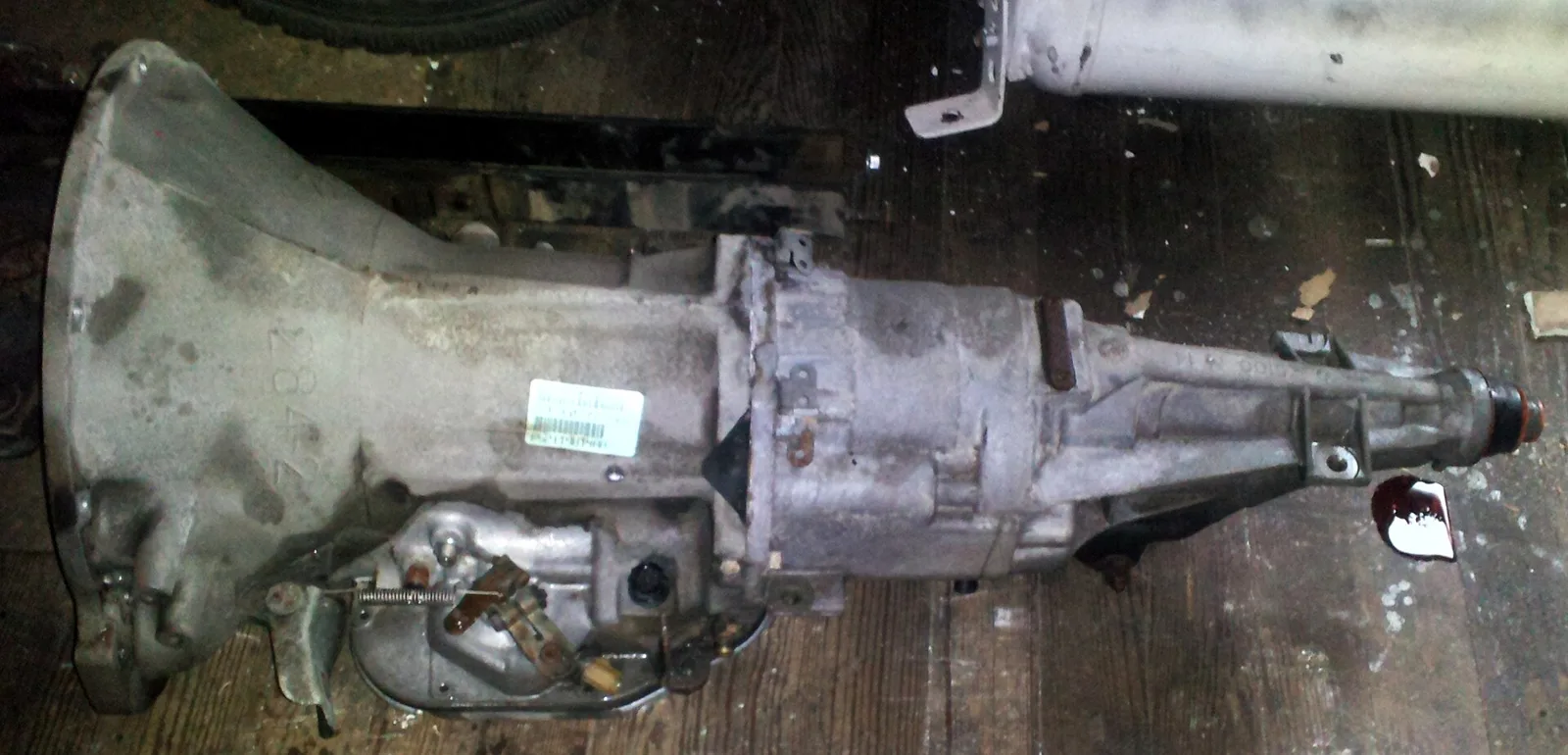
The compact A904 was the standard-duty choice for lighter cars and trucks fitted with six-cylinder or small V8 engines. Its uses ran from the 273 V8 introduced in the 1964 model run to the 318 LA V8, and from the slant-six engines of 1960 to 1976 through AMC models including the Hornet, Gremlin, Pacer and Concord.
Later the A904 found its way into Jeep products. The Cherokee (XJ) used it from 1984 to 1986 and again from 1994 to 2000, with GM 2.8 L LR2 V6 or AMC 2.5 L four-cylinder engines, and the Wrangler (YJ) and (TJ) carried it with four-cylinder engines in the mid-1990s and again from 1997 to 2002. Bellhousing patterns were unique to each engine family.
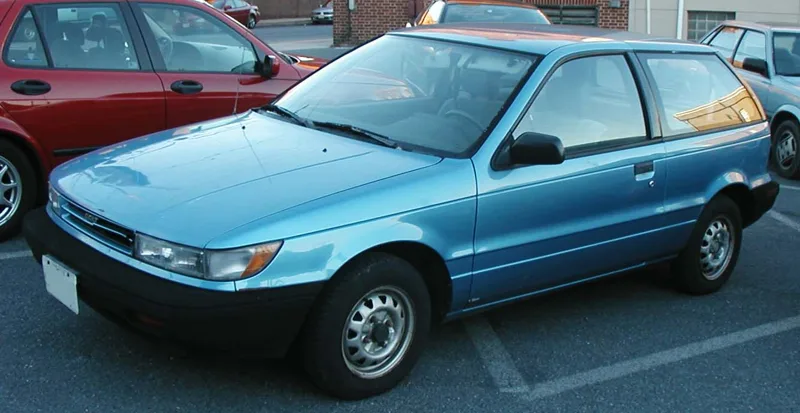
Mitsubishi also built a smaller version of the A904 for the Dodge Colt and Plymouth Champ cars it made in Japan. That variant used a 10 in (25 cm) torque converter, against 10.75 in (27.3 cm) on the standard unit.