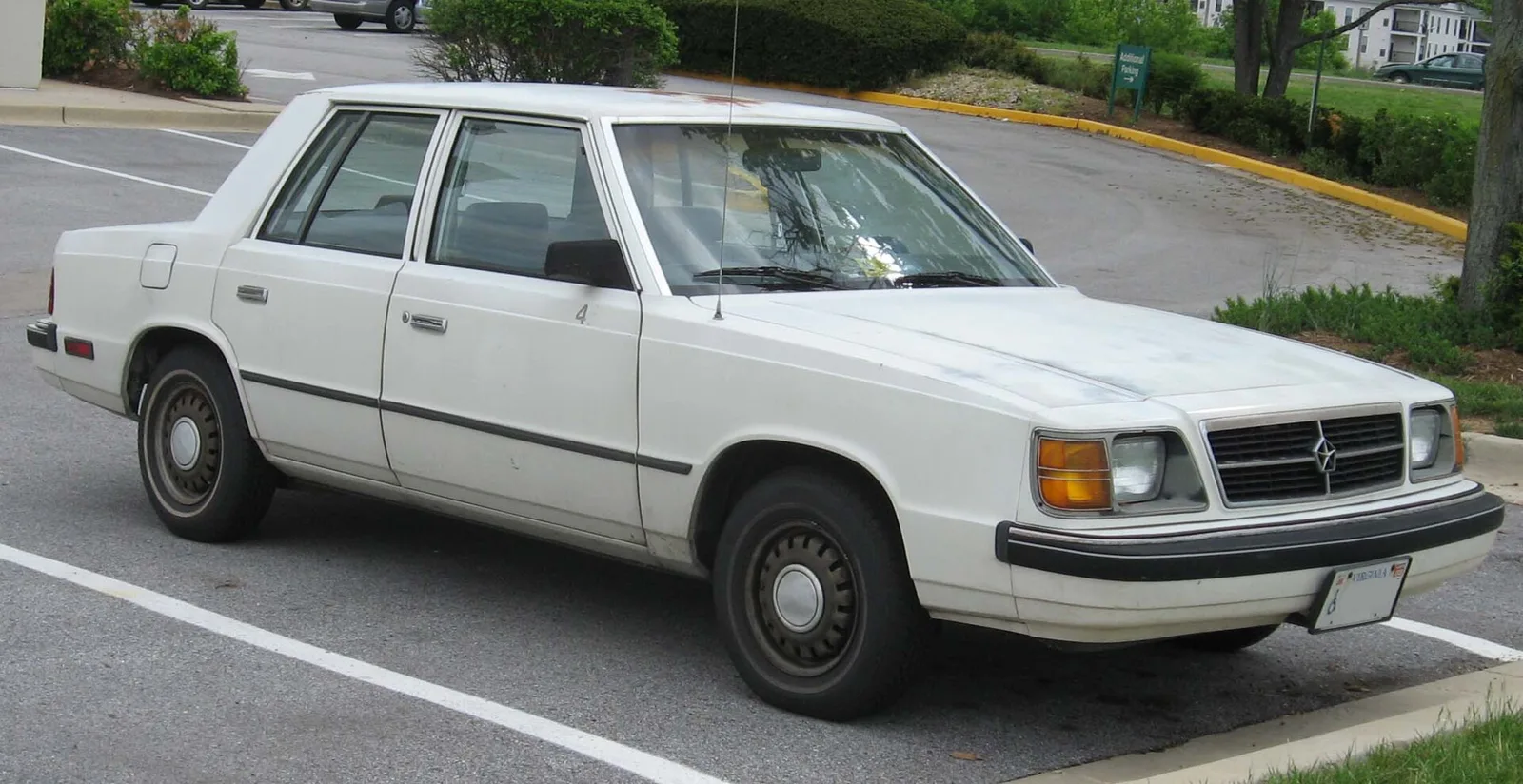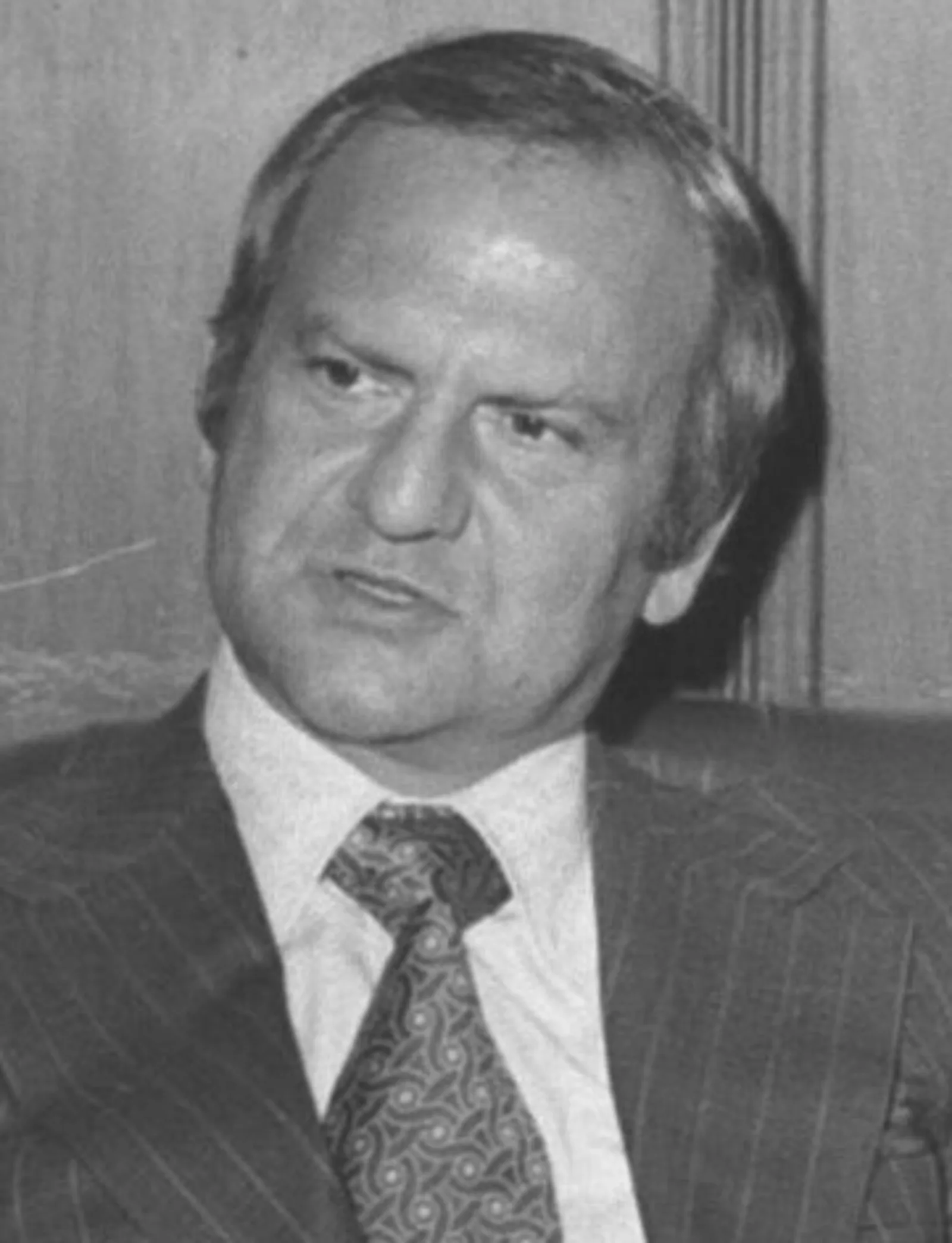
Fired by Ford in 1978, Iacocca took over a failing Chrysler, won a loan guarantee from Congress and rebuilt it around the K car and the minivan.
Lee Iacocca developed the Ford Mustang, was fired by Ford in 1978, and became Chrysler's CEO in 1979. He won $1.5 billion in government loan guarantees and rebuilt the company around the K car and the 1983 minivan, then retired at the end of 1992.
On 13 July 1978 Ford fired its president, even though the company had posted a profit of $2 billion for the year (about $9.87 billion in 2025 money). The man shown the door was Lee Iacocca, the executive behind the Mustang. Chrysler, a company close to going under, had been courting him strongly, and by September 1979 he was its chief executive and asking the United States Congress for a loan guarantee.
Who was Lee Iacocca?
Lido Anthony Iacocca, known as Lee, lived from 15 October 1924 to 2 July 2019. As an engineer-turned-executive and author, he created the Ford Mustang, Continental Mark III and Ford Pinto during the 1960s and then, in the 1980s, brought Chrysler back to life as chief executive. His Chrysler titles were president from 1978 to 1991 and chairman and CEO from 1979 to the end of 1992. Very few people have run two of America's Big Three car makers.
He was born in Allentown, Pennsylvania, the son of Nicola Iacocca and Antonietta Perrotta, Italian Americans from San Marco dei Cavoti who had settled among the steel mills of eastern Pennsylvania's Lehigh Valley. Relatives started a restaurant, Yocco's Hot Dogs, that now has five sites in and around Allentown. His unusual first name, Lido, was said to come from a honeymoon in Venice's Lido district, but he dismissed that in his autobiography as romantic and untrue.
He finished Allentown High School with honors in 1942 and studied industrial engineering at Lehigh University. A Wallace Memorial Fellowship then carried him to Princeton, and in 1946 he had a master's in mechanical engineering.
If you can find a better car, buy it.
From Ford engineer to the Mustang
Iacocca joined Ford in August 1946 as an engineer, but after a brief spell he asked to move into sales and marketing, and his career took off. As assistant sales manager in the Philadelphia district he became nationally known for a campaign called 56 for '56, which offered loans on 1956 model year cars with a 20% deposit and payments of $56 a month for three years. It went national, and he was called to the headquarters in Dearborn.
The promotions came quickly. On 10 November 1960 he became vice-president and general manager of the Ford Division. Vice-president of the car and truck group followed in January 1965, executive vice-president in 1967 and, on 10 December 1970, president.
He had a hand in several successful Ford designs, above all the Mustang, along with the Continental Mark III and the Escort, and in the late-1960s revival of Mercury, which brought the Cougar and the Marquis. He also talked company boss Henry Ford II into going racing again, with wins at the Indianapolis 500, in NASCAR and at the 24 Hours of Le Mans. Other ideas never became Ford products and reached showrooms through Chrysler instead: the K car and the minivan.
The Pinto
In 1968 Iacocca foresaw a need for small, fuel-efficient cars built in America and proposed one that weighed under 2,000 pounds and cost less than $2,000. Ford's European arm already sold such a model, the Escort, but Ford designers in the United States were told to create an entirely new car inside and out, which was named the Pinto. Production began for the 1971 model year, with Iacocca cast as its moving force.
In 1977 it was alleged that the Pinto's structure let the fuel filler neck snap off and the tank be punctured in a rear-end crash, leading to fatal fires. The following year every 1971 to 1976 Pinto was recalled for shielding and reinforcement around the tank.
The break with Henry Ford II
Iacocca eventually reached the presidency but clashed with Henry Ford II, and the dismissal in July 1978 followed.
What state was Chrysler in?
Walter Chrysler founded the company on 6 June 1925 from the Maxwell Motor Company. In 1928 it created Plymouth and DeSoto and bought Dodge Brothers, and in 1960 it became the first of the Big Three to move its passenger cars to unibody construction. By the 1960s it had taken control of Simca in France, Rootes in Britain and Barreiros in Spain, merged into Chrysler Europe in 1967.
The 1970s were hard. Demand shifted to small cars after the 1973 oil crisis, and Chrysler, the smallest of the Big Three, could not meet it, while import competition and tougher safety, fuel economy and emissions rules added to the burden. When the dependable Dart and Valiant ended in 1976, quality control slipped. The Dodge Aspen and Plymouth Volare that replaced them rode comfortably and handled well, but owners soon met serious reliability problems: engines that failed or ran badly, and bodies that rusted prematurely. Iacocca said later that recalls of the two cars were among the causes of Chrysler's woes.
In 1978, with Chrysler losing millions in North America, Chrysler Europe was sold to PSA Peugeot Citroen for a nominal $1, which took its substantial losses and debts with it. Iacocca arrived at a company that appeared close to going out of business. He started rebuilding it from the ground up, and brought in many former Ford associates.
The Chrysler bailout of 1979
Chrysler realised it would fail without a large injection of cash and, in 1979, asked Congress for a loan guarantee. The chairman and CEO, John J. Riccardo, resigned on 17 September 1979, convinced the company would stand a better chance of government aid under new leadership. He stepped down three days later and Iacocca took over.
Congress passed the Loan Guarantee Act, which provided $1.5 billion in guarantees. There was a catch: Chrysler also had to find $2 billion in concessions or help from outside the federal government.
| Source of concessions | Amount |
|---|---|
| Interest rate reductions | $650 million |
| Asset sales | $300 million |
| State and local tax concessions | $250 million |
| Wage reductions | About $590 million |
| Dealers and suppliers | $180 million |
| Stock offering | $50 million |
Chrysler also had to cut costs and drop some longstanding projects. Among them was the turbine engine, ready for customers in 1979 after almost two decades of development. Plant closures and salary cuts, agreed by management and the unions, followed.
The cars that saved Chrysler
Omni and Horizon
Iacocca arrived shortly after the launch of the subcompact Dodge Omni and Plymouth Horizon. They closely resembled the Volkswagen Rabbit, drove through the front wheels and were instant hits, each selling over 300,000 in its first year. The Omni came from Chrysler Europe's Horizon, among the first purpose-designed world cars, so the American and European versions looked nearly identical outside. Underneath, the engines, transmissions, suspensions, bumpers and interiors were quite different. Early American cars used Volkswagen-based engines, while European ones used Simca engines, because Chrysler had no engine of the right size until the K car's 2.2L arrived. Ironically, some later base Omnis used a French Peugeot-based 1.6L.
The K car
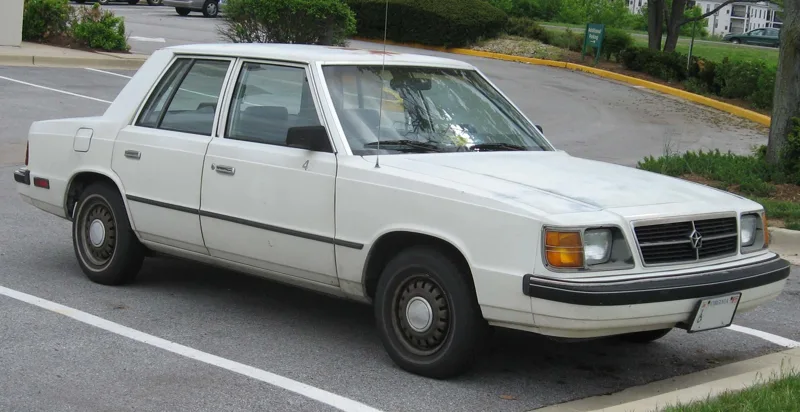
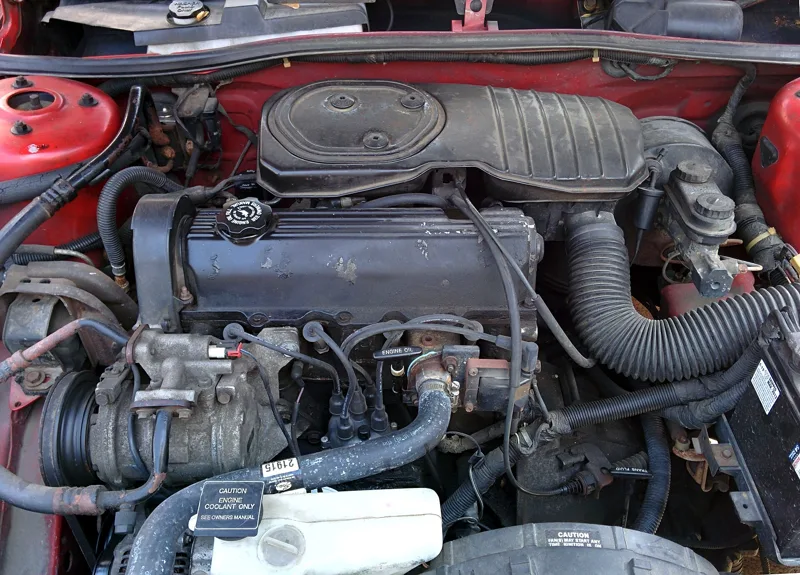
The first of the K-car line, the Dodge Aries and Plymouth Reliant, appeared in 1981 on a new K platform developed from the Horizon and Omni hatchbacks. They drew on design proposals that Ford had turned down while Iacocca and Sperlich were there. Arriving in the depths of the 1980 to 1982 recession, these compact, thrifty, low-priced front-wheel-drive cars sold quickly. Chrysler had not built a four-cylinder engine since 1933, so the Chrysler-engineered K engine mattered. Iacocca also brought back the big Imperial as the flagship, with fully electronic fuel injection and an all-digital dashboard.
The minivan
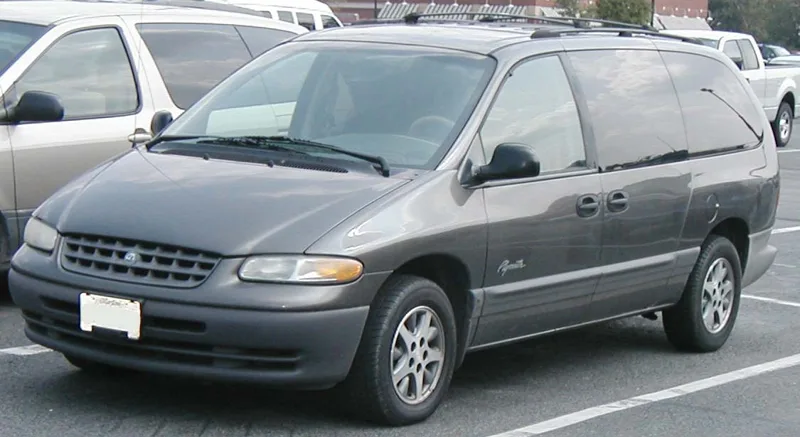
The Dodge Caravan and Plymouth Voyager followed in November 1983, on a modified K platform. They came from the Mini-Max project that Iacocca brought from Ford. Mini-Max was a restyled version of the minivan that Toyota was selling in huge numbers in Asia and Latin America, yet Henry Ford II wanted nothing to do with it, and his view doomed it at Ford. Sperlich, the project's driving force, was dismissed some months before Iacocca and joined Chrysler, where the two made automotive history together. The minivan topped industry sales for a quarter of a century.
The K cars, the minivans and Iacocca's reforms turned the company around fast. Chrysler was back in profit by 1980 and repaid the loans, with interest, in 1983, which was reported as seven years ahead of schedule.
Iacocca's advertising and later deals
Throughout the 1980s Iacocca appeared in commercials developed by Kenyon & Eckhardt with his longtime friend and advertising executive Leo-Arthur Kelmenson. The campaign line was The pride is back, and he delivered what became his trademark challenge: find a better car and buy it.
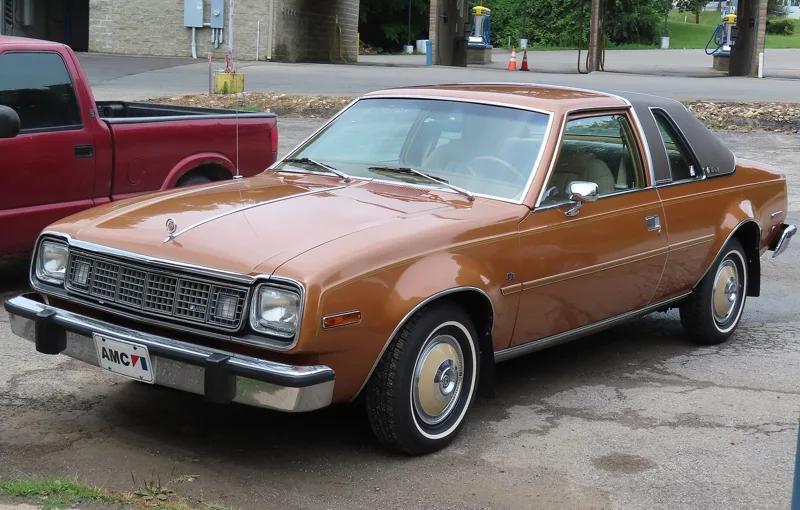
In 1985 Chrysler created Diamond-Star Motors with Mitsubishi, extending their relationship. In 1987 Iacocca led the acquisition of American Motors Corporation, which brought the profitable Jeep division and the short-lived Eagle brand into Chrysler. AMC had completed most of the work on the Jeep Grand Cherokee, which he wanted. It was released in 1992 for the 1993 model year, the year Iacocca retired.
What happened after Iacocca left?
In 1995 he backed the billionaire Kirk Kerkorian in an unsuccessful hostile bid for Chrysler. In 1996 Kerkorian and Chrysler struck a five-year deal that bound Iacocca to silence in public about the company. In July 2005 he came back as the company's pitchman, alongside Jason Alexander and Snoop Dogg, for a pricing promotion that revived his old line. His fees, plus $1 for each vehicle sold from 1 July to 31 December 2005, were given to his foundation, for type 1 diabetes research.
The company's own path was turbulent. In 1998 it merged with Daimler-Benz to form DaimlerChrysler, a merger that proved contentious with investors, and in 2007 Cerberus Capital Management bought it, and it became Chrysler LLC. Chrysler filed for Chapter 11 reorganisation on 30 April 2009 and emerged on 10 June 2009 owned mainly by the United Auto Workers pension fund, Fiat and the American and Canadian governments. It defaulted on over $4 billion in debts. By May 2011 it had finished repaying its government obligations five years early, although the cost to American taxpayers was $1.3 billion.
Iacocca told Newsweek in April 2009 that it was a sad day, and urged the company to bring workers, plant managers and dealers together for real solutions. After the sale he lost part of his pension and a guaranteed company car.
Where Chrysler stands now
Fiat acquired the rest of Chrysler in January 2014, and Fiat Chrysler Automobiles was set up in May 2014. When FCA merged with PSA on 17 January 2021, Chrysler became a subsidiary of the Stellantis Group. It now trades as Stellantis North America, selling under the Chrysler, Dodge, Jeep and Ram nameplates from its base in Auburn Hills, Michigan.
Books, businesses and causes
Iacocca: An Autobiography, written in 1984 with William Novak, was the best-selling non-fiction hardback of 1984 and 1985, and he gave the proceeds to type 1 diabetes research. In 1988 came Talking Straight, written with Sonny Kleinfeld, and in 2007 Where Have All the Leaders Gone?, with Catherine Whitney. In May 1982 President Ronald Reagan put him in charge of the foundation raising money to restore the Statue of Liberty and Ellis Island. His later ventures ranged from an olive-oil margarine, founded in 1993, to electric bicycles from 1997 and the electric vehicle firm EV Global Motors in 1999.
What this means for a car buyer
The Chrysler recovery was built on products. Small, efficient front-wheel-drive cars arrived in 1981 and the minivan in 1983, and the 1987 purchase of AMC brought in Jeep. For anyone looking at a Chrysler, Dodge or Jeep today, those three moves are the ones that mattered.