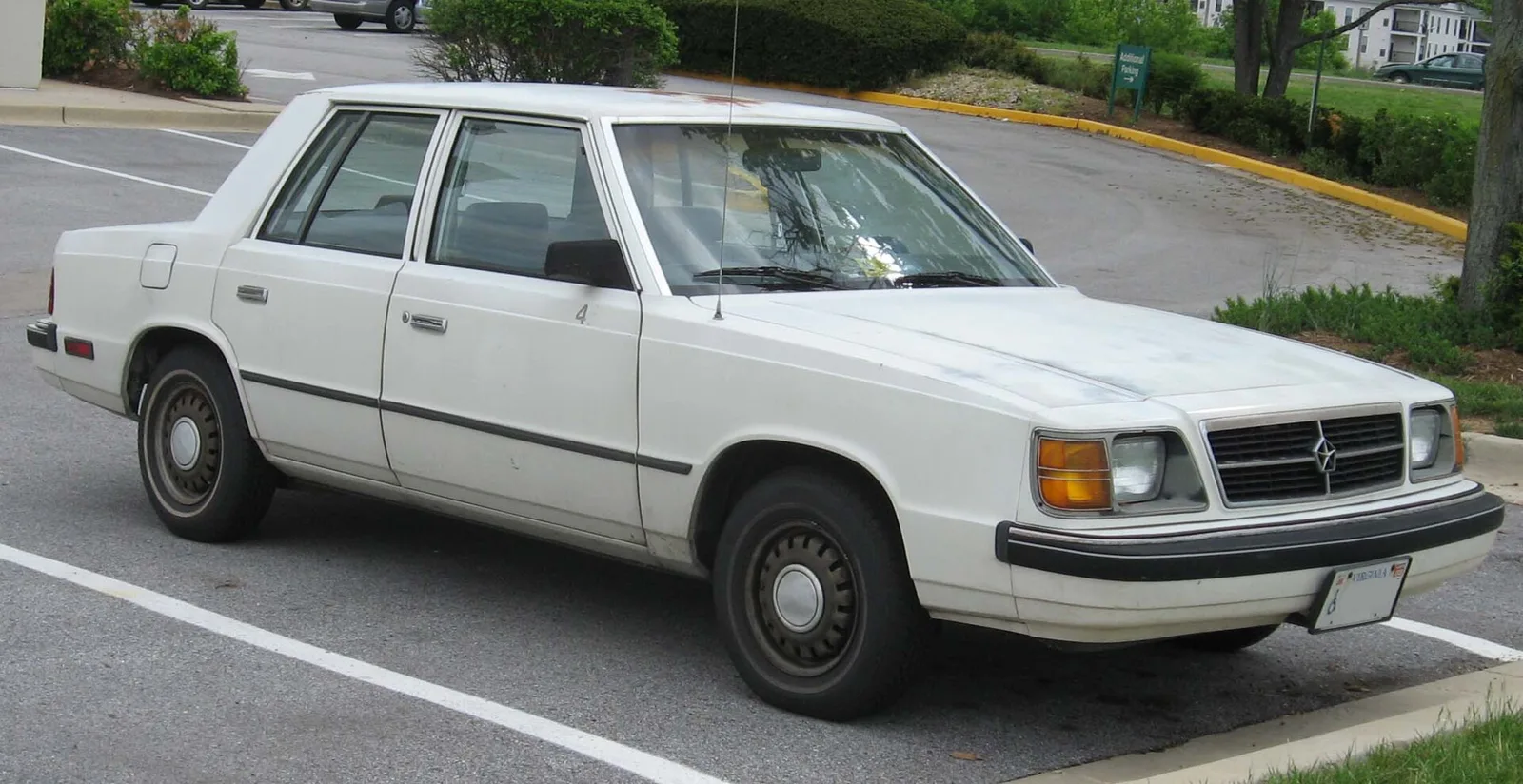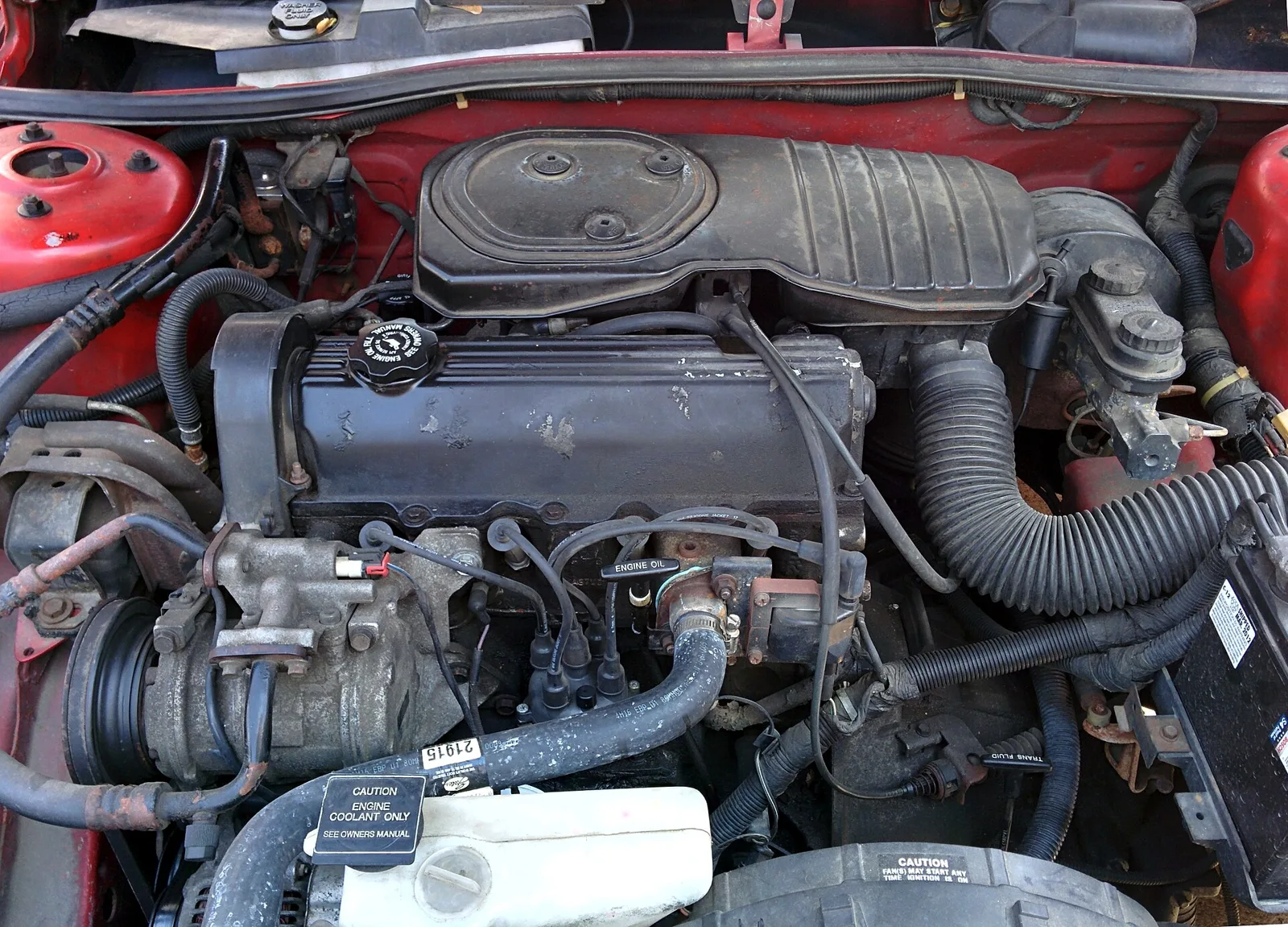
The overhead cam four that carried Chrysler's smaller cars from 1981, with turbo and high-output versions that reached 224 horsepower.
The Chrysler 2.2 and 2.5 was an overhead cam inline-four family launched in 1981 and known as the Trenton Engine. It was the basis for Chrysler's four-cylinder engines until 1994 and was built in turbo, high-output and balance-shaft forms until 2000.
The Chrysler 2.2 and 2.5 litre fours, known as the Trenton Engine, were overhead cam inline-four engines that carried the company's smaller cars from 1981. They grew into turbocharged and high-output forms, and the Turbo III's 224 horsepower (167 kW) was the family's peak output.
Where did the Chrysler 2.2 and 2.5 come from?
Chrysler developed the 2.2 and 2.5 for its K- and L-platform cars, and the engine launched in 1981 as the basis for all Chrysler four-cylinders until 1994. Its nickname, the Trenton Engine, came from the plant where it was made. The block and valvetrain were not derived from the company's LA series V8.
Chief Engineer Willem Weertman led the engine design and development work. Charles Pete Hagenbuch ran performance tuning, having earlier worked across most of Chrysler's V-8 range and the Slant-6. The result was the first Chrysler-engineered four-cylinder since the flathead four was discontinued in 1933.
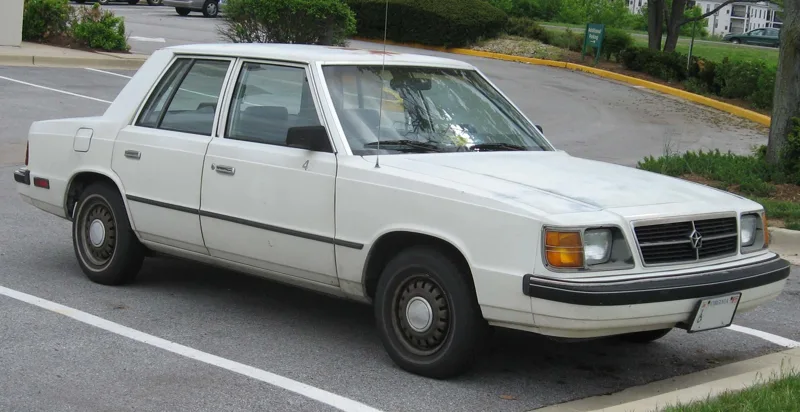
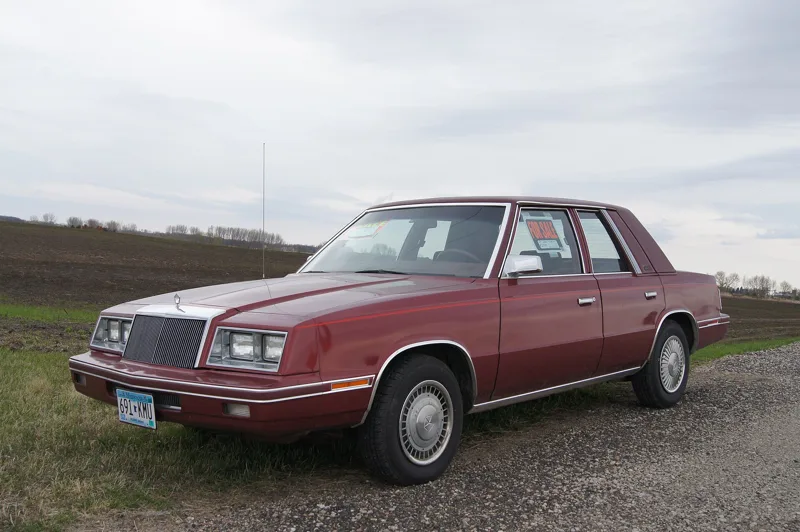
The first version was a normally aspirated 2.2 L (134 cu in) unit. It appeared in the 1981 Dodge Aries, Dodge Omni, Plymouth Horizon and Plymouth Reliant, and it stayed in production until 2000.
From the 1981 Trenton Engine to the 224 horsepower Turbo III, one four-cylinder family covered a wide range of Chrysler cars.
How was the 2.2 engine's block laid out?
The 2.2 had an undersquare bore of 87.5 mm (3.44 in) and a 92 mm (3.62 in) stroke, giving 2,213 cc (135.0 cu in). It was a siamesed design with no coolant passages between cylinders, and its cast iron block used a timing belt and was a non-interference engine.
The bore spacing of 96 mm (3.78 in) limited how far the bore could later grow. Capacity growth for the 2.5 came from a raised deck and a longer stroke instead, which kept the same basic architecture.
How much power did the 2.2 make?
The first carburetted 2.2 produced 84 horsepower (63 kW). Output rose to 96 horsepower (72 kW) and 119 lb-ft (161 Nm), and the fuel-injected versions that followed reached 93 to 99 horsepower (69 to 74 kW) with 122 lb-ft (165 Nm).
Fuel injection arrived in 1984 on both turbocharged and normally aspirated models. In 1985 it became optional on the lower-end Dodge Omni, Plymouth Horizon, Dodge Aries and Plymouth Reliant, eventually replacing the carburetted engine across the board. Higher-end models such as the Chrysler E-Class, Laser and New Yorker had it as standard.
What was the High Output 2.2?
The High Output 2.2 used a revised camshaft and a block that was decked to raise the compression ratio. It produced 110 horsepower (82 kW) and 129 lb-ft (175 Nm), and it helped the 1983 and 1984 Dodge Shelby Charger reach 50 miles per hour (80.5 km/h) in 5.5 seconds.
The Shelby Charger covered the quarter mile (402 m) in under 16 seconds,. The 1985 Dodge Charger Shelby switched to the Turbo I, so the High Output unit became an option on regular Dodge Chargers that year.
Other applications included the 1985 Plymouth Turismo, the 1984 to 1985 Dodge Omni GLH and the 1985 to 1987 Dodge Charger. Owners can recognise the version by its chrome valve cover and tighter timing cover.
How did the turbo versions differ?
Chrysler built four turbocharged series, known as Turbo I, Turbo II, Turbo III and Turbo IV. The main differences lay in the intercooler, which every version had apart from Turbo I, and in the cylinder heads and turbo hardware. Turbo III used a Lotus head and Turbo IV pioneered variable nozzle technology.
Turbo I arrived in 1984 with a Garrett T03 turbocharger and a mechanical wastegate that limited boost to 7.2 pounds per square inch (50 kPa). It was rated at 142 horsepower (106 kW) and 160 lb-ft (217 Nm), helped by a lower compression ratio, special pistons and high-strength valves.
For 1985 a computer-controlled wastegate, aided by a knock sensor, permitted 9 pounds per square inch (62 kPa) of temporary overboost. The 1985 figures reached 146 horsepower (109 kW) and 168 lb-ft (228 Nm), and a Mitsubishi TE04H turbo and new intake manifold followed for 1988.
Turbo II was an intercooled version first seen in the 1986 Shelby GLH-S. Shelby modified a stock Turbo I and fitted an intercooler and other parts to reach 175 hp (130 kW) with a flat 175 ft lbf (237 N m) torque curve. The factory production Turbo II gave 175 hp (130 kW) and 200 lb-ft (271 Nm) at 12 pounds per square inch (83 kPa) of boost, paired with the A520 5-speed manual.
What made the Turbo III stand out?
The Turbo III used a Lotus-made DOHC 16-valve head and produced 224 horsepower (167 kW) and 217 lb-ft (294 Nm). It powered 1,399 Dodge Spirit R/T cars, several hundred Dodge and Chrysler Daytona IROC R/T models and a number of cars sold in Mexico.
Cars that used the 2.2 Turbo III included:
- 1991 to 1992 Dodge Spirit R/T (North America)
- 1991 to 1994 Chrysler Spirit R/T (Mexico)
- 1992 to 1993 Dodge Daytona IROC R/T (North America and Europe)
- 1992 to 1993 Chrysler Phantom R/T (Mexico)
- 1991 to 1993 Consulier GTP (USA)
Turbo IV was a turbocharged SOHC intercooled version with variable nozzle turbo technology, which reduced lag. It appeared in the 1989 Shelby CSX, then in regular 1990 production Dodge Shadows, Daytonas and Chrysler LeBarons. Production was limited to around 1250 units.
What was special about the Chrysler TC?
The Chrysler TC, developed with Maserati, used a special turbocharged 2.2 with its own 16-valve head, pistons, connecting rods and intake manifold. No parts were interchangeable with other versions of the engine, and only 501 TCs were produced with the DOHC 16-valve head.
Cosworth in England cast the head, and Maserati in Italy finished it with a cam-over-bucket layout. Pistons were forged by Mahle in Germany, the turbocharger came from IHI in Japan, and the camshafts were designed by Crane in Florida and built by Maserati in Modena.
The crankshaft was forged and weighed 53 pounds. The TC shared little beyond its seals, intermediate shaft, main bearings and distributor with other 2.2 and 2.5 units, which made it a largely separate engine.
How did the 2.5 differ from the 2.2?
The 2.5 arrived in 1986 with a longer 104 mm (4.09 in) stroke in a raised deck, giving 2.5 L (153 cu in). Counter-rotating balance shafts smoothed the vibration typical of long-stroke fours, and the engine replaced the Mitsubishi 2.6 that Chrysler had used before.
A normally aspirated 2.5 produced 100 horsepower (75 kW) and 136 lb-ft (184 Nm). Its main rival was Ford's HSC engine, which grew from 2.3 L to 2.5 L for the Taurus from 1986 to 1991.
A redesign in 1989 let the 2.2 and 2.5 share a common cylinder block. The 2.5's crankshaft, connecting rods and pistons became completely different from the earlier 2.5, although the block was common to both sizes.
Which 2.5 variants were built?
The 2.5 came in several forms, from a 1989 Turbo I with multipoint fuel injection to Mexican turbo and non-turbo engines. Other versions included a High Torque Turbo I, a flexible-fuel engine and a Mexican multipoint injected unit.
The 2.5 Turbo I was rated at 150 hp (111.9 kW) and 180 lb-ft (244 Nm). The High Torque version raised output to 152 hp (113 kW) and 210 lb-ft (285 Nm) by allowing higher boost pressures at low rpm.
In the Mexican market the Turbo II 2.5 had an intercooler and intake charge temperature sensing. Its output was 168 hp (125 kW), with torque between 175 lb-ft (237 Nm) and 188 lb-ft (255 Nm).
From 1993 to 1995 a flexible-fuel 2.5 made 107 horsepower (80 kW) and could run on fuel containing up to 85% methanol. It was fitted to Dodge Spirits and Plymouth Acclaims, with upgraded seals, gaskets and fuel system parts.
The Mexican multipoint injected 2.5 was rated at 113 horsepower (84 kW). Unlike the other 2.5 versions, it lacked balance shafts. Mexico also kept carburetted engines from 1986 through 1990, running on leaded gasoline, until electronic fuel injection took over for the 1991 model year.
Where was the Chrysler 2.2 and 2.5 made, and what happened next?
The engine was built at the Trenton Engine plant in Trenton, Michigan. In 1995 Chrysler disposed of much of the machining equipment and passed the design licence to First Auto Works of China, which continued building the 2.2 for its own version of the Audi 100.
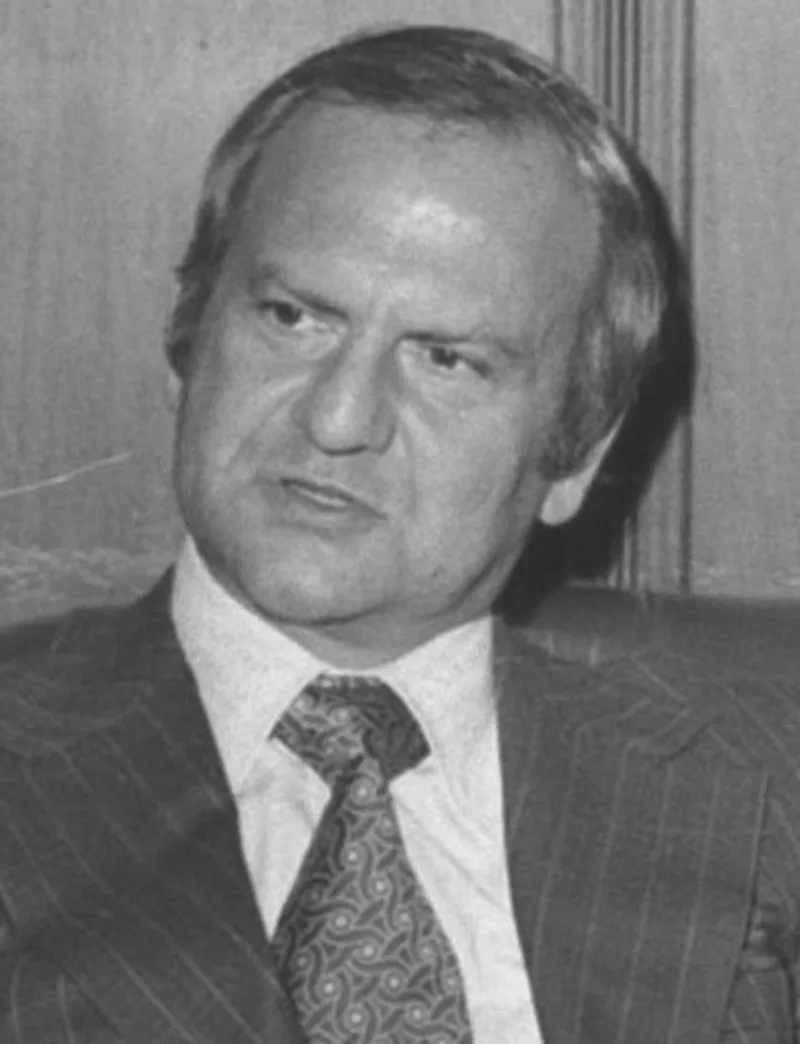
The Trenton plant later switched largely to the Chrysler 3.3 engine. In 1982 Chrysler also agreed with Perkins Engines to build a dieselised 2.2 and 3.7-litre inline-six in Windsor, Ontario. Design work on the six began in 1975 and the 2.2 joined the programme in 1980, but Lee Iacocca cancelled the plans in 1983 amid labour unrest and a collapsing diesel market.
How was the engine managed electronically?
The 2.2 and 2.5 went through three generations of engine control units. From 1984 to 1987 a split Logic Module and Power Module handled control, from 1988 to 1989 the SMEC combined both into one unit, and from 1990 the SBEC used a single board.
The Logic Module's processor ran at 1 MHz, and its memory was 256 bytes of RAM plus either two 8K EPROMs or one 16K EPROM. The SMEC moved to a 2 MHz processor with 256 bytes of RAM and a 32K EPROM, and it used modern CAD for board design with higher density SMD components.
What are the key Chrysler 2.2 and 2.5 specifications?
| Version | Year | Displacement | Peak output | Torque |
|---|---|---|---|---|
| Revised carburetted 2.2 | 1981 onward | 2,213 cc (135.0 cu in) | 96 horsepower (72 kW) | 119 lb-ft (161 Nm) |
| Fuel-injected 2.2 | 1984 onward | 2,213 cc (135.0 cu in) | 99 horsepower (74 kW) | 122 lb-ft (165 Nm) |
| High Output 2.2 | 1983 and 1984 | 2,213 cc (135.0 cu in) | 110 horsepower (82 kW) | 129 lb-ft (175 Nm) |
| Turbo I (1985) | 1985 | 2,213 cc (135.0 cu in) | 146 horsepower (109 kW) | 168 lb-ft (228 Nm) |
| Turbo II (production) | Late 1980s | 2,213 cc (135.0 cu in) | 175 horsepower (130 kW) | 200 lb-ft (271 Nm) |
| Turbo III | 1991 to 1993 | 2,213 cc (135.0 cu in) | 224 horsepower (167 kW) | 217 lb-ft (294 Nm) |
| 2.5 normally aspirated | 1986 onward | 2.5 L (153 cu in) | 100 horsepower (75 kW) | 136 lb-ft (184 Nm) |
| 2.5 Turbo I | 1989 onward | 2.5 L (153 cu in) | 150 horsepower (111.9 kW) | 180 lb-ft (244 Nm) |
| 2.5 flexible-fuel | 1993 to 1995 | 2.5 L (153 cu in) | 107 horsepower (80 kW) |
What was the legacy of the 2.2 and 2.5?
The 2.2 and 2.5 gave Chrysler a long-running four-cylinder family that powered many of its compact cars through the 1980s and into the 1990s. The 2.5 retired in 1995, the 2.2 was built until 2000, and FAW's continued production in China extended its life beyond the original plant.
The 1.8, 2.0 and 2.4 family of 1994 carried the design forward in a new form. The Turbo III stands out for its Lotus-developed head and the 1,399 Dodge Spirit R/T cars that carried it.