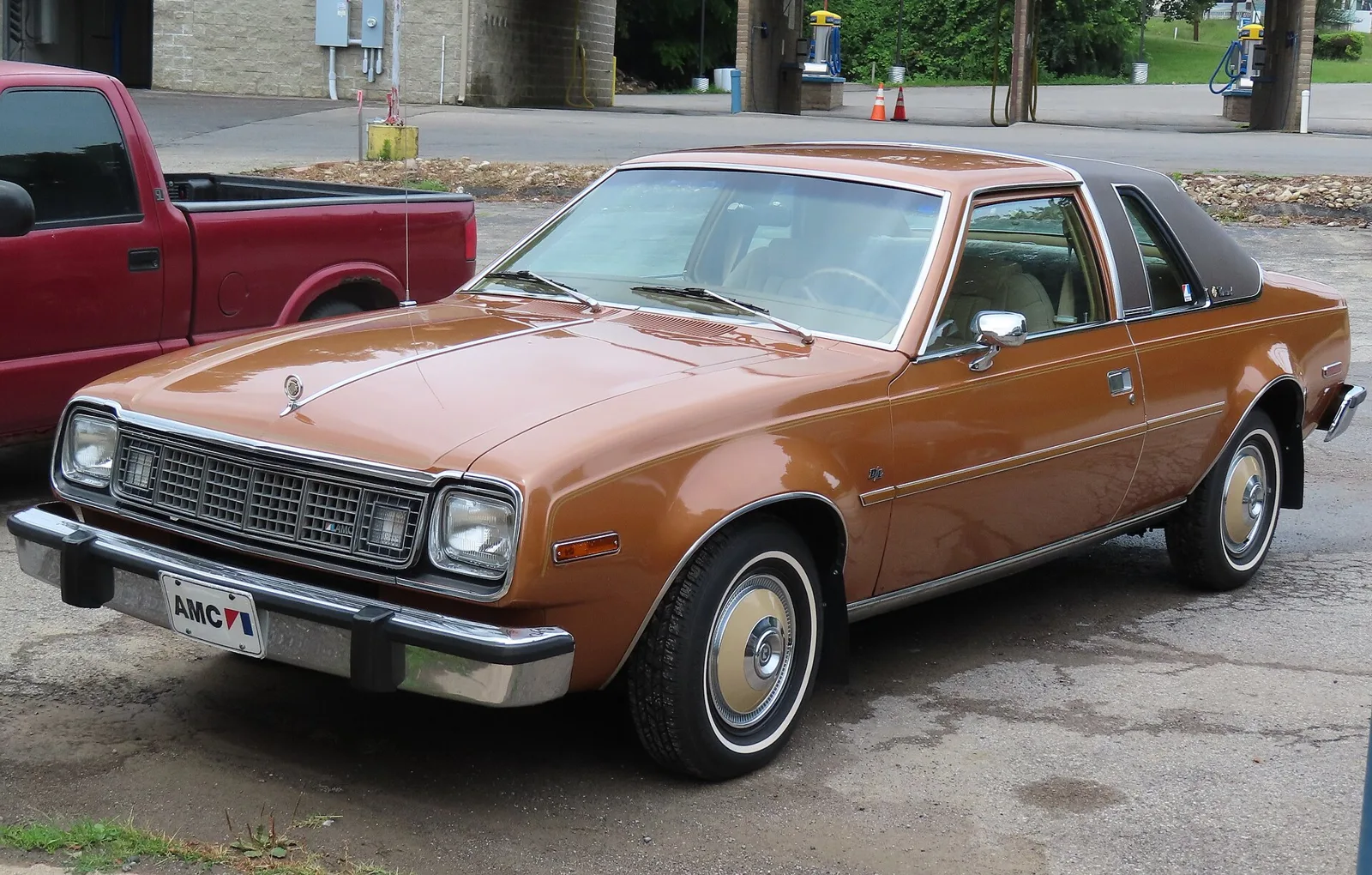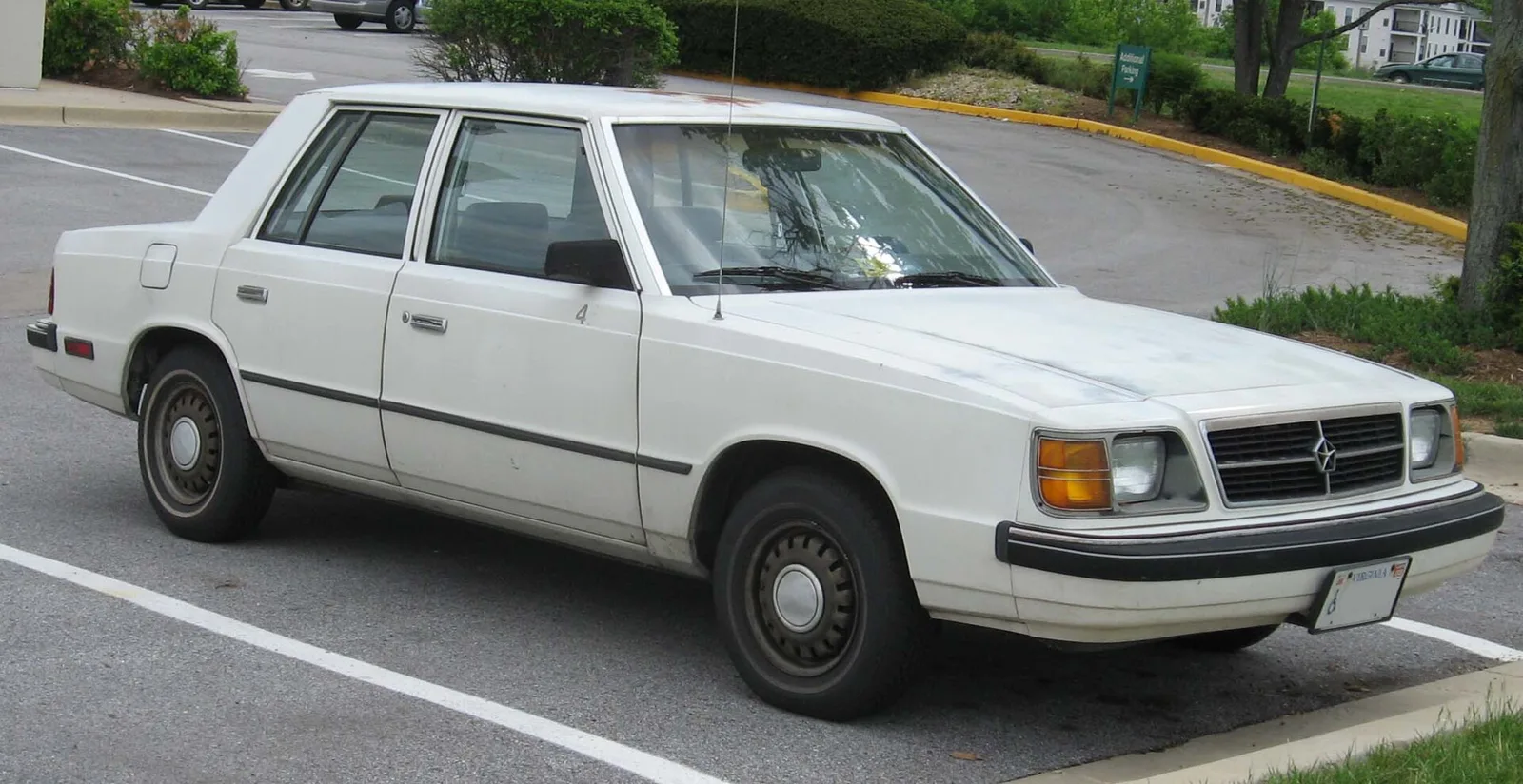
A front-wheel-drive family car from Chrysler's K-platform, sold from 1981 to 1989 with seating for six, four-cylinder engines and a Motor Trend award.
The Dodge Aries was a front-wheel-drive family car built by Chrysler from 1981 to 1989. It shared its K-platform with the Plymouth Reliant, offered four-cylinder engines and seating for six, and sold over 150,000 units in 1981 alone.
The Dodge Aries was a mid-size family car that Chrysler introduced for the 1981 model year as one of its first K-cars. It used front-wheel drive, a four-cylinder engine and two bench seats for six passengers, and it was sold alongside a near-identical Plymouth Reliant. Production ran until December 1988, when the Aries gave way to the Spirit.
Why did Chrysler build the Aries?
Chrysler built the Aries to replace the Dodge Aspen and to give the company a modern front-wheel-drive family car while it was fighting for survival. The K-platform was designed in 1978, but the company could not pay for production until the US government approved a bailout tied to its new front-wheel-drive plans.
The company's troubles had been building for years. Chairman Lynn A. Townsend, in charge from 1967 to 1975, took a hands-off approach and avoided heavy spending on fresh drivetrains and platforms while older designs still sold. Sales of the larger cars fell after the 1973 oil embargo, and Chrysler kept building cars whether or not customers had ordered them, leaving lots full of unsold stock that had to be cleared with rebates.
New federal emissions and safety rules added to the cost of every car, and the compact Aspen and Volare that arrived in 1976 suffered serious quality control problems. Those cars became one of the most recalled models in US history. The company's position worsened further when Chrysler released the Dodge Omni and Plymouth Horizon in January 1978, because dealers struggled to sell small cars in a year when buyers wanted larger ones.
A front-wheel-drive K-car that carried Chrysler through a near-collapse and into the late 1980s.
How did the bailout shape the K-car?
The bailout shaped the K-car project, because Congress approved help only after Chrysler set out its plans for the new front-wheel-drive platform. Riccardo had asked President Jimmy Carter for federal help in 1977, but the administration would not act while the existing management stayed in place. When Riccardo stepped down as chairman and Lee Iacocca took over, Iacocca made the case for a rescue in Congressional hearings.
Lee Iacocca had been dismissed by Ford on July 13, 1978, and three months later Chrysler offered him its presidency. That change at the top was part of the condition for the federal help the company had been seeking.
Iacocca cited earlier government support for the railroad industry and for the aerospace company Lockheed as precedent, and he argued that thousands of American jobs were at stake. Congress approved the bailout after Chrysler set out its new front-wheel-drive platform, and the first K-cars came off the line at Detroit's Jefferson Avenue plant in late 1980.
What was the Aries designed to replace?
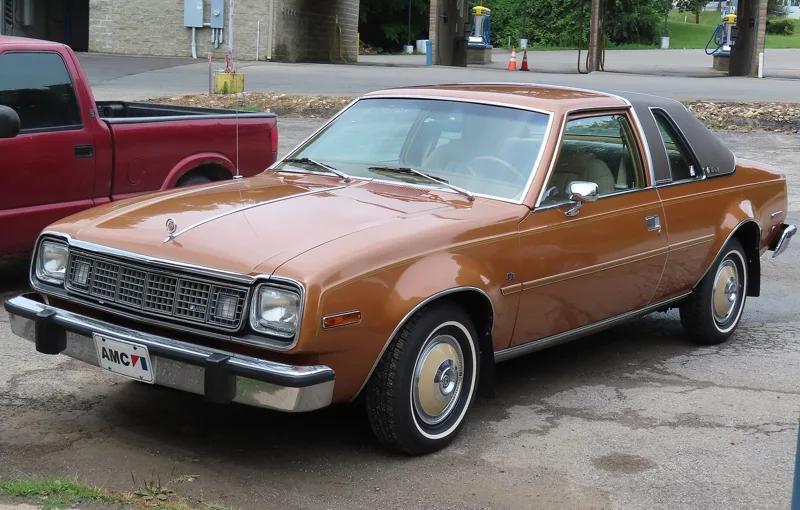
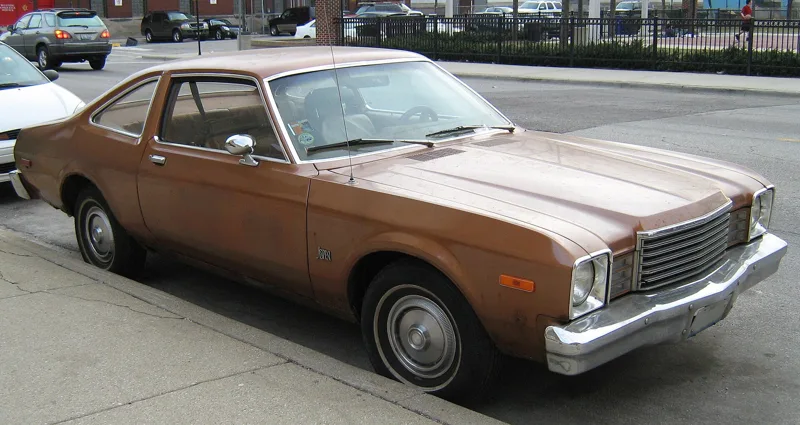
The Aries replaced the Dodge Aspen, and the Plymouth Reliant replaced the Volare and Road Runner. Both were downsized from the six-passenger cars they succeeded, which were themselves modernised versions of the compact Valiant and Dart of the 1960s.
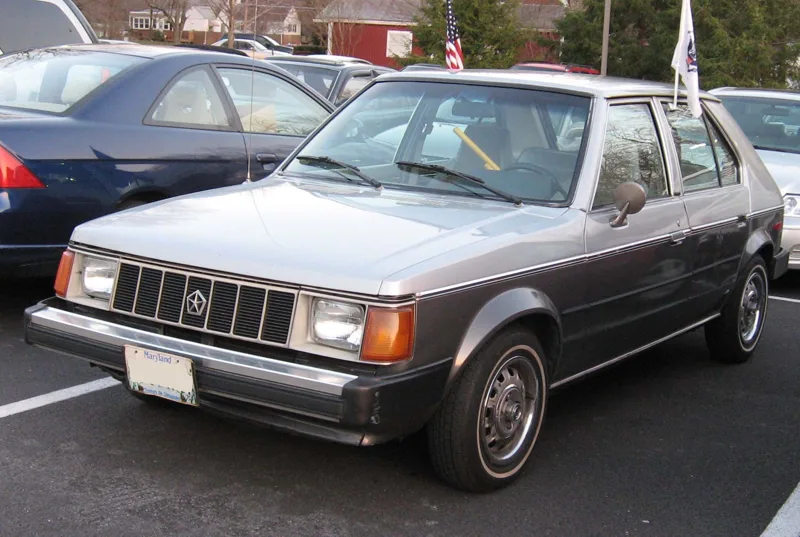
Chrysler drew on the experience of the subcompact Omni and Horizon, which had arrived in 1978. The K-cars were roomier than those small cars and aimed at families. They came as two-door and four-door notchback sedans and as four-door wagons, and they kept six-passenger seating on two bench seats.
Chrysler's early advertising used red, white and blue and promoted the low $5,880 base price. The company was so short of money that its promotional shots showed one car with the Dodge or Plymouth badges and trim swapped.
Rival designs had different fortunes. The Chevrolet Citation introduced front-wheel drive to the Chevrolet range in the 1980 model year, but its unusual styling and recall problems held it back. Ford did not replace its family-sized Fairmont, Granada and LTD with a front-wheel-drive design until the 1986 Ford Taurus.
What engines did the Aries use?
The Aries used a 2.2-litre four-cylinder engine as standard, with a Mitsubishi 2.6-litre unit offered as an option from launch. In 1986 the carburettor gave way to fuel injection, and a fuel-injected 2.5-litre four joined the option list in place of the Mitsubishi engine. Automatic transmission was required with the larger engines.
The base 2.2-litre was a transverse, Chrysler-designed inline four with an electronic two-barrel carburettor, rated at 82 hp (61 kW) in 1985. Buyers chose between a four-speed floor-shift manual and a three-speed automatic.
The Mitsubishi 2.6-litre used a Silent Shaft design and hemispherical combustion chambers, and every 1981 car fitted with it carried HEMI badges on its front fenders. Cars with that engine could reach 60 mph in the 13-second range. Driveability and reliability problems later led to the 2.5-litre's replacement.
Which trim levels did the Aries offer?
The Aries came in base, Custom and SE trim at launch. The top-tier LE arrived in 1985, and the SE line was dropped after 1986, leaving base and LE as the only trims until production ended. The wagon was never offered in base trim, and buyers could choose front bucket seats in place of the standard bench on most versions.
SE wagons came with exterior woodtone siding, which could be deleted. Bucket seats became standard in 1987, with bench seats optional at no charge. The 1988 and 1989 cars used America and Canada trims.
How did the Aries change from year to year?
The Aries changed in small steps during its run, with the biggest styling and engineering updates arriving in 1985 and 1986. Most years brought a handful of detail changes, and the list below sets out the ones that separate one model year from the next.
- 1981 and 1982: the only years a factory sunroof could be ordered on coupes and sedans.
- 1982: counterbalanced hood, black valve cover on the 2.2-litre and an upright Chrysler Pentastar in place of the old hood ornament.
- 1983: blacked-out grille made standard on the Aries, and roll-down rear door windows on sedans and wagons.
- 1984: the Pentastar moved to the grille, the dash was padded and the gauges were redesigned, adding a trip meter and temperature and voltage readouts.
- 1985: a rounder front end, five-section taillights and the new LE trim, which replaced the Custom level on the wagon.
- 1986: throttle-body fuel injection on the 2.2-litre, the 2.5-litre engine added and the four-speed manual removed.
- 1988: the Reliant was renamed in the US and Canada, and the station wagon was discontinued.
How well did the Aries sell?
The Aries sold strongly at launch, with more than 150,000 units in 1981, and peak sales arrived in that first year. Another high came in 1984, but sales declined steadily after the 1986 facelift, and by partway through 1987 they were down 19 percent.
The early months were uneven. Chrysler had built too many SE and Custom models and too few base cars, so buyers who went to dealers for the advertised price often found the car cost hundreds or thousands of dollars more. Chrysler corrected the problem by building more base models, after which sales took off.
In 1987 Chrysler cut prices by up to 16 percent and reduced the range to two models with a limited list of options. Because the tooling and other fixed costs had long since been paid off, the company still made money on each car. Sales rose again for 1988, and the car continued to sell steadily through the partial 1989 model year.
What were the America and Canada editions?
From 1988 the Reliant was renamed Reliant America in the United States and Reliant Canada in Canada, and the Dodge Omni and Plymouth Horizon followed a similar path with America versions in the same year. The Aries and Reliant were then carried over into 1989 with only the America and Canada trims available.
The station wagon disappeared after the 1988 model year, so the 1989 K-cars were sedans only. That year the Reliant was replaced by the Acclaim, while the Aries gave way to the Spirit.
What replaced the Dodge Aries?
The Dodge Aries was replaced by the Spirit for 1989, and the last K-car rolled off the line on December 9, 1988. The Reliant gave way to the Acclaim in the same year, and the 1989 cars were carryovers from 1988 with no station wagon.
The K-platform also lived on through its many derivatives, from stretched and sporty versions to minivans. Those spin-offs carried the design forward after the family sedan had ended production.
Was the Dodge Aries a success?
The Aries sold strongly in its launch year and shared a major award with the Reliant. Motor Trend named the pair its Car of the Year for 1981, and the two original nameplates sold nearly a million units between them before they were rebadged and upgraded.
The car arrived as Chrysler was close to collapse, and its early sales came at a time when the company needed them. The sales figures show how much the K-car mattered to the business during those years.
Dodge Aries specifications
| Specification | Detail |
|---|---|
| Introduced | Model year 1981, one of the first K-cars |
| Layout | Front-wheel drive, transverse engine |
| Base engine | 2.2-litre (134 cu in) inline four, 82 hp (61 kW) in 1985 |
| Optional engines | Mitsubishi 2.6-litre from 1981 to 1985; 2.5-litre from 1986 |
| Transmission | Four-speed manual or three-speed automatic; automatic required with the larger engines |
| Body styles | Two-door coupe, four-door sedan, four-door wagon |
| Seating | Six passengers on two bench seats |
| Trim levels | Base, Custom, SE and LE, with America and Canada in 1988 and 1989 |
| Assembly | Newark Delaware, Detroit Michigan and Toluca Mexico |
| Production | 1981 to 1989; last K-car built December 9, 1988 |
| Sales | Over 150,000 units in 1981 |
| Successor | Spirit, from 1989 |