How the automatic gearbox grew from early experiments and the 1940 Hydra-Matic into torque converters, dual-clutch units and ten-speed designs.
An automatic transmission changes gear ratios without driver input, using planetary gearsets controlled by hydraulics or solenoids. General Motors' Hydra-Matic, introduced for the 1940 model year, was the first mass-produced example. Dual-clutch and continuously variable designs now compete with the classic hydraulic unit.
An automatic transmission, or automatic gearbox, is a multi-speed transmission that changes gears without the driver working a clutch or lever. It is most common in passenger cars, buses and utility vehicles, especially those that spend much of their life in stop-start traffic or face hard acceleration. The idea is old, but the mass-market version took decades to mature.
An engine runs efficiently within a narrow band of speeds, so a gearbox is needed to turn the wheels across a wide range of road speeds. A manual leaves that task to the driver. An automatic does it on its own.
Why are automatic transmissions so common?
Globally, 43 per cent of new cars produced in 2015 had manual transmissions, a share that fell to 37 per cent by 2020. Automatics have long been the norm in the United States, where over 80 per cent of new cars already had them in 1957. Europe was much slower to follow. In 1997 only 10 to 12 per cent of European cars had automatics.
Automatics have been standard in large American cars since at least 1974. By 2020 only 2.4 per cent of new cars carried manual transmissions. In the United Kingdom a majority of new cars have had automatics since 2020, and manufacturers including Mercedes and Volvo have stopped selling manuals altogether. The growth of electric and hybrid cars, and the ease of linking automatics to safety systems such as autonomous emergency braking, have both helped the trend.
The automatic gearbox began as an experiment and became the default choice for most drivers.
Are automatic transmissions less efficient than manuals?
Conventional automatics operate at 86 to 94 per cent efficiency. Manuals are more efficient than all but the newest automatics, because their parasitic losses are low, typically around 4 per cent. They are also cheaper to make, lighter and simpler in their mechanical design.
Real-world tests reported in 2022 found manuals delivering 2 to 5 per cent better fuel economy in typical driving, rising to 20 per cent with an expert at the wheel. Laboratory tests can favour automatics, because the shift pattern prescribed for manuals is not always the one that saves the most fuel. On long highway runs a manual needs a very specific cruising speed to economise, which makes an automatic the easier choice.
How does a hydraulic automatic work?
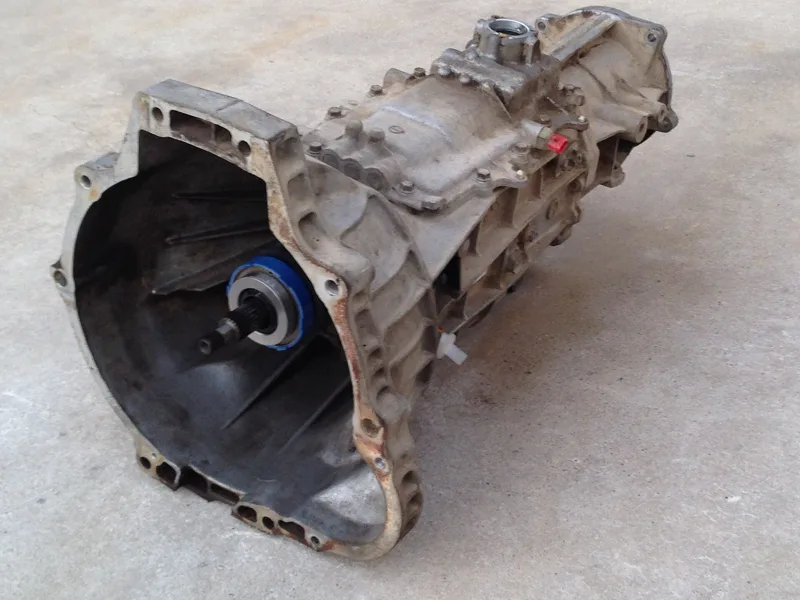
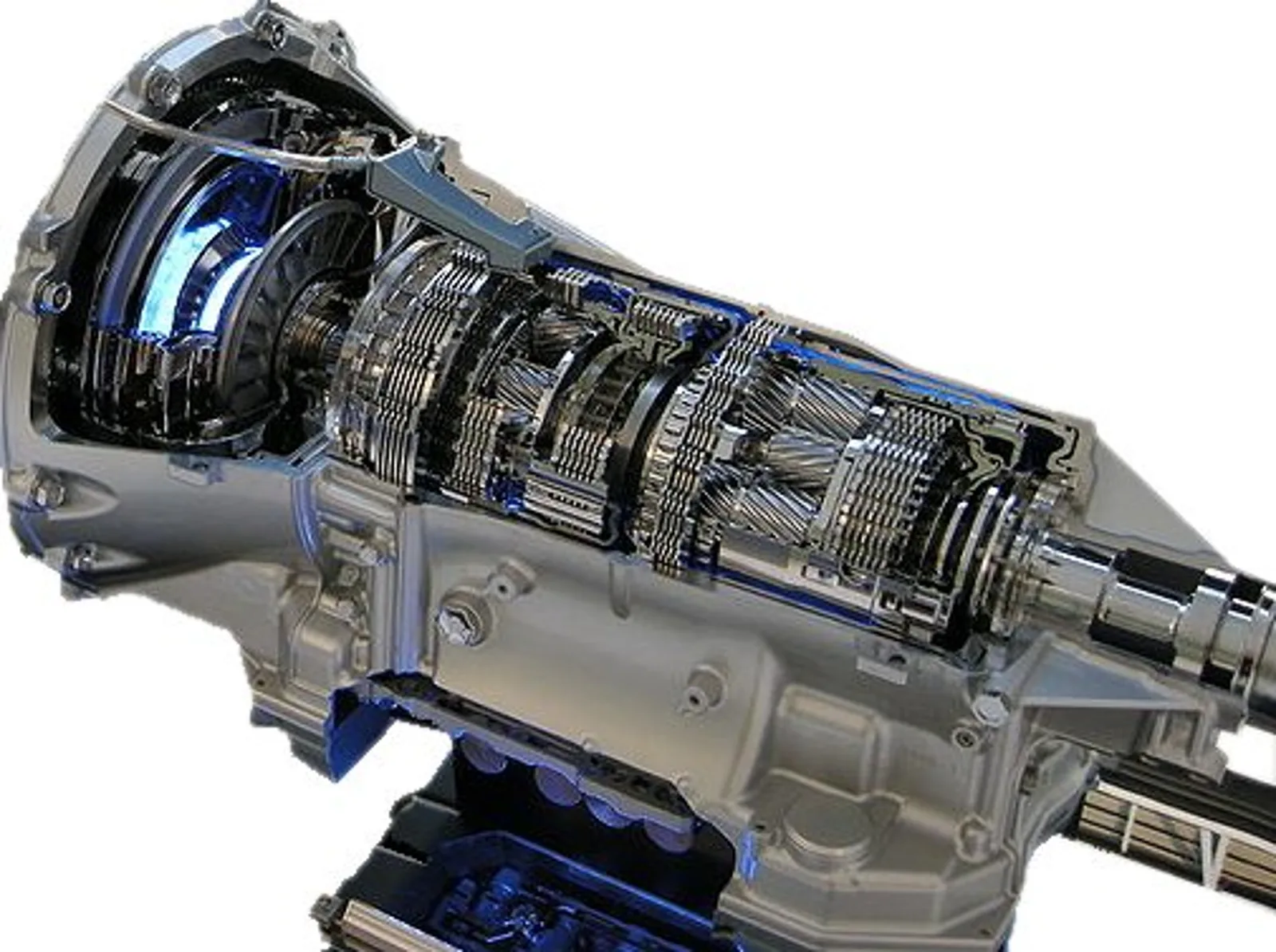
The most common design is the hydraulic automatic, which uses planetary gearsets operated by hydraulics rather than the sliding gears of a manual. It connects to the engine through a torque converter instead of a friction clutch. Before the 1960s many used a fluid coupling in its place.
Gears are selected by internal clutches, friction bands and brake packs that lock particular parts of the gearset. Sprag clutches, which freewheel in one direction, handle most routine shifts because they take up the drive load without precise timing. Friction bands are kept for manually selected ranges such as low or reverse.
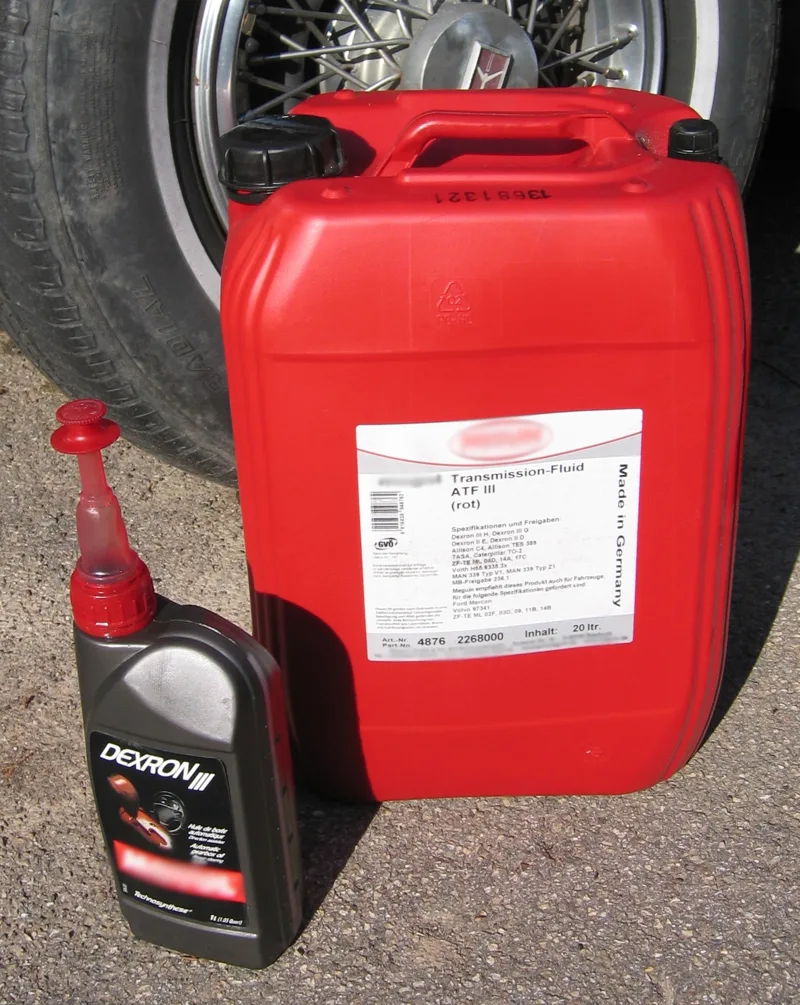
Automatic transmission fluid, or ATF, lubricates the unit, prevents corrosion and carries the hydraulic pressure. A gear pump sits between the torque converter and the gearset, and it pressurises the fluid whenever the engine runs. Because the engine drives that pump, an automatic generally cannot be push-started. A governor on the output shaft varies pressure with road speed, and a valve body directs it to the correct clutch or band.
Older designs relied on spring-loaded valves responding to pump pressure and a centrifugal governor. Modern transmissions use solenoids controlled by a transmission control unit, or by the engine control unit, to choose the gear. Electronic speed sensors have replaced the centrifugal governor, and engine load, read from throttle position or intake vacuum, now feeds into the decision as well.
Who built the first automatic transmission?
The 1904 Sturtevant horseless carriage gearbox is often considered the first automatic for motor vehicles. At higher engine speeds it engaged high gear, and as the car slowed it shifted back to low. The unit was prone to sudden failure because it could not withstand the forces of abrupt gear changes.
Planetary gearsets were a key step forward. The 1901 to 1904 Wilson-Pilcher used epicyclic gears for four ratios, and a planetary set appeared in the 1908 Ford Model T. Early patents followed. Alfred Horner Munro of Regina received one in 1923 for a compressed-air design that never found commercial use, and Henry R. Hoffman of Chicago patented an automatic gear shift the same year. The first automatic transmission to use hydraulic fluid was developed in 1932 by two Brazilian engineers, Jose Braz Araripe and Fernando Lehly Lemos.
Semi-automatics came next. The REO Self-Shifter of 1933 to 1935 changed gear automatically between two forward ratios. The 1937 Oldsmobile Automatic Safety Transmission used a planetary gearset but still required the clutch pedal for standing starts. Chrysler's Fluid Drive, introduced in 1939, added a fluid coupling to manual transmissions so that no clutch pedal was needed.
What was the Hydra-Matic?
The General Motors Hydra-Matic arrived in 1939 for the 1940 model year and became the first mass-produced automatic. It combined a fluid coupling with three hydraulically controlled planetary gearsets to give four forward speeds and reverse. Its wide ratio spread allowed strong acceleration in first gear and relaxed cruising in top, and the fluid coupling carried only part of the torque in the top two gears to save fuel.
The design spread to other General Motors brands and then, from 1948, to other manufacturers, including Hudson, Lincoln, Kaiser, Nash and Holden in Australia. Rolls-Royce and Bentley built it under licence in Britain, and during the Second World War it was fitted to some military vehicles.
How did the torque converter take over?
The Buick Dynaflow of 1948 was the first automatic to use a torque converter in place of a fluid coupling. In normal driving it used only top gear, relying on the converter to multiply torque at lower speeds. Packard's Ultramatic of 1949 and Chevrolet's Powerglide of 1950 followed, each with two forward speeds.
In the early 1950s BorgWarner developed three-speed converter automatics for American Motors, Ford and Studebaker. Chrysler introduced its two-speed PowerFlite in 1953 and the three-speed TorqueFlite in 1956, the first to use the Simpson compound planetary gearset. In 1964 General Motors released the Turbo Hydramatic, a three-speed with a torque converter that was among the first to offer the familiar park, reverse, neutral, drive and low selections.
| Year | Milestone |
|---|---|
| 1940 | Hydra-Matic becomes the first mass-produced automatic, with four forward speeds |
| 1948 | Buick Dynaflow introduces the torque converter |
| 1956 | Chrysler TorqueFlite, the first to use the Simpson compound planetary gearset |
| 1989 | Nissan's Jatco 5R01 becomes the first five-speed automatic |
| 2002 | ZF 6HP26 debuts in the BMW 7 Series (E65) as the first six-speed |
| 2007 | Toyota AA80E becomes the first eight-speed to reach production |
| 2013 | ZF 9HP is the first nine-speed automatic |
| 2017 | Toyota Direct Shift-10A, the first ten-speed, arrives in the Lexus LC |
Electronics changed the story after the 1960s. By the late 1960s most two- and four-speed fluid-coupling designs had given way to three-speed converter units. During the 1980s four-speed automatics with lock-up converters became common, improving economy. Solenoids replaced many spring-loaded valves, allowing more precise shift points and quicker shifts.
Nissan's Jatco 5R01, introduced in 1989 for the Cedric and Gloria, was the first five-speed. ZF's 6HP26 arrived with the 2002 BMW 7 Series, and the Mercedes-Benz 7G-Tronic followed a year later as the first seven-speed. From there the gear count climbed steadily, with the Toyota AA80E in 2007, the ZF 9HP in 2013 and the Direct Shift-10A in 2017.
What do the gear selector letters mean?
Most cars use a P-R-N-D-L layout. Park engages a parking pawl that locks the output shaft and disconnects the engine. Reverse engages reverse gear and usually switches on the reversing lights. Neutral disconnects the drive, so the car can move whatever the engine speed. Drive selects the full range of forward gears. Low gives engine braking on steep hills and a lower starting ratio for heavy loads.
Some transmissions also offer numbered positions, such as 3, 2 or 1, that cap the highest gear. Sport and economy modes change when the car shifts, and since the 1990s manumatic paddles or plus and minus controls have let drivers request a gear directly.
Layouts have varied. General Motors used reverse as the bottom position from 1940 to 1964, giving N-D-L-R or P-N-D-L-R. Early cars such as pre-1960 Chrysler models and the Corvair Powerglide had no park position at all, so drivers set the parking brake. Modern selectors usually lock park behind a button or the brake pedal, and many cars refuse to start unless the selector is in park or neutral.
Coasting in neutral with the engine off can damage some automatic transmissions, because the lubrication pump is usually driven from the input side and stops turning.
What are CVT, DCT and AMT transmissions?
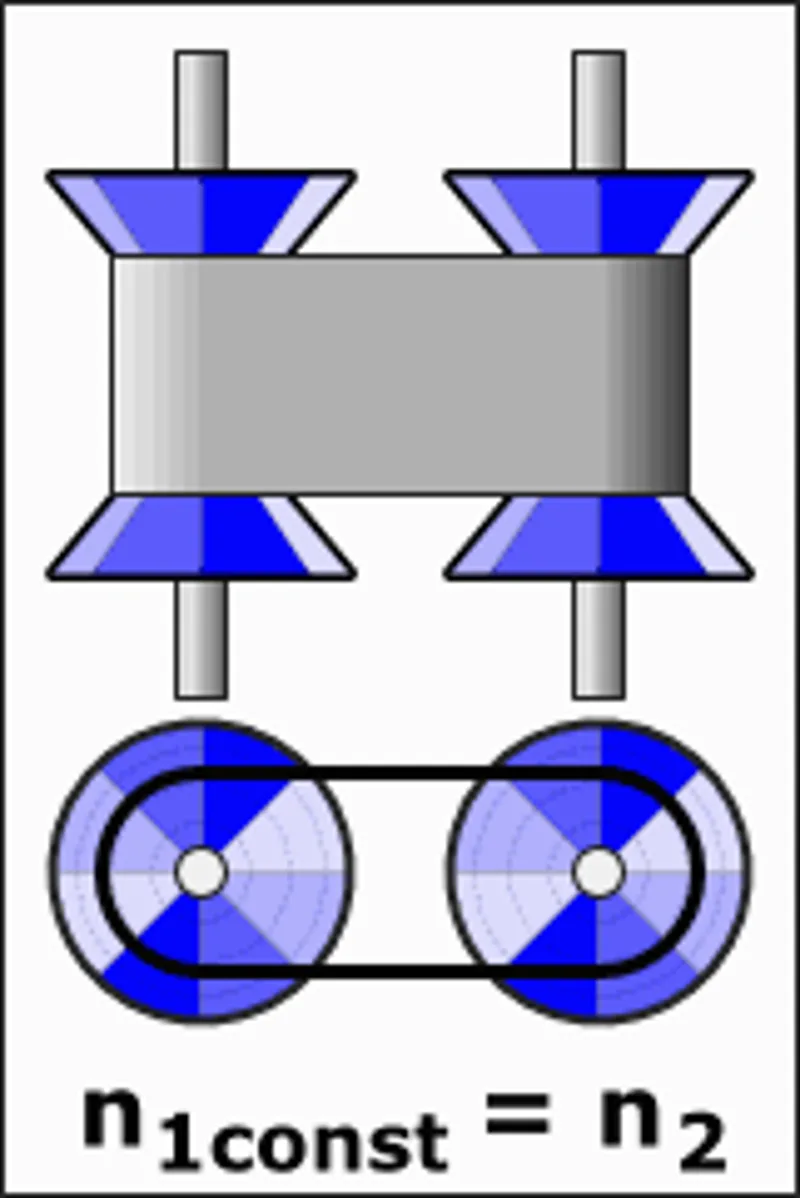
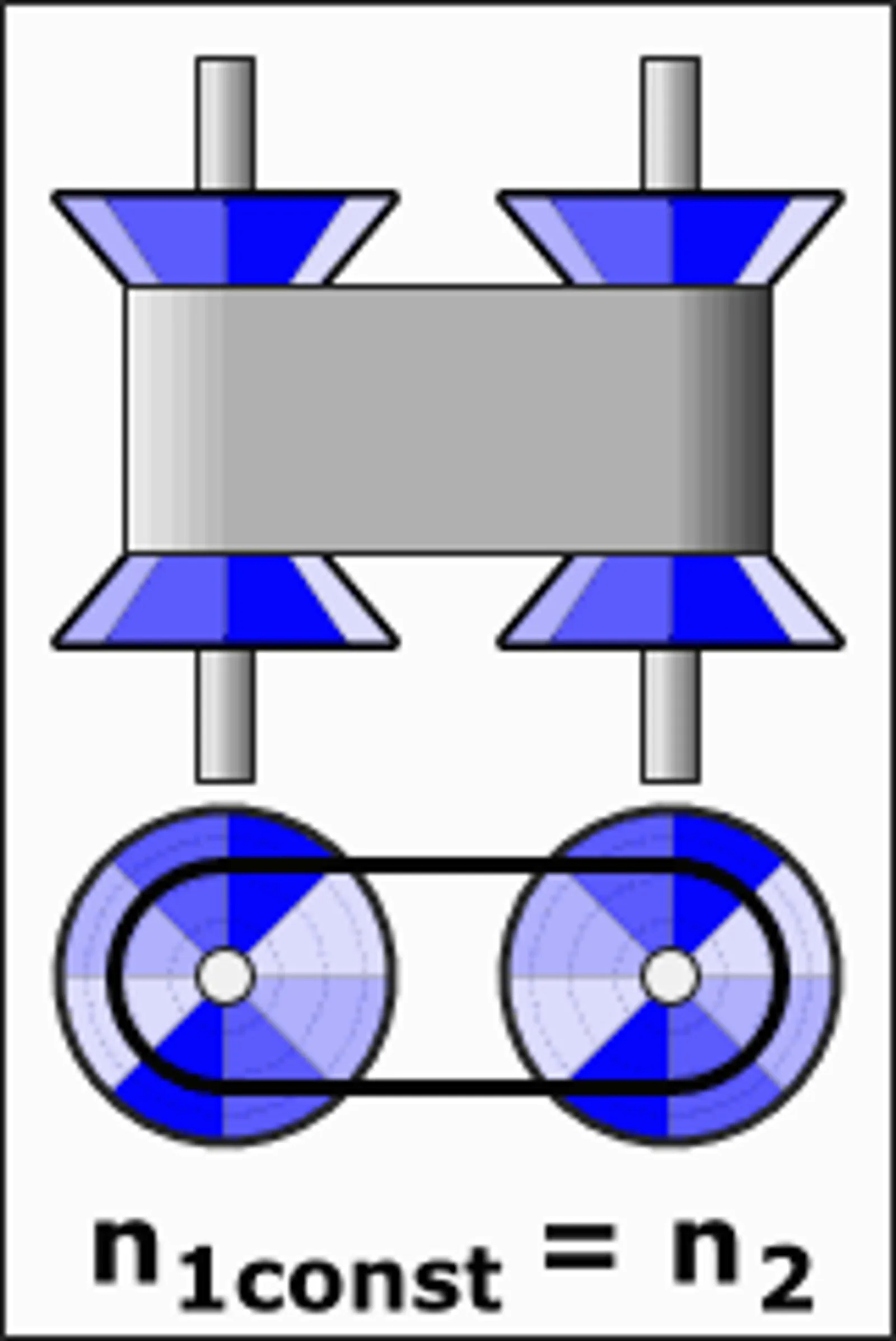
A continuously variable transmission (CVT) changes ratio across an unbroken range rather than in fixed steps. The engine can hold a steady speed while the car accelerates, which is one reason CVTs suit scooters, snowmobiles and earthmoving equipment as well as cars. The most common type uses two pulleys joined by a belt or chain.
A dual-clutch transmission (DCT) uses one clutch for the odd gear sets and another for the even ones, so it works like two manual gearboxes in one housing. The first DCT to reach production was the Easidrive automatic on the 1961 Hillman Minx. The modern wave began with the 2003 Volkswagen Golf R32, and DCTs have since replaced hydraulic automatics in many models.
An automated manual transmission (AMT) starts from a conventional manual and automates the clutch, the gear changes or both. Early examples include the 1942 Hudson Commodore Drive-Master and the Citroen DS of 1955, whose semi-automatic unit was nicknamed Citro-Matic in the United States. BMW's SMG and Ferrari's F1 gearboxes of 1997 were the first modern AMTs. Fully automatic designs such as Selespeed and Easytronic have largely given way to dual-clutch units.