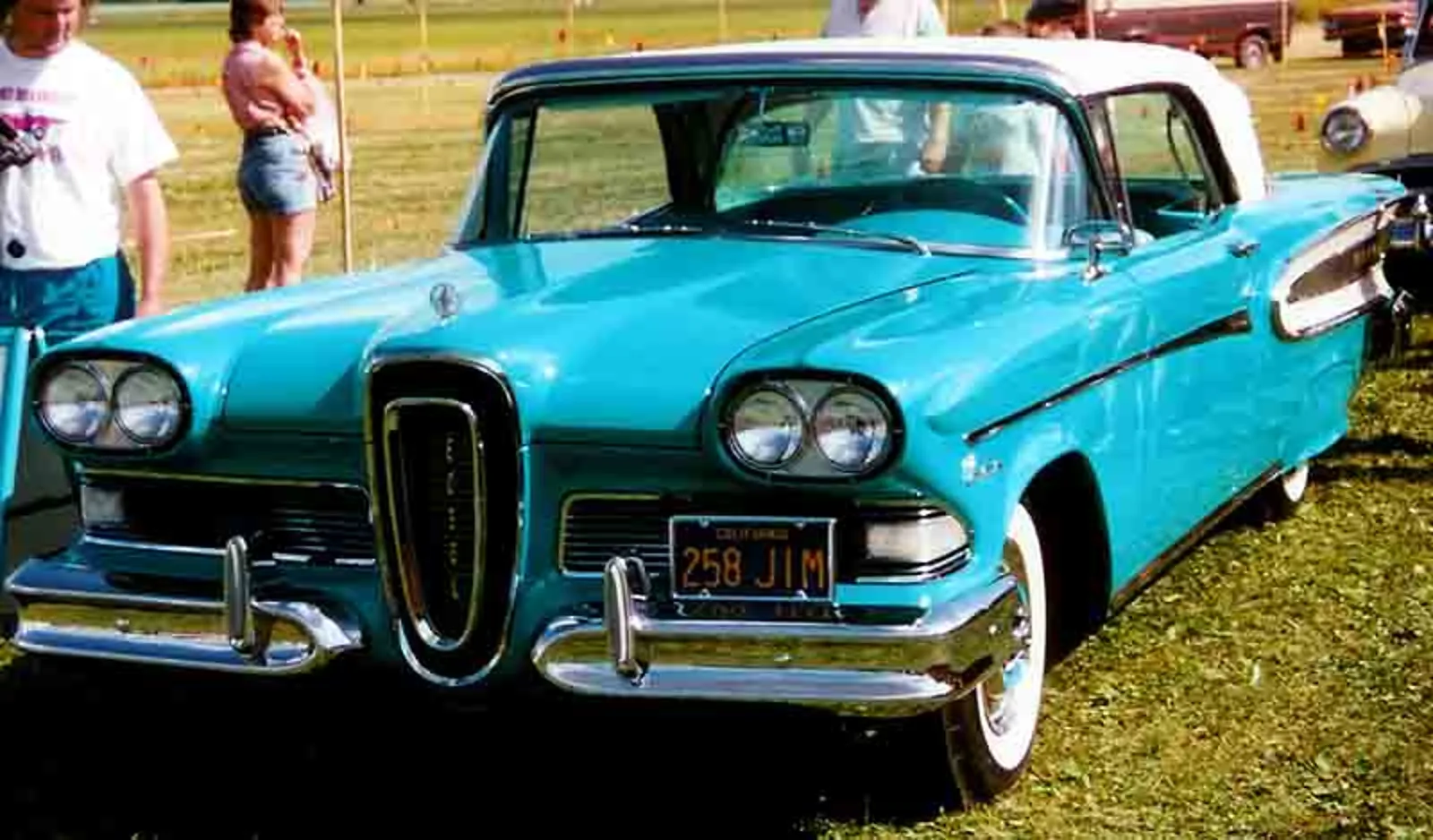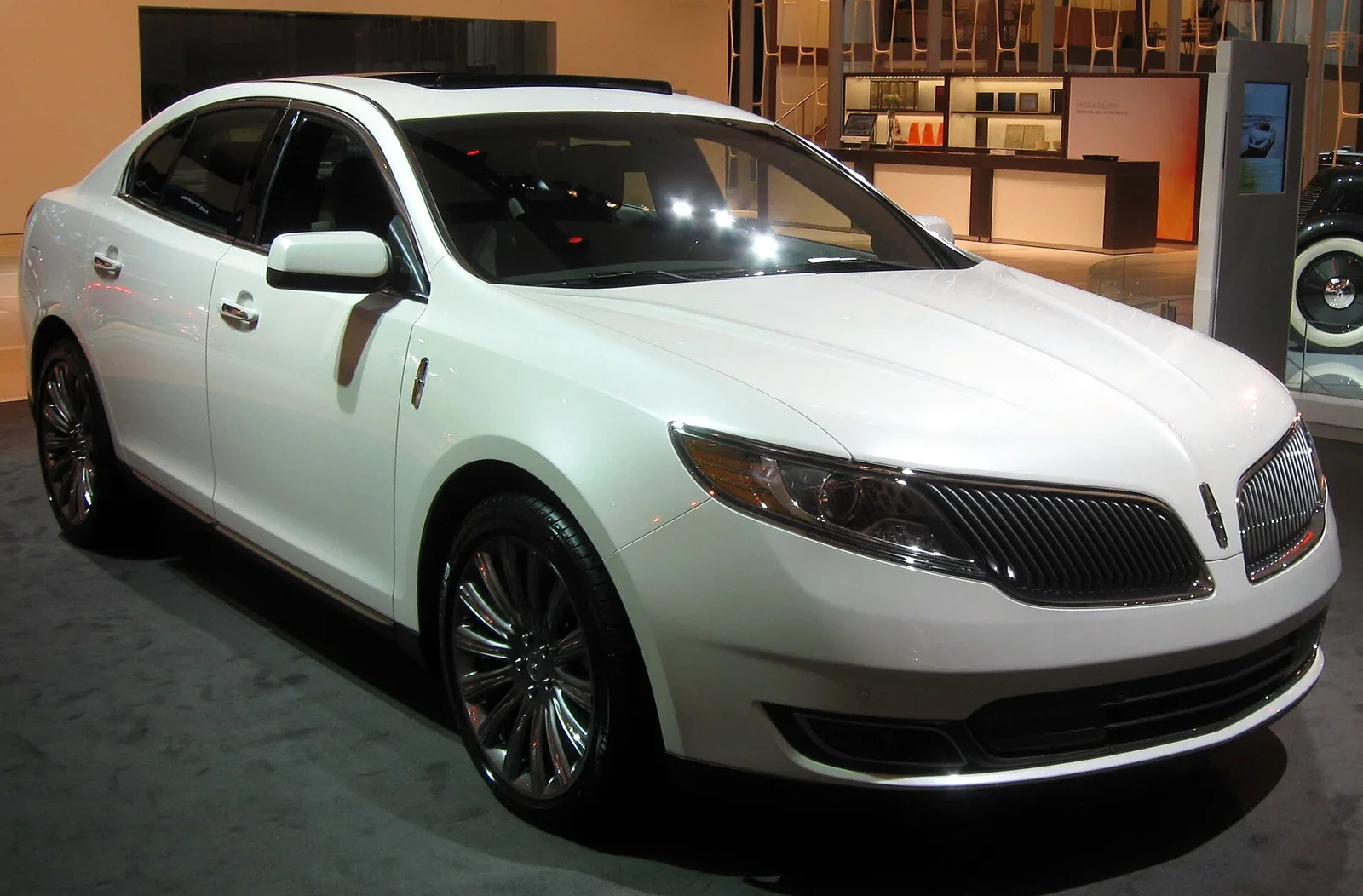
Founded in 1917 and bought by Ford in 1922, Lincoln helped create the personal luxury car with the 1940 Continental and now sells only SUVs and crossovers.
Lincoln is the luxury division of Ford Motor Company, founded in 1917 by Henry Leland and bought by Ford in 1922. It helped establish the personal luxury car with the 1940 Continental and has sold only SUVs and crossovers since the 2021 model year.
Lincoln is the luxury vehicle division of Ford Motor Company, and it is positioned against Cadillac, its General Motors counterpart, in the United States. It helped establish the personal luxury car segment with the 1940 Lincoln Continental, and from the 2021 model year it has offered only SUVs and crossovers.
When and why was Lincoln founded?
Henry Leland and his son Wilfred set up the company in August 1917. Leland had co-founded Cadillac, and he sold that business to General Motors in 1909. He stayed on as an executive, but he left in 1917 after a dispute with GM's president over war production.
Leland named the new company after Abraham Lincoln, whom he had first voted for in 1864. The business was financed by a contract worth $10,000,000 to produce Liberty V12 aircraft engines for the First World War. The company assembled 6,500 of those engines before the war ended.
On 26 January 1920 the company was reorganised as an automobile maker, and on 16 September 1920 it produced its first car, the Lincoln Model L. Its transition from military to civilian production was rough, and by 1922 it was close to bankruptcy and in receivership.
Built to honour a president and then to compete with Cadillac, Lincoln ended up as Ford's only luxury nameplate and an SUV brand.
How did Ford come to own Lincoln?
Henry Ford bought Lincoln Motor Company for $8,000,000 on 4 February 1922, after the sole bid for a company valued at $16 million was made by Ford. Edsel Ford took a leading role in the company's management, and the Lelands were forced to resign on 10 June 1922.
The purchase gave Ford a stand-alone luxury brand, much as Cadillac did for General Motors. Edsel Ford reworked the factory and upgraded the engine components for reliability and performance.
Lincoln was soon profitable. It produced 7,875 cars in 1923, which was nearly 45 per cent more than the year before, and it was operating at a profit by the end of that year. The Model L also became the first presidential state limousine, supplied to Calvin Coolidge.
What were the Model K and the V12 years?
The Model L gave way to the Lincoln Model K, a longer and lower car with better carburettor, brake and suspension parts. It was offered with factory bodies or coachbuilt designs, and it competed with the Duesenberg Model J and other large American luxury cars.
For 1932 Lincoln introduced its first multi-cylinder engine, a V12 for the Model K. The next year the V8 was retired, which made Lincoln the first manufacturer in the world to produce vehicles with V12 engines only. The Model K was later overshadowed by the Lincoln-Zephyr and was built for the last time near the end of its run.
What was the Lincoln-Zephyr?
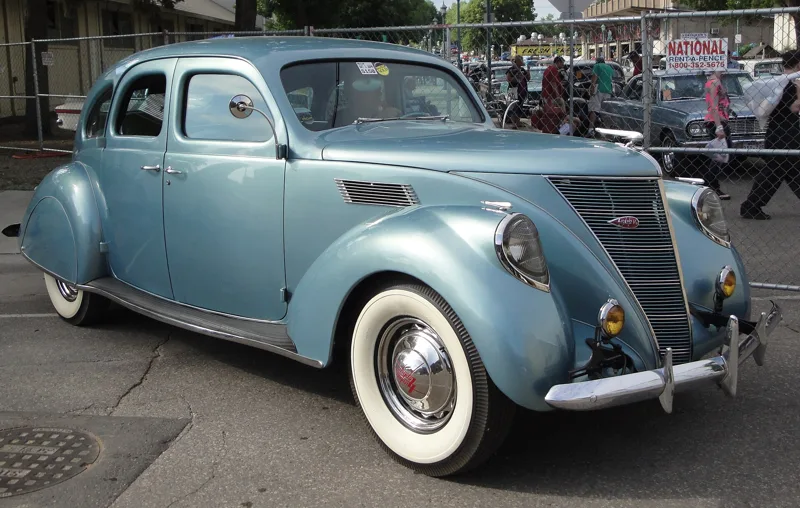
The Lincoln-Zephyr appeared in 1936 as a sub-marque within Lincoln, designed to compete with the Cadillac LaSalle and the Chrysler Airflow. It was the first Ford Motor Company vehicle to use unibody construction, and it was powered by a V12 engine separate from the Model K's.
The Zephyr sold well, with over 15,000 units moving in its first year, and the figure was a nine-fold rise on the previous model year.
How did the Lincoln Continental begin?
Edsel Ford asked his chief stylist, E. T. Gregorie, to design a European-style car for a Florida trip, using a Lincoln Zephyr convertible chassis. The one-off car, sectioned by four inches and stripped of its running boards, attracted so much interest that it became known as the Lincoln Continental.
For 1940 production, 404 Continentals were built, and the first was delivered to Mickey Rooney. The same year Ford reorganised Lincoln Motor Company as the Lincoln Division of Ford Motor Company, which made it structurally similar to Cadillac within General Motors.
How did Lincoln fit into Ford after the war?
After the war Lincoln was paired with Mercury again in the Lincoln-Mercury Division, a pairing that lasted until Mercury's closure in 2010. The Zephyr name was dropped, and the postwar cars were identified by body style. A V8 returned to the postwar Lincolns, adapted from a Ford truck engine, after a planned V12 never reached production.
The Lincoln Cosmopolitan became the flagship of the new range.
How did the Continental become a separate marque?
For the 1956 model year Ford created the Continental Division above Lincoln, and it launched the Continental Mark II. The Mark II was a two-door hardtop coupe, hand-built with extensive testing, and it was priced at $10,000. That made it the most expensive car built by an American automaker at the time.
Each Mark II was sold at a loss of over $1,000, and the car was withdrawn in 1957. The Continental division was integrated into Lincoln in 1959, and the Continental marque was formally brought to an end within Lincoln at that point.
The Continental Mark III followed in April 1968, released as a 1969 model. It was marketed through the Lincoln-Mercury dealer network, and it was the first Ford vehicle with anti-lock brakes. The Mark III used a 460 cu in V8 rated at 365 hp, and it carried a centrally mounted Cartier clock on its dashboard.
What pressures did Lincoln face in the sixties and seventies?
From 1958 until 1960, Lincoln lost over $60,000,000. Ford was forced to recover the costs of a platform that Lincoln shared with neither Ford nor Mercury, and the company required Lincoln to shrink. Lincoln later consolidated its range into a single Continental line.
The next decade brought federal safety rules, a fuel crisis and the end of the hardtop body style. Lincoln had to develop a compact sedan and redesign smaller full-size sedans. The Continental received a full redesign and then carried on with only gradual updates.
The Versailles arrived for 1977 as a response to the Cadillac Seville. It was 30 inches shorter and 1500 pounds lighter than a Lincoln Continental, and it was based on the Ford Granada. Its sales were far below the Seville's, and it was discontinued in early 1980.
What did the Mark V and the 1980s bring?
The Continental Mark V arrived for 1977, and it was over 19 feet long. It became the most successful of the Mark series, with over 228,000 sold across three model years. Designer Editions, first offered on the Mark IV in 1976, became a signature option on later Lincolns.
The Continental underwent a complete redesign in 1980 and became the lightest Lincoln since the Second World War. Its fuel economy rose sharply in a single year, and the Town Car became the division's main sedan. Later the Continental moved to a mid-size platform, which let Lincoln compete more directly with the Cadillac Seville.
In 1985 Lincoln ran the Valet advertisements, created by Young and Rubicam, which showed a parking attendant confusing Cadillacs with lesser GM cars. The campaign was a major success for Lincoln and an embarrassment for General Motors, and it gave the brand the slogan What a Luxury Car Should Be.
How did the Mark VII and Continental change in the late 1980s?
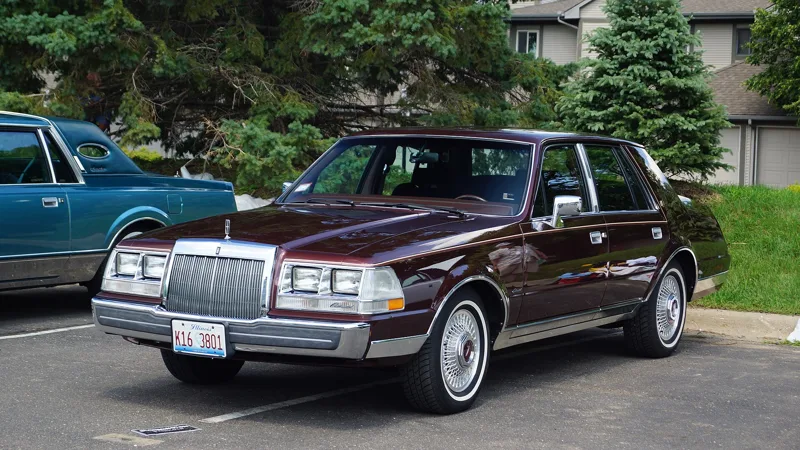
The Mark VII arrived in 1984 with a 4.9-litre V8 shared with the Ford Mustang GT. It had four-wheel disc brakes with anti-lock capability and four-wheel air suspension, and it placed far more emphasis on handling than the Malaise-era cars before it.
For 1988 the Continental was redesigned as the first front-wheel-drive Lincoln, based on an extended-wheelbase Ford Taurus. It was powered by a 3.8-litre V6, the first Lincoln without an eight-cylinder option. The 1989 Continental also became the first domestic sedan sold in the United States with standard dual airbags.
How did Lincoln outrank Cadillac in the nineties?
Lincoln entered the nineties close to Cadillac in sales, but then faced newcomers such as Infiniti and Lexus. The Town Car was fully redesigned at the start of the decade, and it shared its underpinnings with the Ford Crown Victoria and Mercury Grand Marquis.
The 1991 Town Car debuted the 210 hp 4.6-litre Ford Modular V8, the first overhead-cam eight-cylinder in an American car since the Duesenberg Model J. The Town Car was reshaped with the rounded exterior of the Mark VIII, and it became the tallest Lincoln sedan in decades, with a completely new interior.
The Lincoln Navigator debuted in 1998 as the first Lincoln SUV, and it sold 71,000 units in its debut year. That year Lincoln outranked Cadillac in vehicle sales for the first time, by over 4,500 vehicles.
What did the Mark VIII and the Lincoln name mean?
The Mark VII was renamed the Lincoln Mark VII in 1986 to end confusion over the Continental brand. The Mark VIII replaced it for 1993, and it was the first Mark car sold entirely under the Lincoln name. It remained a Thunderbird and Cougar relative with rear-wheel drive and four-wheel independent suspension.
The Mark VIII was withdrawn after the 1998 model year. Elements of its design reappeared on the Continental, the Town Car interior and exterior, and the Ford Windstar minivan interior.
What did the new century bring for Lincoln?
Lincoln then introduced the LS mid-size sports sedan, which was developed alongside the Jaguar S-Type. Lincoln's ownership had moved into Ford's Premier Automotive Group, which also held Jaguar, Land Rover, Aston Martin and Volvo, and the LS was built at Wixom Assembly.
The MKS, the brand's first all-new full-size sedan since 1980, arrived next. It was the Lincoln counterpart of the Ford Taurus, offering front-wheel drive or optional all-wheel drive. The MKT crossover followed and shared its chassis with the MKS.
The Town Car ended production in 2011, the same year the St. Thomas Assembly plant in Ontario closed. Lincoln kept the Town Car name on limousine and livery versions of the MKT for a time.
How did Lincoln's names and engines change in the 2010s?
In 2011 Lincoln introduced the MKZ Hybrid, the first Lincoln hybrid and the first Lincoln with a four-cylinder engine. In 2015 the MKC became the first Lincoln produced solely with four-cylinder engines, and the Navigator adopted a 3.5-litre twin-turbocharged V6 as its standard engine.
In December 2012 the company's formal name changed back to Lincoln Motor Company, the name it had used before 1940. Ford established separate design, product development and sales teams for Lincoln to help the brand stand apart from its Ford counterparts.
Lincoln revived the Continental name for 2017 after a long break, with a new recessed grille. The Continental introduced the Black Label trim, which pairs coordinated design themes with highly personalised service, and the flagship Navigator L Black Label was priced at $95,000 in 2018.
Who has led Lincoln?
Kumar Galhotra led the brand from 2014 to 2018, followed by Joy Falotico and then Dianne Craig, who led the brand until 2025. Joaquin Nuno-Whelan has led the brand since 2025. Lincoln signed Matthew McConaughey as a brand spokesman in 2014, and he has appeared in commercials for several Lincoln models since.
The brand's marketing has stressed a quieter, more personal sort of luxury.
Where does Lincoln sell its cars today?
Lincoln sold 188,383 vehicles globally in 2017. Outside the United States, Canada and Mexico, the brand is officially sold in the Middle East, China and South Korea, and Ford markets it in several Middle Eastern countries. In the United States Lincoln sold 106,868 vehicles in 2025, and in China it sold 69,864.
The brand entered China in 2014 with the MKZ and MKC, and its 2016 sales rose by 180 per cent over the previous year. The first Lincoln built in China was a Corsair, produced by Chang'an Ford in Chongqing on 29 March 2020. That step meant the brand had local production in its largest growth market.
What was Lincoln's motorsport record?
Like the other American brands of its day, Lincoln raced in NASCAR's Grand National Stock Car series and won its first race. Lincoln ran in NASCAR up until 1953. The Continental Mark VII ran in the Trans-Am Series in 1984 and 1985 but never won.
Its best result was ninth at the 1984 Watkins Glen race. In 1992 a Mark VIII prototype set a land speed record for a stock car with an engine under five litres, at 182 mph (293 km/h). Later the Mark VIII was tested at Charlotte Motor Speedway as a possible replacement for the Thunderbird. NASCAR rejected it because of a lack of wind tunnel testing and because the parts' serial numbers had not been verified as stock.
What was Lincoln's role as a presidential car?
From 1939 to 1993 Lincolns were the official state limousines for American presidents, from Franklin D. Roosevelt to George H. W. Bush. Lincoln also built the first purpose-made presidential limousine and the first armoured vehicles for presidential use. The presidential connection began with the Model L in 1924, and it continued for decades.
It gave the brand a public role that no other luxury nameplate in the United States could match at the time.
Key Lincoln figures at a glance
| Item | Detail |
|---|---|
| Founded | August 1917, by Henry Leland and Wilfred Leland |
| Ford purchase | 4 February 1922, for $8,000,000 |
| First car | Lincoln Model L, 16 September 1920 |
| Continental | 1940, from a one-off built for Edsel Ford |
| Mark VII to Lincoln | Renamed Lincoln Mark VII in 1986 |
| Navigator | 1998, first Lincoln SUV, 71,000 sold in its debut year |
| Global sales | 188,383 vehicles in 2017 |
| Range from 2021 | SUVs and crossovers only |