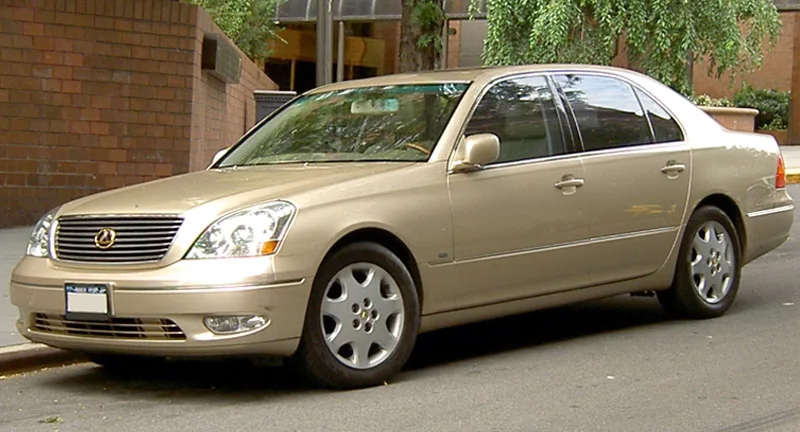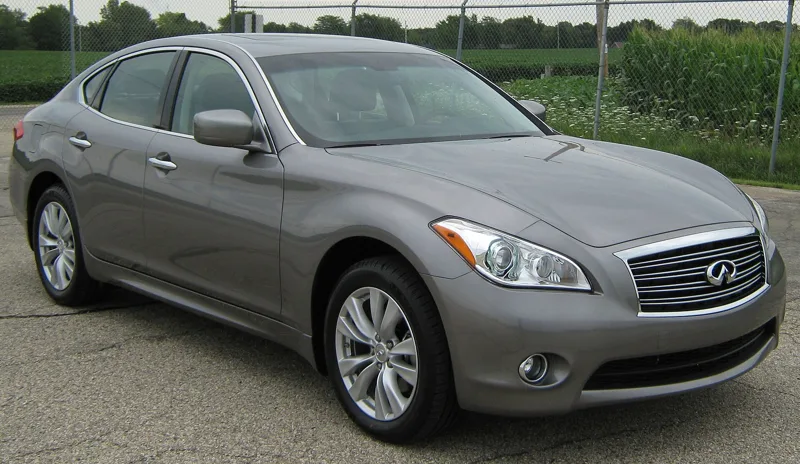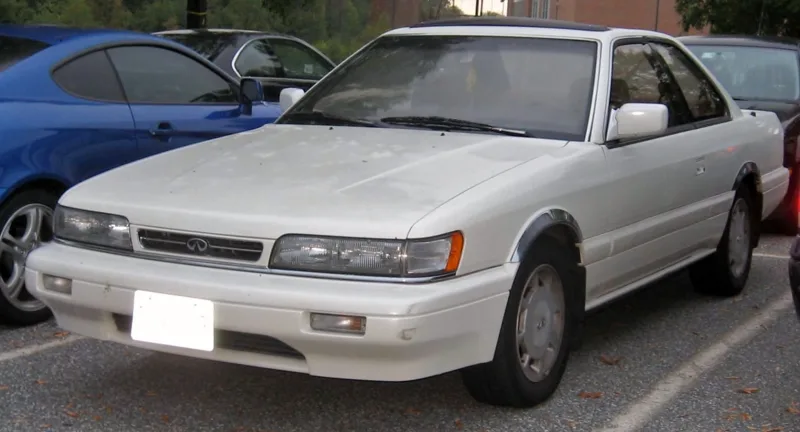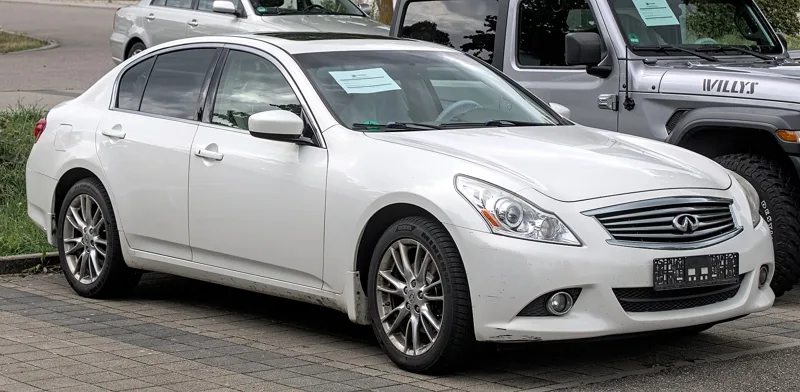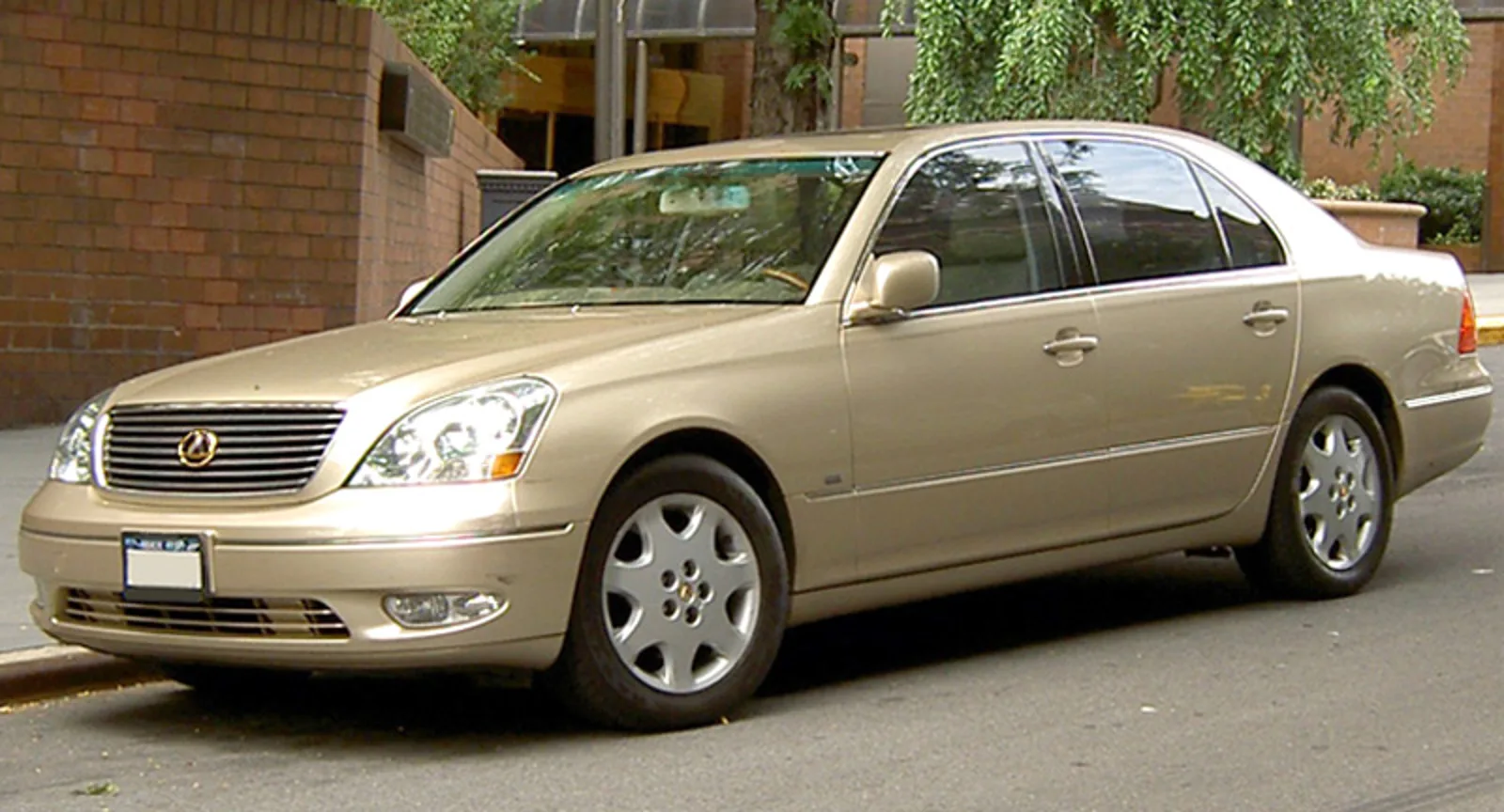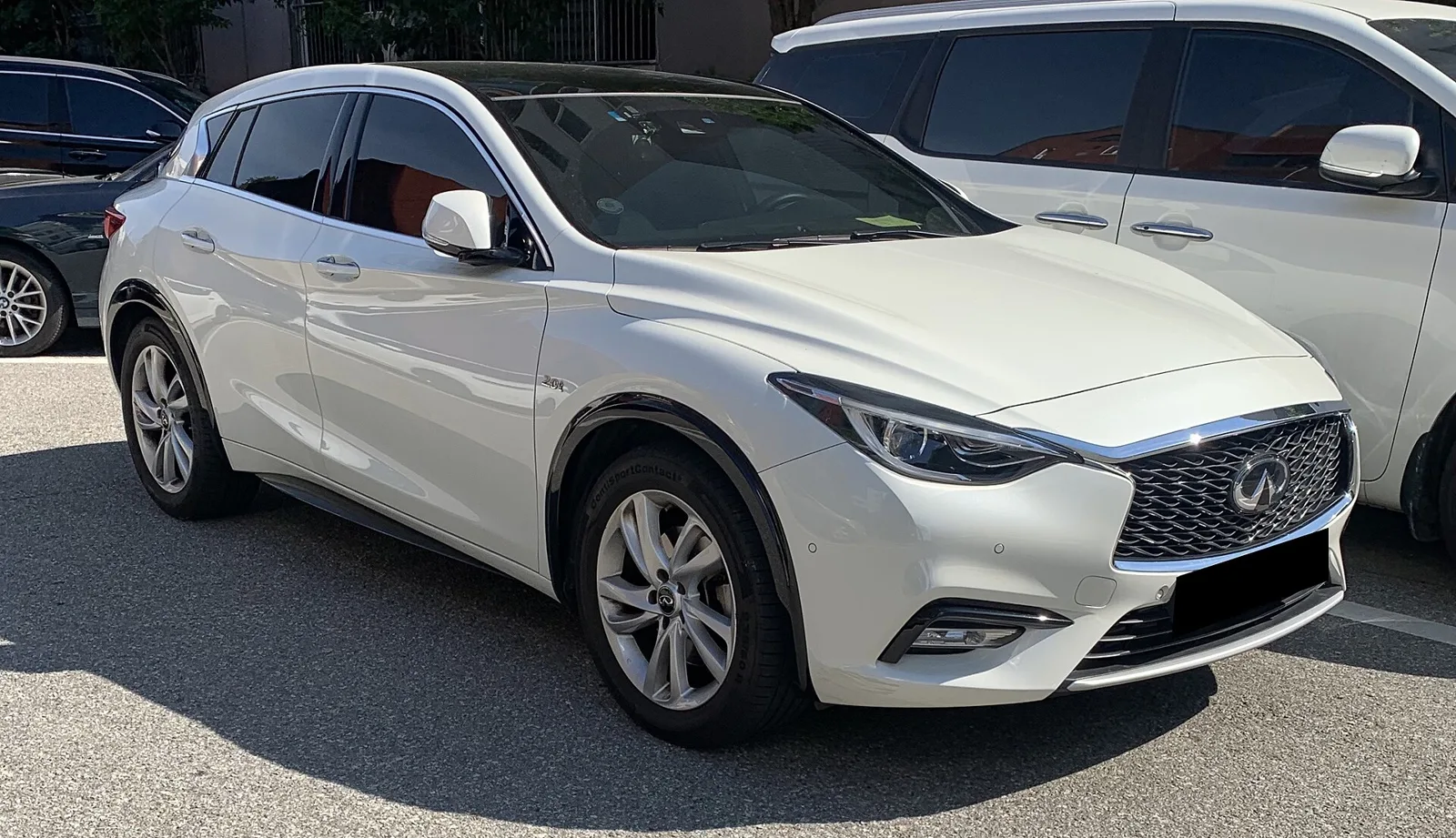
Nissan's premium division, launched in 1989 with the Q45 and M30, rebuilt around the G35 and later pared back to SUVs as electrification arrived.
Infiniti is the luxury division of Nissan, launched on November 8, 1989 with the Q45 and M30. It rebuilt its image around the G35 in the 2000s, left several markets in 2019 and 2020, and became an SUV-only brand after the Q50 was discontinued in August 2024.
Infiniti is Nissan's premium arm, a marque that opened its first showrooms in North America in late 1989 to serve buyers above the reach of Nissan's mainstream models. Its history covers a slow start, a sporty comeback in the 2000s, a retreat from several overseas markets and a commitment to electrification. The account below follows the brand through each of those phases.
Why did Nissan create Infiniti?
Nissan introduced Infiniti in the United States in 1989 to reach premium buyers that its regular models could not attract. The move was shaped in part by the Plaza Accord of 1985, and it mirrored the premium brands that Toyota and Honda were building at the same time with Lexus and Acura.
Japanese export limits, although voluntary, pushed makers toward shipping fewer and pricier vehicles. That shift gave a premium brand a commercial logic, and Infiniti was built to exploit it in North America first.
From a 1989 launch in North America to an SUV-only range, Infiniti has rebuilt itself at almost every stage.
What were the first Infiniti models?
The launch line-up consisted of the Q45 and the M30, both sold earlier through Japanese Nissan Store dealerships. The Q45 was built on the second-generation Japanese-market Nissan President, and the M30 was essentially a Nissan Leopard with a different badge.
The Q45 offered a 278 hp V8, four-wheel steering and an active suspension system, a combination of features that was unusual for its class. Its wheelbase grew to 2,880 mm from the 1992 model year, giving the flagship more room.
The M30 used the VG30E engine, which produced 162 hp, and the coupe carried a weight that its power could not comfortably support. The two launch cars shared almost nothing inside, so the line-up did not feel unified from the start.
Both launch models had to earn their place in a crowded premium market. The early advertising was designed to build awareness of the brand before buyers were asked to weigh the cars on price or performance.
How did the G20 and J30 fill the gaps?
The G20 arrived in September 1990, derived from the compact Nissan Primera and aimed at the entry-level luxury segment. The J30 followed as a four-door coupe for the 1993 model year, powered by a 210 hp VG30DE engine. Both cars were meant to widen the brand's reach below the full-size Q45.
Neither car was a runaway success, but together they showed Infiniti trying to reach buyers beneath the flagship. That approach would shape the brand's product planning for the next two decades, as each new model tried to fill a specific gap.
How did the 1990s go for the brand?
Sales were slow from the outset. The launch advertising used Zen-influenced commercials focused on nature and calm, and it rarely showed the cars themselves. By the middle of the decade the brand trailed Lexus and Acura, and the Q45 had lost much of its sporting edge.
The interiors were finished in padded leather and vinyl rather than wood and chrome, and some owners added wood trim after purchase. The one bright element was a centrally mounted analogue clock, which the designers chose to keep across every model.
The Q45 had lost its taut character and earned the nickname The Japanese Lincoln. The G20 returned in the summer of 1998 as a sport sedan, but it did not reach the sales its maker hoped for.
In late 1996 the QX4 added premium accommodations to the Nissan Pathfinder, making it one of the first luxury makers to offer a mid-size premium SUV. The J30 gave way to the I30 that year, which was based on the second-generation Japanese Nissan Cefiro.
The second-generation I30 gained a fresh design for 2000 and later became the I35 after a mid-2001 engine upgrade to the 259 PS VQ35DE. Sales of the sedans and the brand itself struggled for much of the decade.
How did the 2000s rebuild the brand?
The revival began with a new-generation Q45 flagship for 2002, but the car that truly lifted sales was the G35. Sales improved from 2003, and that year the G35 won the Motor Trend Car of the Year title. The FX35 and FX45 crossovers arrived in 2003 with the same sporting character.
Carlos Ghosn, who ran Nissan, set out to separate the brand from its Nissan roots. The G series was pitched as a Japanese alternative to the BMW 3 Series, and the M35 and M45 won praise from critics in comparison tests. The M45 later became the flagship once the Q45 left the range.
Infiniti executives reportedly vowed never to take their eyes off BMW, and that rivalry shaped the sport focus of the range. Consumer Reports also rated the M45 the best luxury sedan in its survey, which helped the brand's credibility.
The SUV range widened with the QX56 of 2004, which was based on the Nissan Armada, and the EX35 compact crossover arrived in late 2007. The EX shared the G35's 3.5-litre V6 with 306 hp, giving the smaller crossover a sporting heart.
Infiniti reached Europe in 2008, when Ghosn unveiled the brand at the Geneva Motor Show. The launch followed later that year and was phased in over two years across European countries, with the regional headquarters based in Rolle, Switzerland.
What did the 2010s bring to the range?
The 2010s brought new powertrains and a clearer product plan. The M was revealed with a 5.6 L V8 and a hybrid system that used one electric motor and two clutches. A V9X engine developed by the Renault-Nissan Alliance was offered for Europe.
Performance received its own identity in August 2010, when Infiniti unveiled the Infiniti Performance Line. In 2011 the brand began sponsoring Red Bull Racing, and front-wheel drive returned to the range with the JX that same year.
In 2011 the G-series accounted for 60% of sales, so a clear performance badge gave the sportier models their own identity within the range.
In 2012 the global headquarters left the Nissan building in Yokohama and the company was incorporated in Hong Kong. Carlos Ghosn wanted the brand to focus more on mainland China, where the luxury market was expanding quickly.
Why did the model names change in 2013?
In 2013 Infiniti moved to a naming system that separated cars by body style. Coupes and sedans began with Q, SUVs and crossovers began with QX, and a number showed each model's place in the range. The M sedan became the Q70 and the G sedan became the Q50.
The change came with a push into new premium segments. The Q30 concept premiered at the 2013 Frankfurt Motor Show, and later concepts such as the Q50 Eau Rouge in 2014 and the Q60 Project Black S in 2017 extended that push.
Why did Infiniti leave some markets?
In 2019 the company announced it would leave Western Europe, citing poor sales. It also left Australia and New Zealand after September 3, 2019, and by 2020 it had withdrawn from a long list of other markets, which focused the brand on China, the Middle East and North America.
Infiniti had little brand equity against the long-established German luxury makers, which made it hard to hold a meaningful share in Europe. Concentrating on a smaller number of core regions was the practical response.
Nissan also withdrew from Russia and Belarus in March 2022, following the invasion of Ukraine, which halted sales of both Nissan and Infiniti cars in the two countries.
Each withdrawal reduced the number of countries where the brand sold cars, and concentrating on a few regions became the central business approach for the rest of the decade.
What is Infiniti's electric plan?
In January 2018 the chief executive said the brand would move toward electric vehicles, with new models either hybrid or fully electric by 2021. In November 2021 Nissan set a target of 100 percent all-electric sales for Infiniti by 2030.
The Q50 sedan was discontinued in August 2024 because of poor sales. That decision left Infiniti as an SUV-only brand, and its future plans now rest on that range.
Those targets placed Infiniti among the premium brands reshaping their line-ups around electrification. The SUV focus that followed the Q50's exit reflected the same logic, concentrating the range on the body style the brand was keeping.
How did Infiniti compete in motorsport?
Infiniti's first major racing venture came in 1996, when Nissan entered the Indy Racing League under the brand. The engine was a racing variant of the VH unit used in the Q45, and Eddie Cheever finished third in the 2000 season before the programme ended after 2002.
The Indy programme was a small chapter, but it gave the brand a place in American open-wheel racing at a time when it was still defining its identity.
Infiniti then backed Red Bull Racing from 2011, a partnership that used Renault power. Sebastian Vettel was signed as the brand's first global ambassador in 2011, and the sponsorship ended after the 2015 season.
From 2016 Infiniti worked with the Renault F1 Team on its energy recovery system, sending specialists to the team's facilities in France. Project Black S, a road car with an energy recovery system inspired by Formula One, was the most visible result.
In 2020 a few Q50s entered the British Touring Car Championship. Ash Sutton drove one to the drivers' title that year, and the car repeated the feat in the next season.
Who led Infiniti and what concepts did it show?
Johan de Nysschen led the division from 2012 to 2014, and Roland Kruger was president from 2015 to 2019. Christian Meunier and Peyman Kargar followed, and Jose Roman has run the brand since 2023.
The concept programme ran from the FX45 in 2001 and 2002 to the Vision Qe in 2023 and the QX65 Monograph in 2025, with the Q30 and its successors in between.
What are the key figures for Infiniti?
| Specification | Detail |
|---|---|
| Launch | November 8, 1989, North America |
| Parent company | Nissan |
| Launch models | Q45 and M30 |
| Q45 power | 278 hp V8 with four-wheel steering |
| Dealers | Over 230 in 15 countries |
| Western Europe exit | Announced in 2019 |
| Australia and New Zealand exit | After September 3, 2019 |
| Electric target | 100 percent electric by 2030 |
| Last sedan | Q50, discontinued August 2024 |
| Headquarters | Yokohama, Japan |